
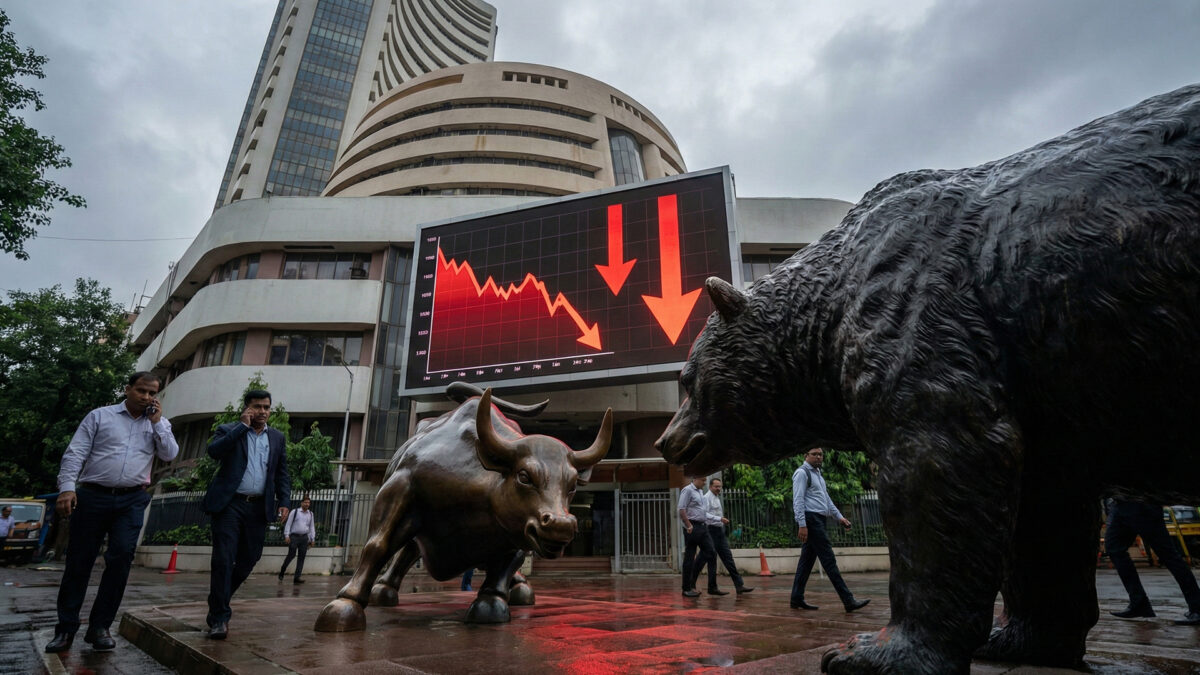
Indian stock markets tumbled sharply on Monday as rising global crude oil prices and geopolitical tensions triggered heavy selling across sectors. Benchmark indices — the BSE Sensex and NSE Nifty 50 — opened with steep losses, reflecting investor concerns about inflation and economic uncertainty.
The Sensex plunged more than 2,400 points to around 76,500, while the Nifty 50 dropped over 700 points to fall below the 24,000 level in early trade. The sharp decline came after global crude oil prices surged past $105 per barrel, raising fears of higher fuel costs and pressure on India’s economy.
India, which imports a large share of its crude oil requirements, is particularly vulnerable to spikes in global oil prices. Analysts say higher oil prices increase import bills, widen the current account deficit and add to inflationary pressure, all of which can negatively affect investor sentiment.
Despite the overall market weakness, a few stocks managed to register gains. Shares of metal and pharmaceutical companies showed relative strength, with Tata Steel, Sun Pharma and Hindalco trading higher during early market hours. Investors moved towards these sectors as defensive and commodity-linked stocks often perform better during periods of global uncertainty.
However, most sectors witnessed significant declines. Banking and financial stocks were among the biggest losers, dragging the indices lower. Shares of HDFC Bank, ICICI Bank and Kotak Mahindra Bank fell sharply as investors trimmed exposure to financial stocks amid the broader market sell-off.
Aviation and oil-sensitive companies also faced heavy pressure due to rising fuel costs. Stocks such as IndiGo’s parent InterGlobe Aviation declined as higher crude prices directly impact airline operating expenses.
Market volatility also increased as foreign investors remained cautious amid global uncertainty. The surge in oil prices was linked to escalating geopolitical tensions in the Middle East, which raised concerns about possible supply disruptions.
The Indian rupee also weakened against the US dollar during the session, adding to market worries. A weaker currency can further increase the cost of crude imports and fuel inflation.
Analysts say investors will closely track crude price movements and geopolitical developments in the coming days. Until oil prices stabilise, market sentiment is expected to remain cautious, with global cues likely to continue driving market direction.
Also Read: US loses 92,000 jobs in February 2026