
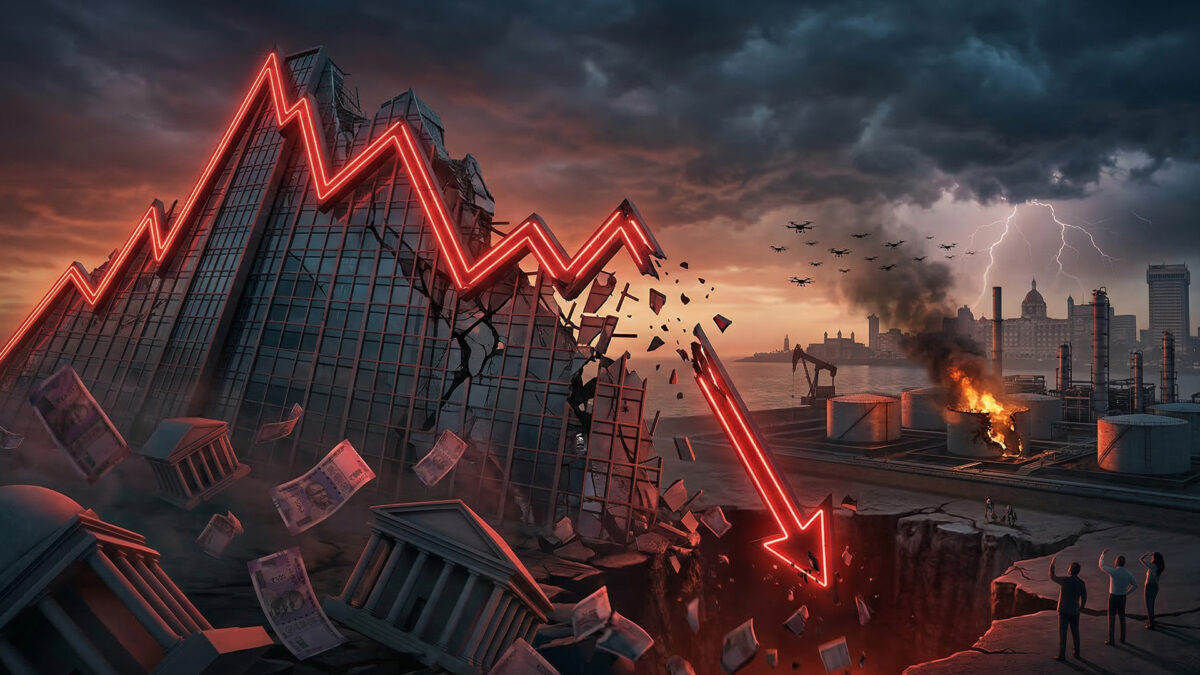
Indian stock markets saw a sharp decline on April 13, 2026, with benchmark indices coming under heavy pressure amid weak global cues. The Sensex dropped over 1,200 points to hover around 73,000, while the Nifty 50 slipped below 23,600, reflecting a broad-based sell-off across sectors.
The downturn was mainly triggered by rising geopolitical tensions in the Middle East after talks between the United States and Iran broke down. This pushed crude oil prices above $100 per barrel, raising concerns for India, which relies heavily on oil imports. Higher oil prices increase inflation risks and can impact corporate earnings, making investors cautious.
Heavyweight stocks such as Reliance Industries, HDFC Bank, and ICICI Bank were among the biggest losers, pulling the indices lower. Selling pressure was visible across banking, financial, and energy stocks, while only a few defensive names showed some resilience, particularly in IT and FMCG spaces.
Foreign institutional investors (FIIs) continued to offload Indian equities, adding to the negative sentiment. The sustained outflows in recent sessions have weighed heavily on market momentum. At the same time, the Indian rupee weakened against the US dollar, further dampening investor confidence.
Signals of a weak start were already visible before the market opened, with GIFT Nifty falling more than 300 points. Rising bond yields and profit booking after last week’s gains also contributed to the decline.
The broader market followed suit, indicating that the sell-off was not limited to large-cap stocks. Midcap and smallcap stocks also faced pressure as investors turned risk-averse.