
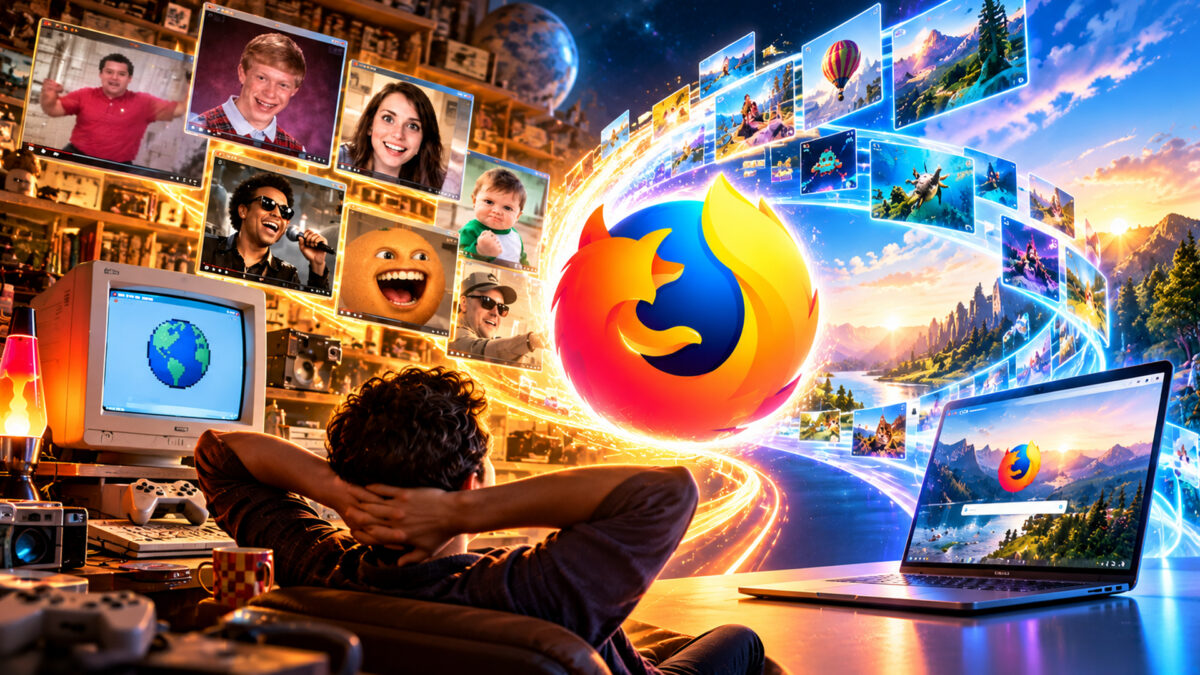
Mozilla is turning to nostalgia to revive interest in its Firefox browser, launching a new campaign that brings back popular internet personalities from the early days of viral videos and memes. Called “Come Back to Firefox”, the campaign aims to persuade former users to reconsider the browser by highlighting online privacy, user choice and concerns about the growing influence of major technology companies.
Announced on October 25, 2026, the campaign combines humour and familiar internet culture with a message about how browsing has changed. Mozilla argues that the web should remain open and personal, rather than becoming an environment where users are constantly tracked or encouraged to adopt digital features they do not need.
The initiative targets people who previously used Firefox but moved to competing browsers. Mozilla hopes the campaign will remind them of the browser’s independent identity while demonstrating that its latest features address modern internet users’ needs.
The campaign features several recognisable figures from the early internet, including Numa Numa Guy, Overly Attached Girlfriend, Annoying Orange, Bad Luck Brian, Success Kid and Dancing Matt. Other familiar personalities include Tay Zonday, Chuck Testa, Apparently Kid and the creator behind “Evolution of Dance”.
These figures became popular when ordinary internet users could reach global audiences through homemade videos, unusual performances and memorable memes. Their appearance in the new campaign evokes a period when the internet felt less commercialised and more driven by creativity and individual expression.
Mozilla uses these personalities to connect past internet experiences with current concerns. Overly Attached Girlfriend represents the problem of excessive online tracking, while Dancing Matt highlights worries about companies collecting and selling personal information. Annoying Orange is used to poke fun at unwanted artificial intelligence features.
The campaign was developed with independent creative agency We Believers, with production by nobodys and direction by the Sunny Sixteen collective. Two 30-second advertisements began airing in the United States on October 25, including during NBC’s NFL coverage. Mozilla also plans to expand the campaign to Germany, France and the United Kingdom.
Beyond its nostalgic approach, Mozilla is highlighting features intended to give users more control over their browsing experience. Firefox offers built-in tracking protection designed to limit certain forms of online monitoring, alongside customisation options that let users tailor the browser to their preferences.
One of its key features is AI Controls, which allows users to manage generative AI tools within Firefox. Users can enable selected features or block AI enhancements altogether, depending on their preferences. The controls cover tools such as translations, AI-assisted tab grouping, link previews and chatbot access.
The feature addresses a growing debate over the integration of AI into everyday software. While some users welcome tools that summarise information or improve productivity, others prefer a simpler browsing experience without additional AI prompts. Mozilla’s position is that users should decide how these tools fit into their online activities instead of having unwanted features imposed on them.
The company is also promoting a free built-in virtual private network (VPN), which adds another privacy option without requiring users to download a separate application. Firefox for iOS offers an ad-blocking option intended to reduce advertisements and trackers. These features strengthen Mozilla’s pitch, although they do not guarantee complete anonymity. Websites and online services may still collect information through accounts, cookies and other tracking methods.
Mozilla is attempting to regain attention in a market dominated by browsers closely connected to major technology ecosystems. Google Chrome benefits from its integration with Google services, Apple’s Safari comes built into Apple devices, and Microsoft Edge is closely tied to Windows.
Such integration makes default browsers convenient and can discourage users from switching. Saved passwords, bookmarks, browsing histories and familiar settings also make changing browsers less attractive. Firefox must therefore offer practical reasons for people to return. Website compatibility, performance, security updates, extension support and ease of use remain important factors alongside privacy.
Mozilla has also expanded its broader strategy through technical partnerships with Nvidia and Mistral, supporting work across gaming and AI. It has introduced an enterprise browser for organisations seeking greater control over data and specialist support. A refreshed visual design and a partnership with Wrexham AFC form part of its efforts to reach audiences beyond traditional technology enthusiasts.
The campaign gives Mozilla an opportunity to reconnect with former users, but its long-term success will depend on whether the advertising generates sustained interest and browser adoption. Nostalgia can attract attention, yet users are more likely to stay if Firefox delivers a reliable, convenient experience. Mozilla must demonstrate that its privacy protections, customisation tools and AI settings make a meaningful difference in everyday browsing.
The campaign also raises a wider question about the future of the internet. As a growing number of digital services are controlled by large technology companies, independent browsers offer an alternative approach to how people access information and manage their online activities.
Mozilla’s message is straightforward: users do not have to stick with the browser that comes pre-installed on their devices. By combining familiar internet personalities with modern privacy features, the company hopes to make people reconsider their choices.
Whether the effort succeeds will depend on how effectively Firefox turns renewed attention into a lasting user base. For Mozilla, the campaign is not just about bringing back an old browser habit. It is also about making the case for an internet where privacy, creativity and individual choice remain important.