
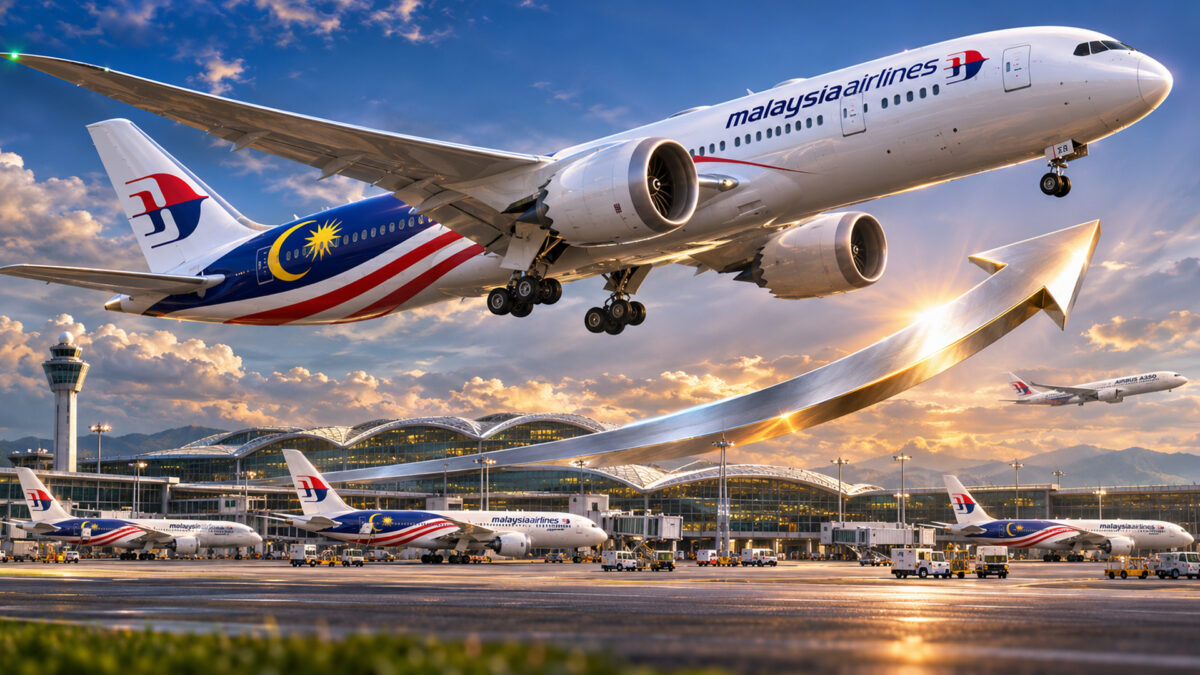
Malaysia Aviation Group (MAG), the parent company of Malaysia Airlines, plans to acquire 10 Boeing 787-10 Dreamliner aircraft, with an option to purchase six more, as it prepares for a major upgrade of its long-haul fleet. The investment will help the airline replace its ageing Airbus A350 aircraft, improve fuel efficiency and expand its international network.
The announcement came on November 25, 2026, during an event in Kuala Lumpur attended by Malaysian Prime Minister Anwar Ibrahim and senior representatives from Boeing and GE Aerospace. The aircraft are scheduled for delivery between 2032 and 2035.
The agreement will make Malaysia Airlines the first carrier in the country to operate the Boeing 787 Dreamliner. It also marks an important step in the airline’s strategy to modernise its fleet and strengthen its position in the competitive international aviation market.
The proposed acquisition covers 10 Boeing 787-10 aircraft, while the additional six remain options that the airline can exercise later. Boeing described the development as a commitment towards the purchase.
MAG President and Group Chief Executive Officer Captain Nasaruddin A. Bakar said the new aircraft would provide the capacity, flexibility and efficiency required to support the airline’s long-term growth. He added that the investment would improve the passenger experience and strengthen Malaysia Airlines’ international operations.
A key reason behind the purchase is the planned replacement of Malaysia Airlines’ seven Airbus A350-900 aircraft. The airline expects to phase out these planes gradually between 2032 and 2035, when they will be between 13 and 15 years old.
The Boeing 787-10 will take over their role on selected long-haul routes. The airline expects the transition to help it maintain operational efficiency while introducing newer aircraft with improved fuel consumption and passenger facilities.
Each Boeing 787-10 will feature a three-class cabin with 319 seats. The configuration will allow Malaysia Airlines to serve high-demand international routes with greater capacity.
The aircraft will also use GE Aerospace’s GEnx-1B engines. These engines offer improved fuel efficiency and performance, helping airlines reduce operating expenses. MAG expects the new aircraft to deliver around 25% better fuel efficiency than previous-generation models.
Fuel remains one of the biggest expenses for airlines, particularly those operating long-distance services. Improved efficiency could therefore help Malaysia Airlines manage costs while maintaining competitive fares.
The group has also renewed its partnership with GE Aerospace for its Fuel Insight and FlightPulse software solutions. These digital systems help airlines monitor fuel consumption, improve flight operations and identify opportunities to reduce unnecessary fuel use.
Malaysia Airlines plans to deploy the Dreamliners across important international markets in Europe and the Asia-Pacific region. Potential destinations include London, Paris, Sydney, Melbourne, Tokyo, Osaka and Seoul.
The aircraft will initially support existing long-haul services. However, the additional capacity could also help the airline consider new destinations as demand for international travel increases.
The Boeing 787-10 offers a combination of passenger capacity and operating efficiency suited to the airline’s network plans. Its introduction will give Malaysia Airlines more flexibility when assigning aircraft to different routes based on passenger demand.
The group has been working to strengthen Kuala Lumpur’s position as an international aviation hub. Better connectivity could help attract more international passengers and support tourism, business travel and trade.
The Dreamliner acquisition forms part of a wider fleet expansion programme. Malaysia Aviation Group currently operates around 101 aircraft across its businesses, including Malaysia Airlines, low-cost carrier Firefly and cargo operator MASKargo. It aims to increase the total fleet to 129 aircraft by 2035.
The group is also expanding its narrow-body fleet. Malaysia Airlines currently operates more than 37 Boeing 737 Next-Generation aircraft and 19 Boeing 737-8 planes. Its existing order book includes another 55 Boeing aircraft, comprising 43 Boeing 737-8s and 12 Boeing 737-10s.
The remaining deliveries under this programme are expected by 2030 through direct purchases and leasing arrangements.
However, the airline has also faced pressure from rising fuel costs and uncertainty in the global aviation industry. Higher jet fuel prices, partly linked to geopolitical tensions in the Middle East, prompted MAG to reduce its capacity by around 6% in 2026. The move involved cutting approximately 8,000 to 9,000 flights during the year.
The group expects to increase capacity by around 8% in 2027 as it works towards its longer-term growth ambitions. Its management has indicated that expansion will depend on passenger demand, fuel prices and operating costs.
The proposed purchase also strengthens Boeing’s relationship with Malaysia. Boeing Global Southeast Asia President Travis Sullivan said the agreement builds on the manufacturer’s nearly 80-year relationship with the country.
GE Aerospace will supply the engines for the new aircraft. The partnership adds to its existing relationship with Malaysia Aviation Group, which has also adopted its digital solutions for improving fuel efficiency.
The indicative book value of the 16 aircraft, including engines, stands at $9.3 billion before customary discounts. The figure covers the initial 10 aircraft and the six additional options. MAG has not disclosed the final purchase price or financing arrangements. It is considering different funding options, including operating and finance leases.