
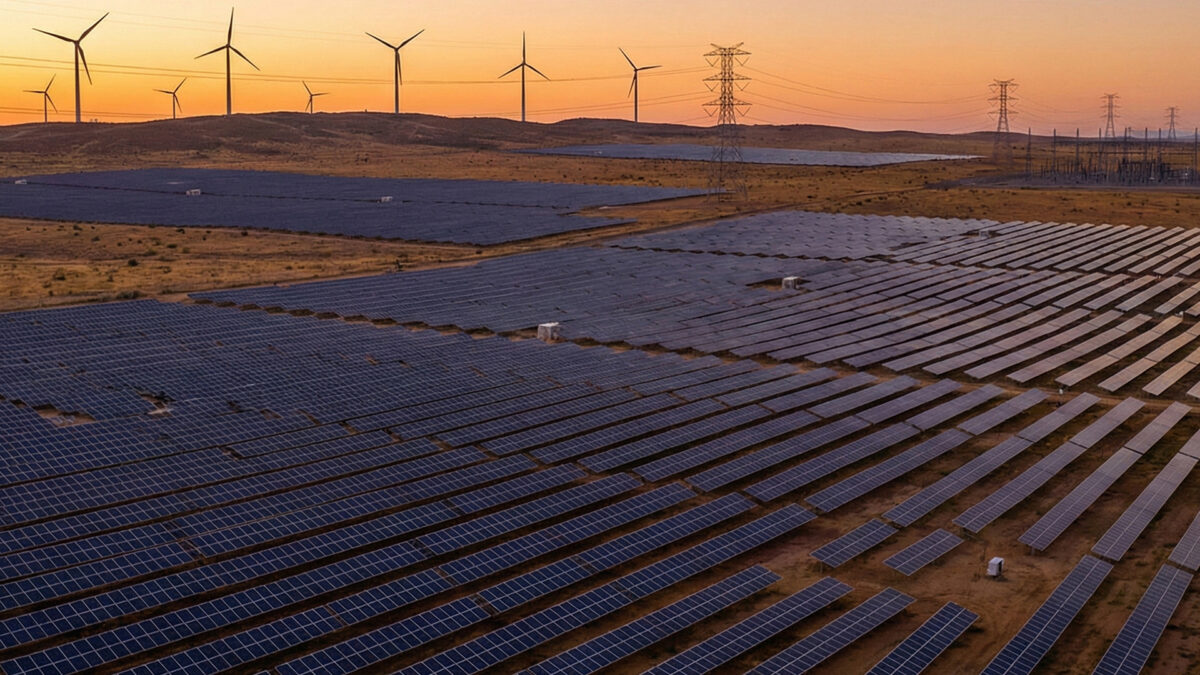
India has added more than 50,000 MW (50 GW) of power generation capacity during the current financial year, marking the highest-ever annual increase in the country’s history. The rapid expansion reflects rising electricity demand and a strong push towards cleaner energy sources.
A major share of the new capacity has come from renewable energy, with solar power contributing the largest portion, nearly 35 GW. Wind energy additions have also gathered pace, while thermal, large hydro and nuclear projects accounted for the remaining capacity. The strong renewable growth means non-fossil fuel sources now form a larger share of India’s total installed power capacity.
With the latest addition, India’s overall installed power capacity has crossed 520 GW, strengthening the country’s ability to meet peak demand from industry, infrastructure, urbanisation and the fast-growing digital economy. The capacity addition represents a significant year-on-year increase and highlights the speed at which new projects are being commissioned.
The record build-out has been supported by policy measures, faster project execution, improved transmission networks and rising investments in clean energy. Government schemes promoting solar parks, rooftop solar and manufacturing of renewable equipment have played a key role in accelerating installations.
The expansion is also crucial for India’s long-term energy transition goals. The country has set ambitious targets to increase the share of non-fossil fuel capacity in its energy mix, reduce carbon emissions and ensure reliable power supply for sustained economic growth.
At the same time, the addition of thermal and hydro capacity is helping maintain grid stability and meet base-load requirements, ensuring that the shift to renewable energy remains balanced.
Also Read: India AI Impact Summit greets skills, tech, leaders