
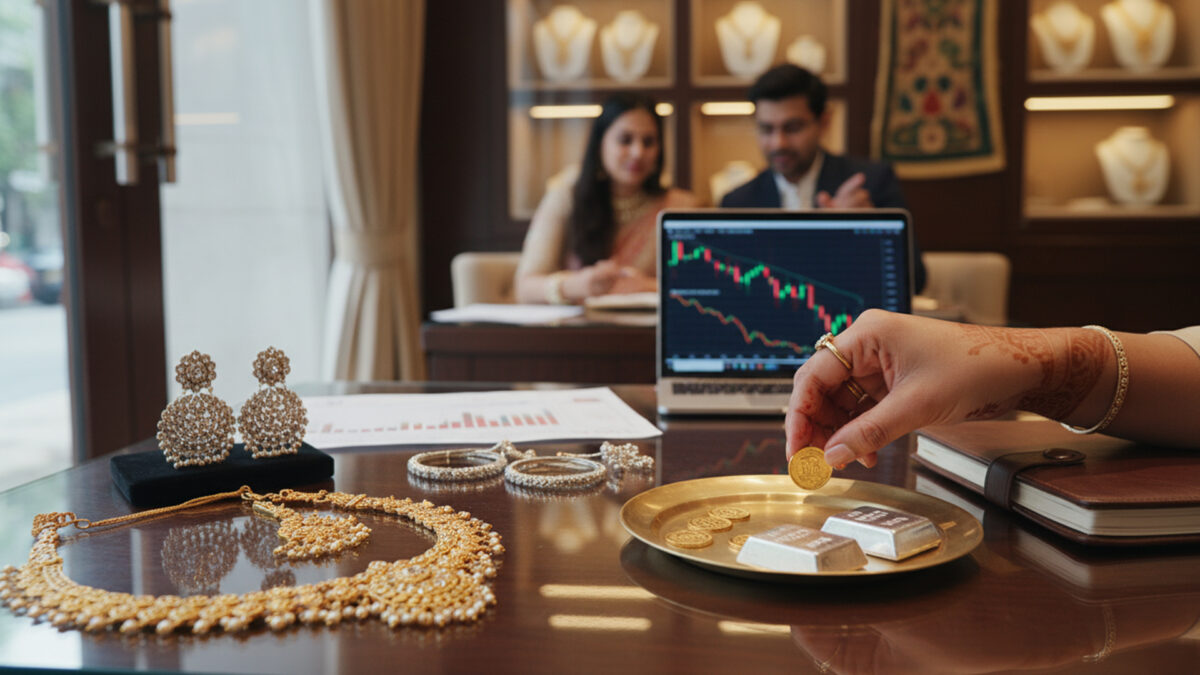
Gold and silver markets in India have entered a phase of correction after hitting record highs earlier this month, presenting what some analysts describe as a timely window of opportunity—especially with the wedding season looming.
Domestic 24-karat gold prices recently eased from their October peaks of around ₹1,32,294 per 10 grams, while silver touched highs near ₹1,70,415 per kilogram before beginning their drop.
In most Indian cities, 24K gold is being sold at around Rs 1.25 lakh. This is a sharp decline from the October 18 levels when 24-karat gold was being sold for over Rs 1.4 lakh.
The pull-back in precious metal prices is being attributed to a confluence of factors including profit-taking by investors, a firmer U.S. dollar, and softening physical demand in key markets such as India and China.
For example, on the Multi Commodity Exchange (MCX), December gold futures fell about 2.8 %, while December silver futures dropped roughly 5.8 % in the most recent week.
Despite the recent correction, the broader outlook remains robust. Analysts continue to cite persistent inflation risks, central-bank diversification away from the dollar, and geopolitical uncertainties as tailwinds for bullion.
At the same time, India’s domestic demand remains anchored by cultural routines—jewellery and bullion purchases around Diwali and the wedding season continue to support demand anchors.
Jewellers and market watchers in India note that although this wedding season usually triggers brisk buying of gold and bridal jewellery, the recent heights of metal prices have prompted some buyers to delay or scale down purchases. One report states that while demand remains, the “softened physical demand” is a clear signal of buyers waiting for a dip.
For buyers with upcoming weddings in mind, the recent dip is being seen as a potential buying opportunity—however the timing may matter.
Market analysts caution that while the correction offers a breather, the window may not stay open for long given the seasonal uptick in demand and possible global triggers.
According to a forecast, gold prices may trade with a “sideways to lower” bias in the short term, but this does not discount a rebound if external factors such as central-bank decisions or geopolitical flare-ups come into play.
Silver’s outlook, meanwhile, is similarly mixed in the short term but favorable for the foreseeable future.
While its recent correction has been sharper—reflecting speculative unwinding and weaker industrial demand—the fundamental drivers remain in place, such as its role in solar, electronics and EV manufacturing. Analysts expect silver to recover once the market stabilises.
In summary, the precious-metal market in India is in a consolidation mode after a sharp rally. The correction is giving potential buyers—especially those preparing for weddings—a more favorable entry point.
Still, with seasonal demand ahead and global cues in flux, the key will be watching for when the consolidation ends and fresh upward momentum resumes.
Also Read: Novartis To Acquire Avidity Biosciences In US$12 Billion Deal