Categories
Technology

‘Healthy Mode’ Now Live on Zomato in Gurugram

Zomato founder Deepinder Goyal has announced the launch of a new feature called “Healthy Mode”, aimed at helping users make more informed and nutritious food choices. Acknowledging that while Zomato revolutionized food ordering, it fell short in promoting healthy eating, Goyal described this feature as a corrective step.

Healthy Mode, currently available in Gurugram, uses AI-driven analysis and restaurant data to assign a “Healthy Score” to dishes, ranging from Low to Super. The score evaluates meals based on protein, complex carbs, fiber, micronutrients, and calorie content. This allows users to filter and compare dishes not just by calories, but by overall nutritional value.

“This isn’t your basic healthy filter,” Goyal said. “We’ve set the bar high, even professional athletes can rely on it to find meals that meet their standards. This is personal for me. Zomato made indulgence easy, but not healthy eating. Healthy Mode is our first serious effort to change that.”

The platform’s new feature also aims to increase transparency, showing users why a dish is considered healthy. By offering detailed nutritional insights, it empowers users to choose meals that better align with their dietary needs.

Goyal also addressed common perceptions about food delivery leading to poor dietary habits. He noted that regular users in big cities often opt for simpler, home-style meals, while the majority of less frequent users indulge occasionally. The goal, he emphasized, is to ensure healthy options are clearly visible, accessible, and easy to choose.

Zomato plans to roll out Healthy Mode to more cities in the coming weeks and is inviting users to provide feedback to improve the feature further.

Categories
Technology

Adobe Integrates Google’s Nano Banana AI into Photoshop

Adobe has introduced Google’s Gemini 2.5 Flash Image model, known as “Nano Banana,” into Photoshop’s Generative Fill feature. This integration aims to provide users with advanced AI-driven editing capabilities, enhancing their creative workflows.

Nano Banana is recognized for its precision in text-based edits and strong prompt accuracy. Unlike traditional AI models that generate new images from scratch, Nano Banana excels at editing and enhancing existing photographs with remarkable accuracy. Its capabilities include maintaining subject consistency across multiple images, making it particularly useful for tasks like adding props, adjusting lighting, or modifying backgrounds while preserving the integrity of the original content.

In Photoshop, users can access Nano Banana by selecting an area with tools like the lasso or marquee, then triggering the Generative Fill feature. The AI model processes the edit, aiming for highly realistic completions. Additionally, Nano Banana supports Smart Object adjustments, allowing for non-destructive editing, and offers a “Consistency Mode” to apply multiple edits while maintaining visual uniformity across the entire composition.

This integration follows Adobe’s broader strategy of incorporating multiple AI models into its suite of tools, providing users with a range of options to suit their specific creative needs. By embedding Nano Banana into Photoshop, Adobe offers enhanced flexibility and precision in image editing, catering to both professional and casual users seeking advanced editing solutions.

To utilize Nano Banana in Photoshop, users need to update to the latest version through the Creative Cloud app, navigate to Preferences > Generative AI Models, enable Google Gemini Nano Banana under partner model options, and restart Photoshop to activate the model. This seamless integration ensures that users can enhance their editing capabilities without disrupting their existing workflows.

Adobe’s collaboration with Google to incorporate Nano Banana into Photoshop underscores the growing trend of leveraging advanced AI models to augment creative processes. As AI continues to play a pivotal role in digital content creation, such integrations are expected to become increasingly prevalent, offering users powerful tools to bring their creative visions to life with greater ease and precision.

Also Read: Google Launches Mixboard: AI-Powered Visual Idea Board to Compete with Pinterest

Categories
Technology

Google Launches Mixboard: AI-Powered Visual Idea Board to Compete with Pinterest

Google has unveiled Mixboard, an AI-powered mood board application designed to help users brainstorm, design, and visualize ideas through generative artificial intelligence. Currently available in public beta in the U.S. via Google Labs, Mixboard is positioned as a direct competitor to platforms like Pinterest, offering a dynamic and interactive approach to creative ideation.

Mixboard allows users to create visual project boards using pre-made templates or by issuing simple text prompts. For example, users can type instructions such as “show me Memphis-style cups and plates” or “set up an autumn-themed party in my living room” to generate relevant images. Additionally, users may upload their own photos, mixing them with AI-generated visuals to shape unique boards.

The application is powered by Google’s Gemini 2.5 Flash AI model, enabling users to build boards starting from ready-made templates or by issuing simple text prompts. This integration allows for seamless generation of visuals based on user descriptions, enhancing the creative process.

One of the standout features of Mixboard is its use of Google’s new image editing model, Nano Banana. This model allows users to make edits and other small changes to images, or even combine images, with ease. Users can ask the AI to make adjustments such as “make this image brighter” or “combine these two pictures,” streamlining the editing process and eliminating the need for complex design software.

Mixboard also offers features like natural language editing, quick regeneration of images, and board templates. Users can start with text prompts or choose from ready-made templates offering various styles, themes, and projects. This flexibility caters to a wide range of creative needs, from home decor and event planning to DIY projects and more.

As an experimental tool under Google’s Labs initiative, Mixboard is currently available in public beta in the U.S. Users can access the platform and join a dedicated Discord community to share feedback and ideas. Google has indicated that the platform may evolve based on user input, suggesting a commitment to continuous improvement and user-centric development.

In summary, Mixboard represents Google’s foray into the realm of AI-driven creative tools, offering users a platform to visualize and refine their ideas through an intuitive and interactive interface. By combining the inspiration-driven style of Pinterest with the creative power of generative AI, Mixboard aims to provide a comprehensive solution for users seeking to bring their ideas to life.

Also Read: PhonePe Files For IPO via Confidential Route, Aims to Raise ₹12,000 Crore


Categories
Technology

Apple Enters India’s Top 5 as Smartphone Market Grows 2% in H1 2025

Apple has made a significant breakthrough in the Indian smartphone market, entering the top five brands for the first time with a remarkable 35% increase in sales during the first half of 2025. The surge was driven by strong demand for the iPhone 17 Pro and Pro Max models, highlighting a growing consumer shift towards premium devices in the country.

This milestone comes amid steady overall growth in India’s smartphone market, which expanded by 2% year-on-year in H1 2025. The growth is fueled by rising 5G adoption, a broadening digital ecosystem, and evolving consumer preferences across both premium and budget segments.

While price-sensitive Android brands continue to dominate the market, Apple’s entry signals a marked shift towards premiumization within India’s smartphone ecosystem. The company’s market share in the super-premium segment expanded by a striking 82% year-over-year, reflecting growing consumer willingness to invest in flagship devices.

Market analysts attribute the overall market growth to strategic product launches offering advanced features and competitive pricing, alongside India’s expanding digital infrastructure and increasing smartphone penetration.

The Indian smartphone market is poised for sustained growth through the remainder of 2025, underpinned by continuous technological innovation and evolving consumer demand, positioning India as a critical battleground for global smartphone manufacturers.

Also Read: Nvidia’s $5 Billion Bet on Intel: A Surprise Alliance That Shakes Up the Chip World

Categories
Technology

Nvidia’s $5 Billion Bet on Intel: A Surprise Alliance That Shakes Up the Chip World

Nvidia stunned markets and the semiconductor industry on September 18, 2025, when it announced a strategic partnership with Intel that includes a $5 billion purchase of Intel common stock and a multi-year collaboration to co-develop chips for data centers and personal computers.

Nvidia said it will buy Intel shares at $23.28 apiece — a purchase that would give it roughly a 4 percent stake in the long-troubled chipmaker — and that the two companies will work on “multiple generations” of custom x86 data-center CPUs and new Intel x86 System-on-Chips (SoCs) that integrate Nvidia RTX graphics.

The deal represents an extraordinary rapprochement between the world’s most valuable chip designer and one of the industry’s oldest names.

Nvidia’s chief executive described the move as a strategic step to deepen its data-center and PC ecosystem, while Intel framed the agreement as a validation of its turnaround efforts and a way to accelerate its roadmap for advanced manufacturing and product co-development.

The companies said specifics of jointly developed products would be revealed in stages, but they emphasised that designs will span both server CPUs used in AI infrastructure and client chips for laptops and desktops that pair Intel compute with Nvidia RTX graphics.

Markets reacted immediately. Intel shares surged more than 25 percent as investors cheered the cash infusion and the signal of renewed commercial relevance; reports placed intraday gains in the range of roughly 24–33 percent depending on the exchange and time of trading. Nvidia’s stock also rose, though far more modestly, climbing roughly 3–4 percent as the market weighed the strategic merits of the tie-up.

Rival chipmakers such as AMD saw share weakness amid concerns that a closer Intel-Nvidia axis could reconfigure competitive dynamics in data-center and PC segments.

Why this matters beyond the immediate market rally is twofold. First, Nvidia gains a significant, long-term alignment with a major x86 CPU vendor at a time when its AI products increasingly rely on tight integration with processors and interconnects.

Second, Intel — which has struggled in recent years with manufacturing delays and competitive pressure — secures both a large capital boost and a marquee partner that could help drive customer interest in Intel-based platforms.

Analysts note, however, that the deal stops short of guaranteeing a major manufacturing contract for Intel; Nvidia continues to rely on external foundries like TSMC for much of its highest-end silicon production, and details about where and how the new chips will be manufactured were left deliberately vague.

Industry watchers flagged potential geopolitical and strategic implications.

The partnership could reshape supply-chain relationships, put pressure on Taiwan Semiconductor Manufacturing Company (TSMC) as a supplier to both rivals and partners, and prompt closer scrutiny from regulators given the centrality of chips to national economic and security strategies.

At the same time, some analysts cautioned that bringing two large engineering organisations into a long, complex co-development process carries execution risk: aligning roadmaps, achieving performance targets, and choosing manufacturing partners are all hard problems that could blunt the deal’s near-term commercial impact.

For customers and the broader tech ecosystem, the announcement promises new product architectures in which Intel CPUs and Nvidia GPUs are designed to work more tightly together, potentially simplifying procurement and performance tuning for AI workloads.

Whether the partnership delivers tangible advantages over existing combinations of Nvidia accelerators with ARM or AMD CPUs will depend on execution and on how the companies allocate production and engineering resources across competing priorities.

In short, Nvidia’s $5 billion investment is both a financial vote of confidence in Intel and a strategic opening of a new chapter in the chip industry.

The market’s euphoric response reflects that promise, but the long road from announcement to product — and from product to profitable market share — contains many technical, commercial and regulatory hurdles that both companies will now have to clear.

Also Read: Gameskraft CFO in ₹270 Cr Fraud; 120 Jobs Cut

Categories
Technology

Gameskraft CFO in ₹270 Cr Fraud; 120 Jobs Cut

Indian online gaming giant Gameskraft Technologies is facing a double crisis: a high-stakes financial fraud allegedly involving its former Chief Financial Officer and a sweeping round of layoffs triggered by ongoing regulatory turmoil in the real-money gaming sector.

An FIR has been filed against Gameskraft’s former Group CFO, Ramesh Prabhu, accusing him of diverting over ₹270 crore from the company into a personal trading account over several years. The funds, meant for corporate investments, were allegedly funneled into Futures & Options (F&O) trading via an RBL Bank account in Prabhu’s name.

According to the complaint lodged at the Marathahalli police station in Bengaluru, Prabhu engaged in extensive manipulation of company records, including falsifying mutual fund statements and misrepresenting investments to conceal the financial irregularities. Internal investigations revealed that between FY2020 and FY2025, Prabhu had routed approximately ₹231 crore into personal trading. Losses from these trades are estimated to exceed ₹250 crore. Following the discovery, Gameskraft wrote off ₹270.4 crore in its FY25 financial statements.

In an email dated March 5, 2025, Prabhu reportedly confessed to the misconduct, claiming full responsibility and stating that no other employees were involved. He has been absent from work since early March and is currently untraceable. The police FIR invokes multiple sections of the Bharatiya Nyaya Sanhita, including charges of theft, criminal breach of trust, forgery, and falsification of accounts.

Compounding the situation, Gameskraft has laid off 120 employees, or nearly 20% of its workforce, as part of a major restructuring effort following increased scrutiny and restrictions on the online gaming industry in India. Sources confirm that layoffs spanned multiple departments, with more job cuts potentially on the horizon. The move comes after recent state-level bans on real-money gaming and ongoing uncertainty around the legal status of such platforms.

The company said the layoffs were not performance-related and that it is offering impacted employees severance support, extended medical insurance, mental wellness assistance, and outplacement services. A priority re-hiring clause has also been extended to those laid off.

Gameskraft, once considered a rising star in India’s online gaming space, is now navigating one of its most turbulent phases. Between regulatory crackdowns and internal financial scandals, the company faces a critical test of governance, transparency, and resilience.

Industry experts say the incident underscores the urgent need for stronger internal controls and regulatory clarity in India’s booming but volatile gaming sector.

Also Read: The New Meta Ray-Ban Collab Will Change How You Think About Smart Glasses

Categories
Technology

Meta Launches Ray-Ban Smart Glasses with AI-Powered Display, Neural Wristband

Meta has launched its latest wearable innovation, the Ray-Ban Display smart glasses, aiming to redefine the future of personal computing. Unveiled at the company’s annual Connect 2025 event, the glasses feature an integrated augmented reality (AR) display and advanced artificial intelligence (AI) capabilities, paired with a new neural wristband controller. Priced at $799, the smart glasses are set to be released on September 30, 2025.

Integrated Display and Neural Wristband for Hands-Free Control

The Meta Ray-Ban Display glasses include a built-in AR display on the right lens, enabling users to access notifications, navigation directions, real-time translations, and other digital content seamlessly. The display is designed to minimize light leakage, ensuring privacy while viewing information. Powered by the Qualcomm Snapdragon AR1 Gen 1 processor, the glasses integrate smoothly with Meta’s suite of applications, allowing video calls, photo sharing, and AI-generated content directly on the device.

Accompanying the glasses is the Meta Neural Band, an electromyography (EMG) wristband that translates subtle muscle movements into commands. Users can control the glasses with simple gestures such as pinches, swipes, or wrist turns, without touching the device or using voice commands. The wristband boasts an 18-hour battery life, water resistance, and an intuitive hands-free interface, positioning the device as both practical and innovative.

The glasses also feature a 12-megapixel camera, five microphones, and dual off-ear speakers to support high-quality video and audio capture, live streaming, and immersive media consumption. A collapsible charging case extends battery life by up to 30 hours, ensuring usability throughout the day.

Strategic Vision and Market Potential

Meta’s launch of the Ray-Ban Display glasses marks a strategic push into the wearable AI market, combining fashion-forward design with cutting-edge technology. The company envisions the glasses as a new computing platform, potentially replacing some smartphone functionalities while offering a more immersive, AI-driven experience. Analysts note that success will depend not only on hardware innovation but also on the development of software and ecosystem integration that can fully leverage the AI capabilities.

This release is part of Meta’s broader vision to embed AI into everyday devices. The company is also developing its “Orion” smart glasses prototype, which promises even more advanced augmented reality experiences in the future. With the Ray-Ban Display glasses and the neural wristband, Meta aims to bring AI closer to everyday users, offering a glimpse into the next generation of personal technology and wearable computing.

By merging style with technology, Meta hopes to attract consumers seeking seamless digital integration in daily life. The glasses represent a significant step toward transforming how people interact with technology, emphasizing gesture-based control, real-time information access, and AI-driven functionality.

Categories
Technology

Microsoft Enhances Copilot Audio Expressions with Scripted Mode and MAI-Voice-1 AI

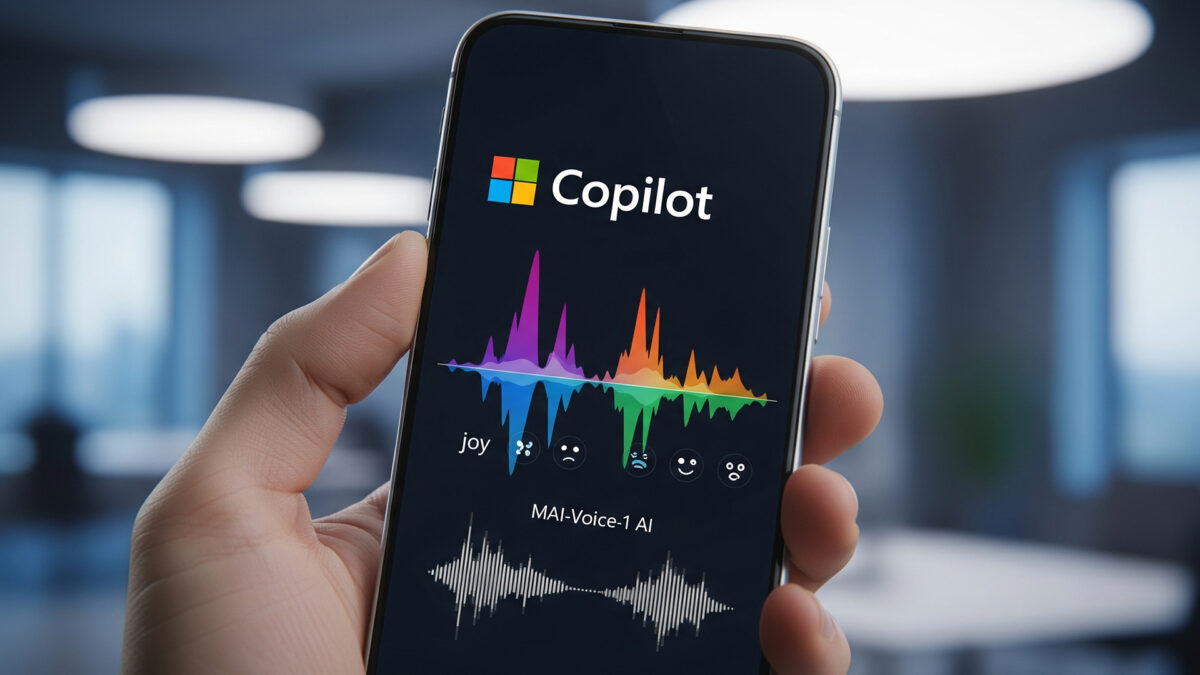
Microsoft has unveiled a significant update to its Copilot Audio Expressions feature, introducing a new scripted mode powered by its in-house MAI-Voice-1 AI model. This advancement enables users to generate high-fidelity, emotionally nuanced audio narrations from written text, enhancing applications in education, entertainment, and content creation.

The scripted mode allows users to input text and select from various vocal styles, including options like vampire, dragon, or witch, to match the tone and atmosphere of the content. This feature is particularly beneficial for storytelling, providing dynamic and engaging audio experiences. Additionally, the Story Mode offers multiple vocal styles, making it ideal for children’s stories or educational content.

MAI-Voice-1, Microsoft’s latest AI model, is designed for efficiency and expressiveness. Capable of generating a full minute of audio in under a second on a single GPU, it delivers high-quality speech synthesis with emotional depth. This model powers not only the new scripted mode but also other Copilot features such as Daily and Podcasts.

The integration of MAI-Voice-1 into Copilot Audio Expressions marks a significant step forward in AI-driven voice synthesis, offering users enhanced control over audio output and expanding the creative possibilities for voice-based content.

Categories
Technology

Apple’s Bold Leap: Ultra-Thin iPhone Air, Power-Packed iPhone 17, and Smarter Watches

Apple’s Bold Leap: Ultra-Thin iPhone Air, Power-Packed iPhone 17, and Smarter Watches

The standard iPhone 17 offers incremental upgrades but continues to focus on refined aesthetics and user experience.

Staff Writer

10 September 2025

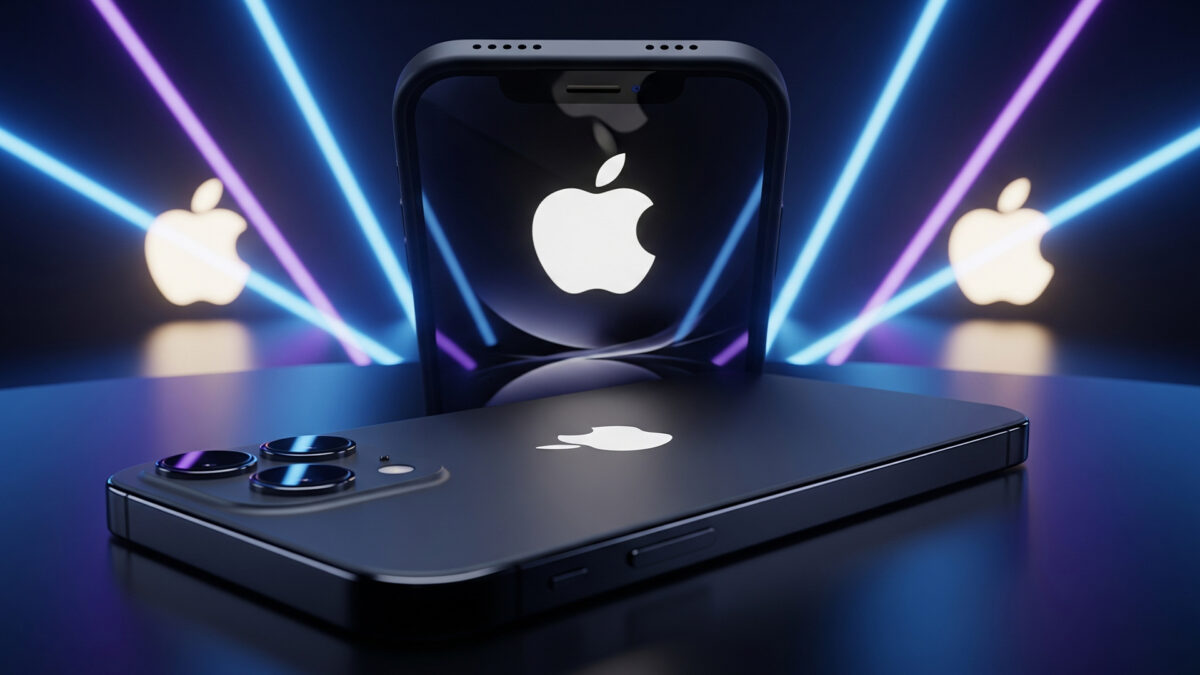
Apple’s latest product launch on Tuesday was a celebration of innovation, style, and performance. The spotlight was on the brand-new iPhone Air, Apple’s thinnest smartphone ever at just 5.6mm, alongside the next-generation iPhone 17 series and the revamped Apple Watch Series 11. Each product blends sleek design, advanced technology, and user-friendly features aimed at enhancing both everyday life and creative pursuits.

The new iPhone Air is a marvel of engineering. Apple completely redesigned its internal components to fit powerful hardware into the ultra-slim frame, removing the physical SIM slot and introducing vapor-cooled thermals to ensure the phone runs smoothly without overheating.

It is powered by the A19 Pro chip, delivering processing power far superior to the base iPhone. CEO Tim Cook described the lineup as “unlike anything we’ve ever created,” emphasizing that “design is not just how something looks or feels; design is also how it works.”

The 6.5-inch display of the iPhone Air, equipped with ProMotion technology and a peak brightness of 3000 nits, offers a vibrant viewing experience, even in bright environments. Its 48MP dual fusion camera delivers four times the resolution of its predecessor, while the 18MP Centrestage front camera allows users to take landscape selfies without rotating the phone—a feature that’s available across all iPhone 17 models.

The iPhone 17 series builds on these innovations, with the standard model offering refined enhancements while the iPhone 17 Pro and Pro Max stand out with their professional-grade features. These models include eight advanced lenses and 40x digital zoom, providing unparalleled creative flexibility. 

A new 48MP fusion telephoto lens offers 4x zoom at 100mm and 8x zoom at 200mm, Apple’s longest optical reach to date. 

A 56% larger sensor, improved 3D sensor shift stabilization, and a new photonic engine powered by machine learning ensure stunning images in any setting. Professional photographers will appreciate tools like ProRes RAW video recording, offering next-level editing capabilities.

The event also showcased advancements in wearable technology. The Apple Watch Series 11 now includes a 5G mode and improved battery life, all packed into a lighter, sturdier frame with liquid glass casing. It introduces a blood pressure monitor to detect hypertension patterns and a new sleep score feature that analyzes overnight data to offer health insights. 

The Apple Watch SE has been upgraded with faster charging and longer battery life, while the Apple Watch Ultra 3 caters to endurance users with satellite connectivity, Emergency SOS, and a 42-hour battery life.

Apple’s pricing reflects its premium positioning. The iPhone 17 (256GB) starts at Rs 82,900, while the ultra-thin iPhone Air (256GB) is priced at Rs 1,19,900. The iPhone 17 Pro (256GB) is available at Rs 1,34,900, and the iPhone 17 Pro Max (256GB) tops the range at Rs 1,49,900. In wearables, the Apple Watch Series 11 (42mm) is priced at Rs 46,900, the Apple Watch Ultra (49mm) at Rs 89,900, and the Apple Watch SE (40mm) at Rs 25,900. 

The AirPods 3 are available at Rs 25,900.

With this launch, Apple reaffirms its commitment to merging style with functionality. From the ultra-slim iPhone Air to the powerful Pro models and health-driven wearables, the company is pushing the boundaries of technology while making it accessible and appealing to a broad audience. Whether for tech enthusiasts, creatives, or everyday users, these new devices promise smarter, faster, and more intuitive experiences designed to transform the way we live and work.

Categories
Technology

Instagram Launches Dedicated iPad App with Reels-Centric Design to Compete with TikTok

Instagram Launches Dedicated iPad App with Reels-Centric Design to Compete with TikTok

Meta's strategic move aims to enhance user engagement on tablets and strengthen its position in the short-form video market.

Sreelatha M

Meta has officially launched a dedicated Instagram app for iPad, ending a 15-year wait for iPad users. The new app, available globally for free on the App Store, is optimized for iPadOS 15.1 and later versions, offering a tailored experience for tablet users.

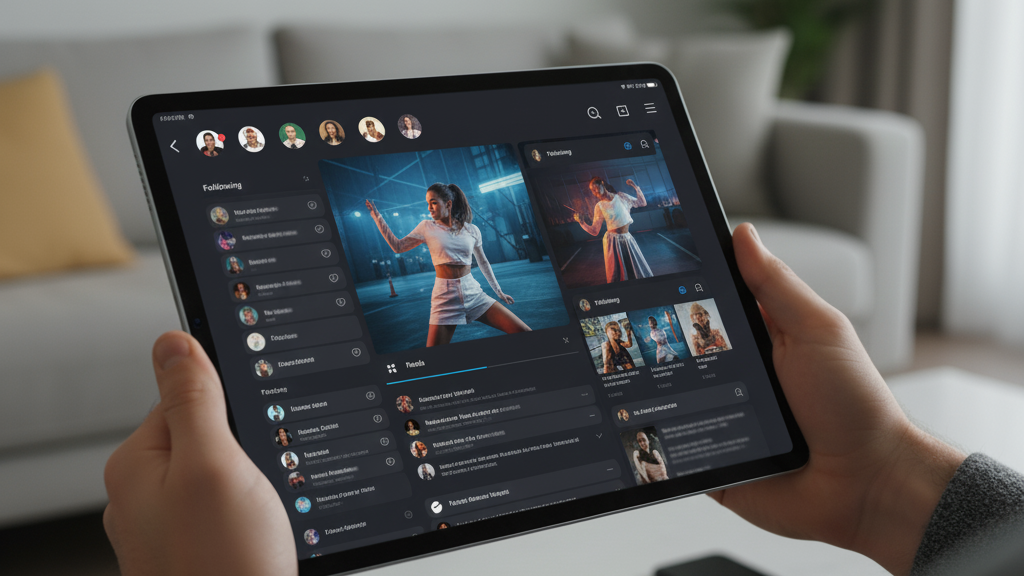
The iPad app places Instagram's short-form video feature, Reels, at the center of its redesigned interface. Upon opening the app, users are greeted with a Reels feed, providing a "lean-back entertainment" experience. Stories are pinned at the top, and users have one-tap access to messaging, streamlining navigation and enhancing user engagement.

The interface introduces a "Following" tab with multiple viewing options, including recommended posts, content from mutual followers, and chronological feeds. Users can reorder these options to prioritize preferred content. The app also supports multitasking layouts, allowing messages and notifications to be viewed side by side, and comments can expand without interrupting video playback, optimizing the user experience on larger screens.

This launch signifies Meta's strategy to enhance user engagement through Reels, which now accounts for over 20% of user time on Instagram. The iPad app's design aims to compete with TikTok by providing a more immersive and user-friendly experience on tablet devices. The introduction of the iPad app is part of Meta's broader efforts to expand Reels' reach and functionality, including features like multi-audio tracks and AI-powered content discovery. 

An optimized version for Android tablets is currently in development, with plans for release in the near future. This expansion reflects Meta's commitment to providing a seamless and engaging experience for users across different platforms.