Categories
Corporate

Vikram Solar Shares Jump 11% on Record Q1 Revenue and Profit

Vikram Solar Shares Jump 11% on Record Q1 Revenue and Profit

₹140 crore net profit and ₹3,423 crore revenue underscore strong growth prospects

Staff Writer

10 September 2025

Shares of Vikram Solar, a leading Indian photovoltaic (PV) module manufacturer, surged over 11% on September 10, 2025, following the company’s outstanding financial results for the first quarter of FY2025-26.

The company reported a remarkable 75% year-on-year increase in net profit, reaching ₹140 crore, up from ₹80 crore in the same quarter last year. This represents a nearly fivefold growth compared to earlier periods reported. Revenue from operations hit a record high of ₹3,423 crore, marking a 36% rise compared to the ₹2,511 crore recorded in Q1 of the previous fiscal year.

Vikram Solar’s EBITDA margin expanded significantly by nearly 370 to 690 basis points, depending on the report, reaching between 15.9% and 21.4%, highlighting improved operational efficiency.

This strong performance is driven by a combination of factors, including robust policy support from the government, growing energy demand fueled by advances such as artificial intelligence, and a broad shift towards renewable energy, especially solar power and energy storage solutions.

The company’s integrated approach across the solar value chain positions it well to capitalize on the expanding demand for clean energy in India and beyond.

Following its market debut on August 26, 2025, where Vikram Solar listed at a premium over its issue price, investor confidence has grown, reflected in the significant share price rally. The impressive quarterly results have further bolstered optimism about the company’s future growth prospects.

Categories
Corporate

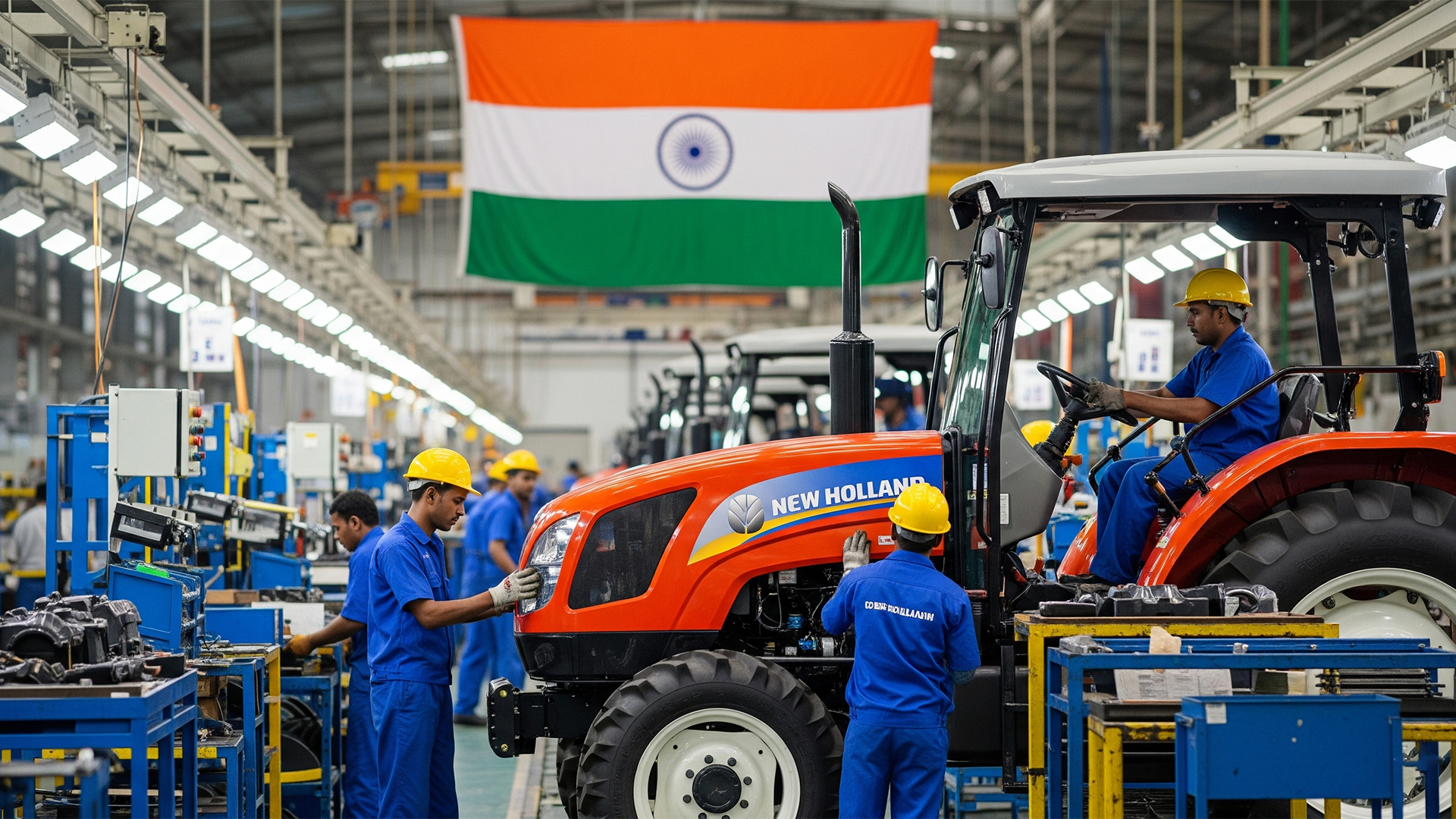
New Holland to Set Up Second Tractor Plant in India to Expand Market Share

New Holland to Set Up Second Tractor Plant in India to Expand Market Share

New plant to be larger than Greater Noida unit, boosting India’s role as a manufacturing and innovation hub.

Staff Writer

10 September 2025

CNH Industrial, the global agri-machinery and construction equipment giant, has announced plans to set up a second manufacturing plant for its New Holland tractor brand in India. The move signals the company’s growing commitment to strengthening its presence in the world’s largest tractor market.

The new facility will be larger than CNH’s existing 60-acre plant in Greater Noida, which currently produces up to 60,000 tractors annually and can be scaled to 70,000 units. In 2024, the plant manufactured around 51,000 tractors, of which 37,000 were sold in India and the remaining 14,000 were exported to key international markets, including the United States and Europe.

Speaking about the company’s expansion strategy, CNH Industrial CEO Gerrit Marx stated that India is now a central hub not just for manufacturing, but also for innovation and product development. “We are looking to double our market share in the Indian tractor segment over the next five years,” Marx said, underscoring the strategic importance of the new plant.

India’s tractor market, which sees annual sales of nearly 900,000 units, remains highly competitive. Despite its global footprint, New Holland currently holds a modest share of this segment, dominated by domestic players.

CNH’s investment in India is backed by strong business fundamentals. Its India operations generate approximately $1 billion in annual revenue, with 65% contributed by agriculture equipment, 32% by construction machinery, and the remainder by financial services.

Besides its Greater Noida plant, CNH operates a combine harvester facility in Pune, a construction equipment plant in Pithampur (Madhya Pradesh), and a technology development center in Gurugram.

The upcoming plant is expected to cater to both domestic demand and international exports, further positioning India as a manufacturing and innovation hub in CNH’s global strategy. The location and investment details of the new facility are expected to be disclosed soon.

Categories
Corporate

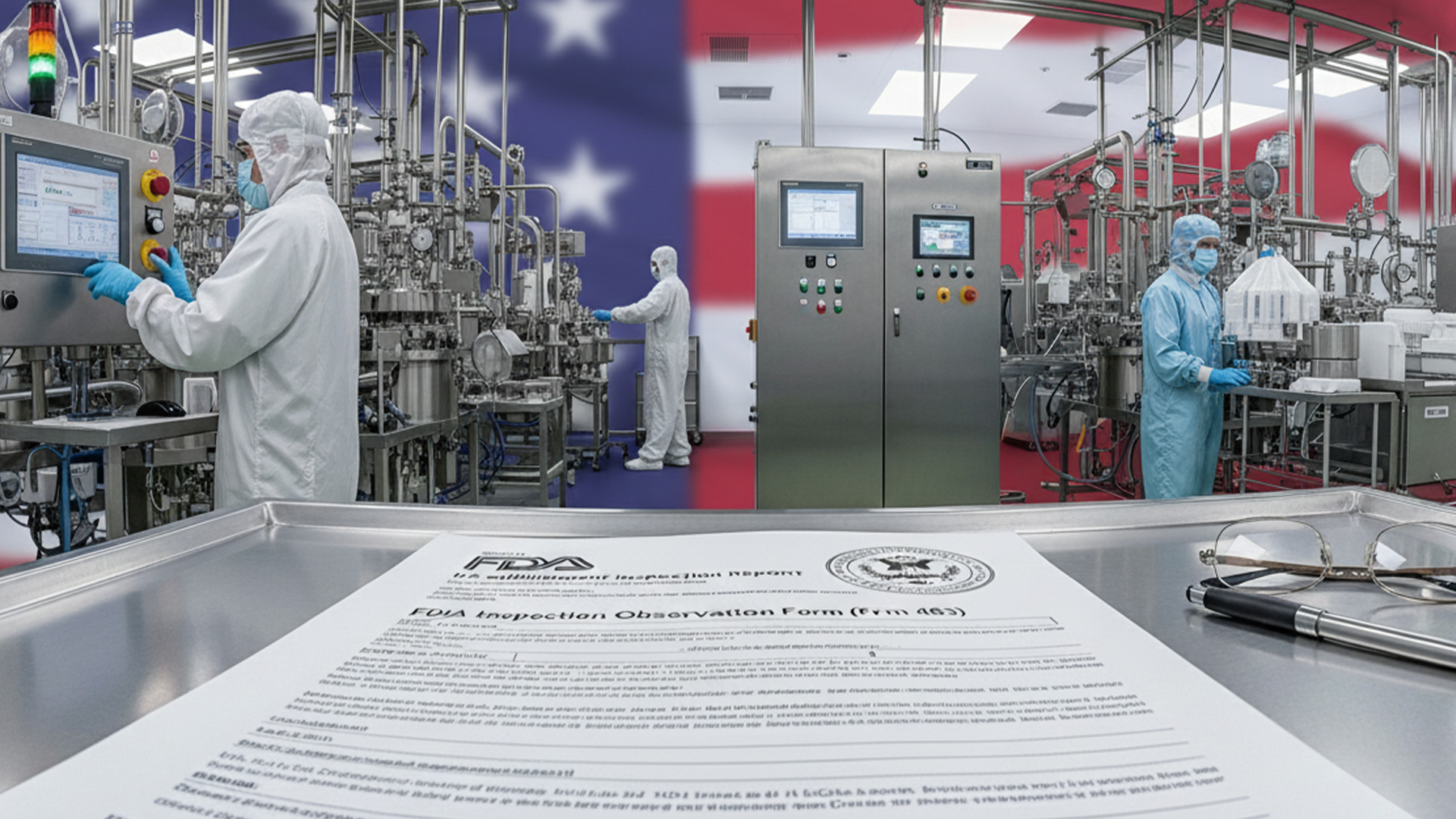
Sun Pharma’s Halol Plant Receives OAI Classification from U.S. FDA

Sun Pharma’s Halol Plant Receives OAI Classification from U.S. FDA

Regulatory concerns deepen as facility remains under import alert; company pledges corrective action

Staff Writer

10 September 2025

Sun Pharmaceutical Industries, India’s largest drugmaker, announced that its Halol manufacturing facility in Gujarat has been classified as “Official Action Indicated” (OAI) by the United States Food and Drug Administration (USFDA), following an inspection carried out from June 2 to June 13, 2025.

The OAI status implies that the regulator has found significant violations of current Good Manufacturing Practices (cGMP) at the site, and that regulatory or enforcement actions may follow if the company fails to address the concerns adequately.

The Halol plant is already operating under an import alert issued by the USFDA, which restricts most of its products from entering the U.S. market, except for select medicines exempted due to medical necessity or shortage. The new classification further complicates Sun Pharma’s efforts to bring the facility back into full regulatory compliance.

In a regulatory filing, Sun Pharma said it remains committed to working closely with the USFDA to resolve the issues. “The company is taking all necessary steps to address the observations and ensure sustained compliance,” it stated.

The Halol facility has been a key site for Sun Pharma’s exports to the U.S., one of its largest markets. However, it has faced recurring regulatory challenges over the years, impacting product approvals and supply timelines.

An OAI classification does not permit the approval of any pending drug applications linked to the site until the concerns are resolved, which could affect the company’s pipeline in the U.S.

Despite the regulatory setback, Sun Pharma said it continues to prioritize product quality and patient safety across all its manufacturing locations.

Categories
Corporate

Microsoft to Reinstate Hybrid Work Model: Office Presence Mandatory Three Days a Week

Microsoft to Reinstate Hybrid Work Model: Office Presence Mandatory Three Days a Week

The tech giant initially adopted a flexible work policy in late 2020 when employees started returning to offices after pandemic-related closures.

Staff Writer

10 September 2025

Microsoft has announced that beginning next year, employees will be required to work from the office at least three days a week. The policy will first apply to staff based near its Redmond, Washington headquarters and then be gradually extended to other U.S. locations and international offices, according to a blog post shared by the company on Tuesday.

The tech giant initially adopted a flexible work policy in late 2020 when employees started returning to offices after pandemic-related closures. Under that arrangement, employees were permitted to work remotely for at least half of their workweek without requiring formal approval. In practice, many employees continued to operate from home much of the time.

Microsoft’s new directive will be implemented in phases. Employees residing within 50 miles of its headquarters must report to the office three days a week by the end of February 2026. Additional details regarding timelines for other U.S. offices will be announced later, while planning for international teams is expected to begin in 2026, Microsoft’s chief people officer Amy Coleman explained in the blog.

Coleman acknowledged that the shift may feel seamless for some employees but could be a significant adjustment for others. “We want to provide ample time for thoughtful planning,” she stated.

The move aligns with a broader trend among major tech firms encouraging employees to return to physical office spaces. The remote work model, widely adopted during the COVID-19 pandemic, allowed many companies to operate virtually as health and safety concerns took priority.

However, companies are now reversing course as they seek greater collaboration and productivity. Microsoft’s approach follows similar steps taken by Amazon, which last year required employees to work on-site five days a week—an increase from its earlier three-day mandate. Amazon’s CEO of AWS, Matt Garman, emphasized the firmness of the policy, stating that employees who disagree with the new terms are free to leave.

As hybrid work arrangements face scrutiny, Microsoft’s phased return-to-office strategy signals a renewed focus on in-person interaction while attempting to ease employees through a gradual transition.

Categories
Corporate

Blue Jet Healthcare Launches OFS to Dilute Promoter Stake by Up to 6.83%

Blue Jet Healthcare Launches OFS to Dilute Promoter Stake by Up to 6.83%

Promoter Akshay Arora to Sell Stake Worth Up to ₹800 Crore to Meet Regulatory Norms

Staff Writer

10 September 2025

Blue Jet Healthcare Ltd has launched a two-day Offer for Sale (OFS) starting today, through which promoter Akshay Bansarilal Arora plans to offload up to 6.83% of his stake in the company. The move is aimed at complying with regulatory requirements mandating a minimum public shareholding of 25% in listed entities.

The offer includes a base issue of 3.42%, or approximately 59.26 lakh equity shares, with an option to additionally sell another 3.42% through oversubscription. At the floor price of ₹675 per share, the total deal size could reach up to ₹800 crore, offering a discount of 7.6%  compared to the previous closing price of ₹730.75.

The OFS will be conducted over two days, with non-retail investors able to place their bids on September 10 (T Day), including the option to carry forward any unallocated bids. Retail investors will be allowed to participate on September 11 (T+1), along with any rollover bids from the previous day.

As of June 30, 2025, the promoter group held a combined 86% stake in Blue Jet Healthcare. Akshay Arora holds 68.99%, while Shiven Akshay Arora and Archana Akshay Arora own 10.96% and 6.05%, respectively. The OFS is expected to help reduce the promoter holding closer to the regulatory ceiling of 75%.

The offer is being managed by ICICI Securities, Kotak Securities, Motilal Oswal Financial Services, and Nomura.

Categories
Corporate

Urban Company IPO Sees Robust Demand on Day 1

Urban Company IPO Sees Robust Demand on Day 1

The retail portion was fully subscribed in less than an hour, reflecting strong demand from individual investors.

Staff Writer

10 September 2025

Urban Company’s ₹1,900 crore initial public offering (IPO) opened for subscription on September 10, 2025, and has already attracted significant investor interest. 

By 11:30 a.m. on the first day, the issue was subscribed 83%, with bids received for 8.85 crore shares against 10.67 crore shares on offer, according to NSE data. The IPO comprises a fresh issue of ₹472 crore and an offer for sale (OFS) of ₹1,428 crore.

The retail portion was fully subscribed in less than an hour, reflecting strong demand from individual investors. The non-institutional investor (NII) category was subscribed 1 time, while the qualified institutional buyer (QIB) portion had received 20% subscription by mid-morning. Investors can bid for one lot of 145 shares and in multiples thereafter.

The IPO is priced in the band of ₹98 to ₹103 per share, with a face value of ₹1 per share. At the upper end of the price band, the company’s valuation is pegged at ₹14,790 crore. The issue will remain open for subscription until September 12, with share allotment expected by September 15 and listing on the BSE and NSE scheduled for September 17.

Urban Company, founded in 2014 as UrbanClap, offers a range of home and beauty services through its app, including cleaning, plumbing, appliance repair, beauty treatments, and massage therapy. The company has shown strong financial growth, with revenue from operations rising to ₹1,144.5 crore in FY25, up from ₹828 crore in FY24. Profit before tax for FY25 stood at ₹205.6 crore, with adjusted EBITDA turning positive.

The IPO has attracted interest from marquee investors, including Goldman Sachs, GIC, and Norges Bank, who participated in the anchor investor round, raising ₹854 crore ahead of the public subscription.

Categories
Corporate

Dev Accelerator Launches IPO to Raise ₹143 Crore for Expansion

Dev Accelerator Launches IPO to Raise ₹143 Crore for Expansion

Staff Writer
9 September 2025

Dev Accelerator Ltd., operating under the brand DevX, is set to launch its Initial Public Offering (IPO) on September 10, 2025. The company aims to raise up to ₹143.35 crore through the issuance of 2.35 crore fresh equity shares, priced between ₹56 and ₹61 each. The subscription window will close on September 12, with shares expected to list on the BSE and NSE on September 17.

DevX is a prominent player in India’s flexible workspace sector, offering co-working and managed office solutions across 11 cities, including Delhi-NCR, Mumbai, Hyderabad, and Pune. As of May 2025, the company operates 28 centers with a combined seating capacity of over 14,000, catering to more than 250 clients.

The IPO proceeds will be utilized for capital expenditure, including the establishment of new centers, and to reduce existing debt. The issue comprises entirely fresh shares, with no offer for sale by existing shareholders. The minimum bid lot is 235 shares, translating to an investment of approximately ₹13,160 at the lower end and ₹14,335 at the upper end of the price band.

In the unlisted market, the IPO is currently trading at a grey market premium of 13.11% over the upper issue price, suggesting positive investor sentiment ahead of the opening.

With a post-issue market capitalization estimated at ₹550 crore, Dev Accelerator’s IPO presents an opportunity for investors to participate in the growing flexible workspace industry in India.

Categories
Corporate

HUDCO Signs ₹11,300 Crore MoU with NMRDA to Boost Nagpur’s Urban Infrastructure

HUDCO Signs ₹11,300 Crore MoU with NMRDA to Boost Nagpur’s Urban Infrastructure

To fund land, housing, and infrastructure projects over five years.

Staff Writer

Housing and Urban Development Corporation (HUDCO) has signed a non-binding Memorandum of Understanding (MoU) worth ₹11,300 crore with the Nagpur Metropolitan Region Development Authority (NMRDA). The agreement aims to support key urban development initiatives, including land acquisition, affordable housing, road networks, and infrastructure projects across the Nagpur metropolitan region over the next five years.

The MoU was signed in Mumbai in the presence of Maharashtra Chief Minister Devendra Fadnavis and Deputy Chief Minister Eknath Shinde. In addition to funding, HUDCO will provide technical assistance, including project structuring, advisory services, and capacity building to help NMRDA execute these projects efficiently.

The deal marks one of HUDCO’s most significant regional engagements and aligns with its mission to promote sustainable urbanization across India.

HUDCO recently reported a strong financial performance for the June 2025 quarter, with revenue rising 34.2% year-on-year to ₹2,937.3 crore and net profit increasing 13% to ₹630.2 crore. Despite a 9% decline in stock value earlier this year, the shares have shown signs of recovery in recent weeks.

Categories
Corporate

Tesla’s U.S. Market Share Falls to Eight-Year Low Amid Rising EV Competition

Tesla’s U.S. Market Share Falls to Eight-Year Low Amid Rising EV Competition

The decline is attributed to intensified competition, with established automakers such as Hyundai, Honda, Kia, and Toyota offering significant incentives to boost their EV sales.

Staff Writer

Tesla’s market dominance in the U.S. electric vehicle (EV) sector is showing signs of erosion, as buyers increasingly turn to rival automakers offering more attractive EV options. According to data from research firm Cox Automotive, shared exclusively with Reuters, Tesla’s U.S. market share dropped to 38% in August 2025 — its lowest in nearly eight years and the first time it has fallen below the 40% mark since October 2017, when the company was ramping up production of its Model 3.

The decline is attributed to intensified competition, with established automakers such as Hyundai, Honda, Kia, and Toyota offering significant incentives to boost their EV sales. Many of these manufacturers reported a surge in demand, with monthly sales increases ranging from 60% to 120%, helping them expand their market share at a time when Tesla’s growth has stalled. The broader EV market grew by 14% in August, while Tesla’s growth rate slowed to just 3.1%, Reuters reported.

Tesla’s struggles come at a time when it is attempting to pivot its focus toward developing robotaxis and humanoid robots, delaying plans for more affordable EV models. The company’s last new vehicle launch, the Cybertruck in 2023, has failed to replicate the success of earlier models like the Model 3 and Model Y. Efforts to refresh the Model Y have not significantly improved sales, and Tesla appears headed toward a second consecutive year of declining deliveries.

The company’s reliance on price cuts and incentives to stimulate demand is also affecting its profit margins, raising concerns among investors. For years, Tesla’s ability to command premium prices had allowed it to maintain profitability, but the current market environment is forcing the company to choose between sustaining profits or boosting sales through higher incentives that erode its margins.

Adding to Tesla’s challenges are concerns over CEO Elon Musk’s political affiliations and activities. Musk’s involvement in efforts to reshape the U.S. government under President Donald Trump, followed by his departure from the administration and strained relations with the Republican leader, has reportedly impacted public perception of the brand.

Despite Tesla’s weakened market position, overall EV sales in the U.S. remain buoyed by the looming expiration of the $7,500 federal tax credit at the end of September. Many automakers, including Tesla, have rolled out aggressive deals to attract buyers in the lead-up to the cutoff. In July, sales of new EVs jumped by more than 24% month-over-month to over 128,000 units, with Tesla’s sales increasing by 7% to just over 53,800 units, according to the data shared with Reuters.

The shifting dynamics in the EV market underscore the growing pressure on Tesla as competitors leverage incentives and newer models to challenge its long-standing supremacy. Analysts expect this trend to continue through September, after which a decline in federal support may further reshape the competitive landscape. Tesla’s future trajectory may depend on how effectively it balances its ambitions in robotics and AI with the core demands of its automotive business in an increasingly crowded market.


Categories
Corporate

RailTel Secures ₹6,597 Crore Contract from Bihar Education Project Council

RailTel Secures ₹6,597 Crore Contract from Bihar Education Project Council

Major Boost to Digital Learning Infrastructure in Bihar

Sreelatha M

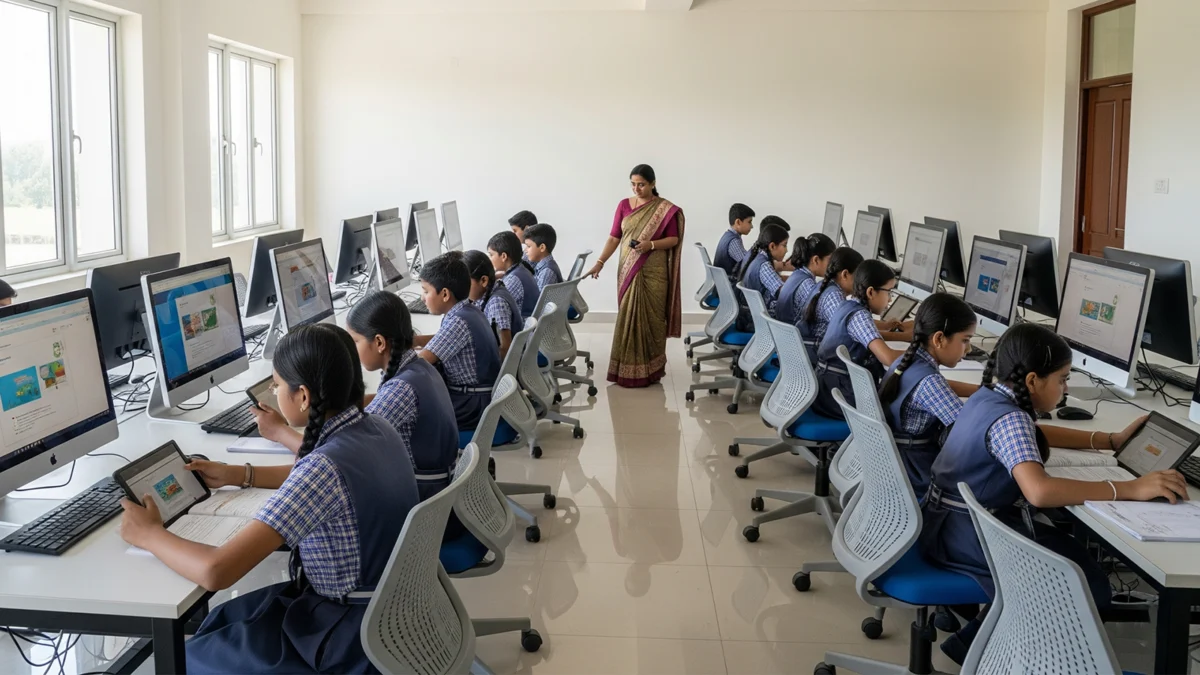
RailTel Corporation of India Ltd, a public sector undertaking under the Ministry of Railways, has been awarded a massive contract worth ₹6,597.56 crore by the Bihar Education Project Council (BEPC) for the implementation of digital infrastructure across schools in the state.

According to a regulatory filing by the company, the order includes the supply, installation, and maintenance of smart classrooms, ICT labs, teaching-learning materials, and ISM labs in government-run schools across Bihar.

The project encompasses several major components, including the installation of smart classrooms in senior secondary and middle schools, valued at ₹2,575.01 crore and ₹2,621.43 crore, respectively. Additionally, ₹899.19 crore has been allocated for providing teaching and learning materials for students in Classes 1 to 5. The project also includes setting up ICT labs worth ₹442.17 crore, along with ₹59.76 crore earmarked for the supply, installation, testing, and commissioning of ISM labs.

The projects are scheduled to be completed by March 31, 2026, with the ISM labs expected to be delivered by December 31, 2025.

RailTel confirmed that the order does not involve any related party transactions or dealings with promoter group entities. The deal marks a significant step in enhancing the digital education ecosystem in Bihar, aligning with national goals to strengthen e-learning infrastructure in government schools.