Categories
Corporate

Tata International Partners with Mercuria, Mitsubishi to Expand Global Trading, Distribution Reach

Tata International, the trading and distribution arm of the Tata Group, has announced two significant joint ventures with Swiss commodities firm Mercuria and Japan’s Mitsubishi Corporation, in a strategic move to expand its global footprint and sharpen its focus on high-growth sectors.

In the first deal, Mercuria will acquire a 51% stake in a new joint venture with Tata International, focused on the global trade of energy, metals, freight, and agricultural commodities. Tata will hold the remaining 49%. Both partners will invest proportionately in the capital structure of the new entity.

The partnership with Mercuria is aimed at strengthening Tata International’s trading capabilities, improving operational resilience, and expanding into high-potential markets, including Asia, Africa, and the Middle East. It also marks a strategic shift towards asset-light, partnership-driven growth models in response to increasing volatility in global supply chains and commodity markets.

In a parallel development, Tata International is investing $51 million for a 51% stake in a joint venture with Mitsubishi Corporation’s mobility division. Mitsubishi will hold 49% in the new entity, which will focus on the distribution of commercial vehicles, construction machinery, and agricultural equipment, particularly in African markets.

These two ventures align with Tata International’s broader strategy to realign its business around trading and distribution, moving away from capital-intensive operations. The company has already divested its leather and minerals businesses and exited several loss-making subsidiaries in recent years.

Despite strong revenue growth—from ₹16,367 crore in FY20 to ₹32,000 crore in FY25—Tata International reported a net loss of ₹477 crore in the last fiscal year. The company is betting on these joint ventures to restore profitability and improve long-term sustainability.

“These partnerships represent a new phase of growth, leveraging the global strengths of our partners while focusing on key markets and verticals,” said Anand Sen, MD & CEO of Tata International.

The transactions are subject to customary regulatory approvals and are expected to close in the coming months.

Also Read: Engineers India Secures ₹618 Crore Contract for Fertilizer Plant in Africa

Categories
Corporate

Instant Messaging App Hike Shuts Down Amid India’s Ban on Real-Money Gaming

Hike, the instant messaging app that later pivoted to a gaming platform, has become the latest casualty of India’s stringent crackdown on the real-money gaming (RMG) sector. Announcing the closure on September 13, 2025, founder Kavin Bharti Mittal, son of telecom mogul Sunil Bharti Mittal, confirmed that the company will cease all operations.

“We could raise capital, but the real question is: is it worth it? Is this a climb worth pivoting for? For the first time in 13 years, my answer is no—not for me, not for my team, and not for our investors,” Mittal wrote in a blog post. “This is both a disappointment and a hard outcome. But I choose to look on the bright side: the learnings are invaluable, and my conviction for what’s next is even stronger.”

Hike was originally launched in 2012 as a challenger to WhatsApp, aiming to attract younger users with a feature-rich messaging app. It amassed over 40 million monthly active users and, at its peak, was ranked the 35th most loved consumer brand in India. With backing from prominent investors like Tiger Global, SoftBank, and Tencent, the company achieved unicorn status in 2016 with a valuation of $1.4 billion. However, rising competition from global players and shifting user behavior forced Hike to sunset its messaging service in 2021.

In 2022, Hike re-entered the market with Rush, a gaming platform where users played casual games such as carrom and ludo for cash prizes. The venture was designed to test traction and unit economics in the Indian market while keeping the long-term vision broader. Over four years, Rush attracted over 10 million users and generated more than $500 million in gross revenue.

However, the introduction of the Promotion and Regulation of Online Gaming Act, 2025, spelled doom for Hike’s business model. The new legislation imposed a blanket ban on all forms of online money games—whether skill-based or chance-based—citing addiction, social fallout, and national security concerns. It carved out esports and subscription-based social games, but these areas weren’t aligned with Hike’s revenue streams. Several other players, including Dream11, Winzo, and Zupee, also exited the RMG space or diversified into areas like micro-dramas and financial services.

While Hike’s expansion into the U.S. market showed promise, Mittal acknowledged that scaling globally would require substantial reinvestment and restructuring—a move he deemed neither capital-efficient nor strategically worthwhile. “Scaling globally would require a full recap, a reset that is not the best use of capital or time,” he remarked.

Reflecting on the journey, Mittal encouraged entrepreneurs to steer clear of winner-take-all markets, build for emerging tech cycles, and seek regulatory clarity early on. “The world will eventually move toward a Nation-type model in gaming and Web3—Company 2.0. But crypto regulation is still developing globally, and we don’t want to repeat India, where we hoped for clarity that never came.”

Looking ahead, Mittal pointed to artificial intelligence and energy innovation as promising avenues for future ventures, signaling that the lessons learned from Hike’s rise and fall will inform the next phase of entrepreneurial exploration. Despite the setback, he remains optimistic about building new ventures in a more stable regulatory environment.

Also Read: Reliance Consumer to Invest ₹1,500 Crore in Nagpur Food Processing Plant by 2026

Categories
Corporate

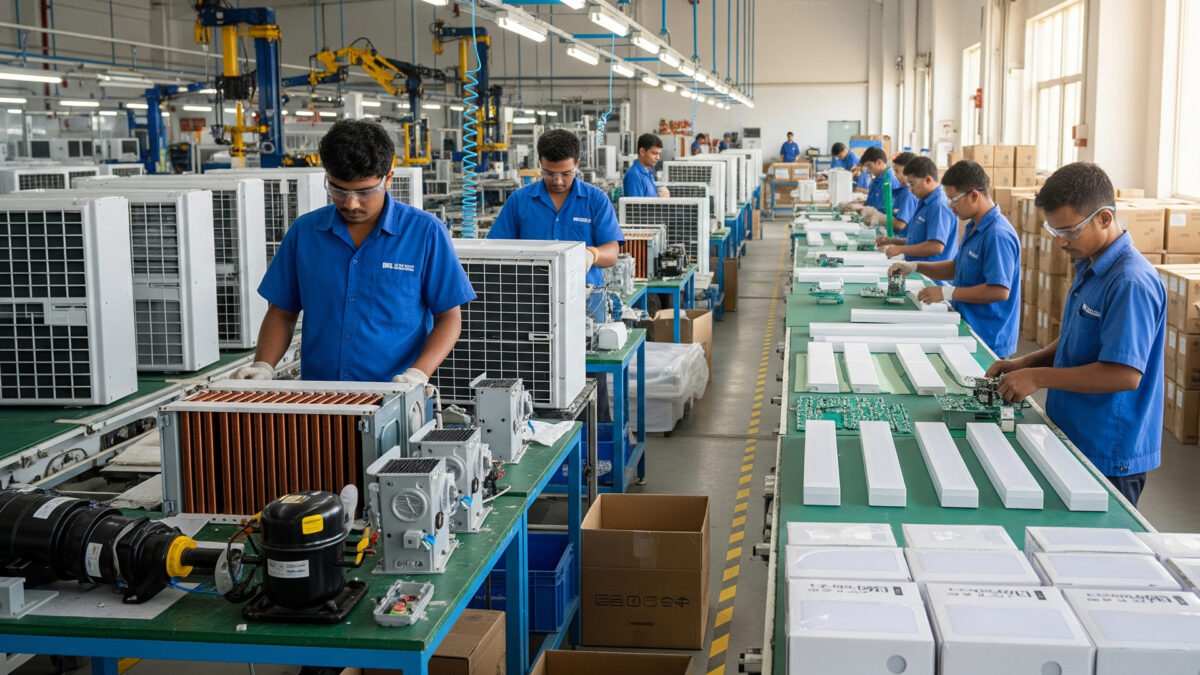
Government Reopens PLI Scheme for White Goods to Boost Local Manufacturing

With a strategic objective to boost local manufacturing and reduce import dependence, the Indian government has reopened the application window for its Production-Linked Incentive (PLI) scheme, focusing on white goods such as air conditioners (ACs) and LED lights. This decision is part of the broader Atmanirbhar Bharat initiative, which aims to strengthen the country’s manufacturing capabilities in key sectors. The decision reflects growing industry interest and the government’s determination to turn India into a global manufacturing hub for energy-efficient appliances.

The revised application window will remain open from September 15 to October 14, 2025. Both new and existing applicants are now eligible to participate. New entrants can apply by committing to higher investment targets or by choosing different segments under the scheme. Notably, new applicants will be eligible to receive incentives only for the remaining duration of the PLI scheme, which is set to conclude in the financial year 2028–29.

The PLI scheme for white goods was originally launched in April 2021 with a total outlay of ₹6,238 crore. So far, it has attracted 83 applicants, who have collectively proposed investments worth ₹10,406 crore. These investments are expected to significantly enhance the domestic manufacturing capacity for key components, many of which are currently imported due to insufficient local production capabilities.

Applicants under the scheme are required to propose investment plans that align with the government’s objective of reducing import dependence and strengthening the supply chain of white goods within India.

Industry analysts see this extension as a timely measure, especially considering the growing domestic market for energy-efficient appliances and the government’s push for Atmanirbhar Bharat (self-reliant India).

Also Read: Instant Messaging App Hike Shuts Down Amid India’s Ban on Real-Money Gaming

Categories
Corporate

Shares of KRBL Plunge Over 9% Following Governance Issues

Shares of KRBL, one of India’s leading basmati rice producers, fell sharply by over 9% on September 15, 2025, after the company disclosed that an independent director resigned citing serious governance issues. The sharp decline reflects growing investor unease over the board’s functioning and transparency.

Anil Kumar Chaudhary resigned from KRBL’s board with immediate effect on September 8, 2025. The company informed stock exchanges the next day, but it was only on September 14 that the resignation letter was shared in full. In the letter, Chaudhary expressed concern that “certain issues” had persisted despite efforts to resolve them, posing “professional and ethical dilemmas” and making it difficult for him to contribute meaningfully to the board’s governance as expected of an independent director.

Chaudhary pointed to several specific governance lapses, including “inconsistencies” in recording board and committee meeting minutes and instances where information was withheld, affecting informed decision-making. He also raised red flags about financial irregularities, such as “unjust write-offs” of export receivables without proper deliberation and questionable use of CSR funds. Furthermore, he noted “arbitrary distribution” of variable pay and increments, significant changes to the company’s object clause without comprehensive discussion, and undue interference by invitees during meetings.

One of the most serious concerns raised was that dissent on the board was “suppressed or sidelined,” which, according to Chaudhary, compromises both professional ethics and obligations under Indian corporate governance standards. He added, “Effective governance and truly independent oversight are essential ingredients for safeguarding stakeholder interests, and I find the prevailing dynamics of the Board to be inconsistent with these principles.”

The resignation and the issues highlighted have unsettled investors, contributing to the steep selloff in KRBL’s stock. Despite this setback, the company’s shares have gained more than 32% so far this year, buoyed by strong performance metrics. In the June quarter, KRBL’s export revenue surged 98% year-on-year to ₹489 crore, while total revenue rose to ₹1,584 crore. The company reported an EBITDA of ₹225 crore and a net profit of ₹151 crore, reflecting robust growth driven by export demand.

As of now, KRBL has not responded to the allegations made by the outgoing director. With governance concerns now in focus, investor confidence in the stock is likely to remain fragile until further clarity emerges.

Also Read: FSIB Recommends Ravi Ranjan as Managing Director of State Bank of India

Categories
Corporate

Engineers India Secures ₹618 Crore Contract for Fertilizer Plant in Africa
Engineers India Limited (EIL), a public sector enterprise under India’s Ministry of Petroleum and Natural Gas, has been awarded a major international contract valued at ₹618 crore. The contract involves providing Project Management Consultancy (PMC) and Engineering, Procurement, and Construction Management (EPCM) services for the construction of a new fertilizer plant in Africa. The project is expected to be completed within a 24-month timeframe.

Although the specific location of the project and details about the client remain undisclosed due to confidentiality agreements, this contract marks a significant expansion of EIL’s global presence, particularly in the African market. The company’s expertise in offering comprehensive engineering solutions positions it as a strong contender for such large-scale infrastructure projects in emerging economies.

The announcement of this contract has had an immediate positive effect on the company’s stock performance. Shares of Engineers India Limited rose by approximately 2.75%, reaching ₹214.55 on the Bombay Stock Exchange. The increase reflects investor confidence in the company’s ability to secure and successfully execute high-value international projects.

This development reinforces EIL’s growing reputation in the global engineering and construction sector. With its proven track record in delivering complex projects, the company is seen as a reliable partner for industrial development initiatives. Successfully executing this fertilizer plant project could open doors for more opportunities in similar regions, further strengthening EIL’s portfolio and contributing to its long-term growth.

The project is also aligned with the broader goals of supporting industrial expansion and sustainable development in developing markets. By providing engineering and project management services, Engineers India will contribute to enhancing local infrastructure and improving agricultural productivity, crucial for economic growth in Africa. The project not only highlights the company’s technical capabilities but also positions it strategically for future collaborations in global markets, ultimately aiding in its sustained growth and industry leadership.

Also Read: FSIB Recommends Ravi Ranjan as Managing Director of State Bank of India

Categories
Corporate

Reliance Consumer to Invest ₹1,500 Crore in Nagpur Food Processing Plant by 2026

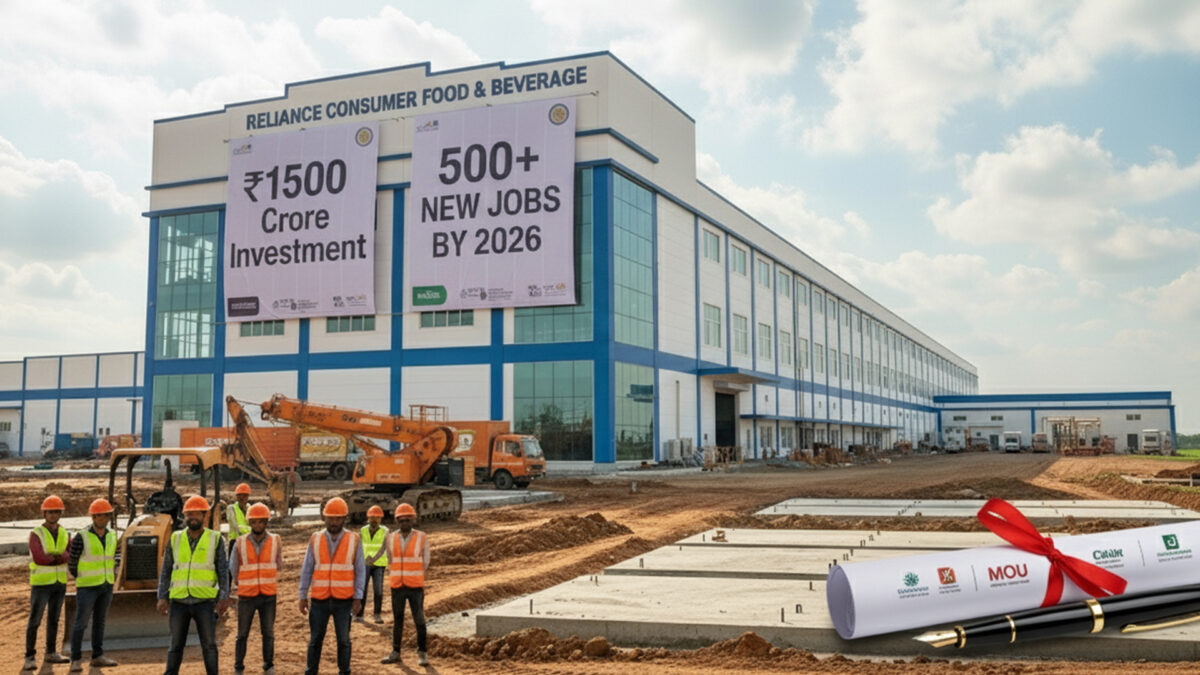
Reliance Consumer Products Ltd (RCPL), the FMCG arm of Reliance Industries Limited, has announced a significant investment of over ₹1,500 crore to set up a state-of-the-art integrated food and beverage manufacturing facility in Katol, near Nagpur, Maharashtra. The new unit is slated to be operational by 2026 and is expected to create more than 500 direct jobs.

The investment forms part of RCPL’s aggressive expansion strategy in the food processing sector, aimed at strengthening its footprint in the fast-growing FMCG market. The company has recently signed a Memorandum of Understanding (MoU) with the Maharashtra government, which has pledged to provide all necessary approvals, clearances, and financial incentives to facilitate the project.

RCPL has seen rapid growth since its inception, crossing ₹11,000 crore in revenue within just three years, fueled by its strong retail network and expanding portfolio of brands. The upcoming Nagpur facility will bolster the company’s manufacturing capabilities and support its ambition to become a leading player in India’s FMCG landscape.

The Maharashtra government, keen on attracting major industrial investments to drive economic growth and employment, welcomes Reliance’s commitment. This move aligns with the state’s broader objective to develop Nagpur and its surroundings as a hub for food processing and allied industries.

With this investment, Reliance Consumer Products not only aims to meet rising consumer demand for packaged foods but also contribute to regional industrial development and job creation, reinforcing Maharashtra’s position as a preferred investment destination.

Categories
Corporate

JBM Auto’s Shares Surge Following $100 Million IFC Investment in Electric Bus Expansion

JBM Auto’s stock experienced a significant surge today, September 12,  climbing 7.8% to ₹674.20 per share on the BSE. This uptick followed the announcement that its subsidiary, JBM Ecolife Mobility, secured a $100 million investment from the International Finance Corporation (IFC), a member of the World Bank Group. The funding is earmarked for expanding electric bus operations across India, underscoring investor confidence in JBM Ecolife’s growth prospects and sustainability initiatives. This funding marks one of the largest investments in India’s electric mobility sector and is aimed at accelerating the expansion of electric bus operations across the country.

The IFC’s investment is part of a larger $137 million commitment to support sustainable public transportation initiatives in India, including backing for GreenCell Mobility, another key player in the electric vehicle space. The infusion of capital is expected to boost the deployment of thousands of electric buses, helping to modernize India’s urban transport infrastructure and reduce carbon emissions.

JBM Ecolife Mobility currently operates electric buses in multiple Indian cities such as Mumbai, Delhi, Ahmedabad, Surat, Bhubaneswar, Hyderabad, and Cuttack. With this new funding, the company plans to increase its fleet to over 6,500 electric buses in the next two years. The expansion will be supported by a cutting-edge manufacturing facility located in the Delhi-NCR region, which has the capacity to produce 20,000 buses annually.

This investment aligns with India’s broader sustainability goals and reflects growing investor confidence in the country’s electric vehicle ecosystem. As the government pushes for greener urban mobility solutions, JBM Auto is well-positioned to play a pivotal role in the transition to cleaner public transportation.

Categories
Corporate

Bharat Forge Partners with UK’s Windracers to Deploy Advanced Cargo UAVs in India

Bharat Forge has entered into a strategic partnership with UK-based Windracers Limited to bring the ULTRA unmanned aerial vehicle (UAV) technology to India. The agreement, formalized through a Memorandum of Understanding (MoU) at the DSEI UK 2025 defence exhibition in London, aims to enhance India’s UAV capabilities by localizing production and operational deployment.

The initial two-year pact focuses on jointly conducting trials, localizing the ULTRA UAV platform, and developing tailored deployment strategies to meet the diverse needs of Indian defence and civil sectors. This collaboration supports the broader framework of the UK-India Free Trade Agreement and aligns with the India-UK Vision 2035 initiative to foster technological innovation and strategic cooperation.

Amit Kalyani, Joint Managing Director of Bharat Forge, emphasized that the partnership will significantly boost India’s indigenous UAV capabilities and address critical logistics challenges across difficult terrains. The ULTRA UAV, already proven in extreme environments such as Antarctic research missions, is well-suited for a variety of applications, including Carrier On Board Delivery (COD) operations for the Indian Navy, and logistical support for the Indian Army and Air Force.

Simon Muderack, CEO of Windracers, highlighted that this collaboration represents a key milestone in expanding the operational reach of ULTRA UAVs, offering strategic advantages and operational independence to Indian defence and civilian agencies.

This partnership reflects Bharat Forge’s commitment to advancing India’s defence and aerospace sectors through innovation and international partnerships, paving the way for future growth and technological self-reliance.

Categories
Corporate

Infosys Shares Rise Over 2% After ₹18,000 Cr Buyback Approval

Infosys Ltd shares rallied over 2% in early trade on Thursday after the IT services major announced a substantial ₹18,000 crore share buyback,  its largest to date, in a move aimed at returning surplus capital to shareholders and boosting investor confidence.

The company’s board has approved the repurchase of up to 10 crore fully paid equity shares, representing approximately 2.41% of its total paid-up capital. The buyback will be conducted via the open market route at a maximum price of ₹1,800 per share, nearly 19% above Wednesday’s closing price of ₹1,509.50 on the BSE.

Following the announcement, Infosys stock opened higher and touched an intraday high of ₹1,544.65, before settling around ₹1,532 by 9:20 AM.

This marks the fifth buyback by the Bengaluru-based IT giant and nearly doubles the value of its 2022 program, which was capped at ₹9,300 crore. Backed by a strong balance sheet and steady cash flows, with a reported free cash flow of $884 million (₹7,805 crore) for the quarter ended June 2025, the company is well-positioned to fund the buyback without impacting its operational investments.

In a parallel development, Infosys also announced a long-term strategic partnership with U.S.-based HanesBrands Inc. The 10-year engagement is aimed at enhancing productivity and driving efficiency through AI-led digital transformation initiatives. This deal signals Infosys’ continued push to deepen client relationships and scale its AI offerings across verticals.

Despite the positive momentum, Infosys shares remain under pressure on a longer horizon, having declined 19% year-to-date and around 21% over the last 12 months. However, analysts view the buyback and the new client win as strong signals of management’s confidence in the company’s fundamentals and growth roadmap.

As India’s IT sector continues to navigate global macroeconomic headwinds, strategic moves like these could help Infosys sustain investor interest and reinforce its commitment to long-term value creation.

Categories
Corporate

Marico Acquires Full Control of True Elements with ₹138 Crore Buyout

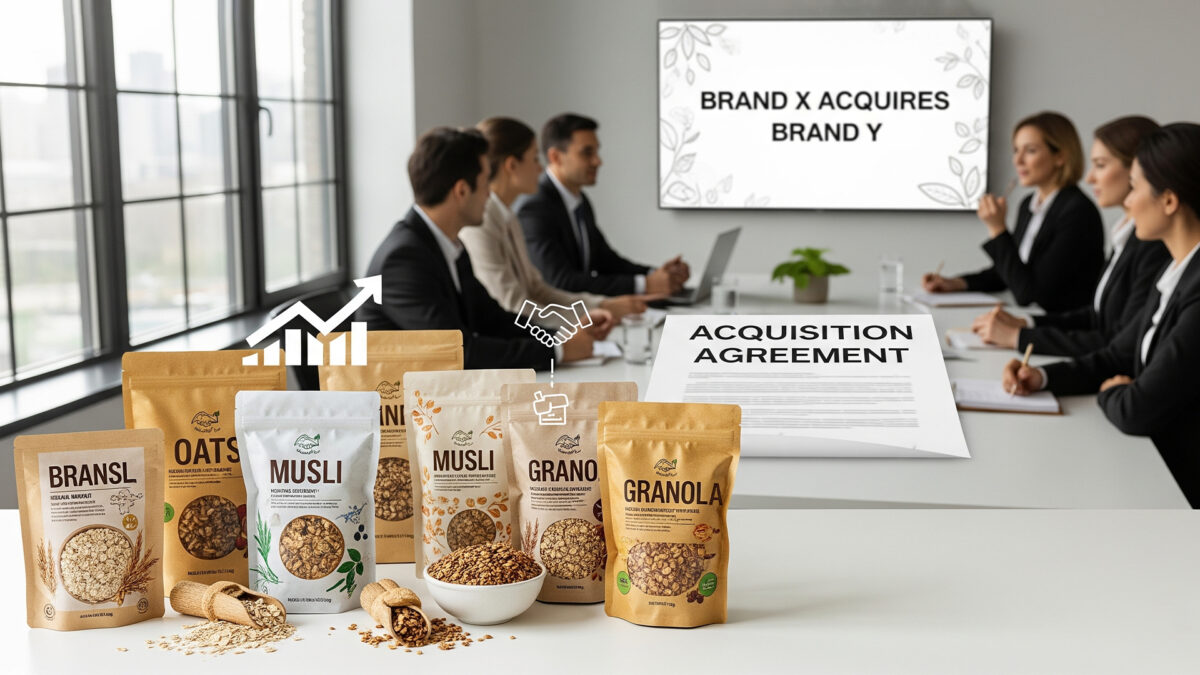
Marico Limited has announced its plan to acquire the remaining 46.02% stake in HW Wellness Solutions Pvt. Ltd., the parent company of the digital-first health food brand True Elements, for ₹138 crore. This transaction will increase Marico’s ownership from 53.98% to 100%, making HW Wellness a wholly-owned subsidiary. The acquisition is expected to be completed by September 30, 2025, subject to customary approvals.

Founded in 2013 by Puru Gupta and Sreejith Moolayil, HW Wellness has become a leading name in India’s healthy breakfast and snacks market. True Elements offers a diverse range of clean-label products such as oats, muesli, granola, and roasted seed mixes, aimed at health-conscious consumers. The brand has built a strong presence through online platforms and is now available in over 12,000 retail outlets across the country.

Marico’s initial investment in HW Wellness in May 2022, when it acquired a majority stake of 53.98%, marked its entry into the health foods sector. The full acquisition reflects the company’s broader strategy to strengthen its foothold in the fast-growing health and wellness segment by leveraging True Elements’ innovative product portfolio and digital-first approach.

True Elements has seen robust growth in recent years. Its turnover rose from ₹57.40 crore in FY23 to ₹76.42 crore in FY24 and further to ₹164.38 crore in FY25, underscoring the increasing consumer appetite for nutritious and convenient food products.

For Marico, this acquisition represents a strategic expansion that complements its existing portfolio. By integrating True Elements’ offerings with its established distribution network, Marico aims to enhance its position in the health foods market and tap into evolving consumer trends. The partnership will allow the company to scale operations, introduce new products, and strengthen its brand presence.

The acquisition also signals Marico’s commitment to diversifying its business and entering new growth areas. As health and wellness continue to be key consumer priorities, Marico’s strengthened presence through True Elements positions it well to meet these demands.

As the transaction moves toward completion, industry observers will watch closely to see how Marico leverages this acquisition to drive long-term growth and innovation in the health foods space. With this move, the company is poised to further capitalize on emerging trends and consumer preferences in India’s dynamic food industry.