Categories
Corporate

Paytm top officials pay Rs 3.32 crore to settle SEBI norms violations

Paytm top officials pay Rs 3.32 crore to settle SEBI norms violations

The settlement amount proposed by SEBI's advisory committee was subsequently approved by the whole-time members panel

Staff Writer

The senior executives at One97 Communications, the company behind Paytm, have submitted fines to the Securities and Exchange Board of India (Sebi) to resolve accusations of breaching regulations. The allegations relate to providing advantages to Vijay Shekhar Sharma, CEO of Paytm, and his family members, as well as approving and signing public offering documents that contained inaccurate information and incomplete disclosures about the promoting entity.

The settlement order was issued by Sebi on January 17. The settlement amount proposed by SEBI's advisory committee was subsequently approved by the whole-time members panel.

Former compliance officer Amit Khera and several former members of the board, including independent directors Ashit Ranjit Lilani, Neeraj Arora, Mark Schwartz, and Pallavi Shardul Shroff, as well as former directors Douglas Feagin, Munish Varma, and Ravi Chandra Adusumalli, collectively settled allegations of violations against Listing Regulations and Public Issue Regulations of the market regulator by paying over Rs 3.32 crore.

The regulator's six-page order stated that Khera did not ensure compliance with the regulatory provisions applicable to the listed entity as per the LODR Regulations, 2015. Additionally, independent directors Lilani and Arora, who are part of the NRC, did not fulfill their duties impartially and independently when making decisions related to benefits for the company's MD & CEO Vijay Shekhar Sharma and his relatives, as outlined in the order.

The market regulator issued a show-cause notice in May 2024, accusing the NRC of neglecting their duties in an impartial and independent manner. Furthermore, the former board members were alleged to have endorsed and executed offer documents containing inaccurate statements and inadequate disclosures.

The offer documents were approved and signed by the directors, despite containing incorrect statements and incomplete disclosures, as observed. Subsequently, their applications were presented to the Internal Committee of Sebi during its meeting on August 27, 2024.

 

Categories
Corporate

Export hub to support other geographies: ABB CEO sees India becoming its third largest market

Export hub to support other geographies: ABB CEO sees India becoming its third largest market

India is one of the most important markets with large infrastructure projects in the pipeline, and according to ABB CEO Morten Wierod, it will become the third largest revenue generator in the next three to four year


Staff Writer

India will become the third largest revenue generator in the next 3-4 years after US and China as the country focuses on building massive transport, power and renewable energy infrastructure, said electrification and automation solutions provider ABB Group’s President and CEO Morten Wierod.

The Switzerland-based company is looking to expand its footprint in India by collaborating on newer revenue streams such as data centres, green hydrogen, and renewable grid integration.

India being the fifth largest revenue contributor to ABB caters to Asia Pacific while contributing to 10-11% of the company’s global export market. “The US and China are the top markets, and India will become the third soon. We have seen strong growth in India in automation, which is way more than GDP growth. In India, it is most important to be a leader in the domestic market. If you can make it here, you can make it anywhere and we see India as an export hub to support other geographies,” Wierod told Business Today.

He said that ABB focuses on local for local and 90% of its product offerings in India are designed and manufactured locally.

On the company’s India operations, Wierod said he met with different industry players, including Reliance, Tata, and Hindalco, who are looking at expansion while remaining competitive and looking to decarbonise operations.

“We are helping them in electrification and automation and decarbonise by transitioning from fossil-based power. Automation will make them more productive and increase energy efficiency. The companies are looking at renewable and nuclear energy through small modular reactors,” Wierod said.

ABB caters to diverse businesses through its 23 market segments. The high-growth segments, such as data centres, railways, and electronics, are growing at 20%; moderate growth segments like water, power T&D, renewable, automobiles, and buildings and infra are witnessing 10-12% growth; while low-growth segments, such as base industries, are growing at less than 10%.


Categories
Corporate

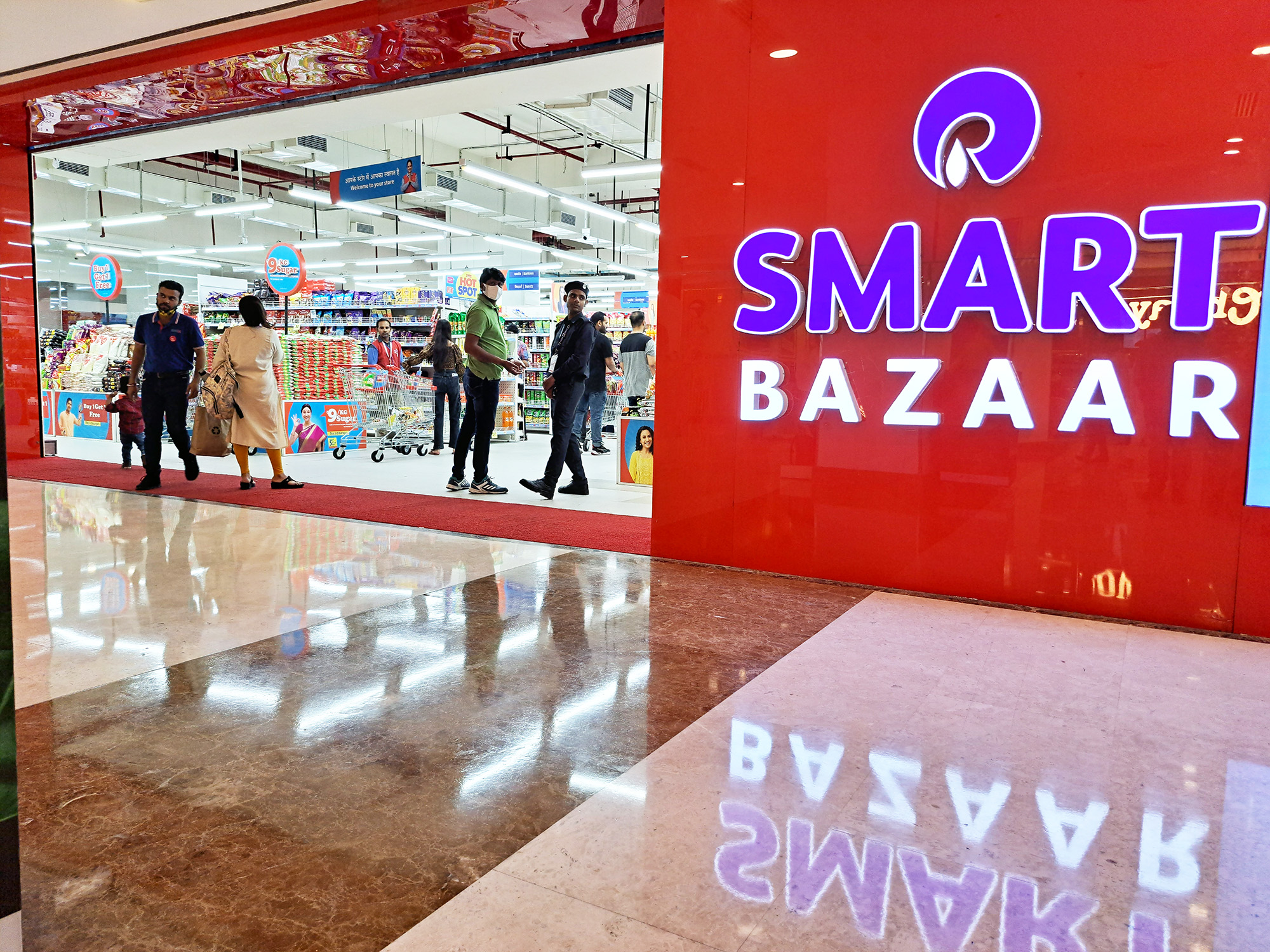
Reliance Retail Ventures PAT rise 10% driven by JioMart, grocery business in Q3 FY25

Reliance Retail Ventures PAT rise 10% driven by JioMart, grocery business in Q3 FY25

Operating revenue also grew by 7% compared to the previous year, reaching Rs 79,595 crore from Rs 74,373 crore. This resulted in a 3.3% increase in revenue from operations

Staff Writer

Reliance Retail Ventures Ltd., the consumer arm of the diversified conglomerate Reliance Group led by Mukesh Ambani, reported a 10% year-on-year increase in its profit after tax (PAT) for the quarter ending on December 31, 2024. During this period, Reliance Retail Ventures' (RRVL) PAT was Rs 3,458 crore, up from Rs 3,145 crore in the same quarter the previous year.

Operating revenue also grew by 7% compared to the previous year, reaching Rs 79,595 crore from Rs 74,373 crore. This resulted in a 3.3% increase in revenue from operations to Rs 212,357 crore for the nine-month period between April and December 2024, up from Rs 205,469 crore reported in the same period the previous year.

“Retail segment delivered a strong performance, with noteworthy contribution from all formats. The business ably capitalized on the pick-up in consumption amid festive demand during the quarter,” Mukesh Ambani, Chairman & Managing Director, Reliance Industries said in a statement.

In the third quarter of fiscal year 2025, RRVL improved its earnings before interest, tax, depreciation, and amortization (EBITDA) by 9.8% year-on-year to Rs 6,828 crore, up from Rs 6,238 crore. The EBITDA margin remained at 8.6%, an increase of 20 basis points from 8.4% in the third quarter of fiscal year 2024, but decreased by 20 bps sequentially. One basis point is equivalent to one hundredth of a percentage point.

Despite being a festive quarter, footfall in Reliance's retail outlets decreased from the previous quarter. During the last quarter, the company recorded 296 million footfall in its stores, down from 297 million in the second quarter of fiscal year 2025, while it increased by 5% year-on-year from 282 million in the third quarter of fiscal year 2024.

According to Ambani, a superior understanding of customer needs and preferences enabled Reliance Retail to serve a wide variety of demographic profiles “with the right product, at the right time, through the right channel”. “With customer-centric innovation at its core, the business constantly endeavors to enhance the shopping experience of its customers through its vast reach and a constantly expanding product basket,” he added.

While RRVL added 779 new stores to its portfolio, bringing the total number of stores under its umbrella to 19,102, the area operated by the retail major decreased sequentially. In Q3, the area operated stood at 77.4 million square feet, down from 79.4 million sq.ft. in Q2 but up from 72.9 million sq.ft. in Q3 of FY2024.

According to the company, its grocery business grew at a healthy pace of 37% y-o-y led by big box format. There was growth across categories, with general merchandise and value apparel growing at 20% y-o-y and premium personal care and beauty growing 16% y-o-y while Metro business achieved highest ever festive sales, it said. JioMart expanded the product range with a 33% y-o-y increase in the seller base while Milkbasket reported 20% y-o-y growth in monthly active users and 24% y-o-y growth in its GMV.

Consumer brands continued to deliver growth across categories with nine month FY2025 revenue at Rs 8,000 crore. Campa & Independence – two of its flagship fast moving consumer goods brands gained traction across markets. According to the company, Campa has over 10% market share in sparkling beverage category in select states. Both brands are projected to cross Rs 1,000 crore turnover each in FY25.

“Reliance Retail delivered strong performance during the quarter led by festive buying across consumption baskets. Our focus on offering wide range of products at an attractive price value proposition continues to draw customers to our stores and digital platforms. We are creating through JioMart – express deliveries, scheduled deliveries coupled with Milkbasket – subscription services, a seamless shopping experience that serves diverse customers across all categories and catchment,” said Isha Ambani, Executive Director, RRVL.

Categories
Corporate

Adani Wilmar OFS: Adani group raises Rs 4,850 crore from 13.5% stake sale

Adani Wilmar OFS: Adani group raises Rs 4,850 crore from 13.5% stake sale

Earlier, Adani Group announced sale of 17.54 crore shares (13.50 per cent equity) in the company on January 10 (to non-retail investors) and on January 13 (to retail investors) at a floor or minimum price of Rs 275 apiece

Staff Writer

Adani Group has raised Rs 4,850 crore from the sale of 13.5 percent of its stake in Fortune oil maker Adani Wilmar as part of a strategy to exit non-core activities to focus on main infrastructure business. 

On January 9, the group had announced sale of 17.54 crore shares (13.50 percent equity) in the company on January 10 (to non-retail investors) and on January 13 (to retail investors) at a floor or minimum price of Rs 275 apiece. The offer for sale (OFS) included an option to additionally sell up to 8.44 crore shares, or 6.50 percent equity. 

Adani Commodities LLP, a subsidiary of Adani Enterprises Ltd, completed the offer for sale (OFS) for 13.5 percent stake in Adani Wilmar to non-retail investors on January 10, according to information available from stock exchange filings. The transaction saw massive demand from a diverse set of marquee international and domestic investors with over 100 investors participating in the transaction.

“We wish to intimate the stock exchanges of our intention to exercise the oversubscription option in the offer to the extent of 1.96 crore equity shares (representing 1.51 percent of the total issued and paid-up equity share capital of the company) in addition to 17.54 crore equity shares (representing 13.50 per cent of the total issued and paid-up equity share capital of the company) forming part of the base offer size,” the group said in a filing. 

Accordingly, the aggregate number of offer shares will be up to 19.50 crore (15.01 percent) of which, up to 1.95 crore (1.50 percent) would be available as part of the offer on January 13, it added. 

The conglomerate had announced its exit from Adani Wilmar in December 2024 by selling the bulk of its stake to a joint venture partner.

Post the successful completion of the OFS, Adani Wilmar has completed its programme for compliance with minimum public shareholding (MPS) norms, with promoters holding 74.37 percent, and the balance 25.63 percent held by public shareholders. 

Adani Wilmar Ltd is an equal joint venture between Adani Group and Singapore-based commodity trader Wilmar. The two partners own a combined 87.87 percent of Adani Wilmar, far above the maximum permissible 75 percent. 

SEBI rules mandate that large firms must have at least 25 percent of shares available to the public within three years from listing.

This transaction follows the agreement between Adani Enterprises Ltd (AEL) and Wilmar announced on December 30, 2024, pursuant to which Wilmar agreed to acquire AEL’s stake in AWL post-achievement of compliance with MPS norms. 

The OFS is the first phase of the port-to-power conglomerate’s exit from Adani Wilmar Ltd (AWL) in which it holds 43.94 percent. In the second phase, Singapore's Wilmar International Ltd has agreed to acquire the residual stake at a price not exceeding Rs 305 apiece. 

On December 30, Adani announced its exit from the company which makes Fortune brand cooking oil, wheat flour and other food products. As per that announcement, Adani will sell up to 40.37 crore shares (31.06 per cent stake) to Wilmar at no more than Rs 305 apiece. The number of shares to be sold to Wilmar will depend on the response to the OFS. The transaction is expected to conclude before March 31, 2025. 

SBI Capital, Jefferies, ICICI Securities, Nuvama, Antique, and Monarch acted as bankers to the OFS. 

With this transaction, the Adani Group has raised total equity capital of $3.15 billion this financial year. AEL had earlier raised $500 million in October 2024, by way of qualified institutional placement route. As a combination, AEL will have a $2.5-billion war chest to fully fund AEL and further turbo charge its incubation portfolio and sharpen its focus on underlying infrastructure platforms, including airports, roads, data centres, green hydrogen. 

Established in 1999, Adani Wilmar makes Fortune brand cooking oil, wheat flour, pulses, rice and sugar. It owns 23 plants across 10 states. The FMCG firm posted a consolidated total income of Rs 51,555.24 crore during the last fiscal. Its market capitalisation on stood at nearly Rs 42,000 crore (around $5 billion) on January 6. 


Categories
Corporate

Bombay Shaving Company founder Shantanu Deshpande exposes India’s widening wealth gap

Bombay Shaving Company founder Shantanu Deshpande exposes India’s widening wealth gap

Deshpande refuses to hold back while discussing the wealth divide, highlighting how just 2,000 families control 18% of India’s wealth yet contribute far less than 1.8% of the country’s taxes

Staff Writer

Shantanu Deshpande, founder and CEO of Bombay Shaving Company, shared a stark reflection on Indian work culture in a recent LinkedIn post. His unfiltered critique touched on the realities of the workforce, wealth inequities, and the deeply ingrained “work hard” ethos that has driven economies for centuries.

“If financial security were guaranteed, 99% wont show up to work the next day,” he stated, challenging the fundamental motivations that fuel the nation’s labor force. From gig workers to government employees, Deshpande observed a near-universal dissatisfaction, adding, “The story is the same. 19-20 ka farak.”

Deshpande didn’t hold back when discussing the wealth divide, highlighting how just 2,000 families control 18% of India’s wealth yet contribute far less than 1.8% of the country’s taxes. “That’s just INSANE,” he exclaimed. He questioned the morality of a system where the majority toil endlessly to sustain their families while a few benefit disproportionately.
 

Categories
Corporate

WeWork India CEO apologises after Gurugram backlash, sparks larger debate about customer service

WeWork India CEO apologises after Gurugram backlash, sparks larger debate about customer service

The co-working space has come under fire after Alok Jain, founder of WeekendInvesting, criticises the company's sales approach

Staff Writer

Karan Virwani, CEO of WeWork India, responded with a public apology, acknowledging that the experience fell short of the company’s standards.

WeWork’s co-working space in Gurugram has come under fire after Alok Jain, founder of WeekendInvesting and an IIT alumnus, criticised the company's sales approach. Jain shared his dissatisfaction on social media platform X, accusing WeWork’s sales representative of adopting a high-handed attitude during an inquiry for office space at the Golf Course Road facility.

WeWork’s co-working space in Gurgaon has come under fire after Alok Jain, founder of WeekendInvesting and an IIT alumnus, criticised the company's sales approach. Jain shared his dissatisfaction on social media platform X, accusing WeWork’s sales representative of adopting a high-handed attitude during an inquiry for office space at the Golf Course Road facility.

The post quickly gained traction, amassing over 90,000 views and sparking a wave of comments, with many users sharing similar experiences. One commenter noted, “Sales processes have checklists, but the tone and approach matter. Some salespeople are not trained to handle larger accounts.” Another echoed Jain’s frustrations, saying, “Their sales folks have become too arrogant in recent years.”

Karan Virwani, CEO of WeWork India, responded with a public apology, acknowledging that the experience fell short of the company’s standards. “Dear Alok, I sincerely apologize for the experience you had with our customer service team,” Virwani wrote. “While our questions are intended to understand your needs better, the manner in which they were conveyed was not acceptable. We are implementing immediate changes to ensure such instances do not happen again.” He invited Jain for a one-on-one conversation to address concerns and improve services.

Despite the apology, the incident has sparked broader discussions about customer service in established brands. Many users noted a perceived decline in courtesy as brands grow, turning what should be a simple inquiry into a frustrating ordeal.
 

Categories
Corporate

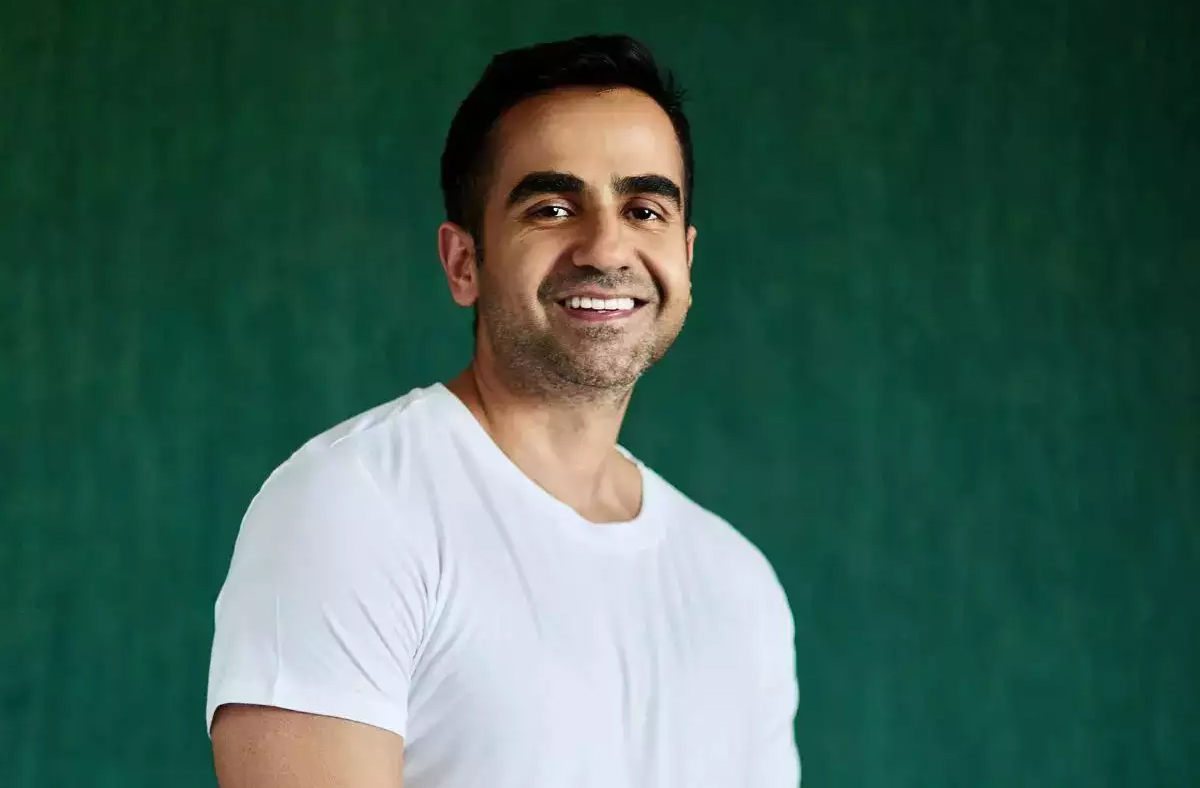
‘Don’t turn to previous generation…’: Zerodha’s Nikhil Kamath shares the secret to future-proofing your business

‘Don't turn to previous generation…’: Zerodha's Nikhil Kamath shares the secret to future-proofing your business

The co-founder of the online stock brokerage platform spells out his philosophy.: Teenagers don’t just consume trends—they create them. Platforms such as TikTok, Instagram, and YouTube are shaping the cultural and consumer landscape, making them critical spaces for businesses to study, says the trendspotter

Staff Writer


Zerodha co-founder Nikhil Kamath says the secret to staying ahead in business lies not in corporate strategy or generational wisdom but in watching what 16-year-olds of the country are doing, according to media reports. 

Speaking to LinkedIn CEO Ryan Roslansky on The Path video series, Kamath made a bold case for teenage intuition: “Look at what a 16-year-old boy wants and what he will need in the next 10 years. Don’t turn to the previous generation to plan 20 years ahead.”

For Kamath, the next big idea isn’t in your business playbook — it’s on TikTok or Instagram.

Kamath’s philosophy is clear: teenagers don’t just consume trends — they create them. Platforms such as  TikTok, Instagram, and YouTube are shaping the cultural and consumer landscape, making them critical spaces for businesses to study. “Look ahead, look at the younger generation for inspiration, not the older generation,” Kamath said, urging leaders to rethink how they plan for the future.

Teenagers drive changes in technology, entertainment, fashion, and lifestyle, and Kamath believes their habits provide a roadmap for what’s coming next. Ignoring these signals, he warns, is a recipe for irrelevance.

Kamath’s focus on the future isn’t limited to his market insights. As the youngest philanthropist on the Hurun India Philanthropy List, he and his brother Nithin have donated over ₹120 crore to causes like climate change and sustainability through the Rainmatter Foundation. 

The Kamath brothers consistently rank among India’s top philanthropists, and their contributions to environmental and social initiatives have made them standout figures in the global philanthropic community.

Kamath in an earlier podcast said he saw untapped potential in industries like men’s grooming, which he predicts is on the brink of explosive growth. 

“With evolving gender norms, this market… is set to blow up,” he noted, comparing it to how beauty trends for women once revolutionized industries. 

Backed by research, the men’s grooming market is expected to reach $202 billion globally by 2030, with India playing a major role. Kamath even hinted at untapped sectors, saying, “Pick what worked with women and build for men — maybe jewellery next.


Categories
Corporate

Why did Adani Group exit the FMCG joint venture, Adani Wilmar?

Why did Adani Group exit the FMCG joint venture, Adani Wilmar?

It’s not just about perceived difficulty in raising money or reducing high debt levels. Analysts say the business does not sit well with the infrastructure piece of the conglomerate


Staff Writer

It’s not very often that a consumer-facing business wants to exit it. One look at the multiples of most players in the space answers the question. They are expensive picks and have zoomed over the last two years or so, on the back of higher disposable incomes and many product categories remaining at relatively lower penetration levels. The case of the Adani group to exit its holding in food FMCG major, Adani Wilmar is not just odd but intriguing as well, according to Business Today. Most of its money (it had a revenue of over Rs 51,500 crore in financial year 2024-25) comes from edible oils, a category that offers high volumes and consequently large revenue but lower profitability (a net profit of Rs 171 crore for the same fiscal or a margin of just 0.33 per cent).

The company went public in February 2022 and with a well-set portfolio of brands in edible oils (Fortune being the most prominent) and foods, looked to be on the right track. This is really where the decision of the Adani group to move out has been a little hard to comprehend – it (Adani Enterprises) sold its 44 per cent stake, most of it (31 per cent) to Wilmar, its foreign partner and the other 13 per cent in the open market for a total of around $2 billion.
Wilmar International is a Singapore-based entity and struck up a 50:50 joint venture with the Adani Group in 1999. In edible oils, it is the leader with a market share of 20 per cent.

Let’s consider a few points here. The bribery issue that hit the Adani Group last November has led to a perception that raising money, especially in the overseas markets, will be difficult for it in the medium to short-term. Plus, there is huge debt at the consolidated level – over Rs 2.4 lakh crore across its listed companies for FY24 – provoking a few concerns. Together, they make for a case to exit a business to reduce debt before anything else.

Adani Enterprises held a 44 per cent stake in Adani Wilmar through Adani Commodities and last August, proposed a demerger of the fast moving consumer goods (FMCG) business in the food category. Consequently, it would now come directly under the promoter and promoter group shareholders. 

In October, the scheme of demerger was withdrawn. By this time, there was enough to suggest that a potential stake sale was round the corner.

Long-time Adani group trackers maintain the decision to exit the Wilmar joint venture is a way to allocate capital more smartly. “It was always on the cards. Typically, the infrastructure businesses deliver a return on equity of 14-15 per cent but that is just about 1 per cent for Adani Wilmar,” points out Deven R Choksey, Chairman and Managing Director (MD) of wealth management and investment advisory firm DRChoksey Finserv. Again, a play in commodities is restrictive. “It is hard for the company to become a HUL [Hindustan UniLever] or an ITC [Indian Tobacco Company]. The proceeds from the sale can be put to better use.”

The capex requirement for the Adani group across its businesses is estimated to be upwards of $75 billion or a minimum of Rs 7 lakh crore; these are expected to go into energy, transport, utilities and logistics. “There are multiple options available to raise funds including interest from investors in Japan and Europe. In that sense, the consumer business is only a distraction compared to other ambitious forays,” thinks Vinit Bolinjkar, Head (Research) at brokerage Ventura Securities. The objective, he says, was to get a good price. “With the $2 billion, it is possible to leverage that by 3x to raise at least $6 billion.”


Categories
Corporate

What is SEBI’s simplified compliance framework for listed companies?

What is SEBI’s simplified compliance framework for listed companies?

Under the new framework, governance filings such as investor grievance redressal statements and corporate governance compliance must be submitted within 30 days after the quarter ends. However, year-end submissions will have a 60-day deadline

Staff Writer

The Securities and Exchange Board of India (SEBI) has unveiled a new compliance framework aimed at listed entities, introducing an integrated filing system for governance and financial disclosures. This system will be applicable for filings related to the quarter ending December 31, 2024, according to media reports.

The initiative is designed to ease compliance burdens by consolidating various periodic filing requirements into a single process. 

This change follows recommendations from an expert committee tasked with reviewing SEBI’s Listing Obligations and Disclosure Requirements (LODR) norms. 

Under the new framework, governance filings such as investor grievance redressal statements and corporate governance compliance must be submitted within 30 days after the quarter ends. However, financial filings, including disclosures on related-party transactions and quarterly results, are required within 45 days and year-end submissions will have a 60-day deadline. 

SEBI mandates the quarterly disclosure of material events, including updates on tax litigation, minor penalties, and acquisitions surpassing certain thresholds. These disclosures will be incorporated into the integrated filing format, which will replace the previous fragmented reporting system. 

SEBI has also introduced stricter eligibility criteria for secretarial auditors of listed entities to improve accountability. Only peer-reviewed company secretaries, who meet specific qualifications, can now take on these roles. 

Restrictions are also placed on auditors performing certain services, such as internal audits and compliance management, to ensure impartiality. 

The Institute of Company Secretaries of India (ICSI) has been tasked with communicating the new provisions to its members and ensuring adherence to the updated guidelines. Listed entities must also disclose details of employee benefit schemes and obtain board approval before redacting commercially sensitive information. 

The new framework also sets timelines for disclosures on shareholding patterns, credit ratings, and reclassifications, with penalties for non-compliance. 

To streamline the process further, SEBI is facilitating single filings through the BSE and NSE portals. Stock exchanges are instructed to develop systems and infrastructure to monitor and enforce the framework. 


Categories
Corporate

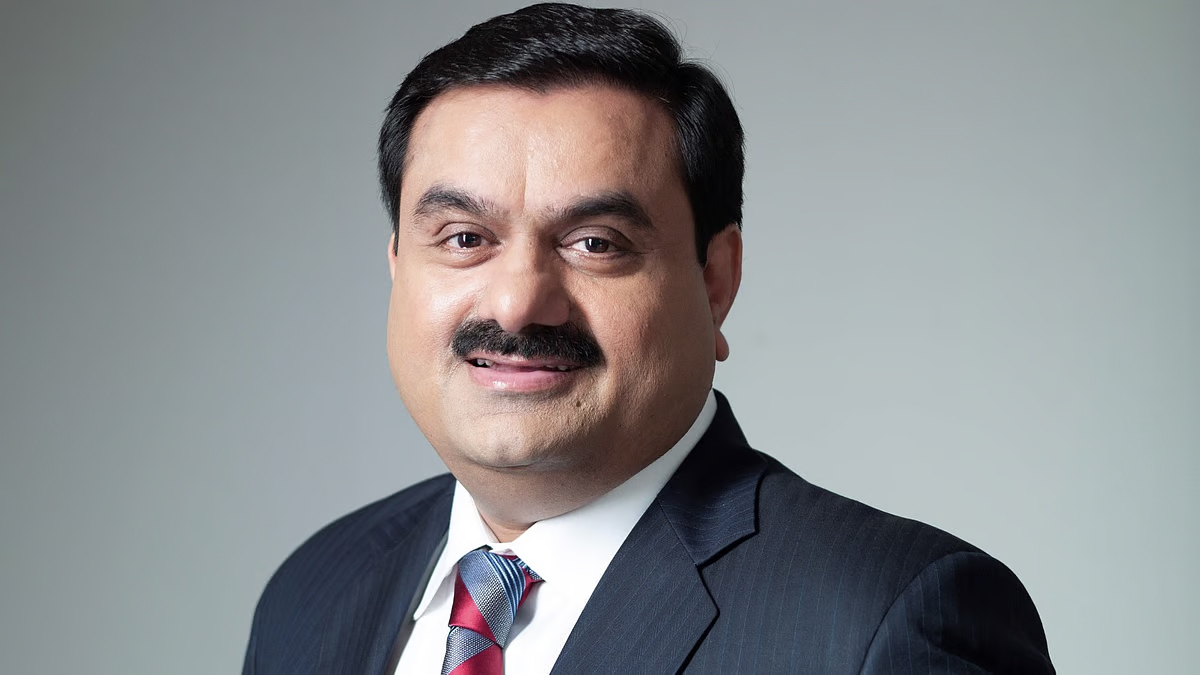
Gautam Adani sets goals for Adani Group employees on New Year

Gautam Adani sets goals for Adani Group employees on New Year

Journey to success is rarely linear, says the Chairman amid the diversified conglomerate's pivot towards technology-first mindset into the fast-expanding organisation’s corporate structure

Staff Writer

In his New Year address to the over 46,000-strong workforce, Adani Group Chairman Gautam Adani emphasised the company's focus on unlocking the full potential of every individual, bt.com has reported. He stressed that moments of transformation require vision, courage, and the will to act. 

Adani described the previous year, 2024, as extraordinary, according to Business Today. He highlighted how the company shattered financial records, faced significant challenges, and emerged stronger, more united, and resilient. “As I’ve often said, the journey to success is rarely a straight line. Our transformation is shaped by the challenges we face, which define us. At our core, we are fearless fighters, and through these battles, we continue to evolve and excel. The storms of 2024 only strengthened our resolve. Today, we stand taller thanks to your unwavering dedication and passion. True resilience is not about surviving chaos but transforming it into a force that propels us forward,” he wrote.

He emphasised that his focus is not on numbers but on laying the foundation for the future. He discussed two key factors — technology and talent — that he believes will be the most sustainable differentiators in today’s world. He noted that capital is no longer a constraint, but the challenge lies in using it effectively. 

Adani conveyed optimism for the remarkable journey ahead. "Together, we will not merely face the challenges of tomorrow but transform them into milestones of success," he added.