Categories
Corporate

Bajaj Auto invests Rs 1,364 crore in bankruptcy-bound KTM

Bajaj Auto invests Rs 1,364 crore in bankruptcy-bound KTM

The investment will be either in the form of equity capital/preference capital/loan – convertible or otherwise in one or more tranches

Staff Writer

Two-wheeler and three-wheeler manufacturer Bajaj Auto said that it would be pumping Rs 1,364 crore or 150 million euros into its Netherlands subsidiary, Bajaj Auto International Holdings BV, Netherlands.

As per the regulatory filing by the auto major, the investment will be either in the form of equity capital/preference capital/loan – convertible or otherwise, as may be determined in the due course, in one or more tranches. Bajaj Auto International Holdings BV holds a 49% stake in Austrian bike maker KTM. Pierer Mobility Group holds the remaining stake in the Austrian bike maker.

On November 29, 2024, KTM announced emergency restructuring. “KTM AG is in the process of implementing restructuring measures due to high financing needs. The management of KTM AG assumes that it will not be possible to secure the necessary interim financing in a timely manner,” Pierer Mobility Group said in a statement in November. Notably, Pierer Mobility Group had earlier said in an investor update that it is looking for “far-reaching restructuring for KTM.”

“In addition to securing liquidity, the Executive Board is endeavouring to put KTM AG back on a stable operational and financial basis. Against the backdrop of a challenging economic environment, an even more far-reaching operational restructuring is being driven forward to reduce inventories at both KTM AG and the dealer level to an economically sustainable level by significantly reducing production volumes,” Pierer Mobility AG had said. The restructuring process will end in February 2025. Bajaj Auto – KTM partnership dates to 2007 when Bajaj Auto International Holdings BV (BAIHBV) picked up a 14.5% stake in KTM Power Sports AG and subsequently launched the brand in India. BAIHBV gradually increased its stake to 48%. In 2021, the shareholding was simplified when BAIHBV swapped 46.5% of its holding to gain a 49.9% stake in PTW Holding AG (the KTM group’s parent company).

At present, Bajaj Auto manufactures small-displacement KTM & Husqvarna motorcycles at its Chakan plant. Notably, Bajaj Auto had a setback in KTM exports in the October to December quarter. “We have had a bit of a setback on KTM exports. The KTM issue globally is well known…. We’ve had to take a hit on our export volumes this time. We took a cautious approach because we didn't want to compromise the recoverability of money that would have been due had we continued to export,” Dinesh Thapar, CFO of Bajaj Auto said during the post-earnings call.

Categories
Corporate

Burman Group gets control of Religare Enterprises Limited

Burman Group gets control of Religare Enterprises Limited

The Burman Group will collaborate with REL's leadership and board to strengthen its strategic vision and drive sustainable value growth

Staff Writer

The Burman Group announced on February 20, 2025, that they have taken control of Delhi-based financial services firm Religare Enterprises Limited (REL) and have been appointed as its promoters.

The company emphasized its primary focus on fostering stability, enhancing governance, and promoting sustainable growth within the organisation. “We are pleased to announce that we have acquired control of Religare Enterprises Limited (REL) and been designated as its promoters. We are grateful to our regulators, shareholders and other stakeholders for their trust and confidence," the group said in an official statement. The Burman Group will collaborate with REL's leadership and board to strengthen its strategic vision and drive sustainable value growth.

"We have always invested in businesses with strong fundamentals and high growth potential, and we will apply the same disciplined approach to Religare Enterprises with the highest levels of governance. This was the intent with which we launched our open offer for control, and we remain committed to that," the spokesperson added. Burmans had extended an open offer of Rs 2,116 crore to acquire an additional 26 per cent stake in Religare Enterprises Ltd (REL).

However, the response to this offer was minimal, with only 231,025 shares (0.07 per cent) being tendered out of the 9 crore shares (26 per cent) available. The tepid response to Burmans' open offer indicates a lack of enthusiasm from shareholders. The open offer, which was for the acquisition of up to 9,00,42,541 fully paid-up equity shares of face value of Rs 10 each, representing 26 per cent of the expanded voting share capital of REL from the public shareholders, was initiated by M B Finmart Pvt Ltd, Puran Associates Pvt Ltd, VIC Enterprises Pvt Ltd, and Milky Investment & Trading Company on January 27, 2025. Following the closing of the open offer on February 13, the date set for the payment of consideration was February 17, as per the data provided.

In September 2023, the Burman family, promoter of Dabur India and other entities such as Eveready Industries, announced a Rs 2,116-crore open offer to REL shareholders to acquire up to 26 per cent stake in the company. Following this, in January 2024, four entities purchased a 3.6 per cent stake in Religare Enterprises for Rs 277 crore through open market transactions. Puran Associates, Vic Enterprises, and M B Finmart, all entities of the Burman family, acquired shares in Religare Enterprises. Puran Associates, owned by Anand Burman and Minnie Burman, V.C. Burman's ownership of Vic Enterprises, and Mohit Burman's ownership of M B Finmart demonstrate the family's continued interest in diversifying their investments in the financial services industry.

Categories
Corporate

Tesla officials to visit in April to further India entry, meet govt officials

Tesla officials to visit in April to further India entry, meet govt officials

To take advantage of lower import duties and government incentives, Tesla will have to apply for the Scheme for Promotion of Manufacturing of Electric Passenger Cars in India (SPMEPCI)

Staff Writer

Tesla officials are set to visit India in April to review the company’s operations and engage with key government departments, including the Prime Minister’s Office (PMO), the Ministry of Heavy Industries, the Ministry of Road Transport and Highways (MoRTH), and the Ministry of Commerce, according to sources.

Tesla has identified Maharashtra’s Chakan and Sambhaji Nagar, as well as Gujarat, as preferred locations for its manufacturing hub. The company is expected to make an initial investment of $3-5 billion to establish its production facilities, the source added.

To take advantage of lower import duties and government incentives, Tesla will have to apply for the Scheme for Promotion of Manufacturing of Electric Passenger Cars in India (SPMEPCI). The policy, notified on March 15, 2024, is aimed at boosting local EV production.

Under this scheme, manufacturers are required to:

  • Invest a minimum of Rs 4,150 crore in India
  • Achieve at least 25% domestic value addition (DVA) by the third year
  • Increase DVA to 50% by the fifth year

“If Tesla wants to benefit from the lower import duties, it will have to commit to manufacturing in India and invest in the local supply chain,” another source said.

In 2023, Tesla executives engaged with the Modi administration to discuss local component sourcing, leading to the company securing office space in Pune. Subsequent meetings between Elon Musk and Prime Minister Modi further fueled speculation about Tesla’s entry into India.

In 2024, India introduced a revised EV policy that offers import duty concessions to manufacturers committing at least $500 million in local investments. Musk was initially expected to announce Tesla’s investment plans during his scheduled April 2024 visit to India. However, he canceled the trip due to urgent business matters and instead traveled to China.

While India’s EV market remains relatively small compared to China — where 11 million electric cars were sold last year — it is gradually expanding. In contrast, India’s EV sales stood at nearly 100,000 units during the same period. Despite this gap, Tesla views India as a high-potential market, given the government’s push for clean energy and incentives to accelerate EV adoption.

Categories
Corporate

NSE, valued at Rs 4.7 lakh crore, breaks into 10 most valuable companies in India list: Hurun

NSE, valued at Rs 4.7 lakh crore, breaks into 10 most valuable companies in India list: Hurun

As per the Hurun list, NSE is also the most-valuable unlisted company in India. It moved up by one position, while Cyrus Poonawalla-led Serum Institute of India, slipped one position

Staff Writer

The National Stock Exchange (NSE) has broken into the ranks of the top 10 most-valuable companies in India.

The exchange, valued at Rs 4,70,250 crore, is the highest value creator in percentage terms, according to the 2024 Burgundy Private Hurun India 500 compilation. NSE, led by Ashishkumar Chauhan, surged 201 per cent in value.

It is ranked at 10th and saw a change of value of 179 per cent in the last four years. According to the Hurun list, NSE is also the most-valuable unlisted company in India. It moved up by one position, while Cyrus Poonawalla-led Serum Institute of India, slipped one position.

To be included in the ‘2024 Burgundy Private Hurun India 500’ list, companies must have a minimum value of Rs 9,580 crore, it said, which equalled $1.1 billion as of December 13, 2024.

The most-valued company, as per the list, is Mukesh Ambani-led Reliance Industries, valued at Rs 17.52 lakh crore, followed by Tata Consultancy Services, valued at Rs 16.10 lakh crore, HDFC Bank valued at Rs 14.22 lakh crore, Bharti Airtel at Rs 9.74 lakh crore, ICICI Bank at Rs 9.30 lakh crore, Infosys at Rs 7.99 lakh crore, ITC at Rs 5.80 lakh crore, Larsen & Toubro at Rs 5.42 lakh crore, HCL Technologies at Rs 5.18 lakh crore, and NSE at Rs 4.70 lakh crore.

When it comes to the most-valued unlisted companies, the list is topped by NSE, followed by Serum Institute of India, valued at Rs 2.11 lakh crore, Zoho Corporation valued at Rs 1.03 lakh crore, Zerodha at Rs 87,750 crore, Megha Engineering & Infrastructures at Rs 77,860 crore, Parle Products at Rs 68,640 crore, Intas Pharmaceuticals at Rs 68,150 crore, Dream11 at Rs 67,860 crore, Razorpay at Rs 63,620 crore, and Amalgamations at Rs 56,660 crore.

Categories
Corporate

TCS likely to roll out salary increases in March, hikes to average 4-8%

TCS likely to roll out salary increases in March, hikes to average 4-8%

The software major's compensation revision comes after Infosys informed its employees that the annual compensation revision letters will be issued before the end of March

Staff Writer

Tata Consultancy Services is expected to roll out the annual increases in March with payouts starting in April.

The hikes are reportedly likely to average 4-8 per cent. According to a report in The Economic Times, annual hikes at most top-tier companies have seen a gradual slowdown, which is in line with the industry’s growth trends. The COVID-19 period saw high, double digit growths in annual hikes. TCS’ compensation revision comes after Infosys informed its employees that the annual compensation revision letters will be issued before the end of March.

Reports stated that the hikes are expected to be in the range of 5-8 per cent. It must be mentioned that TCS had linked its hikes and variable payouts to employees’ compliance with its recent return-to-office mandate that it had announced in 2024. The latest hike will follow the quarterly variable pay (QVP) released in February for the October-December period. An employee working with TCS for eight years, told the financial daily that the hikes have been meagre for the past three-five years.

Meanwhile, TCS reported a 11.95 per cent year-on-year (YoY) rise in consolidated net profit at Rs 12,380 crore for the December quarter compared with Rs 11,058 crore in the same quarter last year. Net sales climbed 5.59 per cent to Rs 63,973 crore from Rs 60,583 crore in the corresponding period last year. Sales were up 4.5 per cent YoY in constant currency (CC) terms.

Categories
Corporate

RBI bars New India Co-operative Bank from fresh business, customers can’t withdraw deposits

RBI bars New India Co-operative Bank from fresh business, customers can’t withdraw deposits

The central bank's move prevents depositors from withdrawing funds as the bank faces liquidity issues

Staff Writer

The Reserve Bank of India (RBI) has barred Mumbai-based New India Co-operative Bank from issuing new loans and suspended deposit withdrawals for six months.

The central bank cited supervisory concerns and the lender's liquidity position issues over the unprecedented move. The RBI move prevents depositors from withdrawing funds as the bank faces liquidity issues.

Soon after the announcement, anxious customers were seen queuing outside various branches of New India Co-operative Bank. The RBI announced that effective from the close of business on February 13, 2025, New India Co-operative Bank is barred from granting or renewing any loans or advances.

It also cannot make any new investments or accept fresh deposits. It is also not allowed to disburse any payments. The bank is not allowed to dispose of any of its properties or make any investments or borrow funds.

The directions were necessary due to concerns arising from "recent material developments" at the bank, and to protect the interest of depositors, the RBI said. However, it did not elaborate on the specifics of these concerns.

The central bank added that eligible depositors are entitled to deposit insurance claims up to Rs 5 lakh, as per the deposit insurance scheme. Depositors have been asked to submit their claims with the bank.

At the end of March 2024, New India Co-op Bank had deposits worth Rs 2,436 crore and advances worth Rs 1,175 crore. It reported a loss of Rs 22.78 crore for FY24 and Rs 42.11 crore in FY23. In April 2024, in a similar move, the RBI had restricted Kotak Mahindra Bank from on-boarding new customers through its online and mobile banking channels and from issuing fresh credit cards.

However, on Wednesday, the RBI had lifted the curbs on Kotak Mahindra Bank following satisfactory compliance with regulatory requirements.

Categories
Corporate

Adani Green Energy to withdraw from Sri Lanka wind power projects, open to future collaboration

Adani Green Energy to withdraw from Sri Lanka wind power projects, open to future collaboration

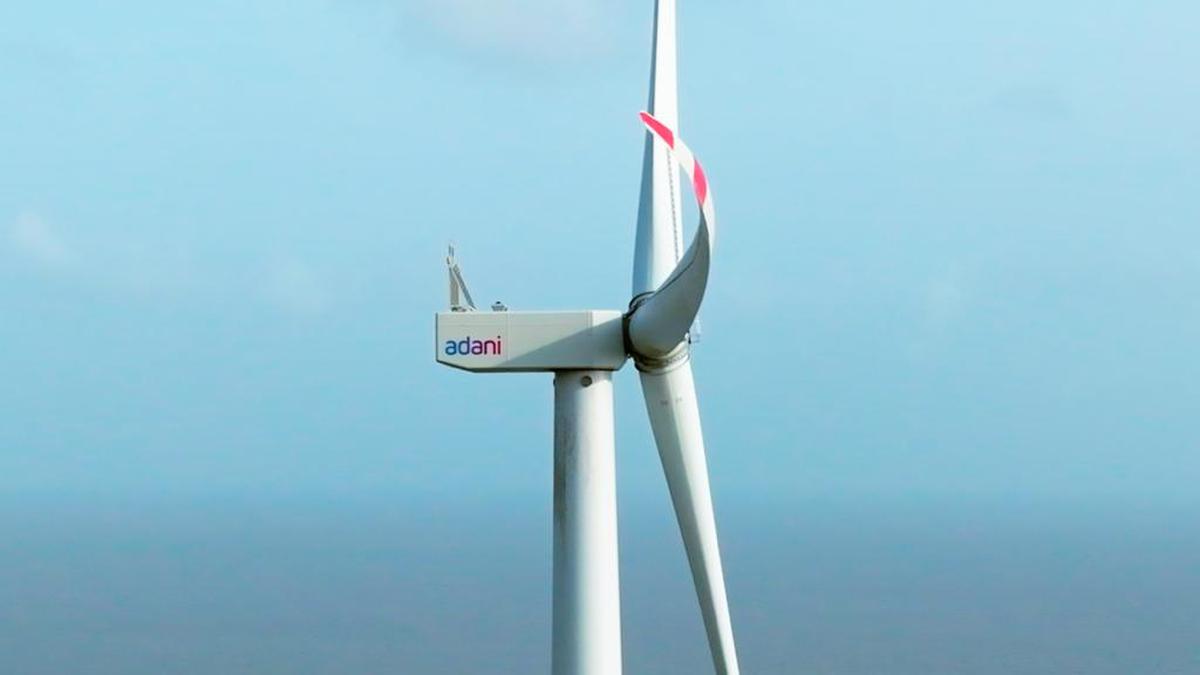
Under the deal with Sri Lanka, Adani Green was to build two wind power projects in Mannar town and Pooneryn village, both in the northern province of the country. Adani’s renewable energy division had earmarked a $442 million investment for wind power generation and transmission in Sri Lanka

Staff Writer

Adani Green Energy announced that it will withdraw from two planned wind power projects in Sri Lanka, according to a letter the company sent to a Sri Lankan government agency. 

“Adani Green Energy has conveyed its Board’s decision to respectfully withdraw from further engagement in the RE wind energy project and two transmission projects in Sri Lanka. However, we remain committed to Sri Lanka and are open to future collaboration if the Government of Sri Lanka so desires,” a Adani Group spokesperson said. 

Last month, the Sri Lankan government said it had started talks with the Adani Group to reduce the cost of electricity from the projects, which were estimated to cost a total of $1 billion. 

Under the deal with Sri Lanka, Adani Green was to build two wind power projects in Mannar town and Pooneryn village, both in the northern province of the country. Adani’s renewable energy division had earmarked a $442 million investment for wind power generation and transmission in Sri Lanka. 

The Adani Group is also involved in constructing a $700 million terminal project at Sri Lanka’s largest port in Colombo. 

Sri Lanka, which faced severe power blackouts and fuel shortages during its economic crisis in 2022, has been working to speed up renewable energy projects to reduce its reliance on expensive imported fuel. 

In May 2024, the former government in Sri Lanka had reached a deal to purchase electricity at a rate of $0.0826 per kilowatt from an Adani wind power facility planned for construction in the northwest region of the island. 

Opposition to the agreement came from activists who believed that smaller renewable energy projects were able to provide electricity at a significantly lower cost compared to Adani's proposal.

Categories
Corporate

RBI removes curbs on Kotak Mahindra Bank that it had placed in April 2024

RBI removes curbs on Kotak Mahindra Bank that it had placed in April 2024

In April 2024, the Kotak Mahindra Bank was instructed to halt onboarding new customers through its online and mobile banking platforms, as well as issuing fresh credit cards

Staff Writer

The Reserve Bank of India lifted the restrictions placed on Kotak Mahindra Bank on February 12, allowing the bank to onboard new customers through its online channels and issue new credit cards. The restrictions were originally imposed by the RBI on April 24, 2024, under Section 35A of the Banking Regulation Act, 1949.

The RBI said: "Subsequently, the bank initiated remedial measures to address the supervisory concerns and submitted compliances to the Reserve Bank. The bank also commissioned an external audit, with prior approval of RBI, to validate the compliances. Now, having satisfied itself based on the submissions, and remedial measures undertaken by the bank, the Reserve Bank, has decided to lift the restrictions placed on Kotak Mahindra Bank Limited."

The central bank imposed restrictions on the bank following an IT Examination by the Reserve Bank in 2022 and 2023, as well as the bank's ongoing failure to effectively and promptly address these concerns.

In its April 24 order, the central bank had directed the lender “to cease and desist, with immediate effect, from

(i) onboarding of new customers through its online and mobile banking channels and

(ii) issuing fresh credit cards. It had added that the bank shall, however, continue to provide services to its existing customers, including its credit card customers.

Following the restrictions, the bank implemented measures in response to concerns raised about specific aspects of its operations, particularly the IT infrastructure.

Kotak Mahindra Bank promptly addressed the RBI's concerns by implementing remedial actions and submitting required compliances. Additionally, the bank conducted an external audit, approved by the central bank, to verify compliance with regulations.

“We welcome the Reserve Bank of India’s (RBI) decision to lift the business restrictions on Kotak Mahindra Bank. This decision follows the Bank's successful implementation of remedial measures and compliance validation through an external audit. We will continue to work closely with the RBI to shortly resume digital onboarding of new customers and issuing fresh credit cards,” Kotak Mahindra Bank spokesperson said.

Shares of Kotak Mahindra Bank closed at Rs 1,943.30, up by 1.35% on 12 February.


Categories
Corporate

Infosys likely to issue salary hike by Feb-end, average raise to range from 5-8%

Infosys likely to issue salary hike by Feb-end, average raise to range from 5-8%

This decision comes as the demand environment picks up, with Infosys positioning itself to capitalise on the expected rise in IT spending

Staff Writer

Infosys, a leading IT services provider, is set to issue salary increment letters by the end of February, with hikes ranging from 5% to 8%. These increments will take effect in April 2025.

The company has also commenced issuing promotion letters in batches since December, indicating a strategic response to an anticipated increase in technology budgets for the coming fiscal year. 

This decision comes as the demand environment picks up, with Infosys positioning itself to capitalise on the expected rise in IT spending, Moneycontrol reported.

"Broadly, the comp (annual salary increment) that we are expecting is 6-8% in India, and the overseas comps will be in line with the earlier comp reviews," Infosys’ Chief Financial Officer Jayesh Sanghrajka said while addressing the press after the Q3FY25 results.

In a contrasting development, Infosys has faced backlash after laying off nearly 700 freshers from its Mysuru campus.

These employees, who had only been with the company for a few months since their onboarding in September 2024, were reportedly dismissed in what has been described as "a shocking and unethical move" by Harpreet Singh Saluja, the president of the IT employees' union NITES. 

The union alleged that "bouncers and security personnel" were deployed during the termination process, which has drawn significant criticism. The layoffs have sparked widespread outrage on social media, with users expressing sympathy and anger over the sudden job losses. 

One user described the situation as "truly heartbreaking," highlighting that many freshers had waited over two years after graduation to join Infosys, only to be laid off after six months. Another post referred to the scene as "the most devastating photo in recent times," underscoring the emotional impact on the affected individuals who had trusted one of India's largest IT firms for their career beginnings. 

Delays in onboarding processes have become a notable issue across the Indian IT sector, with several companies struggling to align hiring with fluctuating market demands. This has resulted in protracted waits for new hires, exacerbating the uncertainty faced by fresh graduates.


Categories
Corporate

Made-in-India Maaza becomes a billion dollar brand

Made-in-India Maaza becomes a billion dollar brand

Indigenous beverages brand Maaza, that was first developed in India in 1976, has turned into a billion-dollar brand for Coca-Cola, says Global CEO

Staff Writer

Maaza – a mango-based drink popular among millions of Indians for decades – has joined the elite club of brands that boasts of billion dollar revenues. Conceptualised and developed in India, now owned by the US behemoth Coca-Cola, Maaza has turned into a “billion dollar brand”, a top executive said today.

According to James Quincey, Chief Executive Officer of The Coca-Cola Company (Coke), Maaza emerged as a new billion dollar brand for it in 2024. “Maaza is now our 30th billion dollar brand. In 2024, our system added approximately 440,000 outlets by digital customer platforms in India, which provides more opportunities to better tailor our product, price and packaging offerings,” Quincey told the stakeholders in a post-earnings call on Tuesday.

Maaza’s emergence as a priced possession for Coke is no mean a feat. Born in 1976 in India, Maaza finds its association close with India’s then de-facto Cola King Ramesh Chauhan of Parle (now Bisleri International). Over the years since its launch Maaza, along with its sister brands like Gold Spot, Limca, Citra and Thums Up, had already established itself as a widely popular choice among Indian consumers. However, by 1995 Maaza found itself a new owner, arriving among the first sets of US multinationals post-liberalisation, Coca-Cola.

Over the last three decades Maaza’s growth held steady against the influx of competing fruit-based beverage brands both from Coke’s rivals in the market and its own stable. “Despite a flurry of fruit-based drinks in the market now, Maaza has curved out a space for itself that is not easy to steal. Its presence in consumer mindset transcends generations,” says a senior FMCG executive who had led the expansion of Maaza in the past.

According to him, Maaza proves the strength of Indian brands that, if done right, then can withstand global competition and the test of time. The only other Indian beverages brand that boost of a billion dollar or more in sales is Thums Up, which despite challenges from global fizzy drinks giants like Coca-Cola and Pepsi Cola, among others.

“In India, our business rebounded nicely during the quarter and we grew volume. We recruited consumers with innovative marketing campaigns that linked Coca Cola with music, Sprite with travel and Thumbs Up with movies,” Quincey further adds.