Categories
Corporate

BlueStone Makes Market Debut: Shares List Soft, Recovers to Trade Above ₹517 Issue Price

BlueStone Makes Market Debut: Shares List Soft, Recovers to Trade Above ₹517 Issue Price

Promoter holding dips from 18.28% to 16.36% post-IPO; expansion plan includes 290 new stores by 2027

Staff Writer

BlueStone Jewellery and Lifestyle Ltd made a lukewarm debut on the stock exchanges on Tuesday, with shares listing at a discount to the issue price before staging a recovery during the early trading session.

On the BSE, the stock opened at ₹508, a 1.74% discount to its IPO price of ₹517. On the NSE, it listed at ₹510, down 1.35%. However, sentiment improved quickly—at 10:25 IST, the scrip was trading at ₹528.05, up 2.14% from the issue price. It touched an intraday high of ₹533.40 and a low of ₹508.60. Over 3.18 lakh shares changed hands on the BSE within the first hour of trade, giving the company a market capitalisation of ₹7,699.18 crore.

IPO Details

The ₹1,541 crore IPO of BlueStone Jewellery and Lifestyle was subscribed 2.7 times when it opened between 11–13 August at a price band of ₹492–517 per share. The offer comprised a fresh issue of equity shares worth ₹820 crore and an offer for sale (OFS) of over 1.39 crore shares, aggregating to ₹720.65 crore by investors including Accel India III (Mauritius), Saama Capital II, and Kalaari Capital Partners Opportunity Fund. Ahead of the IPO, the company raised ₹693.29 crore from anchor investors on 8 August.

Proceeds from the fresh issue will primarily be used to meet working capital requirements (₹750 crore), with the balance allocated for general corporate purposes. Post-IPO, promoter shareholding is expected to reduce from 18.28% to 16.36%.

“BlueStone Jewellery IPO listing arrives at the intersection of scale and scrutiny. The brand has established a formidable omnichannel presence, with over 275 stores complementing its digital-first identity. Yet, the market response leading into the IPO underscores a clear divergence between revenue visibility and profitability conviction,” said Bhavik Joshi, Business Head, INVasset PMS.

Brand & Expansion Plans

Founded in 2011, the Bengaluru-based company has positioned itself as a leading digital-first, omni-channel jewellery retailer. It offers over 7,400 designs across gold, diamond, platinum, and studded jewellery, catering primarily to customers in the 25–45 age group. As of March 2025, it operates 275 stores across 117 cities and 26 states and UTs, supported by three manufacturing facilities in Mumbai, Jaipur, and Surat. BlueStone has outlined aggressive expansion plans to add over 290 new stores by 2027.

Despite its scale, the company remains loss-making, reporting a consolidated net loss of ₹221.84 crore on revenues of ₹1,770 crore for FY25. Market watchers believe profitability will be key to sustaining investor confidence.
 

Categories
Corporate

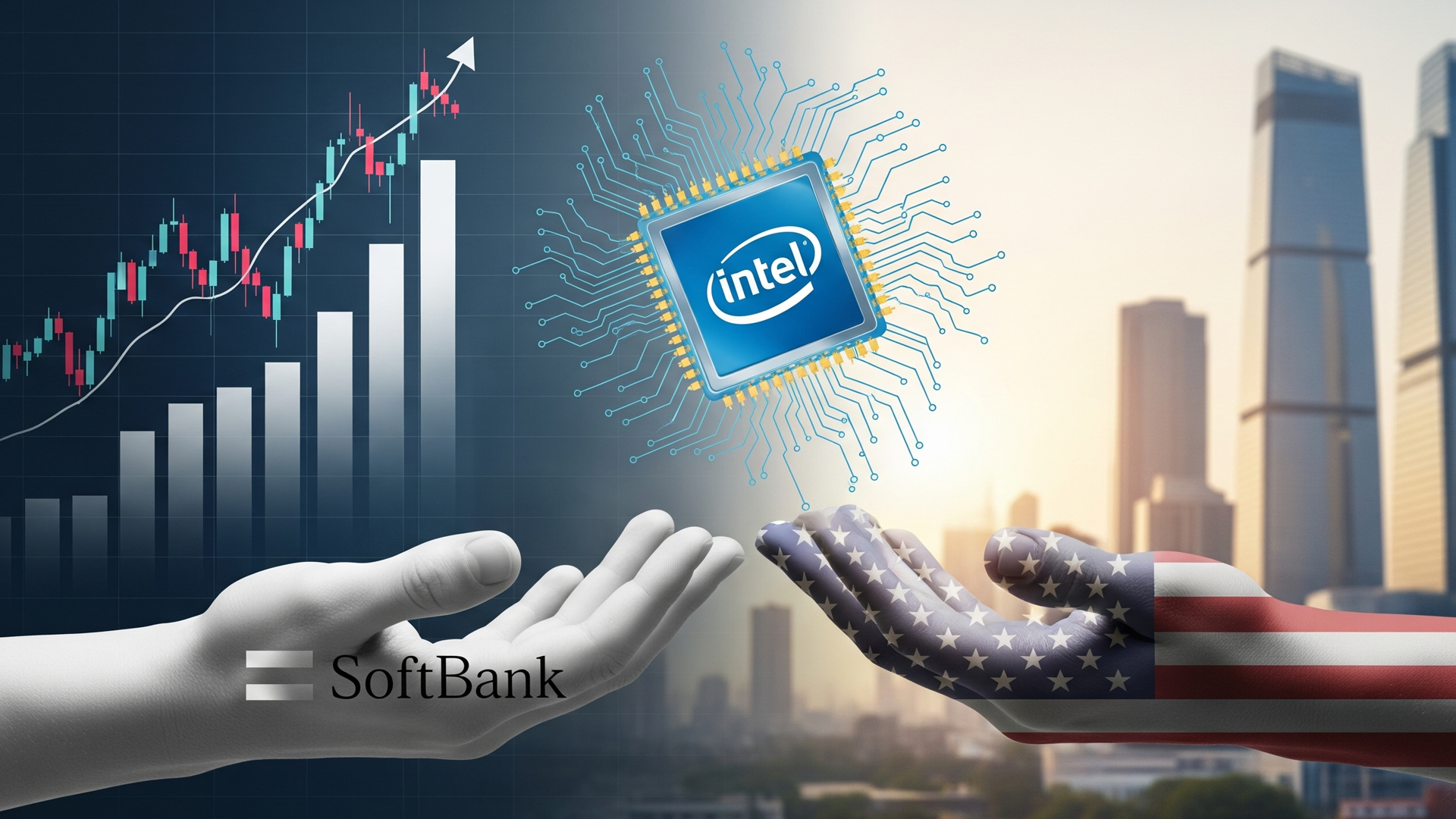
SoftBank’s $2 Billion Bet Lifts Intel as U.S. Considers Direct Stake

SoftBank’s $2 Billion Bet Lifts Intel as U.S. Considers Direct Stake

Japanese investor’s deal sparks rally in Intel shares, spotlighting Washington’s semiconductor strategy

Staff Writer

Intel stock jumped over 5% in after-hours trading on Monday, August 18,  after Japanese technology giant SoftBank announced a $2 billion investment in the U.S. chipmaker. The deal, struck at $23 per share, comes at a time when Washington is weighing a potential direct stake in Intel to secure America’s semiconductor supply chain.

SoftBank Chairman Masayoshi Son considers this step in business as a long-term bet on U.S. chip manufacturing, calling it a “strategic investment” that reinforces Intel’s role in next-generation semiconductors and AI hardware. The Japanese group, which has already expanded its U.S. presence with plans for AI data centers in Ohio, is signaling confidence in Intel’s turnaround under new CEO Lip-Bu Tan.

Intel has been under pressure in recent years, ceding market leadership to rivals Nvidia, TSMC, and Samsung. Tan has launched aggressive restructuring, cutting jobs, exiting its automotive unit, and slimming down its foundry operations, to sharpen focus on core clients and data center chips.

The investment also comes against a charged political backdrop. Reports last week suggested the Trump administration could convert government grants into a roughly 10% equity stake in Intel, though officials have stopped short of confirming any deal. The move, if approved, would mark a rare government intervention in a major U.S. corporation and signal Washington’s determination to anchor chipmaking capacity domestically.

Trump has publicly pressured Intel’s leadership, even calling for Tan’s resignation over alleged conflicts tied to China. Despite the rhetoric, the White House has held talks with the CEO on Intel’s role in building out a flagship semiconductor hub in Ohio.

Market analysts say the twin tracks of SoftBank’s capital injection and possible U.S. equity participation are reshaping sentiment around Intel. "[The Government's] agenda is clear: Accelerate domestic production, reduce dependence on Asia, and position Intel at the centre of the AI and national security landscape. This is a clear vote of confidence in Intel’s turnaround story,” said Dan Sheehan of Telos Wealth Advisors. “The U.S. agenda is clear: accelerate domestic production, reduce reliance on Asia, and position Intel at the heart of the AI and national security ecosystem.”

For investors, the developments suggest Intel could regain momentum not only as a technology player but also as a strategic asset in America’s industrial policy. With shares trading close to the SoftBank deal price and political support growing, the company may be positioned for a stronger rerating if execution on restructuring and U.S. government backing align.

Categories
Corporate

India Removes 11 % Cotton Import Duty, Easing Domestic Strain and Signaling Trade Gesture to the US

India Removes 11 % Cotton Import Duty, Easing Domestic Strain and Signaling Trade Gesture to the US

Vardhman, Ambika, and Welspun are among the top gainers

Staff Writer

New Delhi: Shares of leading textile companies surged on Monday after the government scrapped customs duty and agriculture cess on raw cotton imports until September 30. This decision is being interpreted both as a relief measure for India’s stressed textile industry and as a calibrated signal to the United States amid tense trade talks.

The Finance Ministry, through a notification by the Central Board of Indirect Taxes and Customs (CBIC), announced that all imports under heading 5201, covering raw cotton, will be duty-free for the next six weeks. Until now, cotton imports have attracted about 11 percent in combined duties.

The announcement immediately buoyed stocks such as Vardhman Textiles, Ambika Cotton Mills, Gokaldas Exports, and Welspun Living, which rallied between 1 and 8 percent. Industry bodies said the move would help stabilise raw material costs and prevent a spike in yarn and garment prices ahead of the festive season.

“CITI has long been requesting that the import duty on cotton be removed to help domestic prices align with international benchmarks. We therefore greatly welcome this measure, even though the relief is temporary,” said Chandrima Chatterjee, secretary general of the Confederation of Indian Textile Industry.

The decision also comes against a backdrop of heightened trade friction. Washington imposed 25 percent retaliatory tariffs on Indian exports earlier this month, with the rate set to double to 50 percent on August 27. A planned US delegation visit for the sixth round of trade talks on August 25 has already been cancelled.

Experts see the cotton exemption as an attempt to defuse tensions without compromising on India’s red lines in sensitive areas such as agriculture and dairy. “It is a calibrated gesture that addresses US concerns while safeguarding domestic sensitivities,” noted Ajay Srivastava, founder of the Global Trade Research Initiative.

At home, falling output has squeezed supply. India’s cotton production has dropped from 33.7 million bales in FY23 to an estimated 30.7 million bales in FY25, according to the agriculture ministry data. Imports, meanwhile, surged to 2.71 million bales this year, with the US emerging as the largest supplier, alongside Brazil, Egypt, and African nations like Benin and Mali.

For American exporters, India’s duty waiver is significant, particularly after China imposed additional tariffs on US cotton. For India’s $150-billion textile sector, it offers immediate respite, keeping mills running and consumer prices steadier during the crucial festive season.

Categories
Corporate

RIL Shares Climb as Jio Tariff Hike Spurs Bullish Brokerage Calls

RIL Shares Climb as Jio Tariff Hike Spurs Bullish Brokerage Calls

RIL Shares Climb as Jio Tariff Hike Spurs Bullish Brokerage Calls

Staff Writer

Reliance Industries (RIL) shares gained over 2 percent in Tuesday’s trade after its telecom arm, Reliance Jio, announced revisions to its prepaid tariff structure. Positive commentary from brokerages further fueled the rally.

On the NSE, RIL climbed as much as 2.2 percent to ₹1,412.40 around 11:52 am, marking its second consecutive session of gains.

Jio has discontinued its low-cost prepaid packs of ₹209 (1GB per day for 22 days) and ₹249 (1GB per day for 28 days). With this change, the new entry-level daily data plan begins at ₹299 for 1.5GB per day over 28 days — a 20 percent jump from earlier, bringing Jio’s tariffs in line with Bharti Airtel and Vodafone Idea.

Brokerage IIFL noted that the ₹249 plan contributed less than 10 percent to Jio’s mobile revenues, suggesting the price hike may lift overall revenue by under 2 percent. However, Axis Capital estimated that the revisions could raise Jio’s FY26E revenue and ARPU by 4–5 percent.

Morgan Stanley highlighted the scrapping of Jio’s popular ₹249 (1GB/day, 28 days) and ₹199 (1.5GB/day, 18 days) plans, pointing out that the lowest daily data plan for 28 days now starts at ₹299.

Domestic brokerages reiterated bullish calls on Reliance. Citi maintained a “Buy” rating with a target price of ₹1,690, adding that SEBI’s new IPO proposal could be favorable for a potential Jio listing. Jefferies also retained its “Buy” recommendation with a target price of ₹1,670, citing stronger Jio cash flows, steady momentum in retail, and sustained investments in renewables within the oil-to-chemicals segment.

As of 10:30 am, trading data showed 2.21 lakh RIL shares worth ₹31.06 crore changing hands on the BSE, while more than 45 lakh shares were exchanged on the NSE. The company’s market capitalization stood at over ₹19.1 lakh crore.

Categories
Corporate

Reliance Power partners with Bhutan firm for a clean energy push

Reliance Power partners with Bhutan firm for a clean energy push

At Monday’s close of ₹43.27, Reliance Power commanded a market value of ₹17,895 crore

Staff Writer

Reliance Power, led by Anil Ambani, has taken another step toward clean energy by setting up a joint venture with Bhutan’s state-owned Green Digital Private Limited. The new entity, GDL–Reliance Solar Pte Ltd (GRSPL), was formally incorporated on July 24, 2025, under Bhutan’s Gelephu Mindfulness City, a Special Administrative Region envisioned as a hub for sustainability and innovation.

The venture is built on equal footing, with Reliance Enterprises Private Limited (a Reliance Power arm) and Green Digital each holding 50%. As part of the deal, Reliance subscribed to 2.25 lakh shares at $100 apiece, giving it an indirect 25% stake in GRSPL. While operations are yet to begin, the company will focus on renewable energy projects, aligning with Reliance Group’s larger strategy of diversifying into clean energy and defense.

Importantly, the JV does not fall under related party transactions, despite Reliance Infrastructure, Reliance Power’s promoter, holding an indirect 25% stake through REPL.

On the market side, Reliance Power shares closed at ₹43.27 on Monday, valuing the company at ₹17,895 crore. Investors are expected to closely monitor when GRSPL begins operations, as this could significantly impact sentiment around the stock.

Financially, Reliance Power has been showing signs of revival. The company reported a net profit of ₹125.6 crore in the March 2025 quarter, a sharp turnaround from a ₹397.6 crore loss a year earlier. Though revenue slipped marginally by 1% to ₹1,978 crore, operating performance improved dramatically, EBITDA surged over 11 times to ₹589.8 crore, lifting margins from 2.4% to 29.8%.

The tie-up with Bhutan not only strengthens Reliance Power’s renewable energy portfolio but also underscores the growing role of cross-border collaborations in meeting global sustainability goals. For investors, the venture signals long-term ambition, even as the immediate focus remains on execution.

Categories
Corporate

JSW Steel, Posco Ink Pact to Explore 6 MTPA Integrated Steel Plant in India

JSW Steel, Posco Ink Pact to Explore 6 MTPA Integrated Steel Plant in India

JSW Steel, Posco Ink Pact to Explore 6 MTPA Integrated Steel Plant in India

Staff Writer

JSW Steel and South Korea’s Posco have signed a non-binding Heads of Agreement (HoA) to explore setting up a 6 million tonnes per annum (MTPA) integrated steel plant in India. The pact, signed in Mumbai, marks another step in the two companies’ efforts to deepen collaboration in one of the fastest-growing steel markets globally. Odisha has emerged as one of the top locations being evaluated for the project.

The signing ceremony was attended by Lee Ju-tae, representative director and president of Posco Holdings, and Jayant Acharya, joint managing director and CEO of JSW Steel. The HoA lays down the framework for a proposed 50:50 joint venture first announced in October 2024. A detailed feasibility study will follow to determine location, investment size, raw material sources, and logistics.

Strategic Significance for Odisha and India

Odisha is a frontrunner for the site, thanks to its abundant iron ore reserves, coal availability, and access to ports. “JSW and Posco are looking at various sites which will make sense in terms of proximity to mines, logistics, and ports. Odisha remains one of our potential sites,” Acharya said. The state already hosts several large-scale steel plants and is positioning itself as a global hub for mineral-based industries.

The venture is expected to support India’s Atmanirbhar Bharat initiative by reducing reliance on imports and creating a globally competitive steel manufacturing ecosystem that caters to both domestic and export markets. For JSW Steel, India’s largest steel producer with 34.2 MTPA of domestic capacity, the deal adds momentum to its capacity expansion drive. The company is targeting 41.9 MTPA capacity by September 2027, and 50 MTPA in India by FY31. Including its US operations, JSW aims for 51.5 MTPA capacity by that period.

Posco’s India Journey

For Posco, one of the world’s leading steelmakers, the partnership represents another attempt at upstream investment in India after several aborted projects. Its most ambitious plan — a $12 billion, 12 MTPA greenfield project in Odisha — fell through after a decade of delays and protests. Later tie-ups with Shree Uttam Steel and Power, Steel Authority of India (SAIL), and Rashtriya Ispat Nigam also did not materialize. A proposed collaboration with the Adani Group in 2022 similarly did not advance.

Currently, Posco operates a downstream facility in Maharashtra producing galvanized steel for automotive and appliance industries. The joint venture with JSW could finally give the South Korean firm a foothold in India’s upstream steel sector.

Investment and Outlook

Industry estimates suggest that building greenfield steel capacity costs around $1 billion per million tonnes. At 6 MTPA, the proposed facility could therefore require investments upwards of $6 billion (nearly ₹50,000 crore). Acharya noted that the final cost would be determined once technology, plant design, and other contours of the project are finalized.

India’s steel demand is projected to grow sharply, backed by rising investments in infrastructure, housing, and manufacturing. According to the National Steel Policy 2017, India targets 300 MTPA of steel-making capacity and 255 MTPA of consumption by 2030–31, supported by urbanisation, smart cities, and transport corridors. The Ministry of Steel estimates annual demand growth of 7–7.5 percent over the next decade, making India the fastest-growing large steel market. This backdrop makes the JSW-Posco venture timely, positioning both companies to capitalise on long-term demand.

Posco’s Lee Ju-tae said India is central to the future of global steel demand. “Our collaboration with JSW is based on mutual trust and a shared long-term vision. This initiative represents our commitment to supporting India’s industrial growth while creating long-term value for both organisations,” he said.

China dominates the global steel industry with a production capacity of over 1,000 MTPA, accounting for more than half of the world’s total output. In contrast, India, the world’s second-largest steel producer, has a current capacity of about 160 MTPA and aims to expand this to 300 MTPA by 2030–31 under the National Steel Policy. While China’s growth is plateauing due to slowing domestic demand and stricter environmental regulations, India is emerging as the next major growth engine for steel, driven by infrastructure, housing, and manufacturing.

Categories
Corporate

Escorts Kubota to Establish ₹4,500 Crore Tractor Manufacturing Hub in UP

Escorts Kubota to Establish ₹4,500 Crore Tractor Manufacturing Hub in UP

The facility is not only intended as a manufacturing hub but also as a base for shared services that will support Kubota’s global research and development activities.

Staff Writer

Escorts Kubota Limited is set to make a landmark investment of ₹4,500 crore to develop a state-of-the-art tractor manufacturing facility in Uttar Pradesh. The Yamuna Expressway Industrial Development Authority (YEIDA) has allotted approximately 190–200 acres in Sector 10, Greater Noida, following a Memorandum of Understanding (MoU) signed with the UP government in August 2024.

The project will be executed in at least two phases. In the first phase, Escorts Kubota will invest ₹2,000 crore to construct a tractor plant, a commercial equipment unit, and related infrastructure. The second phase will be rolled out depending on market demand and capacity utilization from the initial operations. When fully operational, the new hub is expected to generate around 4,000 jobs through phased hiring, providing a major boost to the state’s employment landscape.

YEIDA officials have described the project as a key endorsement of Uttar Pradesh’s industrial policies and infrastructure initiatives. The facility is not only intended as a manufacturing hub but also as a base for shared services that will support Kubota’s global research and development activities. This reflects India’s growing importance as a center for both production and innovation in the global agricultural machinery sector.

Escorts Kubota, created in 2019 through the partnership of India’s Escorts Limited and Japan’s Kubota Corporation, has been steadily expanding its footprint. With tractors, construction equipment, and engines as part of its portfolio, the company aims to strengthen its position in both the domestic and global markets. The planned greenfield project is aligned with this ambition, designed to meet rising demand while reinforcing India as a major manufacturing base.

Beyond the greenfield plant, Escorts Kubota is targeting an increase in tractor production capacity by 100,000 units over the next three to four years. This expansion is crucial given the surge in demand for agricultural machinery, as well as India’s growing role as an export hub for farm equipment.

The choice of location highlights strategic foresight. The Yamuna Expressway corridor offers strong logistical advantages, including seamless connectivity to Delhi NCR and access to upcoming logistics clusters. Such positioning ensures efficient distribution within India while enhancing export potential. For the UP government, the project signals progress toward its goal of transforming the state into a preferred destination for large-scale manufacturing investments.

With this initiative, Escorts Kubota joins a growing list of companies capitalizing on India’s favorable industrial climate, state-level incentives, and the government’s broader push to encourage domestic manufacturing under the “Make in India” banner. As the project takes shape, it is expected not only to transform Greater Noida’s industrial landscape but also to reinforce India’s role in the global tractor market.

Categories
Corporate

Foxconn’s $2.8 B Bengaluru Facility Kicks Off Small-Scale iPhone 17 Output

Foxconn’s $2.8 B Bengaluru Facility Kicks Off Small-Scale iPhone 17 Output

Earlier this year, the Bengaluru facility's operations were briefly disrupted when dozens of Chinese engineers departed abruptly.

Staff Writer

The eagerly awaited Foxconn factory near Devanahalli in Bengaluru has officially begun producing the iPhone 17 on a small scale, marking a major leap in Apple’s India strategy. Set up with an investment of approximately USD 2.8 billion (around ₹25,000 crore), this plant has become Foxconn’s second-largest iPhone manufacturing facility outside China.

Although Apple and Foxconn have not released official statements, the development underlines their strategic push to expand production in India, complementing the ongoing iPhone 17 assembly at Foxconn’s Chennai plant.

Earlier this year, the Bengaluru facility's operations were briefly disrupted when dozens of Chinese engineers departed abruptly. However, Foxconn swiftly addressed the issue by deploying technical experts from Taiwan and elsewhere, ensuring minimal impact on production timelines.

Karnataka’s Industries Minister M B Patil heralded the milestone, stating it showcases the state's emergence as a high-tech manufacturing hub. He emphasized that the expansion is driving job creation, supply chain strength, and boosting India’s export ambitions—with Bengaluru poised to become the “iPhone capital of the world.”

Background:

  • The Devanahalli plant was agreed upon in 2023 between Foxconn and the Karnataka government, aiming to transform the region into a tech manufacturing hub and generate thousands of local jobs.

  • Foxconn’s broader push to shift more Apple production from China to India aligns with global trends like Apple’s “China-Plus-One” strategy, political pressures, and trade diversification ambitions.

This move comes amid Apple’s aggressive ramp-up of its India output. The goal is to elevate annual iPhone production to 60 million units in 2025, up from 35–40 million in 2024–25. In the fiscal year ending March 2025, Apple assembled 60% more iPhones in India, worth nearly USD 22 billion. CEO Tim Cook has also noted that the majority of iPhones sold in the U.S. during the June 2025 quarter were manufactured in India.

Categories
Corporate

Gautam Adani Urges IIT Graduates to Build India’s Future, Highlights Nation’s Economic Transformation

Gautam Adani Urges IIT Graduates to Build India’s Future, Highlights Nation’s Economic Transformation

The Adani Group chairman underscored how India’s transformation is visible across multiple fronts — from digital adoption and green energy to infrastructure development and space exploration.

Staff Writer

Industrialist and the Chairman of Adani Group, Gautam Adani, addressed the 70th convocation of the Indian Institute of Technology (IIT) Kharagpur, urging graduates to dedicate themselves to nation-building while underlining India’s unprecedented economic rise.

The convocation at IIT Kharagpur, established in 1951, saw thousands of students graduate in engineering, sciences, and management. 

Delivering his speech at the country’s oldest IIT, Adani told the graduating students that they were entering a world filled with opportunities where India is poised to lead in technology, sustainability, and innovation. “You represent the brightest minds of our nation, and the responsibility of shaping the future rests on your shoulders,” he said.

“In 1947, we broke the chains on our land. Yet in the 21st century, a nation can be independent and still be bound by dependence. Just three days ago, we marked our 79th Independence Day, and it is clear we stand at a major inflection point. The world is moving from conventional wars to technology-driven wars of power, and our ability to prepare will decide our future,” he added. 

Adani highlighted that India is currently the fastest-growing major economy, with a growth trajectory that has captured global attention. He pointed out that India’s GDP, which stood at around $3.7 trillion in 2023, is expected to touch $5 trillion in the next few years. “This growth is not just a statistic. It is a reflection of the confidence, ambition, and determination of a billion-plus Indians,” he noted.

The Adani Group chairman underscored how India’s transformation is visible across multiple fronts — from digital adoption and green energy to infrastructure development and space exploration. Citing examples, he pointed to India’s rapid strides in renewable energy, where the country has become the world’s third-largest producer of solar power, and the success of Chandrayaan-3, which showcased the strength of indigenous technology.

Speaking about his own journey, Adani reminded students that success is not defined by privilege or background but by resilience and conviction. He recalled his early years when he had little formal training in business but managed to build an empire through perseverance. “Your degree from IIT Kharagpur is an enabler. But what will define your future is not your grades, but your grit and your ability to adapt to change,” he said.

Adani warned that over the next decade, several companies that today seem unbeatable will vanish. “They will disappear, not because they lacked resources, but because they could simply not compete at the pace and scale needed. And I will say that the same stands true for educational institutions! Because the educational institutions too must transform. They must move at the speed of change, drive cutting edge research and yet be accountable to real-world impact. This is no longer about producing brilliant graduates — it is about producing brilliant patriots that graduate armed with ideas, discipline, and the will to make India unshakable,” he added. 

Adani also touched on the need for ethical leadership and sustainable development. He warned that technological advancement without responsibility can lead to greater inequality and environmental challenges. “The future of business lies in balancing growth with sustainability. Climate change is the biggest challenge of our times, and young innovators like you will play a decisive role in finding solutions,” he urged.

In his speech, Adani reminded graduates that India’s demographic dividend gives it a unique edge. With an average age of 28, the nation has one of the world’s youngest populations. “This energy, if channelled with purpose, will ensure that India not only becomes the third-largest economy but also a nation that leads in inclusivity and innovation,” he said.

The industrialist’s address came at a time when India is seeking to strengthen its position in global supply chains. Adani said the country’s push for self-reliance — under initiatives like ‘Make in India’ and ‘Atmanirbhar Bharat’ — will open new avenues for engineers, technologists, and entrepreneurs. “In the coming decade, the world will look towards India not just as a market but as a hub of innovation,” he said.

Concluding his speech, Adani urged graduates to retain humility and empathy in their professional journeys. “No matter how high you rise, remember that true success is measured not by wealth or position, but by the impact you create on society,” he told the IIT graduates, leaving them with the message that their brilliance should serve not just themselves but the nation at large.

Categories
Corporate

S&P Upgrades Ratings of 10 Indian Financial Institutions, Including SBI and HDFC Bank

S&P Upgrades Ratings of 10 Indian Financial Institutions, Including SBI and HDFC Bank

Seven banks & three finance companies see an increase in long-term credit ratings following India’s sovereign rating upgrade.

Sreelatha M

S&P Global Ratings upgraded the long-term credit ratings of 10 major financial institutions, including the State Bank of India (SBI), HDFC Bank, and Tata Capital on August 15. This follows the US-based agency’s upgrade of India’s sovereign rating to ‘BBB’ from ‘BBB-’, its first revision in 18 years, since 2007.

Bank of America Securities are of the view that S&P Global Ratings’ may have a limited immediate market impact, even as it strengthens the government’s fiscal credibility and could lower borrowing costs.

“While positive, the near-term effect may be modest. Tariff-related growth uncertainties are likely to dominate, and their impact on capital flows and credit costs will take time to show,” Bank of America noted.

Upgrades Meant for Economic Growth and Reforms 

 The upgrades reflect the strong growth prospects of Indian banks and finance companies, supported by robust economic momentum and structural improvements such as better recovery of bad loans. S&P expects banks to maintain healthy profitability, strong capitalisation, and adequate asset quality over the next one to two years, despite some pockets of stress.

The rating boost covers seven banks: SBI, ICICI Bank, HDFC Bank, Axis Bank, Kotak Mahindra Bank, Union Bank of India, and Indian Bank,  and three finance companies: Bajaj Finance, Tata Capital, and L&T Finance. The agency also highlighted the positive impact of the Insolvency and Bankruptcy Code (IBC), introduced in 2016, which has strengthened the rule of law, improved payment culture, and promoted restructuring of viable companies.

“India’s financial institutions will continue to ride the country’s good economic growth momentum. These entities will benefit from their domestic focus and structural improvements in the system such as the recovery of bad loans,” said S&P Global Ratings

Broader Market Inferences
The upgrades reflect the growing confidence in India’s financial system. S&P had also raised ratings for large public and private enterprises such as ONGC, Power Grid, NTPC, Tata Power, the Export-Import Bank of India, and Indian Railway Finance Corp., signaling overall economic resilience.

India’s real GDP grew at an average of 8.8% between FY2022 and FY2024—the fastest in the Asia-Pacific region—and S&P expects this momentum to continue, projecting annual growth of 6.8% over the next three years.

With India now on a firmer footing, the rating upgrades mark a milestone for investors and financial institutions, reflecting both the promise of continued growth and the strength of the country’s banking and finance ecosystem.