
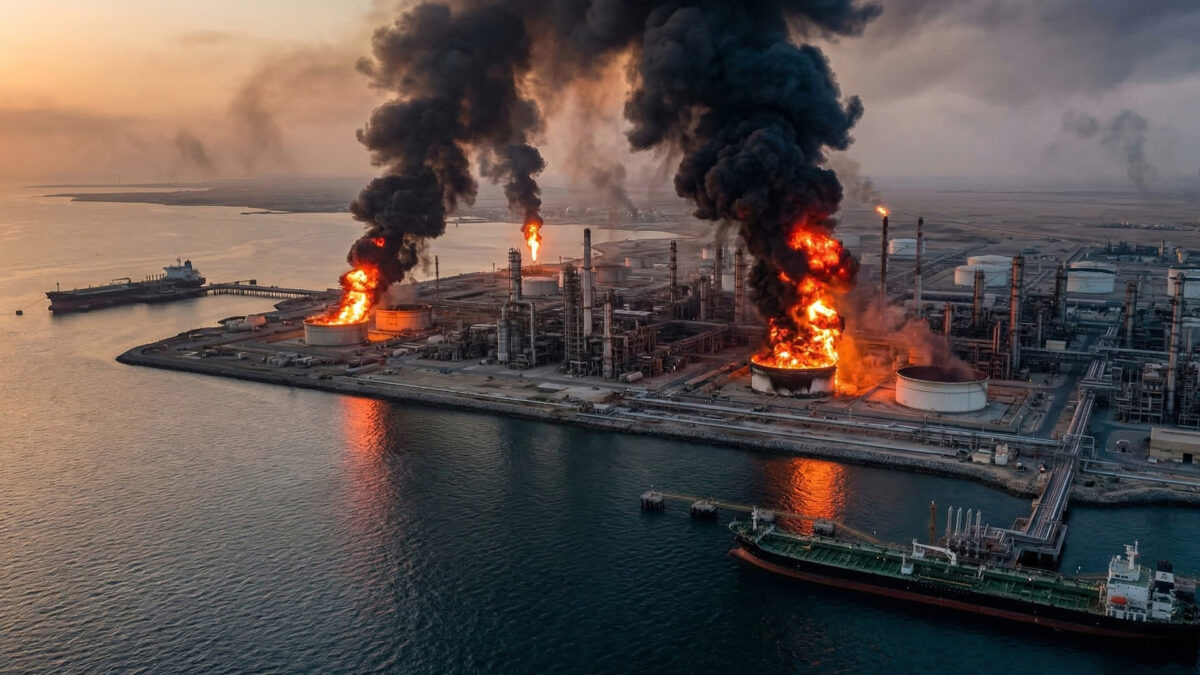
Brent crude oil, the global benchmark, is nearing $120 per barrel as tensions in the Middle East escalate. The rise comes after Iran attacked key energy facilities in the Gulf, sparking worries about supply disruptions that could affect the world’s oil markets.
The attacks targeted major oil and gas sites in countries including Qatar, Saudi Arabia, Kuwait, and the UAE. Notably, Iran struck Qatar’s Ras Laffan LNG complex, one of the largest liquefied natural gas hubs in the world. These strikes came after an earlier Israeli attack on Iran’s South Pars gas field and caused damage that could slow production and exports.
Brent oil prices jumped to nearly $120 per barrel, while US crude prices also saw significant gains. Experts warn that if the conflict continues, oil prices may stay high or rise further.
A key concern is the Strait of Hormuz, a narrow sea passage through which roughly 20% of the world’s oil passes. Any disruption here could reduce oil supply even more, pushing prices higher globally.
The surge in oil costs has also affected other markets. Stock indices in Asia, Europe, and the US have fallen as investors worry about rising energy prices and the impact on inflation. Natural gas prices in Europe have also increased, adding to energy cost concerns.
Countries that import large amounts of oil, such as India, face higher fuel prices, which can lead to increased costs for transport, manufacturing, and everyday goods. Rising energy prices may also put pressure on governments and consumers alike.