Categories
Beyond

Reliance Consumer Products to Invest ₹1,156 Crore in Tamil Nadu Manufacturing Facility

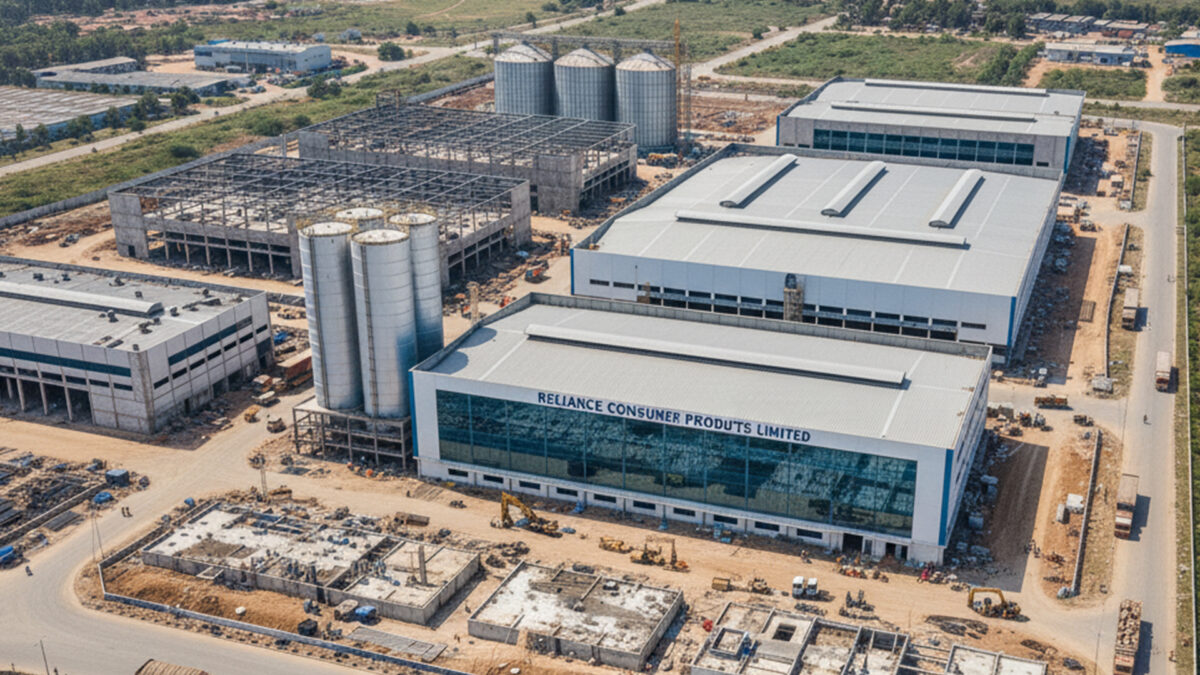
Reliance Consumer Products Limited (RCPL), the fast-moving consumer goods (FMCG) arm of Reliance Retail, has announced a significant investment of ₹1,156 crore to establish an integrated manufacturing facility in Tamil Nadu. The facility will be located at the State Industries Promotion Corporation of Tamil Nadu (SIPCOT) Allikulam Industrial Park in Thoothukudi district. Spanning 60 acres, the plant is set to produce a diverse range of products, including regional snacks, biscuits, spices, wheat flour, and edible oils. This strategic move underscores RCPL’s commitment to expanding its footprint in the southern market and catering to the growing demand for FMCG products in the region.

The project is expected to generate approximately 2,000 local jobs over the next five years, contributing to the state’s employment landscape. State Industries Minister TRB Rajaa highlighted that this development positions Tamil Nadu as a preferred destination for national FMCG players, attributing the state’s industrial growth to the “Dravidian Model” of governance championed by Chief Minister M.K. Stalin. He emphasized that the state continues to attract marquee national FMCG players, leaving no major sector untapped.

RCPL’s decision to set up its first manufacturing unit in Tamil Nadu aligns with the state’s ongoing efforts to bolster its industrial infrastructure and attract significant investments. The establishment of this facility is anticipated to enhance the state’s position in the FMCG sector, fostering economic growth and development in the region.

This investment marks a significant milestone for RCPL as it expands its manufacturing capabilities and strengthens its presence in the competitive FMCG market. The company’s strategic focus on diversifying its product offerings and enhancing production capacity is expected to yield positive outcomes, both in terms of market share and consumer reach.

In summary, RCPL’s ₹1,156 crore investment in Tamil Nadu signifies a pivotal step in the company’s growth trajectory, contributing to regional economic development and reinforcing its position in the FMCG industry.


Also Read: PhonePe Files For IPO via Confidential Route, Aims to Raise ₹12,000 Crore

Categories
Technology

Google Launches Mixboard: AI-Powered Visual Idea Board to Compete with Pinterest

Google has unveiled Mixboard, an AI-powered mood board application designed to help users brainstorm, design, and visualize ideas through generative artificial intelligence. Currently available in public beta in the U.S. via Google Labs, Mixboard is positioned as a direct competitor to platforms like Pinterest, offering a dynamic and interactive approach to creative ideation.

Mixboard allows users to create visual project boards using pre-made templates or by issuing simple text prompts. For example, users can type instructions such as “show me Memphis-style cups and plates” or “set up an autumn-themed party in my living room” to generate relevant images. Additionally, users may upload their own photos, mixing them with AI-generated visuals to shape unique boards.

The application is powered by Google’s Gemini 2.5 Flash AI model, enabling users to build boards starting from ready-made templates or by issuing simple text prompts. This integration allows for seamless generation of visuals based on user descriptions, enhancing the creative process.

One of the standout features of Mixboard is its use of Google’s new image editing model, Nano Banana. This model allows users to make edits and other small changes to images, or even combine images, with ease. Users can ask the AI to make adjustments such as “make this image brighter” or “combine these two pictures,” streamlining the editing process and eliminating the need for complex design software.

Mixboard also offers features like natural language editing, quick regeneration of images, and board templates. Users can start with text prompts or choose from ready-made templates offering various styles, themes, and projects. This flexibility caters to a wide range of creative needs, from home decor and event planning to DIY projects and more.

As an experimental tool under Google’s Labs initiative, Mixboard is currently available in public beta in the U.S. Users can access the platform and join a dedicated Discord community to share feedback and ideas. Google has indicated that the platform may evolve based on user input, suggesting a commitment to continuous improvement and user-centric development.

In summary, Mixboard represents Google’s foray into the realm of AI-driven creative tools, offering users a platform to visualize and refine their ideas through an intuitive and interactive interface. By combining the inspiration-driven style of Pinterest with the creative power of generative AI, Mixboard aims to provide a comprehensive solution for users seeking to bring their ideas to life.

Also Read: PhonePe Files For IPO via Confidential Route, Aims to Raise ₹12,000 Crore
 

Categories
Corporate

Waaree Energies Invests ₹300 Crore in Subsidiary to Establish Lithium-Ion Cell Manufacturing Plant

Waaree Energies Limited has announced a strategic investment of ₹300 crore in its wholly owned subsidiary, Waaree Energy Storage Solutions Private Limited (WESSPL), to establish a 3.5 GWh lithium-ion advanced chemistry storage cell manufacturing plant. This move underscores Waaree’s commitment to expanding its footprint in the renewable energy sector, particularly in energy storage solutions.

The investment was executed through a rights issue, involving the allotment of 60 crore partly paid-up equity shares with a face value of ₹10 each. Of this, ₹5 per share was paid on application, with the remaining ₹5 payable on call. This capital infusion aims to bolster WESSPL’s capabilities in manufacturing advanced battery storage solutions, aligning with India’s increasing demand for energy storage as the country transitions towards renewable energy sources.

WESSPL, incorporated in February 2020, has reported nil turnover over the past three financial years, including FY25. Despite this, the fresh capital infusion positions the subsidiary to capitalize on the growing energy storage market. The establishment of the 3.5 GWh manufacturing facility is expected to play a pivotal role in enhancing grid stability and supporting the integration of renewable energy into India’s power infrastructure.

Following the investment, WESSPL will continue to operate as a wholly owned subsidiary of Waaree Energies, with no change in the shareholding structure. The company has confirmed that the transaction was executed for cash consideration and did not require any regulatory approvals.

This development is part of Waaree Energies’ broader strategy to diversify its portfolio and strengthen its presence in the renewable energy sector. The company’s recent acquisition of a 76% stake in Racemosa Energy India, a smart electric meters company, for ₹53 crore further reflects its commitment to integrating smart energy solutions into India’s energy infrastructure.

Market analysts anticipate that this strategic investment will enhance Waaree Energies’ position in the renewable energy sector, potentially leading to increased investor interest and positive movement in the company’s stock performance.

Also Read: Indian Hotels Company Signs 310-Room Taj Hotel in Visakhapatnam

Categories
Corporate

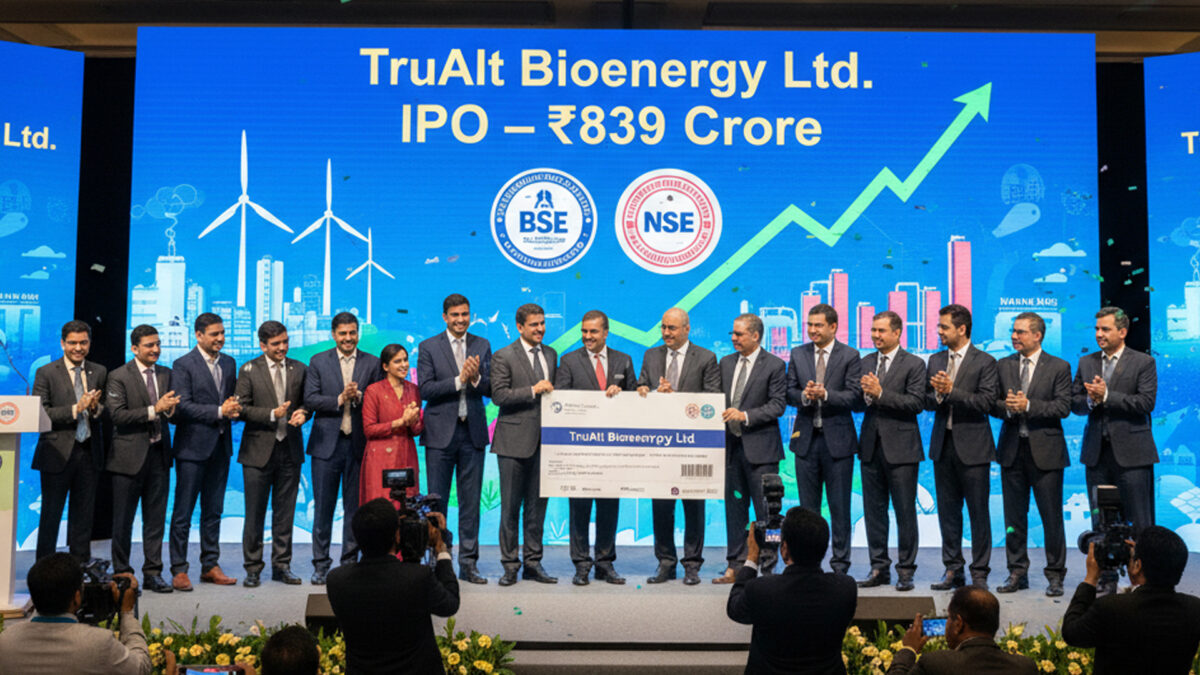
TruAlt Bioenergy Launches ₹839 Crore IPO Amid Growing Biofuel Demand

TruAlt Bioenergy Ltd, a prominent Bengaluru-based biofuels producer, has commenced its Initial Public Offering (IPO) on September 25, 2025, aiming to raise ₹839.38 crore. The IPO comprises a fresh issue of 1.51 crore equity shares aggregating to ₹750 crore and an offer for sale of 0.18 crore shares valued at ₹89.28 crore at the upper price band.

The price band for the IPO is set between ₹472 and ₹496 per share, with a face value of ₹10 each. Investors can bid for a minimum of 30 shares, translating to a minimum investment of ₹14,880 at the upper price band. The subscription period will remain open until September 29, 2025, with the allotment process expected to be finalized by September 30. Shares are scheduled to be listed on the Bombay Stock Exchange (BSE) and the National Stock Exchange (NSE) on October 3, 2025.

Ahead of the public offering, TruAlt Bioenergy secured ₹252 crore from anchor investors, including Tata Mutual Fund, HDFC Mutual Fund, Bandhan Mutual Fund, SBI General Insurance Company, Societe Generale, and Citigroup Global Markets Mauritius. These investors were allotted 50.76 lakh equity shares at ₹496 per share.

The proceeds from the IPO will be utilized for expanding the company’s ethanol production capacity, establishing multi-feedstock operations, and reducing existing debt. TruAlt Bioenergy is among India’s leading ethanol producers, with an installed capacity of 2,000 kiloliters per day (KLPD), accounting for approximately 3.6% of the national capacity in Fiscal 2025.

In the grey market, the shares of TruAlt Bioenergy are trading at a premium of around ₹80 over the issue price, indicating positive sentiment among investors ahead of the listing.

Analysts view the IPO favorably, citing the company’s strong position in the biofuels sector and the government’s supportive policies promoting renewable energy. However, they also caution about the risks associated with the volatility of raw material prices and regulatory changes in the biofuels industry.

Investors interested in participating in the IPO can apply through various online platforms and stockbrokers. Given the promising outlook for the biofuels sector and the company’s strategic initiatives, TruAlt Bioenergy’s IPO presents an opportunity for investors seeking exposure to the growing renewable energy market in India.

Also Read: PhonePe Files For IPO via Confidential Route, Aims to Raise ₹12,000 Crore
Categories
Corporate

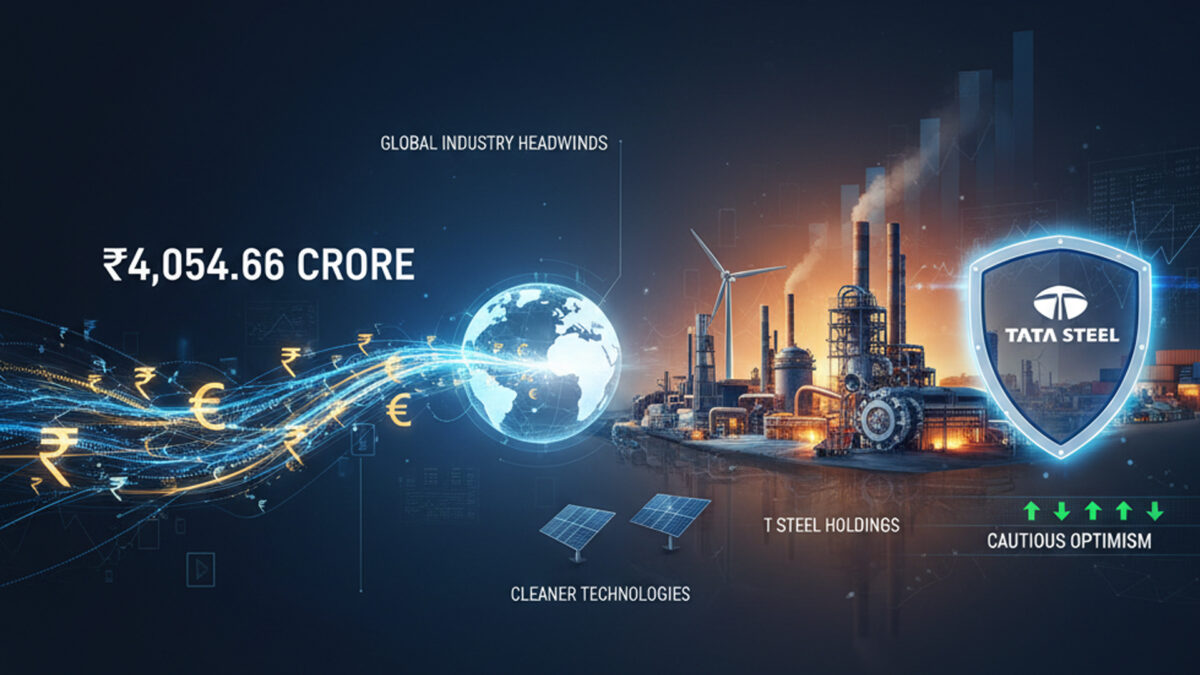
Tata Steel Pumps ₹4,054.66 Crore into Overseas Arm T Steel Holdings

Tata Steel has injected ₹4,054.66 crore into its overseas subsidiary, T Steel Holdings, in a move that underlines the group’s strategic investment in its international operations. The capital infusion, approved by Tata Steel’s board, marks one of the latest steps in the company’s attempts to strengthen its global presence and address working capital or financial requirements of its foreign entity.

The funds are being routed into T Steel Holdings, which oversees Tata Steel’s overseas assets and operations. While Tata Steel has not provided detailed public disclosures about the precise use of these funds, sources familiar with the matter indicate that the infusion will support both operational needs and ongoing expansion or modernization programmes abroad. The move is expected to help offset currency risks, fund capital expenditure in line with market conditions, and shore up balance sheet health for overseas operations.

Tata Steel’s annual reports and filings periodically show performance pressures in foreign units, including those in Europe and Southeast Asia, where raw material costs, energy prices, import/export duties, and logistic expenses have had notable impacts. By transferring capital via the parent company, Tata Steel appears to be ensuring that its subsidiaries have sufficient liquidity to navigate volatile global steel market conditions.

Financial analysts suggest that the ₹4,054.66 crore infusion may also be aimed at facilitating compliance with regulatory norms in overseas jurisdictions, enabling investments in cleaner technologies or facility upgrades, and safeguarding against disruptions in supply chains. Tata Steel has in recent years made several commitments toward decarbonisation and environmental sustainability; overseas units often require upgraded infrastructure to meet increasingly stringent environmental standards.

The timing of the infusion is significant: it comes amid a global steel industry facing challenges such as overcapacity, fluctuating demand, freight rate volatility, and raw material price inflation. Such external pressures have compressed margins for many firms, especially for overseas units operating in Europe where energy and carbon costs can erode profitability rapidly. For Tata Steel, maintaining operational resilience abroad is critical not only for revenue diversification, but also for exposure to advanced steel-making markets and technology.

Investors have reacted to the news with cautious optimism. On one hand, the investment signals Tata Steel’s continued commitment to its overseas subsidiaries and suggests confidence in their long-term potential. On the other, some market watchers indicate that sustained capital infusions might raise concerns about returns if those overseas operations continue to underperform or if the parent company faces cash flow constraints domestically.

Regulatory filings pertaining to this transaction are expected to shed more light on the subsidiary’s business plans, including where precisely the capital will be deployed — whether in debt reduction, scaling production, or upgrading technology. Tata Steel’s management, while not yet disclosing granular details, has reaffirmed its focus on disciplined capital expenditure and cost management across its businesses.

The ₹4,054.66 crore investment in T Steel Holdings underscores Tata Steel’s strategy of buttressing its overseas operations amid global industry headwinds. It reflects a balance between ensuring short-term stability for those units and positioning them for longer-term competitiveness in a shifting international steel landscape.

Also Read: Infosys Expands Partnership with Sunrise to Accelerate AI-Driven IT


Categories
Corporate

Glenmark Bags Exclusive Global License for HER2-ADC From China’s Hengrui in $1.1B Pact

Glenmark Specialty S.A., a wholly owned subsidiary of Glenmark Pharmaceuticals, on Wednesday clinched an exclusive licensing agreement with China-based Hengrui Pharmaceuticals for the cancer therapy drug Trastuzumab Rezetecan (SHR-A1811). The deal, among the largest in Glenmark’s oncology push, grants the Indian firm rights to develop and commercialise the drug across most global markets, with certain exclusions.

Under the terms, Glenmark will pay an upfront fee of US$18 million, followed by potential regulatory and commercial milestone payments up to US$1.093 billion. In addition, Hengrui will receive royalties based on net sales in the territories covered.

The licence excludes Mainland China, Hong Kong SAR, Macao SAR, Taiwan, the United States, Canada, Europe, Japan, Russia and several Central Asian countries among others. Glenmark will cover the rest of the world under the agreement.

Trastuzumab Rezetecan is a next-generation HER2-targeting antibody drug conjugate (ADC). It was approved in China in May 2025 for adult patients with HER2-activating mutations in unresectable locally advanced or metastatic non-small cell lung cancer who had already undergone at least one prior systemic therapy. Clinical study applications are underway or under review for additional indications such as breast cancer, among others.

With this transaction, Glenmark aims to strengthen its oncology pipeline significantly. Glenn Saldanha, Chairman and Managing Director of Glenmark, said the collaboration aligns with the company’s strategy to bring differentiated, high-value therapies to patients and underscores its commitment to advancing innovation in areas with unmet need. Jo Feng, President of Hengrui, described the deal as a strategic step toward deepening the company’s presence in emerging markets and expanding access to innovative treatments in more countries.

Analysts observe that Glenmark is leveraging this deal to ride the wave of demand for targeted cancer treatments, especially in markets outside the U.S., Europe and other highly regulated territories where regulatory costs and competition are steep. ADCs like Trastuzumab Rezetecan are viewed as high-potential due to their mode of action — delivering anti-cancer agents directly to tumour cells while sparing healthy tissue — which may offer advantages in efficacy and tolerability.

The agreement comes at a time when global pharmaceutical firms are increasingly partnering across borders to accelerate access to novel oncology drugs. For Glenmark, this deal represents a major milestone in establishing itself as a serious player in the high-stakes market of ADCs and biologics, complementing its existing strengths in generics and differentiated therapies.

Also Read: Swiggy Exits Rapido, Hives Off Instamart to Step-Down Arm in Major

Categories
Corporate

Polycab Promoters Poised to Offload ~₹880 Crore Stake via Block Deal

Promoters of Polycab India Ltd are preparing to divest a portion of their holdings in a block deal valued at approximately ₹887–₹888 crore. The planned sale, involving around 1.2 million shares at a floor price of ₹7,300 per share, equates to about 0.81% of the company’s equity. Market participants expect the transaction to attract attention, given its size and implications for promoter shareholding.

According to sources familiar with the matter, the floor price represents a discount of roughly 3.1% relative to Polycab’s most recent trading levels. This discount is intended to entice buyers and ensure liquidity in the block deal. The exact timing of the deal is slated for a Thursday trading session, although confirmation from Polycab’s management or promoter group has yet to be disclosed in official filings.

Polycab shares had seen significant trading interest ahead of the announcement, with analysts noting that promoter stake reductions often trigger volatility in share prices. Investors tend to interpret such moves as either a liquidity play by promoters or a signal that the promoters wish to rebalance holdings.

The company, well known for its leadership in the Indian wires and cables sector, recently posted solid financial results. Its performance has been underpinned by strong demand, expanding operations, and improving margins. Despite this, the decision by the promoters to pare back some ownership is being viewed by many as a routine capital markets manoeuvre rather than a reflection of business stress.

At present, Polycab’s promoter holdings stand at about 63% of the total share capital. The reduction of around 0.81% will still leave the promoter group with a strong controlling interest, though it will slightly dilute their ownership. Stake sales of this nature typically require a lock-in period or other regulatory disclosures, especially when they involve promoter or promoter group entities; however, specific lock-in terms for this transaction are not yet clear.

Analysts suggest that the success of this block deal will depend heavily on investor appetite at that price level. Given the discount and promoter status of the shares, demand could be strong, but execution may still affect the stock’s short-term movement.

Some market watchers caution that these deals may lead to downward pressure on the stock if speculative selling follows. While the deal size is large, the remaining promoter stake remains substantial, and the move appears consistent with standard capital markets activity. Investors will be observing closely both the execution of the sale and any subsequent impact on the stock’s trading behaviour.

Also Read: Infosys Expands Partnership with Sunrise to Accelerate AI-Driven IT

Categories
Beyond

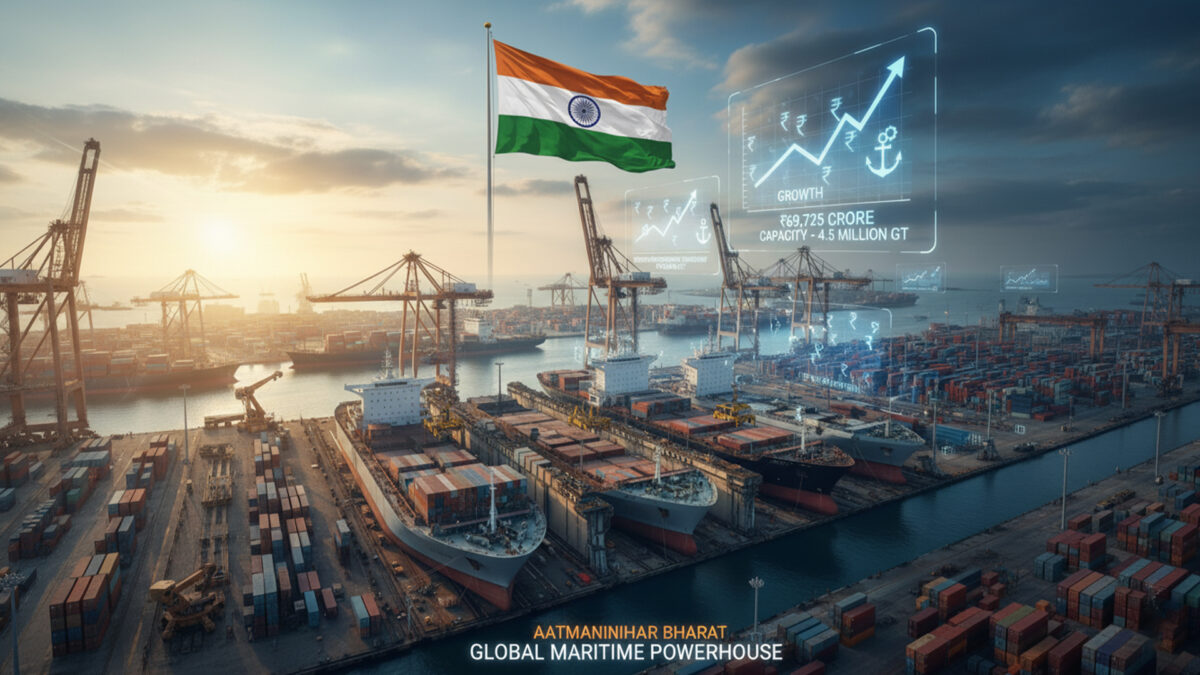
Union Cabinet Approves ₹69,725 Crore Package to Boost India’s Shipbuilding and Maritime Sector

The Union Cabinet, chaired by Prime Minister Narendra Modi, on Tuesday approved a comprehensive package of ₹69,725 crore aimed at revitalizing India’s shipbuilding and maritime ecosystem. The initiative introduces a four-pillar strategy to strengthen domestic capacity, improve long-term financing, promote shipyard development, enhance technical capabilities, and implement legal, taxation, and policy reforms.

Under the plan, the Shipbuilding Financial Assistance Scheme (SBFAS) has been extended until March 31, 2036, with a total corpus of ₹24,736 crore. This includes a Shipbreaking Credit Note of ₹4,001 crore and the creation of a National Shipbuilding Mission to oversee implementation. The scheme seeks to incentivize domestic shipbuilding, reduce project costs, and encourage technological adoption in shipyards across the country.

The package also introduces the Maritime Development Fund (MDF) with a total corpus of ₹25,000 crore, which will provide long-term financing for the sector. A Maritime Investment Fund of ₹20,000 crore will see 49% participation from the government, complemented by an Interest Incentivization Fund of ₹5,000 crore aimed at lowering the effective cost of debt and improving project bankability.

Further, the Shipbuilding Development Scheme (SbDS), with an outlay of ₹19,989 crore, is designed to expand domestic shipbuilding capacity to 4.5 million Gross Tonnage annually. The scheme will support the development of mega shipbuilding clusters, upgrade infrastructure, establish the India Ship Technology Centre under the Indian Maritime University, and provide risk coverage including insurance for shipbuilding projects.

The government expects the overall package to unlock 4.5 million Gross Tonnage of shipbuilding capacity, generate nearly 30 lakh jobs, and attract investments of around ₹4.5 lakh crore into India’s maritime sector. Officials noted that the measures will not only bolster economic growth but also enhance national, energy, and food security by strengthening supply chains and maritime routes.

Experts said the initiative will reinforce India’s geopolitical resilience and strategic self-reliance, advancing the government’s vision of Aatmanirbhar Bharat and positioning the country as a competitive player in global shipping and shipbuilding.

India’s maritime sector has historically been central to trade, supporting nearly 95% of the country’s trade by volume and 70% by value. Shipbuilding, often called the “mother of heavy engineering,” remains critical for employment, investment, national security, and the resilience of trade and energy supply chains.

The Cabinet’s approval marks a major step in modernizing India’s maritime infrastructure and promoting long-term competitiveness in shipbuilding, aligning with the government’s broader industrial and strategic priorities.

Also Read: Swiggy Exits Rapido, Hives Off Instamart to Step-Down Arm in Major

Categories
Beyond

Sensex and Nifty Dip as Visa Policy Concerns and FII Outflows Weigh on Markets

Indian equity markets slipped on Wednesday, with the benchmark Sensex falling as much 380.48 points to 81,721.62 in early trade and the Nifty shedding 106.45 points to 25,063.05. Investor sentiment was dampened by sustained foreign fund outflows and concerns over potential changes in the US H-1B visa system.

Tech and banking stocks were among the key laggards, with Tech Mahindra, Wipro, Tata Motors, HDFC Bank, and ICICI Bank declining up to 2 percent intraday. Analysts attributed the decline to multiple factors, including proposed modifications to the US visa framework. The US Department of Homeland Security has suggested a shift to a wage-based system for H-1B visa allocations, prioritising higher-paid candidates. Market observers note that this could adversely affect Indian IT services exporters, which traditionally rely on cost-effective H-1B staffing for overseas projects.

The broader market sentiment was also pressured by continuing foreign institutional investor (FII) selling, with equities worth ₹3,551.19 crore offloaded on Tuesday. Experts point out that persistent FII outflows have heightened volatility, particularly in mid-cap and large-cap segments.

Global cues contributed to the bearish mood, with South Korea’s Kospi and Japan’s Nikkei 225 trading lower, reflecting overnight losses on Wall Street. Higher Brent crude prices, which rose 0.28 percent to $67.82 a barrel, added to concerns for India, given its heavy dependence on oil imports. The Indian rupee weakened seven paise to 88.80 against the US dollar in early trade, hovering near record lows, as analysts highlighted the combined effect of capital outflows, tariff-related uncertainties, and the proposed US visa fee hike.

Further weighing on markets were comments from US Federal Reserve Chair Jerome Powell, who emphasized the need for caution in easing interest rates. Powell’s remarks suggested that premature monetary easing could entrench inflation, while overly restrictive policies could harm employment prospects. Market strategists noted that the Fed’s cautious stance typically keeps foreign investors cautious about emerging markets, including India.

Technical analysts observed that while the Nifty managed to hold the 25,000 support level, upside momentum remained capped. Geojit Financial Services’ Chief Market Strategist indicated that without a decisive move above 25,330, the index was likely to oscillate in a 24,880–25,080 range, reflecting both domestic and global headwinds.

Overall, Wednesday’s trading highlighted the vulnerability of Indian markets to global macroeconomic shifts and domestic liquidity pressures. Analysts suggest that investor focus will remain on developments related to US visa policies, FII flows, crude price fluctuations, and the trajectory of the rupee in the near term, with market participants closely monitoring both technical levels and fundamental drivers for signs of stability.

Also Read: Trump’s India Strategy Could Backfire on US Giants: Here’s how

Categories
Corporate

Indian Hotels Company Signs 310-Room Taj Hotel in Visakhapatnam

Indian Hotels Company Limited (IHCL) has announced the signing of a new 310-room Taj hotel in Visakhapatnam, Andhra Pradesh. This marks the debut of the Taj brand in the coastal city, reflecting IHCL’s strategy to expand its presence in key leisure and commercial markets.

The hotel, named Taj Varun Beach, will be located within the Varun Bay Sands complex. It is set to offer panoramic views of the Bay of Bengal, providing a luxurious experience for both leisure and business travelers. The property will feature an all-day dining restaurant, specialty restaurants, a bar, a well-equipped gym, a swimming pool, and the signature J Wellness Circle spa. Additionally, expansive banqueting and meeting facilities will cater to corporate events and social gatherings.

Puneet Chhatwal, Managing Director and CEO of IHCL, expressed enthusiasm about the partnership with Varun Hospitality Private Limited for this greenfield project. He highlighted the company’s commitment to introducing the iconic Taj brand to Visakhapatnam, aiming to set new benchmarks for luxury hospitality in the region.

The Varun Bay Sands complex, which will house Taj Varun Beach, is a multi-use development that also includes Varun Hub, offering commercial office spaces, and Varun Nest, featuring service apartments. This integration of hospitality with commercial and residential spaces is expected to enhance the overall appeal of the location.

Prabhu Kishore, Founder and Chairman of Varun Group, emphasized the significance of this collaboration, stating that Taj Varun Beach will elevate the hospitality landscape in Visakhapatnam and contribute to the city’s growing prominence as a tourist and business destination.

This development aligns with IHCL’s broader expansion plans, which include a significant capital expenditure over the next five years to double its hotel count and consolidate revenue. The company aims to reach 150 billion rupees in revenue by fiscal 2030, expanding from 350 to over 700 hotels, primarily focusing on the Indian subcontinent.

The introduction of Taj Varun Beach is anticipated to bolster tourism in Visakhapatnam, attracting both domestic and international visitors. As the city continues to develop its infrastructure and connectivity, the new hotel is poised to become a landmark destination for travelers seeking luxury and comfort along the eastern coast of India.

Also Read: Apple Enters India’s Top 5 as Smartphone Market Grows 2% in H1 2025