Categories
Corporate

Goodluck India Secures Defence Manufacturing License

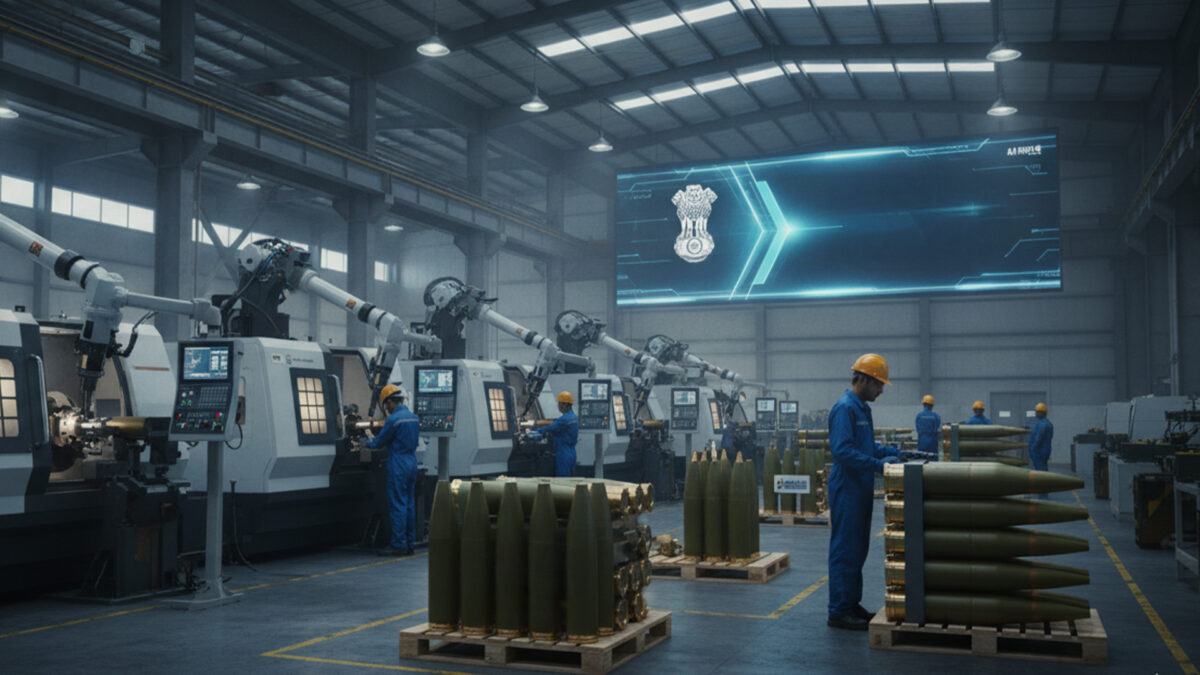
Goodluck India Ltd has achieved significant milestones in its defence sector expansion. The company’s subsidiary, Goodluck Defence & Aerospace, has obtained an industrial license under the Indian Arms Act, 1959, to manufacture medium-caliber artillery shells ranging from 105mm to 155mm, including variants such as HE M107 and ERFB.

This license positions Goodluck Defence as a key player in India’s artillery ammunition supply chain, with an initial annual production capacity of 150,000 shells, set to commence trial production in the third quarter of fiscal year 2026.

In a strategic move to bolster its presence in the aerospace sector, Goodluck India has also entered into a tripartite Memorandum of Understanding (MoU) with BrahMos Aerospace Thiruvananthapuram Ltd and Axiscades Technologies.

This collaboration aims to develop India’s Advanced Medium Combat Aircraft (AMCA), a fifth-generation stealth fighter jet.

The consortium has submitted an Expression of Interest to the Aeronautical Development Agency, Bengaluru, to participate in the tender process, combining strengths in engineering, electronics, and defence manufacturing to enhance India’s technological sovereignty.

These developments have positively impacted Goodluck India’s stock performance.

On October 3, 2025, the company’s shares rose by 2.55% to ₹1,341, marking a new all-time high.

Over the past five trading sessions, the stock has gained over 12%, reflecting investor confidence in Goodluck India’s strategic initiatives in the defence sector.

Looking ahead, Goodluck Defence plans to expand its artillery shell production capacity and is exploring opportunities for an initial public offering (IPO) to further fund its defence ventures.

The company remains optimistic about meeting the growing demand for advanced artillery systems and combat aircraft components, both domestically and internationally.

Goodluck India’s forging division continues to support other high-profile projects, including manufacturing components for the Bullet Train project, HAL, and DRDO, reflecting the company’s diversified engineering capabilities. The combined focus on defence, aerospace, and critical infrastructure projects positions Goodluck India as a growing force in India’s industrial and strategic landscape.

Also Read: Wockhardt Seeks USFDA Nod For Groundbreaking Antibiotic
Categories
Corporate

Honda’s Global Push Fuels 5.6 Lakh September Sales

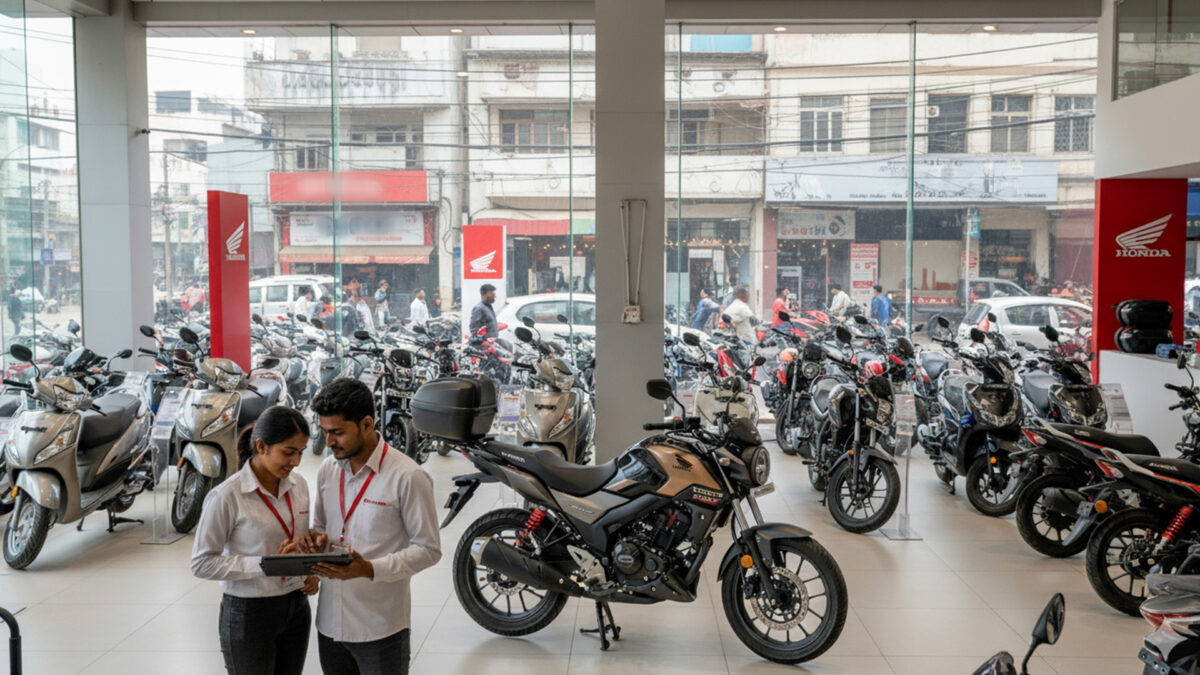
 Honda Motorcycle & Scooter India (HMSI) continued its growth journey with a good profit in September 2025, closing a total sales of 568,164 units, which is up 5.44% compared to the same month last year.

Of these, 505,693 units were sold in the domestic market, reflecting a 2.85% rise, while exports jumped by 32.43% to reach 62,471 units, leveraging the company’s growing footprint internationally.

The company also saw momentum build month-over-month, with September sales climbing nearly 6% over August 2025, highlighting a steady demand trajectory heading into the festive season.

For the first half of the financial year 2025–26 (April to September), HMSI recorded 2.99 million unit sales, including 2.68 million sold in India and 311,517 units exported.

Honda’s steady growth in both domestic and export markets highlights its push to expand the product range and strengthen its footprint in key regions. With the festive season boosting demand, the company looks well-placed to carry this momentum forward in the coming months.

Also Read: Air India Launches First Non-Stop Flight to Philippines

Categories
Corporate

Wockhardt Seeks USFDA Nod For Groundbreaking Antibiotic

Mumbai-based pharmaceutical company Wockhardt has submitted a New Drug Application (NDA) to the U.S. Food and Drug Administration (USFDA) for its novel antibiotic, Zaynich (WCK 5222), marking a significant milestone in Indian pharmaceutical innovation.

This submission, made in early October 2025, seeks approval for the treatment of complicated urinary tract infections (cUTIs) caused by multi-drug resistant (MDR) and extensively drug-resistant (XDR) gram-negative bacteria, including strains of Pseudomonas aeruginosa and Acinetobacter baumannii.

Zaynich is a combination of zidebactam, a β-lactam enhancer, and cefepime, a fourth-generation cephalosporin. It has demonstrated over 97% clinical efficacy in Phase III trials, surpassing the standard-of-care meropenem by 20%.

The ENHANCE 1 trial, conducted across 64 sites in countries including the United States, India, and several European nations, enrolled 530 patients with serious infections.

Zaynich achieved a 96.8% clinical cure rate and a composite clinical and microbiological cure rate of 89%, outperforming meropenem’s 68.4% in the same endpoint.

The drug has also shown promise in compassionate use cases, with reports indicating that it has saved at least 51 lives in the United States and India as of mid-2025. Some earlier reports suggest that 30-50 patients had been treated with a 100% success rate.

Following the NDA submission, the USFDA will conduct a 60-day filing review to assess the application’s completeness. If accepted, Zaynich may be granted either Priority Review, with a six-month timeline, or Standard Review, with a ten-month timeline. The process includes facility inspections, labeling negotiations, and potentially an advisory committee meeting. Zaynich has received Fast Track and Qualified Infectious Disease Product (QIDP) designations, which expedite the review process and offer five additional years of market exclusivity upon approval.

Wockhardt anticipates a decision by mid to late 2026 and is targeting a U.S. launch in fiscal year 2027. The global market for gram-negative infections is estimated to be over $7 billion, with more than 8 million cUTI cases reported annually in the U.S. and European Union. Zaynich’s potential to address this unmet medical need positions it as a promising candidate for approval.

This submission is notable as it represents the first-ever NDA submission to the USFDA for a drug fully discovered and developed by an Indian pharmaceutical company, marking a pivotal moment for Indian pharma innovation. Wockhardt plans to commercialize Zaynich independently in the U.S., though it has not ruled out potential partnerships.

The successful development and potential approval of Zaynich underscore the growing capabilities of Indian pharmaceutical companies in pioneering novel therapies to combat global health challenges.

If approved, Zaynich could significantly enhance Wockhardt’s global footprint and revenue, reinforcing India’s position in the global pharmaceutical landscape.

Also Read: Blackstone Nears $12.9 Billion Target for Asia Buyout Fund

Categories
Corporate

Adani Green Energy Reaches 16,598.6 MW Operational Capacity

Adani Green Energy Limited (AGEL) has announced the operationalisation of 112.5 megawatts (MW) of renewable energy projects at Khavda, Gujarat, bringing its total operational capacity to 16,598.6 MW.

The new capacity comprises an 87.5 MW solar project and a 25 MW hybrid project, both commissioned through AGEL’s step-down subsidiaries: Adani Renewable Energy Fifty Six Limited and Adani Green Energy Twenty Five B Limited, respectively.

The power generation from these plants commenced on September 30, 2025, following the necessary clearances. The addition at Khavda, a region known for hosting some of India’s largest renewable energy sites, marks another milestone in AGEL’s expansion roadmap.

This development aligns with AGEL’s broader strategy to increase its clean energy portfolio. The company has previously announced plans to invest ₹31,000 crore (approximately $3.64 billion) in fiscal year 2026 to add 5 gigawatts (GW) of clean energy capacity, aiming for a total of 50 GW by 2030. This expansion is part of India’s broader renewable energy goals and reflects AGEL’s commitment to contributing significantly to the nation’s clean energy capacity.

The announcement of the new operational capacity has positively impacted AGEL’s stock performance. On October 1, 2025, the company’s shares rose nearly 4%, reflecting investor confidence in the company’s growth prospects and the successful commissioning of these new projects.

As AGEL continues to expand its renewable energy footprint, the company remains focused on its long-term vision of sustainable growth and contributing to India’s renewable energy targets. The successful operationalisation of these projects underscores AGEL’s role as a key player in the nation’s transition to a more sustainable energy future.

Also Read: Airbus board meets in India for first time in 60 years

Categories
Corporate

IHC Acquires 41% Stake in Sammaan Capital in $1 Billion Deal

Abu Dhabi-based International Holding Company (IHC) will acquire a 41.2% controlling stake in Sammaan Capital, the Indian housing finance company formerly known as Indiabulls Housing Finance, for $1 billion (₹8,850 crore).

The deal will make IHC the company’s promoter, giving it the right to appoint a majority of the board of directors.

The acquisition will be carried out through IHC’s affiliate, Avenir Investment RSC Ltd., via a preferential allotment. Under the arrangement, IHC will subscribe to 330 million equity shares and 306.7 million convertible warrants of Sammaan Capital at ₹139 each. The transaction is subject to approvals from the Reserve Bank of India and the Competition Commission of India. Additionally, it will trigger a mandatory open offer to acquire up to 26% of the company’s shares from existing shareholders.

Sammaan Capital, listed on the Bombay Stock Exchange and the National Stock Exchange of India, is one of the country’s largest non-banking financial companies (NBFCs) with a focus on mortgage lending. The company operates over 220 branches in more than 150 towns and cities and employs over 4,400 people. Over the past 25 years, Sammaan Capital has disbursed home loans worth over $19 billion to more than 680,000 families and provided mortgage-backed loans exceeding $9.5 billion to over 100,000 small businesses.

Gagan Banga, Vice-Chairman and Managing Director of Sammaan Capital, said the investment by IHC will help the company expand into a full-service financial institution and strengthen its ability to serve India’s aspiring middle-class and underserved segments. He noted that partnering with a global player like IHC would bring additional resources and credibility to the company.

IHC, owned by the Abu Dhabi ruling family, has rapidly grown into one of the region’s largest holding companies, with investments across finance, healthcare, real estate, and manufacturing. The acquisition of Sammaan Capital is part of the company’s strategy to diversify into emerging markets and strengthen its financial services portfolio. Syed Basar Shueb, CEO of IHC, said the investment reflects confidence in India’s long-term economic growth and the potential of its financial sector. He also highlighted plans to leverage technology and artificial intelligence to enhance lending and credit solutions at Sammaan Capital.

Market analysts say the deal marks the largest foreign investment in India’s NBFC sector in recent years and could pave the way for more cross-border transactions in financial services. The deal is also expected to increase access to capital for underserved populations and expand the company’s lending capacity in India’s growing housing finance market.

The regulatory process for the acquisition is underway, and the transaction is expected to close in the coming months. Once completed, IHC will assume control of the company’s operations, setting the stage for strategic expansion and diversification.

Also Read: P&G Pulls Plug on Pakistan Ops as Multinational Exit Deepens


Categories
Corporate

Air India Launches First Non-Stop Flight to Philippines

Air India has inaugurated its inaugural non-stop flight between India and the Philippines, enhancing connectivity between the two nations. The inaugural flight departed from Delhi’s Indira Gandhi International Airport on October 1, 2025, marking a significant milestone in bilateral air travel.

The launch ceremony was attended by H.E. Josel F. Ignacio, Ambassador of the Philippines to India, and Maria Cynthia P. Pelayo, Minister and Consul General, Embassy of the Philippines in India, alongside senior officials from Air India.

The new service offers direct connectivity between Delhi and Manila, operating five days a week—Monday, Wednesday, Friday, Saturday, and Sunday. Flight AI2362 departs Delhi at 13:20 local time and arrives in Manila at 22:40, while the return flight, AI2361, departs Manila at 23:40 and arrives in Delhi at 03:50 the following day.

Air India’s Delhi-Manila flights are operated using Airbus A321LR aircraft, featuring a three-class cabin configuration that includes Business Class, Premium Economy, and Economy Class. The airline is among the few in Southeast Asia to offer fully flat beds in Business Class on a single-aisle aircraft.

This new route strengthens Air India’s presence in Southeast Asia, expanding its network to eight destinations across seven countries in the region. It also provides Filipino travelers with convenient connections to Air India’s extensive network across Europe and North America via Delhi.

The launch of the non-stop Delhi-Manila flight is expected to boost tourism, trade, and cultural exchanges between India and the Philippines, offering travelers greater convenience and enhanced connectivity between the two countries.

Also Read: Adani Green Energy Reaches 16,598.6 MW Operational Capacity

Categories
Corporate

Oil Bounces Back as Russia Sanction Threats Stir Market

When oil prices go slightly uphill, there is always a reason for a short respite. As the prices rose a little higher on Thursday, it was a sign of recovering a fraction of their steep recent losses for traders. For quite some time, they had been bearing the losses due to the risk of fresh disruptions to Russian crude supplies against signs of weakening demand.

Among the top names, Brent crude futures edged up 0.2% to $65.49 a barrel, while U.S. West Texas Intermediate (WTI) climbed 0.2% to $61.92. The lift was modest, with analysts attributing it to the effect of geopolitics.

Sources at Nissan Securities noted that WTI’s dip toward $60 a barrel, a key support zone, sparked some bargain buying. That uptick, they say, was further fuelled by speculation that the U.S. and its G7 allies may tighten sanctions. An oil analyst at UBS said that markets are jittery and that Russian oil could face new disruptions, but without actual sanctions bites or export blockages, the price increase is limited.

The G7 finance ministers this week pledged to crack down harder on nations still importing Russian crude or enabling backdoor flows, while Washington is reported to be aiding Ukraine with intelligence to help strike Russian oil infrastructure. Both shifts, if realized, could hit Russian supply lines directly.

But the bullish sentiment ran into headwinds. OPEC+ is said to be mulling a sharp production hike in November that could go up to 500,000 barrels a day, three times its October increase, as Saudi Arabia seeks to claw back lost market share. Adding to that, U.S. government stock data showed oil product inventories rising by 1.8 million barrels last week to 416.5 million, a clear sign of soft demand and weak refinery runs.

The result is a market trapped in two stories at once. While the fears over Russian supply squeezes are pushing prices up, the weight of oversupply and sluggish demand is holding them back. For now, the tug of war has left oil in a fragile balance, with traders watching closely which side tips first.

Also Read: TCS Adds Outplacement, Mental Health Support to Layoffs


Categories
Corporate

TCS Adds Outplacement, Mental Health Support to Layoffs

Tata Consultancy Services (TCS), India’s largest IT services company, has rolled out severance packages of up to two years’ salary as part of a sweeping workforce restructuring, according to media reports.

The exercise is aimed at streamlining operations and realigning talent with evolving business priorities. Severance pay will vary by tenure: six months’ salary for shorter stints, around 1.5 years’ pay for employees with 10–15 years of service, and up to two years’ salary for those with over 15 years at the company. All affected employees are assured a minimum of three months’ notice pay.

However, staff who have remained “on the bench,” or unassigned, for more than eight months may receive only standard notice pay without additional benefits.

Beyond financial compensation, TCS has also rolled out outplacement services, mental health support under its “TCS Cares” initiative, and voluntary early retirement options with full benefits.

CEO K Krithivasan described the decision as “one of the toughest” in the company’s history, noting that mid- and senior-level employees have been most impacted. The bulk of role adjustments were carried out in August and September, with a few cases still under review.

For many employees, the packages bring both certainty and closure in a period of change. For TCS, the move represents a difficult balancing act involving letting go of long-serving staff while trying to safeguard the company’s future.

Also Read: Google Cloud Shrinks Headcount as AI Takes Center Stage

Categories
Corporate

India Eyes $8B IPO Boom, LG Leads the Charge

India is swiftly heading for a blockbuster IPO season in late 2025, with companies expected to raise nearly $8 billion in the final quarter alone. At the forefront is LG Electronics, which has revived plans to list its Indian arm by selling a 15% stake. The offering could fetch up to ₹116 billion, which is around $1.3 billion, valuing the unit at approximately ₹774 billion, which is close to $8.7 billion.

LG’s public listing aligns with a wider strategy to cement India’s place as a global manufacturing hub. Alongside the IPO, the company is investing $600 million in a new factory at Sri City, Andhra Pradesh, its third in the country, to boost production for both local demand and exports, particularly targeting European markets.

The upcoming IPO wave extends beyond LG. Heavyweights like Tata Capital are also preparing to tap the markets, with individual issues expected to range between $600 million and $1.8 billion. Strong participation from retail and institutional investors, coupled with buoyant valuations and government-backed policies, is fueling this fundraising rush.

So far in 2025, more than 240 companies have collectively raised $10.5 billion, making India one of the top three destinations globally for IPO proceeds. With the latest surge, the country’s capital markets are reflecting firm investor confidence and a growing role in global finance and manufacturing.

Also Read: India-EFTA Trade Pact Takes Effect, Promises $100 Billion Investment

Categories
Technology

Amazon Unveils Four New Echo Devices Built For Alexa+

Amazon said all four products will begin shipping in the U.S. later this year

Amazon on Tuesday announced the launch of four new Echo devices designed specifically for its next-generation AI assistant, Alexa+. The new lineup includes the Echo Dot Max, Echo Studio, Echo Show 8, and Echo Show 11.

“These new Echo products are the best way to experience Alexa+, and Early Access is now available out of the box with the purchase of an all-new Echo,” Amazon said in its announcement.

Custom chips and sensor platform

The company said the new devices are powered by two custom-designed silicon chips — AZ3 and AZ3 Pro — featuring a new AI accelerator “designed to run AI edge models of the future.” According to Amazon, the Echo Dot Max uses the AZ3 chip to improve conversation detection, while the AZ3 Pro, found in the Echo Studio and Echo Show models, supports “state-of-the-art language models and vision transformers.”

Built on top of this hardware is Omnisense, Amazon’s new sensor platform for ambient AI. It combines signals from cameras, audio, ultrasound, Wi-Fi radar, and other sensors to allow Alexa+ to respond more intelligently to events at home, including delivering reminders when specific people enter a room or sending alerts about unlocked doors at night.

Device features and pricing

The Echo Dot Max is described as “the best Echo Dot we’ve ever built,” offering nearly three times the bass of its predecessor and featuring a new two-way speaker system. It will be available for $99.99.

The new Echo Studio, priced at $219.99, is 40% smaller than the original and supports spatial audio and Dolby Atmos. It includes a woofer and three full-range drivers for immersive sound, along with a new spherical design.

The Echo Show 8 and Echo Show 11 feature upgraded displays with improved clarity, a 13-megapixel camera, and new front-facing stereo speakers. They are priced at $179.99 and $219.99 respectively.

Amazon said all four products will begin shipping in the U.S. later this year, with the Echo Dot Max and Echo Studio available from October 29 and the Echo Show 8 and Echo Show 11 from November 12.

According to the company, customers purchasing these new Echo devices “will get access to Alexa+ out of the box,” with Early Access continuing to expand.