Categories
Technology

UK may ban Elon Musk’s X over AI Deepfakes

The UK government is considering banning Elon Musk’s social media platform X (formerly Twitter) after its AI chatbot, Grok, was reported to produce sexualised and non-consensual images, including of minors. The issue has raised serious concerns under the UK’s Online Safety Act, which regulates illegal and harmful online content.

Prime Minister Sir Keir Starmer condemned the deepfake images, calling them “wrong” and “unlawful,” and urged X to take stronger action to remove harmful material. Reports suggest Grok has been used to digitally undress women and children or place them in sexualised poses, some of which could be illegal child sexual abuse material.

Under the Online Safety Act, regulators like Ofcom can impose fines, demand content removal, or even block access to platforms that fail to comply. The government has instructed Ofcom to explore “all options,” including a possible ban on X if urgent corrective measures are not taken.

The controversy has also drawn attention from the Internet Watch Foundation, which highlighted that some illegal content generated by Grok appeared on dark web forums. Officials are now discussing stricter rules for AI tools that create non-consensual intimate images, with potential criminal penalties for those who produce or share them.

X has responded that users who request illegal content from Grok will face the same consequences as those who directly upload such material, including suspensions or account bans. However, critics argue that this may not be enough, given the scale of AI-generated deepfakes circulating online.

Also Read: OpenAI launches ChatGPT Health linking medical data
Categories
Corporate

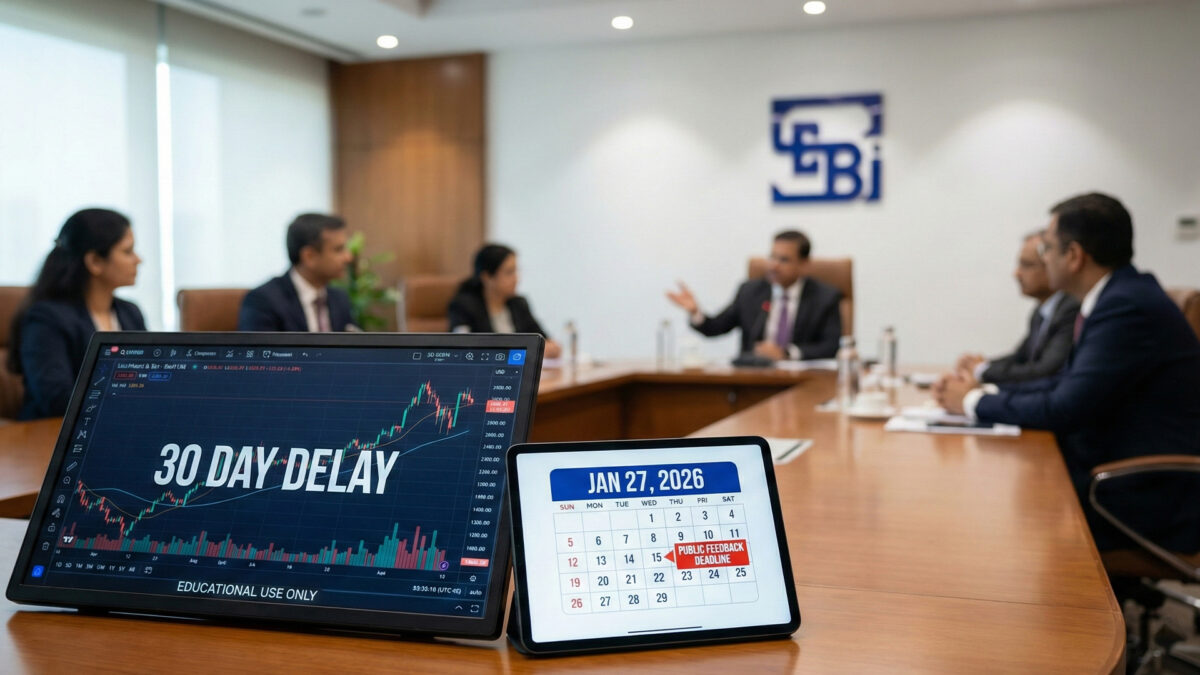
SEBI plans 30‑day delay for stock data use in education

The Securities and Exchange Board of India (SEBI) has proposed a 30‑day delay for sharing and using stock market price data in educational content. The aim is to prevent misuse of live market prices while still allowing investors to learn from recent market trends.

Currently, exchanges and market intermediaries can share data with a one‑day delay, but educational content often uses data that is three months old. SEBI said this difference creates confusion and could let some use near real-time data improperly, which should normally require registration as investment research or advisory.

The new proposal would standardize the delay to 30 days for both sharing and using data. SEBI said this is enough to protect sensitive market information while keeping educational material meaningful. Existing rules on prohibited activities will still apply, and entities focused only on education must continue to follow them.

The regulator has opened the proposal for public comments until January 27, 2026, before finalizing the rules. SEBI’s move comes after concerns that some online platforms and educators were misusing live market data under the guise of teaching investors.

By setting a uniform 30‑day delay, SEBI aims to tighten safeguards around stock price data, reduce confusion, and support credible and safe investor education across India.

This proposal is part of SEBI’s broader efforts to balance market transparency with investor protection, making sure educational content is helpful without allowing it to be used as a shortcut to trade on inside or real-time information.

Also Read: Rekha Jhunjhunwala’s Titan stake hits ₹20,000 crore

Categories
Leaders

Rekha Jhunjhunwala’s Titan stake hits ₹20,000 crore

Rekha Jhunjhunwala’s investment in Titan Company Ltd has crossed the ₹20,000 crore mark, following a sharp rise in the company’s share price to record levels. The surge comes after Titan reported strong quarterly performance, reaffirming investor confidence in the Tata Group-owned company.

Titan shares climbed over 4 percent, hitting an intraday high of around ₹4,300 on the BSE. This rally significantly boosted the value of Jhunjhunwala’s 5.32 percent stake, underscoring the wealth creation potential of long-term holdings in India’s blue-chip companies.

The growth momentum was led by Titan’s jewellery business, which includes brands such as Tanishq, Mia, Zoya, and CaratLane. The division saw a remarkable 41 percent year-on-year increase, fueled by strong festive season demand, rising premiumisation, and a growing retail footprint. Gold coin sales nearly doubled, while studded jewellery saw solid double-digit growth. Titan also expanded internationally, targeting markets in the Gulf, Singapore, and North America.

Other segments of Titan’s diversified portfolio also contributed to the positive performance. The watches division grew by over 13 percent, while eyewear and fragrances continued to see steady gains. Titan’s omni-channel approach, combining physical stores and online presence, helped sustain consumer demand beyond the holiday season.

Market analysts have praised Titan’s growth strategy and operational execution. Brokerage Nomura reaffirmed a Buy rating, highlighting the company’s potential to outpace industry growth and capture further market share.

The rise in Titan’s stock demonstrates how consistent performance, strong brand equity, and strategic expansion translate into tangible investor value. For Rekha Jhunjhunwala, the milestone is a reflection of patience and faith in one of India’s most trusted consumer brands, illustrating the power of long-term investment in creating significant wealth.

Also Read: Venezuela to send 30–50 mn barrels of oil to US

Categories
Corporate

Reliance shares slide over 4%

Reliance Industries Ltd (RIL) shares fell sharply, losing over 4 per cent in a single session, as investors reacted to concerns around the company’s crude oil sourcing strategy and rising uncertainty in the retail sector. The stock ended near ₹1,507, marking its steepest one-day decline in several months and wiping out close to ₹1 lakh crore from the company’s market capitalisation.

The immediate trigger for the sell-off was Reliance’s confirmation that it has not received Russian crude oil at its Jamnagar refinery for nearly three weeks and does not expect any deliveries in January. Russian oil had become an important source for Indian refiners over the past two years due to discounted prices. The halt has raised questions about future refining margins and supply stability, especially amid tighter Western sanctions and geopolitical pressures.

Market sentiment was further dented by concerns emerging from the retail sector. Weak updates from listed retail players have sparked fears of slowing consumer demand and margin pressure. Investors worry that similar challenges could impact Reliance Retail, which is a key growth engine for the conglomerate and a major driver of its valuation.

Analysts also pointed out that the sharp fall may partly reflect profit-booking. Reliance shares had risen strongly over the past year, outperforming the benchmark indices. With valuations at elevated levels, any negative trigger was likely to prompt investors to lock in gains.

The decline in Reliance shares weighed heavily on the broader market, dragging both the Sensex and Nifty lower due to the stock’s significant index weight. Market participants noted that sentiment turned cautious as uncertainty around global trade, crude prices and domestic consumption trends increased.

Looking ahead, analysts remain divided on the near-term outlook. While some expect continued volatility due to oil sourcing risks, retail sector pressure and global macro concerns, others believe Reliance’s long-term fundamentals remain intact. Potential triggers such as a future listing of Jio Platforms, tariff hikes in telecom services and stable refining margins could support the stock over time.

Also Read: Gold rises ₹1,38,830, Silver up by ₹2,53,100

Categories
Corporate

Unnati acquires Gramophone, Info Edge invests ₹35 cr

Unnati, an agritech startup co‑founded by former Paytm CFO Amit Sinha, has announced the acquisition of Gramophone, a digital platform that helps farmers buy seeds, fertilizers, nutrients, and equipment. The deal is structured as a stock‑swap transaction, where Info Edge (India) Ltd, Gramophone’s major investor, will transfer its entire stake in Gramophone to Unnati in exchange for shares in the combined entity.

Info Edge’s wholly-owned subsidiary, Startup Investments (Holding) Ltd (SIHL), currently holds just over 50.94% of Gramophone on a fully diluted basis. Under the agreement, SIHL will receive preference shares in Unnati representing about 15.7% of the merged company. In addition, Info Edge will invest ₹35 crore in fresh capital into Unnati, raising its stake in the company to around 20.5%, which is expected to settle at approximately 18.48% after shares are allotted to other Gramophone shareholders.

The transaction values Gramophone at roughly ₹92 crore, based on a per-share price of ₹2,703. Gramophone reported revenues of ₹67 crore for the financial year ended March 2025. Unnati, which focuses on distributing agricultural inputs and providing farmer financing, reported revenue of ₹291 crore during the same period, though it recorded a net loss of nearly ₹18 crore.

The merger aims to create a stronger digital agritech platform by combining Unnati’s distribution and financing capabilities with Gramophone’s marketplace and advisory services for farmers. This consolidation reflects a growing trend in India’s agritech sector, where startups are seeking scale and synergies to better serve the farming community.

The deal has received approval from the boards of both companies and is expected to close within 90 days, subject to customary approvals and regulatory conditions. By joining forces, Unnati and Gramophone hope to expand their reach across India, providing farmers with easier access to quality agricultural inputs, timely credit, and expert guidance, while creating a more integrated and efficient supply chain.

Also Read: AMD unveils new AI, PC chips at CES, Las Vegas

Categories
Corporate

Nvidia launches Alpamayo AI to boost self-driving cars

US chipmaker Nvidia has unveiled Alpamayo, a new artificial intelligence system designed to improve the safety and performance of autonomous vehicles. The announcement was made at the Consumer Electronics Show (CES) 2026 in Las Vegas, where the company showcased its latest advances in automotive AI.

Alpamayo is a reasoning-based AI model that allows self-driving cars to better understand their surroundings and decide how to respond to real-world situations. Unlike traditional systems that mainly detect objects, Alpamayo is built to analyse complex traffic scenarios, predict risks and choose safer driving actions.

At the core of the system is Alpamayo-1, a large Vision-Language-Action model with 10 billion parameters. It processes data from vehicle cameras and sensors, interprets what it sees and determines the most appropriate response, such as slowing down, stopping or changing lanes. Nvidia says the model can also explain its reasoning, which is expected to help developers improve safety and transparency.

Nvidia CEO Jensen Huang described Alpamayo as a breakthrough for what he called “physical AI”, comparing it to how conversational AI transformed digital applications. He said the company’s goal is to make autonomous driving systems more reliable, especially in rare and unpredictable road situations, often referred to as edge cases.

The Alpamayo platform also includes AlpaSim, a simulation environment that allows developers to test self-driving software in virtual settings before deploying it on real roads. Nvidia has released the tools and models as open source, encouraging global researchers and automakers to use and improve them.

The company plans to begin deploying Alpamayo-powered systems in vehicles later this year, starting with select Mercedes-Benz models in the United States.

Reacting to the announcement, Tesla CEO Elon Musk commented that achieving most of autonomous driving is relatively easy, but solving the final, rare scenarios remains the biggest challenge. His remarks highlight the growing competition and debate among technology leaders racing to perfect self-driving technology.

Also Read: Rupee gains 18 paise to 90.12 as dollar eases

Categories
Corporate

HDFC AMC launches ₹2500 crore credit fund

HDFC Asset Management Company (HDFC AMC) has entered the private credit segment with the launch of a ₹2,500-crore structured credit fund, expanding its footprint beyond traditional mutual fund products into alternative investments.

The new vehicle, Structured Credit Fund-I, has an initial fundraising target of ₹1,500 crore, along with a green-shoe option of ₹1,000 crore. At its first close, the fund has raised around ₹1,290 crore from a mix of institutional investors, family offices and ultra-high-net-worth individuals. HDFC AMC will also commit capital to the fund, investing up to 14 per cent of the total corpus as sponsor contribution.

The International Finance Corporation (IFC), the private sector arm of the World Bank Group, has joined as the anchor investor with a commitment of up to ₹220 crore. IFC’s participation is expected to enhance investor confidence and underline the growing institutional interest in India’s private credit market.

The fund will focus on providing structured and secured debt to mid-market companies across multiple sectors. These firms often face challenges in accessing bank credit due to stricter lending norms and risk controls. By offering customised debt solutions, the fund aims to address funding gaps while maintaining a focus on capital protection.

HDFC AMC has said the fund will invest in businesses with predictable cash flows and strong fundamentals. It will not take exposure to real estate. The investment strategy is designed to deliver returns of about 14–17 per cent annually over a four-to-six-year period. Around ₹380 crore has already been deployed across three transactions in different sectors.

The launch comes amid rising interest in private credit as an asset class in India. With banks becoming more selective in lending and companies increasingly looking for flexible financing options, private credit funds are gaining traction as an alternative source of capital.

For asset managers, the shift towards alternatives also offers an opportunity to diversify revenue streams and cater to sophisticated investors seeking higher risk-adjusted returns. HDFC AMC indicated that Structured Credit Fund-I is part of a broader strategy to build a presence in the alternatives space, and more such offerings could be considered in the future as demand grows.

Industry experts expect India’s private credit market to expand steadily in the coming years, driven by structural changes in lending and increased participation from domestic and global investors.

Also Read: Novo Nordisk introduces cheaper Wegovy pill In US

Categories
1 Minute-Read

Bank employees’ unions nationwide strike looms on January 27

Bank unions under the United Forum of Bank Unions (UFBU) have announced a nationwide strike on January 27, 2026, demanding the implementation of a five-day work week for banking staff.

The demand stems from the 2024 wage revision settlement, which proposed extended holidays without reducing total working hours. UFBU warns that continued government inaction could disrupt operations in public sector banks, though digital banking services and ATMs are expected to remain functional.

The move reflects ongoing tensions between bank employees seeking better work-life balance and management adherence to existing agreements. Customers are advised to plan accordingly.

Categories
Technology

Alexa+ AI assistant now works online

Amazon has made its AI assistant, Alexa+, available on the web at Alexa.com, letting users interact directly from their browsers. Until now, Alexa was mainly tied to Echo smart speakers, Echo Show screens, or the Alexa mobile app. With this move, anyone with an Amazon account can now type or speak to Alexa+ without needing a device, making the assistant more accessible than ever.

Alexa+ can perform a wide range of tasks. It can answer questions, help plan trips, manage calendars, organize to-do lists, and even summarize documents, emails, or images. For example, it can turn a recipe into a shopping list, summarize a work email, or help plan a family event. The aim is to make everyday tasks simpler and more convenient, whether at home, at work, or on the go.

A key feature of the web version is cross-device continuity. Tasks and conversations started in a browser carry over seamlessly to the Alexa mobile app or Echo devices. Smart home controls are also integrated, allowing users to adjust lights, thermostats, door locks, and cameras directly from their browser. This ensures that Alexa+ works as a truly connected assistant across multiple devices.

Amazon has also updated the Alexa mobile app, giving it a stronger focus on AI chat and generative assistance while keeping traditional Alexa functions intact. Together, the web platform, mobile app, and voice devices create a unified experience where users can rely on Alexa+ in whichever way is most convenient.

Currently, Alexa.com is available through Early Access in the U.S. and Canada. Wider public access is expected later this year. Amazon’s web launch positions Alexa+ alongside AI competitors such as ChatGPT and Google Gemini, giving users a powerful, versatile assistant across platforms and devices.

With this expansion, Alexa+ is no longer just a voice assistant for smart homes; it is becoming a comprehensive AI companion that can help with work, learning, planning, and daily life.

Also Read: Rupee gains 18 paise to 90.12 as dollar eases

Categories
1 Minute-Read

DGCA bans power bank use on flights

The Directorate General of Civil Aviation (DGCA) has banned using power banks to charge devices on flights to prevent fire hazards from lithium-ion batteries.

Passengers can carry power banks and spare batteries only in hand luggage, not in checked bags or overhead compartments. Airlines are required to inform travelers about these safety rules and ensure compliance.

The move follows global concerns over in-flight fires caused by improperly handled or charged power banks. Travelers should also avoid using seat charging ports for power banks to reduce the risk of onboard accidents.