Categories
Counterpoint

You give the CEO ₹50 crore… Mohandas Pai calls out stagnation in entry-level IT salaries

You give the CEO ₹50 crore… Mohandas Pai calls out stagnation in entry-level IT salaries

He further argues that the industry has been exploiting freshers for over a decade, with stagnant wages disproportionately affecting the bottom 50% of employees
Staff Writer

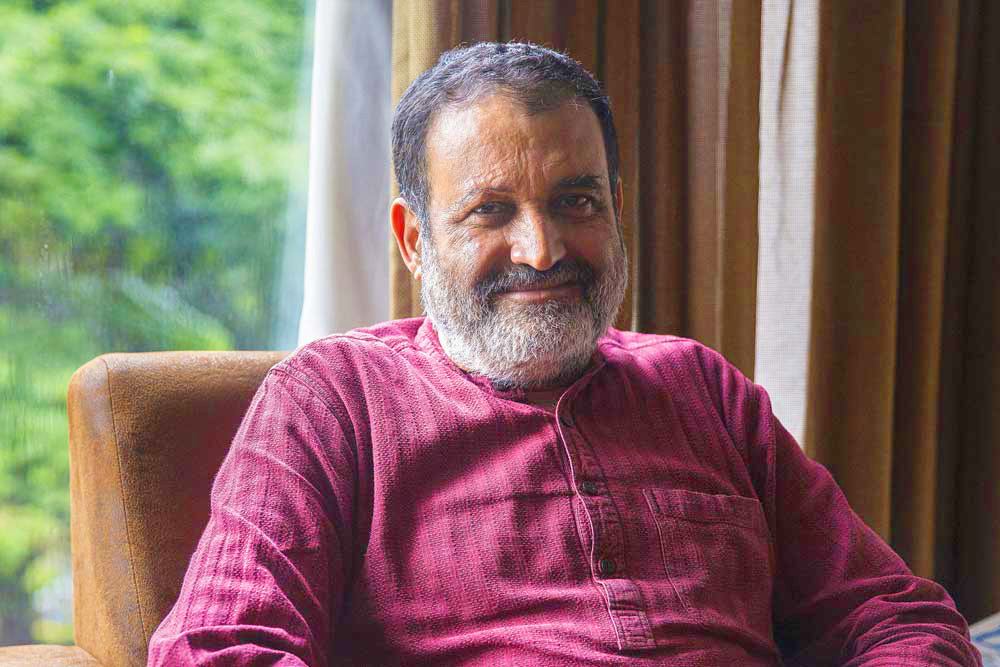
Mohandas Pai, Chairman of Aarin Capital and former CFO of Infosys, has sharply criticized the state of entry-level salaries in India's IT sector. In a video interview to the Hindustan Times, Pai accused the industry of exploiting freshers, despite boasting about record profits and paying top executives exorbitant salaries.

“They're exploiting the entry level. I've been talking about them exploiting people because they [have] surplus labor, desperate young people who are getting educated and want to work. It is very unethical, not correct, and against what the industry stands for,” Pai said.

Pai pointed out that while CEO salaries have seen massive hikes, entry-level salaries have remained nearly stagnant over the past decade.

Freshers who earned ₹3.25 lakh annually in 2011 now make only ₹3.50-₹3.75 lakh in 2024—a mere 15% increase over 13 years. In contrast, CEO salaries have risen by 50-60% in just the last five years, with the median pay of top IT executives surging 160% to reach ₹84 crore annually, Pai had stated earlier.

“You give the CEO ₹50 crore, ₹60 crore, ₹70 crore, whereas seven to eight years back they were getting ₹8-10 crore. Now you don't want to pay freshers? I think it's terrible. This is not the way for the industry to lead the country,” Pai remarked.

He further argued that the industry has been exploiting freshers for over a decade, with stagnant wages disproportionately affecting the bottom 50% of employees.

Despite concerns over job losses due to AI, Pai remains optimistic about India's role in global tech hiring. He predicts that more technology jobs will come to India as companies shift AI-first strategies.

“If you want to do AI in Western markets, you need data scientists who are not available there. So, the work will come to India,” he stated.

Pai believes that job losses will be more pronounced in the West, where companies are paying $150,000 per employee but can replace them with AI at a fraction of the cost. In India, productivity gains from AI in service companies are expected to be around 10-12% annually, leading to more projects and spending.

With economic certainty improving and global spending set to rise, Pai forecasts better hiring prospects in the coming years.


Categories
Corporate

Aditya Birla Housing Finance secures ₹830 crore from IFC to boost affordable housing

Aditya Birla Housing Finance secures ₹830 crore from IFC to boost affordable housing

ABHFL, a subsidiary of Aditya Birla Capital, stated that the funding was secured through Non-Convertible Debentures (NCDs) from the IFC

Staff Writer

Aditya Birla Housing Finance Limited (ABHFL) has secured Rs 830 crore from the International Finance Corporation (IFC) to promote affordable housing and empower women borrowers in India. The funding will focus on low and middle-income groups and support women-led MSMEs.

ABHFL, a subsidiary of Aditya Birla Capital, stated that the funding was secured through Non-Convertible Debentures (NCDs) from the IFC. This investment aims to address critical gaps in the housing sector by providing loans to low-income and middle-income groups, focusing on encouraging homeownership among women. A portion of the funds will also support MSMEs, particularly women-led enterprises, to drive economic growth and empowerment. 

"This collaboration with IFC marks a key milestone in advancing financial inclusion and equitable growth…This initiative empowers underserved communities, particularly women borrowers, while supporting MSMEs to foster entrepreneurial growth and economic empowerment," said Pankaj Gadgil, MD and CEO of ABHFL.

The funding aligns with IFC's mission to enhance financial access in emerging markets. "A dynamic housing sector and improved financial access for MSMEs are essential for India's sustainable development," stated Wendy Werner, Country Head, India and Maldives, IFC.

ABHFL, registered with the National Housing Board as a non-deposit accepting finance company, has its footprint in 150 branches. The company manages assets under management (AUM) of over Rs 23,236 crore and holds a long-term credit rating of AAA (Stable) by CRISIL, ICRA, and India Ratings. ABHFL, part of the $66 billion Aditya Birla Group has operations in over 40 countries.

Categories
Technology

How can India match China’s DeepSeek?

How can India match China's DeepSeek?

Zoho CEO Sridhar Vembu points out, Chinese entrepreneurs never had it easy either. And yet, China is competing head-on with Silicon Valley

Staff Writer

Every few years, a moment forces a nation to rethink its trajectory. DeepSeek, China’s latest AI breakthrough, has sparked one such reckoning in India.

The question is common: "Why can't India do what China did?" The answer, as Zoho CEO Sridhar Vembu puts it, is simple: "India can, and it is not that hard."

For decades, India’s tech industry has thrived as an outsourcing hub, but global AI leadership demands more than service revenue. 

It requires fundamental research, long-term investment, and a cultural shift toward innovation. Yet, when conversations arise about India’s lag in AI, they often dissolve into blame—on reservations, on governance, on bureaucracy. 

But as Vembu points out, Chinese entrepreneurs never had it easy either. And yet, China is competing head-on with Silicon Valley.

On Reddit, an Indian student at a premier institute made a grim observation: "The ship has long sailed." He argued that China, despite being behind on hardware, has used aggressive open-source research to undermine American dominance. Indian companies, by contrast, remain stuck in low-risk, service-based AI applications.

"We have never caught any bus, train, or even cycle of the tech revolution," wrote another user. "All this self-patting is for IT service revenue. In real terms, we are nowhere near what the world is achieving."

The criticism is sharp but not unwarranted. India’s largest corporations largely avoid research-intensive fields. Government funding for non-pharma research remains scarce. The academic system prizes engineering degrees over foundational scientific inquiry.

Even at Davos 2025, HCLTech Chairperson Roshni Nadar Malhotra acknowledged the gap: "Indian companies are focusing on practical AI use cases, but they aren't yet at the cutting edge of AI research."

Meanwhile, DeepSeek has already reshaped global markets. The AI race wiped $1 trillion from Nasdaq, with Nvidia losing nearly $600 billion in valuation—its largest drop in history. The AI assistant even overtook ChatGPT on Apple’s App Store in the US and UK.


Categories
Corporate

SEBI rejects US-based Danny Gaekwad’s bid to pick up 26% stake in Religare Enterprises

SEBI rejects US-based Danny Gaekwad's bid to pick up 26% stake in Religare Enterprises

Danny Gaekwad Developments & Investments had proposed acquiring a 26% stake in Religare Enterprises at a price higher than the one offered by the four Burman family-controlled entities

Staff Writer

The Securities and Exchange Board of India (SEBI) has rejected the competing open offer from US-based Danny Gaekwad Developments & Investments for the acquisition of a 26 percent stake in Religare Enterprises Ltd (REL). The regulator stated that the offer did not comply with required regulations.

In a communication to REL on January 28, SEBI clarified that the "letters submitted by Digvijay Laxmansinh Gaekwad" were being returned, as they did not qualify as an exemption application under Regulation 11 of the SEBI (SAST) Regulations, 2011. The rejection referenced an email from January 25, 2025, which included a letter from Gaekwad's entity, Danny Gaekwad Developments & Investments, based in Florida.

Danny Gaekwad Developments & Investments had proposed acquiring a 26 percent stake in Religare Enterprises at a price higher than the one offered by the four Burman family-controlled entities. Gaekwad, a self-proclaimed globally recognized investor, offered Rs 275 per share — 17 percent more than the Burmans' offer of Rs 235 per share.

The Burman family's open offer to acquire an additional 26 percent stake in REL commenced on January 27 following regulatory approval. The offer covers up to 90,042,541 fully paid-up equity shares, representing 26 percent of REL's expanded voting share capital. If approved, the Burman family's stake in REL will rise to 53.94 percent.

The Burman entities involved in the open offer include Finmart Private Ltd, Puran Associates Private Ltd, VIC Enterprises Private Ltd, and Milky Investment & Trading Company. As of September 30, 2024, these entities collectively owned 25.12 percent of REL.

In September 2023, the Burman family — promoters of Dabur India and other companies like Eveready Industries — through its entities, announced an open offer worth Rs 2,116 crore to acquire up to a 26 percent stake in REL.

Following the open offer, the Burmans raised a complaint with SEBI regarding insider trading violations by the chairperson and her board appointments.

This was challenged by REL’s independent directors, who flagged concerns about fraud and other alleged violations by the Burman family entities and reported the matter to regulators including SEBI, RBI, and the Insurance Regulatory and Development Authority.

Categories
Leaders

Zoho founder Sridhar Vembu steps down as CEO. His surprising new role revealed

Zoho founder Sridhar Vembu steps down as CEO. His surprising new role revealed

The leadership baton has now been passed to Zoho’s co-founder, Shailesh Kumar Davey

JSG

Sridhar Vembu, the founder of Zoho Corp, has stepped down as the CEO of the software company, marking a significant leadership transition for the tech giant. In a post on X, Vembu announced his decision to take on the role of Chief Scientist, redirecting his focus toward research and development.

"A new chapter begins today," Vembu wrote. "In view of the various challenges and opportunities facing us, including recent major developments in AI, it has been decided that it is best that I should focus full time on R&D initiatives, along with pursuing my personal rural development mission."

The leadership baton has now been passed to Zoho’s co-founder, Shailesh Kumar Davey, who steps into the role of CEO. Vembu explained that this restructuring is a strategic move to ensure the company can tackle pressing technological challenges while maintaining its competitive edge.

Under this new structure, Zoho’s leadership will be divided across its core business divisions. Co-founder Tony Thomas will oversee Zoho’s US operations, Rajesh Ganesan will lead the ManageEngine division, and Mani Vembu will head the Zoho.com division.

Vembu, who is widely recognized for his commitment to sustainable development and uplifting rural economies, emphasized that his shift to a research-intensive role aligns with the company’s broader priorities. "The future of our company entirely depends on how well we navigate the R&D challenge," he said. "I am looking forward to my new assignment with energy and vigor. I am also very happy to get back to hands-on technical work."

The announcement highlights Zoho’s focus on navigating the evolving tech landscape, especially with the rapid advancements in artificial intelligence. 

Categories
Corporate

ICICI Bank Q3 FY25: Net profit goes up by 15%, NII increases 9.1%

ICICI Bank Q3 FY25: Net profit goes up by 15%, NII increases 9.1%

The lender reported a net interest income of Rs 20,370.6 crore, reflecting a 9.1% increase from Rs 18,678 crore in the previous year

Staff Writer

In the third quarter of fiscal year 2025, ICICI Bank, the second largest private sector bank following HDFC Bank, disclosed a net profit of Rs 11,792 crore. This marked a 15% increase compared to the same quarter the previous year when the net profit was Rs 10,272 crore.

Additionally, the lender reported a net interest income of Rs 20,370.6 crore, reflecting a 9.1% increase from Rs 18,678 crore in the previous year.

The net NPA (bad loans) ratio remained steady at 0.42% in the latest quarter, while the provisioning coverage ratio for non-performing loans stood at 78.2% as of December-end.

In Q3 of FY25, the gross NPA ratio showed a slight improvement to 1.96% from 1.97% in Q2. Gross NPA additions totaled Rs 6,085 crore in Q3, compared to Rs 5,916 crore in Q1 and Rs 5,073 crore in Q2 of FY25.

ICICI Bank noted that it typically experiences higher NPA additions from the kisan credit card portfolio in the first and third quarters of the fiscal year.

During the quarter, the bank wrote off Rs 2,011 crore worth of gross NPAs.

In Q3, ICICI Bank saw a 14.1% year-over-year increase and a 1.5% sequential increase in total period-end deposits, reaching Rs 15,20,309 crore. Average deposits also showed growth, with a 13.7% year-over-year increase and a 2.1% sequential increase to Rs 14,58,489 crore for the quarter.

Specifically, average current account deposits rose by 13.1% year-over-year and 4.5% sequentially, while average savings account deposits increased by 12.3% year-over-year and 1.3% sequentially. The average current account and savings account (CASA) ratio stood at 39% during Q3.

The net domestic advances experienced a year-on-year growth of 15.1% and a sequential growth of 3.2% during the quarter. The retail loan portfolio saw a year-on-year growth of 10.5% and a sequential growth of 1.4%, making up 52.4% of the total loan portfolio.

On the other hand, the business banking portfolio witnessed a year-on-year growth of 31.9% and a sequential growth of 6.4%.

The shares of ICICI Bank closed at Rs 1,213.70 on Friday (January 24), 0.99% percent up on BSE.


Categories
1 Minute-Read

Ola Consumer denies differential pricing for Android and Apple phones

Ola Consumer denies differential pricing for Android and Apple phones

On January 23, notices were sent by the Central Consumer Protection Authority (CCPA) to ride-hailing services Ola and Uber due to allegations of differential pricing based on the type of mobile phone used to book rides

Staff Writer

Ride-hailing firm Ola Consumer on Friday it does not adjust pricing based on the operating system of a user's mobile device. Its global rival Uber had denied similar allegations of differential pricing for Android and Apple phones on Thursday.

Ola Consumer's statement was issued in response to a consumer's claim that booking identical rides on Android and iOS devices resulted in different fares.

The clarification aims to address concerns regarding pricing transparency, especially after reports of perceived discrepancies in ride fares between Android and iOS users. Dynamic pricing, a key feature of ride-hailing services, adapts fares in real time based on factors like peak hours, route conditions, and vehicle availability.

On January 23, notices were sent by the Central Consumer Protection Authority (CCPA) to ride-hailing services Ola and Uber due to allegations of differential pricing based on the type of mobile phone used to book rides. This action was prompted by complaints from consumers who reported seeing varying prices for the same rides depending on whether they booked using an iPhone or an Android device. 

Union Minister of Consumer Affairs Pralhad Joshi announced on X, via social media, that inquiries have been initiated to address concerns of possible differential pricing practices by these major cab aggregators.

The CCPA notices were issued after Minister Joshi issued a warning to companies last month regarding the ministry's zero tolerance policy towards practices that exploit consumers.

The minister expressed concern about potential unfair trade practices, specifically mentioning cab-aggregators using differential pricing based on various factors. Such practices, if confirmed, would be a violation of consumers' rights to transparency and fair pricing, as stated in a post on X.

"This, prima facie, looks like unfair trade practice where the cab-aggregators are alleged to be using differential pricing based on the factors mentioned in the article below. If so, this is blatant disregard for consumers' rights to know," he said in a post on X.

In response to a social media post, Uber explained that differences in pick-up points, estimated time of arrival, and drop-off locations can lead to variations in prices for rides. The company assured that trip pricing is not personalized based on a rider's cell phone manufacturer.

Categories
Corporate

ICC TV rights dispute: Zee files around Rs 70 cr case against Star India

ICC TV rights dispute: Zee files around Rs 70 cr case against Star India

The counterclaim is related to the Rs 69 crore paid by ZEEL to Star as per their agreement

Staff Writer

Zee Entertainment Enterprises Limited (ZEEL), in a regulatory filing, said it has filed a counterclaim case for $8 million plus interest (around Rs 70 crore) against Star India, now backed by Reliance Industries Limited (RIL). This comes after Star filed a damages claim of $940 million in relation to a failed International Cricket Council (ICC) contract, currently being arbitrated at the London Court of International Arbitration (LCIA).

The counterclaim is related to the Rs 69 crore paid by ZEEL to Star as per their agreement. ZEEL has mentioned in a regulatory filing that the arbitration process is in its early stages, with the determination of ZEEL's alleged liability for breaches of the Alliance Agreement with Star still pending.

On 23 December 2024, ZEEL submitted its statement of defence refuting all claims made by Star. A three-member arbitral tribunal appointed by the LCIA is overseeing the dispute. On 16 September 2024, Star filed its statement of case, which included an expert report on damages and a witness statement.

Star, previously owned by Walt Disney before being majority owned by RIL, acquired the ICC media rights valued at $3 billion following ZEEL's withdrawal from the agreement. Walt Disney and Bodhi Tree Systems are also shareholders in Star. Star alleges that ZEEL failed to make the initial payment of $203.56 million (Rs 1,693 crore) and incurred additional obligations worth Rs 17 crore for bank guarantee commission and deposit interest.

In March 2024, Star initiated arbitration proceedings to enforce the agreement or seek damages. By June 2024, Star decided to terminate the agreement and focus on claiming damages from ZEEL. ZEEL, on the other hand, demanded a refund of Rs 69 crore, claiming that the agreement had become null and void due to Star's failure to fulfill its obligations.

In July 2024, Star India decided to end its exclusive partnership with Zee Entertainment Enterprises Ltd (ZEE). This agreement, which involved sub-licensing the linear TV rights for the ICC Men’s tournaments for the 2024-27 cycle, was dissolved due to allegations of contractual breaches.

ZEE reported that Star India terminated the agreement on June 20, citing a breach of contract. Initially signed on August 26, 2022, this agreement had established ZEE as a key player in broadcasting significant ICC events, such as the ICC Men’s T20 World Cups and the ICC Men’s Cricket World Cup.

The termination of this partnership follows arbitration proceedings that Star India initiated in March. During these proceedings, the company sought either the specific fulfillment of the agreement by ZEE or compensation for unquantified damages.

Categories
Counterpoint

Labour officials fail to adequately investigate complaints of employment discrimination at Foxconn: NHRC

Labour officials fail to adequately investigate complaints of employment discrimination at Foxconn: NHRC

The human rights panel has criticised labor officials for not thoroughly investigating complaints of discrimination at Foxconn, which highlighted the exclusion of married women from assembly jobs

Staff Writer

The National Human Rights Commission (NHRC) has criticised labour officials for not thoroughly investigating allegations of employment discrimination at Foxconn's iPhone assembly plant in India. The watchdog has instructed federal and Tamil Nadu state officials to reassess Foxconn's hiring practices after reports revealed the exclusion of married women from assembly line jobs, a ban reportedly eased during peak production periods. The NHRC's directive comes as Foxconn and Apple aim to expand manufacturing in India, aligning with Prime Minister Narendra Modi's vision of boosting electronics production in the country.

According to a report in Reuters, labour officials conducted a visit to the Foxconn plant in July but did not release their findings publicly. Documents that it reviewed showed that Tamil Nadu labor officials informed the NHRC that 6.7 per cent of the 33,360 women employed at the plant were married, without specifying if they worked on the assembly line. The officials claimed that the recruitment of female employees from six districts "makes it clear that a large number of female employees have been hired by the company … without any discrimination." However, the NHRC noted that the officials did not address the core issue of discrimination against married women.

The NHRC stated that labor officials "filed their reports in a routine/casual manner" and failed to scrutinise Foxconn's hiring documents. The commission emphasised that "the presence of (a) certain number of female employees at present does not answer the question (of) whether the company had actually discriminated against the married women at the time of recruitment," highlighting that officials were "apparently silent in this regard”.

The commission has ordered a "thorough investigation" to be conducted within four weeks, reflecting its powers akin to a civil court to recommend remedial actions, including compensation. Neither the state nor federal labour departments responded to requests for comments on the NHRC's assessment. The NHRC's intervention aligns with the government's assertion that India's Equal Remuneration Act prohibits discrimination in recruitment based on gender.


Categories
Leaders

Worst times of my life… Zerodha’s Nithin Kamath flags India’s debt default surge

Worst times of my life… Zerodha’s Nithin Kamath flags India’s debt default surge

Among borrowers with loans ranging from ₹10,000 to ₹50,000, nearly 29.3% experienced a drop in credit scores within six months of borrowing. Alarmingly, instead of slowing down, these individuals borrowed 62.7% more, increasing their total debt by 37.6%

Staff Writer

India’s borrowing habits are reaching dangerous territory, warns Nithin Kamath, founder and CEO of Zerodha.

Small-ticket personal loans and credit card borrowings are on the rise, often driven by aggressive marketing from fintech apps. Kamath pointed to a disturbing trend: “The defaults among this segment that can't afford to take loans are starting to increase. These delinquencies started to show up in the numbers of banks and NBFCs a couple of quarters ago. We’ll get to know the true extent of the problem in the next few quarters.”

Kamath shared CRIF data that shows how personal loans in India now total ₹13.7 lakh crore. Public sector banks hold 38% of this burden, followed by private banks with 33% and NBFCs with 24%.

However, it’s the meteoric rise in small-ticket loans—many under ₹10,000—that raises serious concerns. NBFCs dominate this segment, issuing 94% of such loans, and their share of new lending grew to 38.7% in the first half of FY25, up from 33.2% last year.

“The lowest hanging fruit and the most bang-for-your-buck thing you can do with your personal finances is to pay off all your high-interest loans, including credit cards,” Kamath advised. 

Small-ticket loans are particularly problematic. Among borrowers with loans ranging from ₹10,000 to ₹50,000, nearly 29.3% experienced a drop in credit scores within six months of borrowing. Alarmingly, instead of slowing down, these individuals borrowed 62.7% more, increasing their total debt by 37.6%.

He also highlighted the psychological toll of debt: “If you are in debt, the psychological effects will show everywhere…from your personal life to your workplace.”

Small-ticket loans are particularly problematic. Among borrowers with loans ranging from ₹10,000 to ₹50,000, nearly 29.3% experienced a drop in credit scores within six months of borrowing. Alarmingly, instead of slowing down, these individuals borrowed 62.7% more, increasing their total debt by 37.6%.

Defaults are rising faster in smaller cities, where the percentage of overdue loans in the 31-to-180-day range jumped from 6.8% to 8% in a year. Loans under ₹10,000 have seen defaults over 360 days surge to 39.7%, compared to 24.5% last year.

Kamath reflected on his personal experience: “The worst times in my life have been when I owed money for spending it on things I didn’t really need. The first lesson of personal finance is to borrow only when you are sure that it can earn a return more than the cost of money.”

These trends are happening against the backdrop of a broader credit market expansion. The unsecured business loan segment, for instance, has grown by 43.5% in the past year, hitting ₹7.8 lakh crore. But delinquencies are also rising in this category, especially in smaller towns where economic growth hasn’t kept pace with credit expansion.

Kamath’s advice rings clear: “Ensuring you get out of debt has to be the first thing you do, even before you save and invest.”