Categories
Corporate

Berkshire Hathaway smashes profit record as earnings surge 71% in Q4, cash pile hits a record $334 billion

Berkshire Hathaway smashes profit record as earnings surge 71% in Q4, cash pile hits a record $334 billion

Warren Buffett highlights the company’s significant tax contributions, revealing that Berkshire paid $26.8 billion to the US government in 2024 — more than any other corporation, including trillion-dollar tech firms

Staff Writer

Warren Buffett’s Berkshire Hathaway delivered another record-breaking year, with operating profit surging 27% to $47.44 billion in 2024, up from $37.35 billion the year before.

The company’s strong performance was driven by gains in insurance underwriting and investment income. The fourth quarter was particularly strong, with operating profit jumping 71% to $14.53 billion, or about $1,010 per Class A share. Net income for the quarter reached $19.69 billion, boosted by gains in Apple, American Express, and other equity holdings.

For the full year, Berkshire’s net income totaled $89 billion. Buffett highlighted the company’s significant tax contributions, revealing that Berkshire paid $26.8 billion to the US government in 2024 — more than any other corporation, including trillion-dollar tech firms.

This amounted to 5% of all corporate tax revenue collected in the country. The Oracle of Omaha also revealed a major shift in Berkshire’s portfolio: Apple is no longer its largest holding. Despite Apple’s stock rising 30% in 2024, Berkshire’s stake in the tech giant fell by over $104 billion, making American Express its top holding.

Looking ahead, Buffett reaffirmed his preference for stocks over bonds, stating that Berkshire’s massive $334.2 billion cash reserve will be deployed into equities rather than fixed-income investments. Warren Buffett started buying Berkshire Hathaway stock in 1962 for just $7.60 per share. Over the decades, his investment acumen and refusal to split the stock turned it into the world’s most expensive share.

On Friday, Berkshire’s Class A stock closed at a staggering $718,750, while its more affordable Class B shares traded at $478.74. To mark his 60 years at the helm, Buffett is offering shareholders a chance to purchase a special anniversary book at the annual meeting, featuring untold stories and lessons from Berkshire’s history.
Categories
Leaders

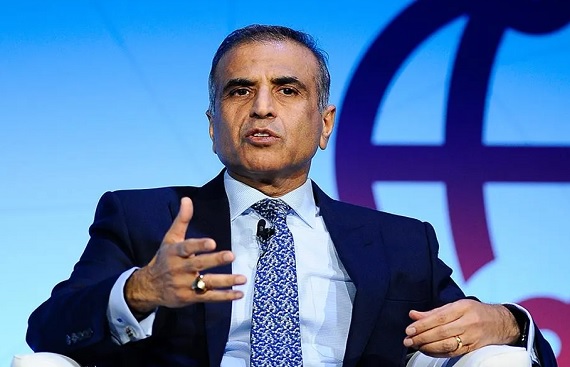
Sunil Bharti Mittal presented with Honorary Knighthood medal by British High Commission

Sunil Bharti Mittal presented with Honorary Knighthood medal by British High Commission

The medal was presented at a formal investiture ceremony at the British High Commissioner’s residence in New Delhi, attended by his family and close associates

Staff Writer

Sunil Bharti Mittal, Founder and Chairman of Bharti Enterprises, was awarded the Knight Commander of the Most Excellent Order of the British Empire (KBE) in recognition of his contributions to UK-India business relations on February 22.

The medal was presented at a formal investiture ceremony at the British High Commissioner’s residence in New Delhi, attended by his family and close associates. The honorary knighthood was announced in 2024 with the approval of King Charles III.

Lindy Cameron, British High Commissioner to India, said, “I was delighted to present Sunil Bharti Mittal the KBE medal on behalf of His Majesty the King. Mittal is a great friend of the UK – with significant investments, including BT, Gleneagles, Norlake Hospitality, and OneWeb. Mittal’s leadership has made a lasting impact on the UK-India partnership, including through his work with the India-UK CEO Forum. Most recently, he led a senior Indian business delegation to the UK to meet with Prime Minister Starmer, the Foreign Secretary, the Chancellor, and other Cabinet Ministers to identify opportunities for accelerating economic growth across both nations. I look forward to continuing to work closely with Mittal and congratulate him once again.”

Receiving the honour, Mittal said, “It is an honour to have received the KBE from His Majesty, King Charles III. As India and the United Kingdom continue to chart remarkable scale in our bilateral relations, I acknowledge this recognition both as a privilege and a responsibility. I remain committed to working with stakeholders in our nations towards advancing India – UK business relations. On the occasion of this very special milestone, I extend my gratitude to all for their support through this journey.”

Categories
Corporate

Bajaj Auto invests Rs 1,364 crore in bankruptcy-bound KTM

Bajaj Auto invests Rs 1,364 crore in bankruptcy-bound KTM

The investment will be either in the form of equity capital/preference capital/loan – convertible or otherwise in one or more tranches

Staff Writer

Two-wheeler and three-wheeler manufacturer Bajaj Auto said that it would be pumping Rs 1,364 crore or 150 million euros into its Netherlands subsidiary, Bajaj Auto International Holdings BV, Netherlands.

As per the regulatory filing by the auto major, the investment will be either in the form of equity capital/preference capital/loan – convertible or otherwise, as may be determined in the due course, in one or more tranches. Bajaj Auto International Holdings BV holds a 49% stake in Austrian bike maker KTM. Pierer Mobility Group holds the remaining stake in the Austrian bike maker.

On November 29, 2024, KTM announced emergency restructuring. “KTM AG is in the process of implementing restructuring measures due to high financing needs. The management of KTM AG assumes that it will not be possible to secure the necessary interim financing in a timely manner,” Pierer Mobility Group said in a statement in November. Notably, Pierer Mobility Group had earlier said in an investor update that it is looking for “far-reaching restructuring for KTM.”

“In addition to securing liquidity, the Executive Board is endeavouring to put KTM AG back on a stable operational and financial basis. Against the backdrop of a challenging economic environment, an even more far-reaching operational restructuring is being driven forward to reduce inventories at both KTM AG and the dealer level to an economically sustainable level by significantly reducing production volumes,” Pierer Mobility AG had said. The restructuring process will end in February 2025. Bajaj Auto – KTM partnership dates to 2007 when Bajaj Auto International Holdings BV (BAIHBV) picked up a 14.5% stake in KTM Power Sports AG and subsequently launched the brand in India. BAIHBV gradually increased its stake to 48%. In 2021, the shareholding was simplified when BAIHBV swapped 46.5% of its holding to gain a 49.9% stake in PTW Holding AG (the KTM group’s parent company).

At present, Bajaj Auto manufactures small-displacement KTM & Husqvarna motorcycles at its Chakan plant. Notably, Bajaj Auto had a setback in KTM exports in the October to December quarter. “We have had a bit of a setback on KTM exports. The KTM issue globally is well known…. We’ve had to take a hit on our export volumes this time. We took a cautious approach because we didn't want to compromise the recoverability of money that would have been due had we continued to export,” Dinesh Thapar, CFO of Bajaj Auto said during the post-earnings call.

Categories
Corporate

Burman Group gets control of Religare Enterprises Limited

Burman Group gets control of Religare Enterprises Limited

The Burman Group will collaborate with REL's leadership and board to strengthen its strategic vision and drive sustainable value growth

Staff Writer

The Burman Group announced on February 20, 2025, that they have taken control of Delhi-based financial services firm Religare Enterprises Limited (REL) and have been appointed as its promoters.

The company emphasized its primary focus on fostering stability, enhancing governance, and promoting sustainable growth within the organisation. “We are pleased to announce that we have acquired control of Religare Enterprises Limited (REL) and been designated as its promoters. We are grateful to our regulators, shareholders and other stakeholders for their trust and confidence," the group said in an official statement. The Burman Group will collaborate with REL's leadership and board to strengthen its strategic vision and drive sustainable value growth.

"We have always invested in businesses with strong fundamentals and high growth potential, and we will apply the same disciplined approach to Religare Enterprises with the highest levels of governance. This was the intent with which we launched our open offer for control, and we remain committed to that," the spokesperson added. Burmans had extended an open offer of Rs 2,116 crore to acquire an additional 26 per cent stake in Religare Enterprises Ltd (REL).

However, the response to this offer was minimal, with only 231,025 shares (0.07 per cent) being tendered out of the 9 crore shares (26 per cent) available. The tepid response to Burmans' open offer indicates a lack of enthusiasm from shareholders. The open offer, which was for the acquisition of up to 9,00,42,541 fully paid-up equity shares of face value of Rs 10 each, representing 26 per cent of the expanded voting share capital of REL from the public shareholders, was initiated by M B Finmart Pvt Ltd, Puran Associates Pvt Ltd, VIC Enterprises Pvt Ltd, and Milky Investment & Trading Company on January 27, 2025. Following the closing of the open offer on February 13, the date set for the payment of consideration was February 17, as per the data provided.

In September 2023, the Burman family, promoter of Dabur India and other entities such as Eveready Industries, announced a Rs 2,116-crore open offer to REL shareholders to acquire up to 26 per cent stake in the company. Following this, in January 2024, four entities purchased a 3.6 per cent stake in Religare Enterprises for Rs 277 crore through open market transactions. Puran Associates, Vic Enterprises, and M B Finmart, all entities of the Burman family, acquired shares in Religare Enterprises. Puran Associates, owned by Anand Burman and Minnie Burman, V.C. Burman's ownership of Vic Enterprises, and Mohit Burman's ownership of M B Finmart demonstrate the family's continued interest in diversifying their investments in the financial services industry.

Categories
Technology

PhonePe starts its IPO process two years after moving its main office to India from Singapore

PhonePe starts its IPO process two years after moving its main office to India from Singapore

In December 2022, PhonePe moved its main office from Singapore to India with the goal of being listed on local stock exchanges

Staff Writer

PhonePe, a prominent player in digital payments, has announced its initiation of the process for a potential public listing on the Indian stock exchanges, as stated in a release today.

While not specifying a specific timeline for completing the initial public offering (IPO) procedures, the company noted its favourable revenue growth and progress toward profitability as factors prompting the decision to embark on preparations for an IPO. This development follows over two years of PhonePe relocating its headquarters from Singapore to India.

Established by Sameer Nigam and Rahul Chari, PhonePe holds a dominant position in the Unified Payments Interface (UPI) sector, commanding approximately 47% of the market share. Subsequently, the fintech startup separated its various business ventures – including insurance, international payments, and insurance distribution – into distinct subsidiary entities under the parent company.

The company stated, “PhonePe’s strong top-line and bottom-line growth across its diverse business portfolio, as detailed in its FY23-24 annual report, makes this a suitable time to prepare for a public listing.” In December 2022, PhonePe moved its main office from Singapore to India with the goal of being listed on local stock exchanges. As a result, the fintech company, led by Sameer Nigam, reorganized its corporate structure by establishing its new non-payment ventures as wholly-owned subsidiaries in anticipation of its IPO strategy.

PhonePe recently made the decision to leave the account aggregator business earlier this month and transitioned to a partnership model with existing AAs. In less than two years of obtaining its non-banking financial company AA license, the company voluntarily surrendered it to the Reserve Bank of India. By August 2024, the leading digital payments company achieved a positive adjusted profit after tax (PAT) of Rs 197 crore in FY23-24, excluding ESOP-related costs. This followed a recovery from a loss of Rs 738 crore in FY22-23. Additionally, PhonePe reported a significant 74% year-on-year revenue growth, with revenue reaching Rs 5,064 crore in the previous fiscal year, up from Rs 2,914 crore.

In the fiscal year 2024, PhonePe recorded an operating revenue of Rs 5,064 crore, with a net loss of Rs 1,996 crore. By excluding employee stock options from the financial calculations related to core business activities, the company reported a net profit of Rs 197 crore. According to a company statement, as of January 2025, PhonePe, headquartered in Bengaluru, boasts more than 590 million registered users and over 40 million merchants. The platform also facilitates over 310 million daily transactions, with an annualized total payment value (TPV) exceeding Rs 145 lakh crore.

Categories
Leaders

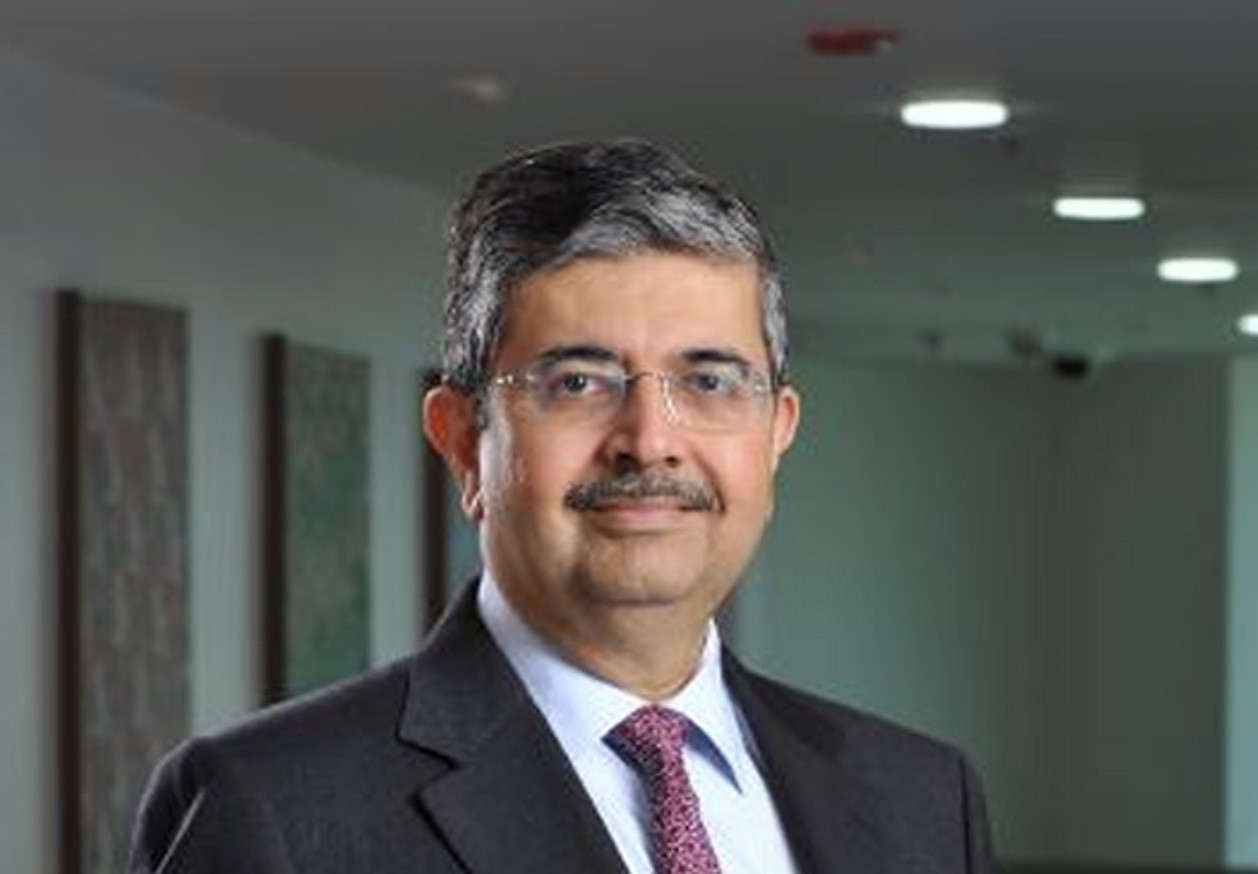
I would love to see this generation be hungry for success, build operational businesses: Uday Kotak

I would love to see this generation be hungry for success, build operational businesses: Uday Kotak

Speaking at Kotak Institutional Equities' investor conference, Chasing Growth 2025, Kotak pointed out a significant shift in mindset among young business heirs

Staff Writer

Uday Kotak, founder of Kotak Mahindra Bank, expressed apprehensions regarding the future of India's economy due to a waning enthusiasm for entrepreneurship, which he refers to as a decline in economic 'animal spirits'.

He cautioned against a diminishing entrepreneurial zeal among younger business families who are increasingly inclined towards investment management over active business operations.

Speaking at Kotak Institutional Equities' investor conference, Chasing Growth 2025, Kotak pointed out a significant shift in mindset among young business heirs. "What concerns me is that many in this generation are taking the easy way out, especially in the post-Covid world. They claim to be managing family offices and investments, trading in the stock market, allocating funds to mutual funds, and treating it as a full-time job," he said. He added: "If someone has sold a business, they should be thinking about starting, buying, or building another business. Instead, I see many young people saying, 'I'm running my family office. They should be creating real-world businesses. Why not start from scratch?"

Kotak raised questions about why individuals aged 35 or 40 were not directly contributing, despite recognising the significance of startup funding. "I would love to see this generation be hungry for success and build operational businesses. Even today, I firmly believe that the next generation must work hard and create businesses rather than becoming financial investors too early in lif

He also voiced apprehension about over-financialisation in the Indian economy. He warned that over-reliance on financial instruments could potentially harm the economy, as uninformed investors pour their savings into equities without considering their true valuations. 

"Should we continue encouraging retail investors to keep buying? Retail investors in India are funneling money into equities daily, contributing to domestic institutional flows. Money from individuals from Lucknow to Coimbatore is flowing to Boston and Tokyo," he said, noting that foreign companies were taking advantage of high valuations to book profits and repatriate funds. According to Kotak, the US dollar is behaving like a vacuum pump, draining capital from emerging markets due to the rise in US Treasury yields exceeding 4.5%. Indian stock valuations continue to be notably higher than the majority of global markets. He emphasised that there has been a shift in the dynamics of capital flows, signaling a need for adaptability in the economic landscape.

He further emphasised that India must steer clear of protectionist policies and instead focus on leveraging the changing global market conditions to enhance the competitiveness of the Indian industry. The Economic Survey for 2024-25 also highlighted over-financialisation and observed that such a phenomenon has resulted in unprecedented levels of public and private sector debt in developed economies.


Categories
Corporate

NSE, valued at Rs 4.7 lakh crore, breaks into 10 most valuable companies in India list: Hurun

NSE, valued at Rs 4.7 lakh crore, breaks into 10 most valuable companies in India list: Hurun

As per the Hurun list, NSE is also the most-valuable unlisted company in India. It moved up by one position, while Cyrus Poonawalla-led Serum Institute of India, slipped one position

Staff Writer

The National Stock Exchange (NSE) has broken into the ranks of the top 10 most-valuable companies in India.

The exchange, valued at Rs 4,70,250 crore, is the highest value creator in percentage terms, according to the 2024 Burgundy Private Hurun India 500 compilation. NSE, led by Ashishkumar Chauhan, surged 201 per cent in value.

It is ranked at 10th and saw a change of value of 179 per cent in the last four years. According to the Hurun list, NSE is also the most-valuable unlisted company in India. It moved up by one position, while Cyrus Poonawalla-led Serum Institute of India, slipped one position.

To be included in the ‘2024 Burgundy Private Hurun India 500’ list, companies must have a minimum value of Rs 9,580 crore, it said, which equalled $1.1 billion as of December 13, 2024.

The most-valued company, as per the list, is Mukesh Ambani-led Reliance Industries, valued at Rs 17.52 lakh crore, followed by Tata Consultancy Services, valued at Rs 16.10 lakh crore, HDFC Bank valued at Rs 14.22 lakh crore, Bharti Airtel at Rs 9.74 lakh crore, ICICI Bank at Rs 9.30 lakh crore, Infosys at Rs 7.99 lakh crore, ITC at Rs 5.80 lakh crore, Larsen & Toubro at Rs 5.42 lakh crore, HCL Technologies at Rs 5.18 lakh crore, and NSE at Rs 4.70 lakh crore.

When it comes to the most-valued unlisted companies, the list is topped by NSE, followed by Serum Institute of India, valued at Rs 2.11 lakh crore, Zoho Corporation valued at Rs 1.03 lakh crore, Zerodha at Rs 87,750 crore, Megha Engineering & Infrastructures at Rs 77,860 crore, Parle Products at Rs 68,640 crore, Intas Pharmaceuticals at Rs 68,150 crore, Dream11 at Rs 67,860 crore, Razorpay at Rs 63,620 crore, and Amalgamations at Rs 56,660 crore.

Categories
Technology

Sacked employee recalls receiving Meta’s termination mail

Sacked employee recalls receiving Meta's termination mail

The tech titan's crackdown on “low-performers” as it scours for new talent to dominate the AI race have been met with backlash from the affected employees

Staff Writer

Mark Zuckerberg-led Meta Platforms, the parent company of Facebook, Instagram, WhatsApp and other tech arms, kicked off its company-wide global layoffs on February 10.

Around 3,600 positions or about 5% of Meta’s workforce have been impacted by the mass layoffs, Bloomberg reported. The company crackdown on “low-performers” as it scours for new talent to dominate the AI race have been met with backlash from the affected employees. Several former Meta workers have spoken out on social media.

Sharing the ordeal on Blind, a platform that provides an anonymous forum and community for verified employees to discuss issues, one sacked employee slammed Meta's 'lack of empathy' in handling the layoffs. The individual was sent a termination email at 5 am. "No ERBP or Manager meeting, No Phone, No nothing. Just a email to personal account and blocked us out completely. Where the f*ck is the empathy to meet the affected and give a feedback when you labelling someone "low performer".

Many of us worked in the company for so many years! Feel so betrayed," the post read. Several employees alleged that they were let go while on medical or parental leave.

One former employee wrote, “I consistently exceeded expectations for multiple years, had a baby in 2024, and got laid off.”

According to various reports, Meta workers who were let go were notified via email. Reportedly, the company is offering US-based employees severance packages that include 16 weeks of salary, in addition two weeks for each year of service.

Categories
Corporate

TCS likely to roll out salary increases in March, hikes to average 4-8%

TCS likely to roll out salary increases in March, hikes to average 4-8%

The software major's compensation revision comes after Infosys informed its employees that the annual compensation revision letters will be issued before the end of March

Staff Writer

Tata Consultancy Services is expected to roll out the annual increases in March with payouts starting in April.

The hikes are reportedly likely to average 4-8 per cent. According to a report in The Economic Times, annual hikes at most top-tier companies have seen a gradual slowdown, which is in line with the industry’s growth trends. The COVID-19 period saw high, double digit growths in annual hikes. TCS’ compensation revision comes after Infosys informed its employees that the annual compensation revision letters will be issued before the end of March.

Reports stated that the hikes are expected to be in the range of 5-8 per cent. It must be mentioned that TCS had linked its hikes and variable payouts to employees’ compliance with its recent return-to-office mandate that it had announced in 2024. The latest hike will follow the quarterly variable pay (QVP) released in February for the October-December period. An employee working with TCS for eight years, told the financial daily that the hikes have been meagre for the past three-five years.

Meanwhile, TCS reported a 11.95 per cent year-on-year (YoY) rise in consolidated net profit at Rs 12,380 crore for the December quarter compared with Rs 11,058 crore in the same quarter last year. Net sales climbed 5.59 per cent to Rs 63,973 crore from Rs 60,583 crore in the corresponding period last year. Sales were up 4.5 per cent YoY in constant currency (CC) terms.

Categories
Counterpoint

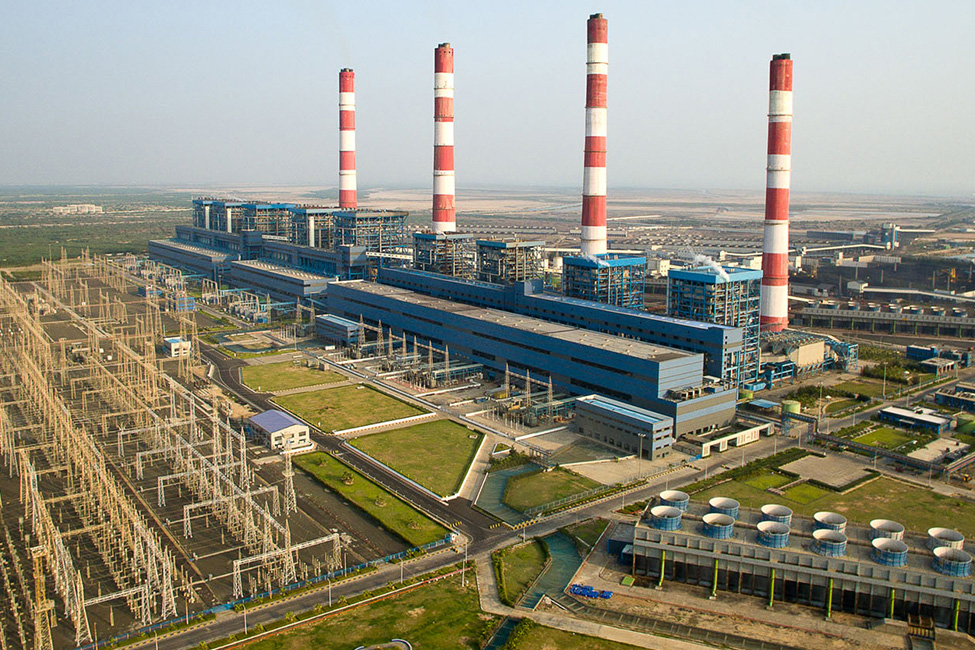
Adani Power to fully restore supply to Bangladesh, but rejects discount request

Adani Power to fully restore supply to Bangladesh, but rejects discount request

Bangladesh owes Adani approximately $650 million, though company sources estimate the outstanding dues have reached nearly $900 million

Staff Writer

Adani Power will fully restore the 1,600 MW power supply from its Jharkhand plant to Bangladesh, but it has rejected Dhaka’s request for discounts and tax benefits, Reuters reported, citing sources.

The restoration follows a request from the Bangladesh Power Development Board (BPDB) amid rising summer demand. Despite agreeing to resume full supply, Adani Power has declined BPDB’s demands for discounts and concessions potentially worth millions of dollars.

Bangladesh owes Adani approximately $650 million, though company sources estimate the outstanding dues have reached nearly $900 million. The $2 billion plant in Jharkhand, which operates under a 25-year power purchase agreement signed in 2017, had reduced supply on October 31 due to overdue payments.

Since November 1, the facility has been running at minimal capacity, with one unit offline and no confirmed timeline for complete restoration. A Reuters-reviewed document revealed that the plant operated at just 41.82% capacity last month, its lowest level this year.

Adani Power had sent a letter on October 27, warning BPDB that if payments were not made, it would suspend power supply on October 31 as per the terms of the power purchase agreement.

Payments of $85 million in November and $97 million in October have only marginally reduced the outstanding balance. The company highlighted that BPDB has neither provided a $170.03 million letter of credit (LC) from Bangladesh Krishi Bank nor cleared the accumulated dues of $846 million.

In winter, Bangladesh had imported around 1,000 MW per month from Adani’s plant. With full supply expected to resume next week, it remains uncertain how the unpaid dues will affect the long-term power arrangement between the two parties.