Categories
Corporate

Vodafone Idea Jumps almost 8% as Q1 Loss Narrows, ARPU Beats Estimates

Vodafone Idea Jumps almost 8% as Q1 Loss Narrows, ARPU Beats Estimates

Vodafone Idea shares surged nearly 8% on August 18 after the telco narrowed sequential losses in Q1FY26 and beat ARPU estimates, though the stock remains sharply down year-to-date

Staff Writer

Vodafone Idea shares surged up to 8.5% to ₹6.68 on Monday, August 18, as investors cheered the telco’s June-quarter results showing sequential improvement in losses. The broader market’s positive tone also lent support.

By 10:30 am, the stock was at ₹6.61, up 7.48% on the NSE. Despite the rally, the stock remains under pressure—down 21% in 2025 and nearly 60% over the past year.

The company reported a net loss of ₹6,608 crore for Q1FY26, wider than ₹6,432 crore a year ago but narrower than ₹7,166 crore in the March quarter. Revenue rose 5% year-on-year to ₹11,022 crore, though flat sequentially. Crucially, average revenue per user (ARPU) climbed to ₹177, topping expectations of ₹167, aided by subscriber upgrades and a stronger customer mix.

Brokerages highlighted the improvement. Motilal Oswal Financial Services said the loss was narrower than its ₹7,500 crore estimate, helped by lower interest costs, while revenue was in line. It also noted that subscriber erosion slowed, with the user base down just 0.5 million to 197.7 million, compared to a 1.6 million decline in Q4FY25 and better than its 1.2 million forecast.

Global brokerage UBS maintained a Neutral rating with a target price of ₹8.5, calling the results broadly in line. It pointed to a 0.6% quarter-on-quarter ARPU gain to ₹165, stable revenues, and a 1% dip in EBITDA, with margins slipping 47 basis points to 41.8%. UBS flagged the larger-than-expected loss, driven by higher interest costs, while noting that capex moderated to ₹2,440 crore, down from ₹4,230 crore in Q4 and ₹3,210 crore in Q3.

 

Categories
Beyond

What explains the strong performance of Japan’s Nikkei?

What explains the strong performance of Japan’s Nikkei?

Investor optimism has also been reinforced by expectations of sustained foreign buying in Japanese equities.

Staff Writer

On August 18, 2025, Japan’s Nikkei 225 surged to a record high of 43,683.56, gaining 0.7 %, while the broader Topix index advanced 0.58 % to 3,125.6. The rally was largely powered by a weaker yen, which boosted exporters’ outlooks, and by strong performances from automakers such as Toyota Motor, which rose 1.58 %, and Honda Motor, which gained 1.22 %. The yen fell 0.2 % against the U.S. dollar, making Japanese exports more competitive, a development that directly benefited the Nikkei’s heavyweights, according to Reuters and the Economic Times.

Investor optimism has also been reinforced by expectations of sustained foreign buying in Japanese equities. The market continued to build momentum from last week amid a bullish outlook. Fast Retailing, the operator of Uniqlo, added further strength with a 1.2 % jump, making it another major contributor to Nikkei’s rise, reported Reuters.

Yet, the rally was not uniform across all sectors. Japan’s banking sub-index dropped 1.45 %, with Mitsubishi UFJ Financial down 1.96 % and Sumitomo Mitsui Financial falling 1.78 %, as highlighted by Reuters. Chip-related shares also lagged, with Tokyo Electron sliding 1.3 % and Advantest down 0.09 %, according to the Economic Times.

The performance of Japanese markets also mirrors broader global trends. The Dow Jones Industrial Average has been climbing toward record highs, with a notable boost from UnitedHealth shares after Berkshire Hathaway raised its stake, as reported by Reuters. That momentum spread across Asian equities, lifting investor confidence in Tokyo.

The latest rally builds on earlier milestones. On August 12, 2025, the Nikkei had already closed at 42,849.67, a 2.46 % gain, driven by surges in SoftBank Group—up 6.9 % amid speculation it could list its payments arm PayPay in the U.S.—and by strong semiconductor stocks such as Advantest and Lasertec. That session also saw a broader lift across Asia following a 90-day extension of the U.S.–China trade truce, which fueled optimism region-wide, according to Reuters and the Times of India.

Still, analysts remain cautious. In their assessment of the August 12 rally, Reuters reported that while a weaker yen, easing trade tensions, and upbeat corporate earnings have underpinned Japanese equities, seasonal factors such as the Obon holiday lull and the absence of new catalysts could test the sustainability of the surge.

Categories
Corporate

Supriya Lifescience Reports Q1 FY26 Results; Maintains Strong Margins Despite Revenue Dip

Supriya Lifescience Reports Q1 FY26 Results; Maintains Strong Margins Despite Revenue Dip

The anaesthetic segment emerged as the top revenue contributor during the quarter, accounting for more than half of total sales, up significantly from the same period last year.

Staff Writer

Supriya Lifescience Ltd., a cGMP-compliant API manufacturer with a presence in over 86 countries, has announced its unaudited financial results for the first quarter of FY26. The company operates across multiple therapeutic categories, including anti-histamine, anti-allergic, vitamins, anaesthetics, and anti-asthmatics.

In Q1 FY26, the company reported a year-on-year decline in revenue, primarily due to delays in production at its Lote facility. This was caused by essential repair and maintenance work aimed at improving efficiency in older manufacturing blocks and preparing Module E for new product launches. Despite the dip in topline numbers, profitability metrics remained resilient, with strong EBITDA margins supported by better backward integration and a rising contribution from regulated markets.

The anaesthetic segment emerged as the top revenue contributor during the quarter, accounting for more than half of total sales, up significantly from the same period last year. The company also saw notable growth in its European business, which now represents a larger share of overall revenue. Capacity utilisation improved compared to the previous fiscal, reflecting operational recovery.

To support future growth, Supriya Lifescience has acquired three separate land parcels near different plants. These will be used to expand manufacturing capacity and strengthen its supply capabilities for upcoming product launches.

Commenting on the results, Chairman and Managing Director Satish Wagh said the quarter’s performance reflected a temporary setback from the facility upgrade work. He emphasised that these investments were crucial for sustaining long-term operational efficiency and enabling full utilisation of production assets.

“Despite the revenue dip, EBITDA margins remained strong, backed by improved backward integration and increased contribution from regulated markets. With the Ambernath site on track for commercial production in Q4, a strong pipeline of 3–4 product launches in FY26, and healthy demand across key therapeutic areas, we expect the second half to recover the delays from H1. We remain on track to deliver ~20% growth and reach ₹1,000 crore revenue by FY27,” Wagh said.

The company remains confident that its diversified therapeutic portfolio, ongoing capacity expansions, and robust international presence will help it achieve its medium-term growth targets, even as it navigates short-term operational disruptions.

Categories
Corporate

JSW Cement Makes Strong Stock Market Debut with 4% Premium

JSW Cement Makes Strong Stock Market Debut with 4% Premium

The company will allocate ₹800 crore to partially finance the construction of a new integrated cement plant in Nagaur, Rajasthan

Staff Writer

JSW Cement picked up with a successful market debut on August 14, 2025, as its shares were listed at a premium exceeding 4% on both major Indian stock exchanges. The acclaimed cement manufacturer's shares opened at ₹153.50 on the National Stock Exchange (NSE) and ₹153 on the Bombay Stock Exchange (BSE), representing gains of 4.42% and 4.08% respectively against the initial public offering (IPO) price of ₹147 per share.

Robust IPO Subscription and Market Capitalisation

The company's ₹3,600-crore mainboard IPO, which remained open for subscription from August 7 to 11, reflected strong investor appetite with an overall subscription rate of 7.77 times. Prior to the public listing, JSW Cement had successfully raised ₹1,080 crore from anchor investors, indicating institutional confidence in the company's prospects.

At the time of listing, JSW Cement's market capitalisation reached ₹20,914.02 crore, surpassing grey market expectations where only a 3% premium had been anticipated. This performance reflects investor optimism about the company's growth trajectory and market position.

Expert Analysis and Market Position

Narendra Solanki, Head of Fundamental Research – Investment Services at Anand Rathi Shares and Stock Brokers, highlighted several factors contributing to JSW Cement's strong market reception. "JSW Cement benefits from strong backing by the diversified JSW Group and a focused strategy on green cement solutions," Solanki explained. He also stressed that the company holds a commanding position as India's largest manufacturer of ground granulated blast-furnace slag (GGBS), controlling an impressive 84% market share.

Valuation Concerns and Long-term Approach

JWS Cement advocates sustainable products and this provides a competitive advantage in an increasingly environmentally conscious market. However, Solanki also noted that the IPO valuation appeared aggressive at approximately 36.7 times FY25 post-issue EV/EBITDA at the upper price band.

Despite the premium valuation, analysts remain optimistic about JSW Cement's long-term prospects, citing the company's synergies with the broader JSW Group, strategic plant locations, expanding production capacity, and alignment with India's sustainable infrastructure development goals.

JSW Cement has outlined clear plans for utilising the IPO proceeds strategically. The company will allocate ₹800 crore to partially finance the construction of a new integrated cement plant in Nagaur, Rajasthan, expanding its manufacturing footprint. An additional ₹520 crore is allotted for debt repayment to strengthen the balance sheet, while the remaining funds will support general corporate purposes.

The successful listing positions JSW Cement as a significant addition to India's cement sector, with investors showing confidence in the company's sustainable business model and growth strategy within the country's expanding infrastructure landscape.

Categories
Beyond

India’s Trade Gap Widens to $27.35 Billion in July Amid Push for Diversified Export Markets

India’s Trade Gap Widens to $27.35 Billion in July Amid Push for Diversified Export Markets

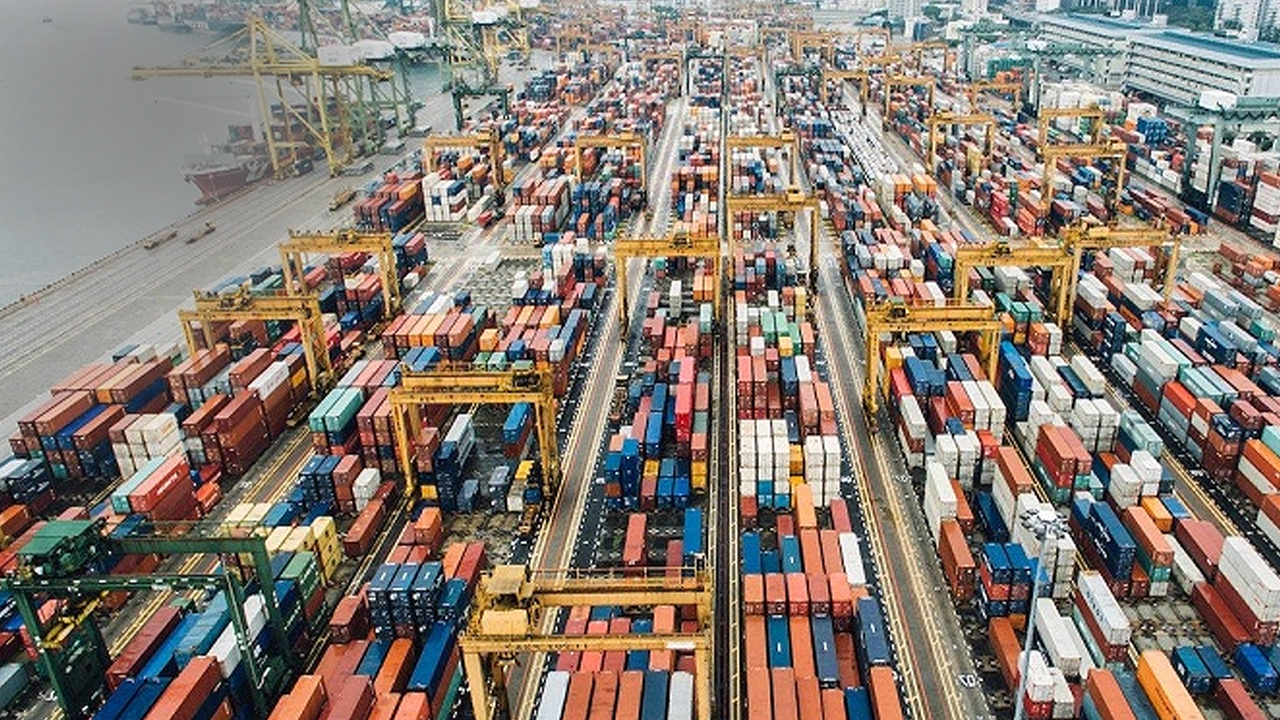
India’s trade deficit hit $27.35 billion in July, its widest in over a year, as the government ramps up efforts to diversify export and import markets.

Sreelatha M

India’s merchandise trade deficit surged to $27.35 billion in July, sharply higher than the $18.78 billion recorded in June and exceeding the $23.5 billion gap from the same month last year, according to data released by the commerce ministry on Thursday (August 14).

Exports of goods in July stood at $37.24 billion, while imports reached $64.59 billion, reflecting a widening imbalance even as the government maintains that overall trade performance remains resilient compared to global trends.

“Despite an uncertain global policy environment, India’s services and merchandise exports in July and in FY26 so far have grown substantially, and much higher than global export growth,” Commerce Secretary Sunil Barthwal said.

Engineering goods, electronics, pharmaceuticals, organic and inorganic chemicals, as well as gems and jewellery, were among the key contributors to outbound shipments last month.

Barthwal emphasised that New Delhi is accelerating efforts to reduce its reliance on a handful of markets — particularly the United States, which has recently imposed steep tariffs on certain Indian goods.

To address this, the government is moving to fast-track free trade agreement negotiations and review existing pacts with partners including the EU, UK, EFTA, Oman, ASEAN, New Zealand, Peru, and Chile.

In addition to securing new trade arrangements, Barthwal said the government aims to strengthen export promotion schemes and diversify import sources to mitigate supply risks.

“Expanding focus to the top 50 importing nations via mobilisation of missions abroad for export promotion efforts,” he noted, signalling an expanded diplomatic-commercial outreach.

The widening deficit underscores the twin challenge India faces: sustaining export momentum while curbing dependency on limited trade partners, even as global demand patterns remain volatile.

Categories
Corporate

Cognizant: 80% Staff Set to Receive Pay Hikes Starting November

Cognizant: 80% Staff Set to Receive Pay Hikes Starting November

The salary hikes will apply to employees up to and including the Senior Associate level, according to a company spokesperson

Sreelatha M

IT services giant Cognizant has announced salary hikes for around 80% of its eligible workforce, effective November 1, 2025. The long-awaited move brings clarity and assurance to employees after months of uncertainty over the company’s annual increment cycle.

The decision was confirmed during the company’s second-quarter earnings call, where Cognizant reiterated its commitment to awarding merit-based hikes to the vast majority of staff in the second half of the year. The hikes will apply to employees up to and including the Senior Associate level, with the quantum varying based on performance and location.

In India, consistent high performers can expect increases in the higher single-digit range, while top-rated employees are likely to receive the most significant raises. “Top performers will receive the highest increases,” a company spokesperson said, adding that earlier this year, most associates received their highest bonuses in three years, ranging from 85% to 115%.

Traditionally, Cognizant begins its increment cycle from August 1, but the decision was delayed this year due to global economic headwinds. Recent tariff actions by U.S. President Donald Trump have added to the uncertainty, particularly a 25% tariff on Indian goods effective August 7, and a similar penalty that was announced a day earlier, set to begin August 27 for purchasing Russian oil and arms.

These external pressures have led most Indian IT firms to tread cautiously, with Tata Consultancy Services (TCS) being one of the few to announce salary hikes from September 1.

Despite the challenging environment, Cognizant has remained focused on workforce expansion and retention. The Teaneck-headquartered firm added approximately 7,500 employees in the June quarter, pushing its total headcount to 343,800. Attrition also showed improvement, falling to 15.2% over the last 12 months.

Looking ahead, the company plans to hire between 15,000 and 20,000 freshers in 2025. CEO Ravi Kumar S noted that the June quarter marked one of the strongest periods for headcount growth, largely driven by fresher hiring in India.

Categories
Beyond

SEBI Proposes Major Overhaul in Stockbroker and Algorithmic Trading Regulations

SEBI Proposes Major Overhaul in Stockbroker and Algorithmic Trading Regulations

The proposals span 20 key changes, from clearer definitions to stronger compliance norms, marking one of the regulator’s most ambitious overhauls in years.

Staff Writer

In a landmark step to modernise market oversight while easing operational hurdles, the Securities and Exchange Board of India (SEBI) has released a 99-page consultation paper outlining 20 proposals aimed at the broking and algorithmic trading sectors. The reforms seek to balance business facilitation with robust investor protection, streamlining regulations while addressing evolving market practices.

Regulatory Overhaul and New Definitions

SEBI has proposed sweeping changes to stockbroker regulations, introducing fresh definitions and eliminating outdated provisions. For the first time, "Algorithmic Trading" has been formally defined as orders generated through automated execution logic, while "Execution Only Platform" (EOP) is now recognised as a category for digital platforms enabling mutual fund transactions. The definition of "Proprietary Trading" has also been clarified to distinguish between a broker’s personal trades and client trades.

These changes consolidate what were earlier broad guidelines into core stockbroker regulations, bringing more clarity and uniformity. Language has been simplified, ambiguities removed, and inconsistencies addressed, ensuring parity across sub-regulations and alignment with other capital market intermediary rules. Redundant terms such as “small investor” are being scrapped, while references are being updated to reflect current practices and the Companies Act, 2013.

Notable operational reforms include a requirement for at least one director to be based in India to boost investor trust, mandatory grievance redressal within 21 calendar days, and permission for brokers to carry out other SEBI-approved activities via Separate Business Units (SBUs). The proposals also promote digital record-keeping over physical formats, strengthening compliance efficiency.

Industry voices have welcomed the move. Punnet Tewani of Fox Trading Solutions highlighted the benefits for retail algo tool developers, saying reduced compliance burdens would foster a healthier ecosystem. Algo trader Santosh Pasi noted that the changes align the industry with modern technologies, simplify regulations, and promote investor confidence.

Strengthened Oversight and Compliance Measures

The proposals extend beyond definitional changes, addressing critical aspects of risk management and market integrity. Stockbrokers will be bound by explicit obligations, including safeguarding client funds and securities, implementing robust internal controls, and adhering to enhanced cybersecurity and cyber resilience standards.

In response to recent market controversies such as the Jane Street incident, SEBI has also sharpened its surveillance capabilities to detect and prevent fraudulent or manipulative trading behaviour. Particular focus is being given to unusual trading patterns, including the high concentration of trading in index options on expiry days—where 90% of volume occurs, with 30% of it taking place in the last hour.

For inspections, SEBI has proposed provisions allowing exchanges to conduct them independently or jointly with the regulator and depositories, reducing procedural bottlenecks. Compliance costs for brokers are expected to drop as operations become more streamlined, potentially improving profitability without compromising market safeguards.

By redefining market terms, removing outdated clauses, and enhancing both compliance and oversight, SEBI’s proposals aim to create a regulatory environment that is both business-friendly and investor-protective. The reforms—if implemented—could significantly reshape India’s capital market operations, setting higher benchmarks for transparency, security, and efficiency.

Categories
Beyond

India’s Forex Reserves Expected to Rise Despite RBI’s Rupee Defense Operations

India's Forex Reserves Expected to Rise Despite RBI's Rupee Defense Operations

Central bank's $5.6 billion intervention offset by favorable gold prices and dollar weakness

Staff writer

This unprecedented rise comes despite significant headwinds, including a $5 billion currency swap maturation and intensive RBI intervention after U.S. President Donald Trump imposed fresh tariffs on Indian goods over the country's Russian oil purchases.

India's foreign exchange reserves slightly increased during the week ending August 8, even as the Reserve Bank of India aggressively intervened to prevent the rupee from hitting its historic lows, according to economist calculations released ahead of Friday's official data.

Market Pressures Escalate Higher

The rupee faced severe pressure during the week, threatening to breach its all-time low of 87.95 against the dollar. Trump's tariff announcement specifically targeted India's continued energy trade with Russia, making currency traders confused and forcing the RBI sweep into action across multiple markets.

"The RBI intervened in both onshore spot and non-deliverable forward markets to defend the rupee," said banking sources familiar with the operations. The central bank's total dollar selling reached $5.6 billion for the week, including the $5 billion swap delivery.

Revaluation Rescue Brings Respite

Despite this substantial outflow, rising gold prices and a weakening dollar provided crucial support through revaluation gains. Gaura Sen Gupta, economist at IDFC First Bank, estimates these favorable market movements generated a $9.8 billion boost to reserve valuations.

"The rise in FX reserves was fueled by a revaluation boost of $9.8 billion, reflecting higher gold prices and a weaker dollar," Sen Gupta explained. Also her prompt calculations suggest reserves increased by over $4 billion during the week.

Tactical Intervention by RBI

The RBI's approach revealed careful strategic planning. Rather than relying heavily on spot market sales, which directly drain reserves, the central bank seems to have emphasized non-deliverable forward interventions to influence offshore sentiment without immediate reserve impact.

"This implied spot intervention in the week was less and that the RBI would have relied on NDF," Sen Gupta noted, highlighting the central bank's strategic preference for preserving its dollar ammunition while still defending the currency.

Broader Implications Anticipated

The episode highlights the balancing act the central bank faces as it manages currency stability amid rising geopolitical and market pressures. Official reserve data, due on Friday, will confirm whether whether the estimated gains actually materialized. The data will provide crucial insight into the RBI's intervention capacity as global uncertainties continue to pressure emerging market currencies.

For now, the preliminary calculations suggest India's financial managers successfully navigated a turbulent week, using favorable market conditions to offset the costs of currency defense operations.

Categories
Corporate

Claim denied? E20 Fuel Rollout Faces Insurance Roadblock Over Engine Damage Risks

Claim denied? E20 Fuel Rollout Faces Insurance Roadblock Over Engine Damage Risks

On August 8, motor insurer ACKO publicly stated that using the wrong fuel could void claims.

Staff Writer

India’s push for greener fuels could be hitting an unexpected speed bump — the insurance sector. Some insurers have warned they may reject claims if an engine fails after using E20 petrol in vehicles not designed for it.

The government’s ethanol blending programme, hailed by policymakers as a win-win for farmers, the environment, and energy security, is drawing resistance from both automakers and vehicle owners. While the Centre aims for nationwide availability of E20 — a blend of 80 percent petrol and 20 percent ethanol — by 2025–26, concerns are emerging over its compatibility with the bulk of India’s existing vehicle fleet.

A recent Moneycontrol report noted that many automakers have cautioned about the technical risks of using E20 in vehicles built for E10 — which contains just 10 percent ethanol. Those risks are now being echoed by insurers.

On August 8, motor insurer ACKO publicly stated that using the wrong fuel could void claims. Responding to a user query on X, ACKO clarified: “In case of engine failure due to incorrect fuel usage, the claim would not be admissible. This falls under gross negligence as per our policy terms.”

While Union ministers Hardeep Singh Puri and Nitin Gadkari have insisted there are no proven cases of E20 causing vehicle damage, anecdotal evidence from consumers and data from surveys point to a more complex picture. A LocalCircles survey found that petrol vehicles running on E20 reported mileage drops exceeding 10 percent.

One senior general insurance executive, speaking on condition of anonymity, explained that ethanol burns cleaner than petrol but produces less energy — pure ethanol has about 30 percent lower energy content. This, he said, inevitably impacts mileage. Over time, prolonged use in non-compliant engines can also cause mechanical damage.

Technical concerns include ethanol’s tendency to absorb moisture, leading to “phase separation” in fuel tanks, where water-laden ethanol settles at the bottom. This can corrode metal components, cause rust, and degrade rubber parts such as fuel lines, seals, and gaskets — especially in older, E10-compliant vehicles.

E20-compliant vehicles, in contrast, are built with ethanol-tolerant coatings and corrosion inhibitors, and their engines are calibrated for the correct air–fuel mix. Still, these models require periodic replacement of rubber parts to maintain performance.

For insurance customers, the critical issue is whether existing motor policies will cover damage caused by E20 in E10 vehicles. Even “Engine Protection Plus” add-ons, which cover failures due to water ingress or oil leakage, may not apply if incorrect fuel usage is deemed the root cause.

Most vehicles sold in India before 2023 — such as the 2018 Maruti Suzuki Swift or 2019 Hyundai i20 — are E10-compliant. Examples of E20-ready models include the 2024 Honda City and 2023 Toyota Hyryder.

India’s ethanol blending programme began in 2006 with 5 percent ethanol. The original target of 20 percent by 2017 was missed due to supply and infrastructure challenges. The revised 2025–26 goal now appears within reach — but unless the insurance and auto sectors align with the government’s environmental ambitions, the road to greener fuels may get bumpier.


Categories
Corporate

ICICI Bank Cuts Minimum Balance Requirement After Severe Backlash

ICICI Bank Cuts Minimum Balance Requirement After Severe Backlash

From Rs 50,000 to Rs 15,000, it is a calculated move to strike a balance between customer sentiment and internal policy changes.

Sreelatha M

New Delhi:  ICICI Bank has rolled back part of its recent hike in minimum average balance (MAB) requirements for new customers in urban areas, following widespread criticism both online and offline. The bank had faced strong pushback after increasing the MAB from ₹10,000 to ₹50,000 last week. Now, the MAB has been revised down to ₹15,000 which is still higher than the original, but significantly lower than the controversial hike.

In a statement released Wednesday, the bank acknowledged the pushback: “We had introduced new requirements for the monthly average balance for new savings accounts opened from August 1, 2025. Following valuable feedback from our customers, we have revised these requirements to better reflect their expectations and preferences.”

The revised minimum balance requirements stand as follows:

  • Metro and urban locations: ₹15,000
     
  • Semi-urban locations: ₹7,500
     
  • Rural areas: ₹2,500
     

Pensioners below 60 and students from 1,200 select institutions will continue to be exempt from maintaining a minimum monthly average balance.

It was just last week, on August 9, ICICI Bank had announced a steep hike, raising the MAB for metro and urban customers from ₹10,000 to ₹50,000, semi-urban from ₹5,000 to ₹25,000, and rural areas from ₹2,500 to ₹10,000. Customers failing to meet these requirements faced penalties of ₹500 or 6% of the shortfall, whichever was lower.

The move was widely condemned as anti-consumer and disconnected from the realities of the average Indian saver. Indian National Congress spokesperson Shama Mohamed called it “a blow to the middle class.”

RBI Governor Sanjay Malhotra clarified that the central bank does not regulate minimum balance requirements for savings accounts. “It’s up to individual banks to decide. Some have set it at ₹10,000, some at ₹2,000, and others have waived it. It’s not within the RBI’s regulatory domain,” he said.

As a result of this change, the ICICI Bank’s stock value dipped slightly by 0.07% to ₹1,421.15 on the BSE, even as the benchmark Sensex climbed 0.38% to close at 80,539.91.

The partial rollback signals a course correction by the country’s second-largest private bank, which now aims to keep the rates in line to match the financial behavior and expectations of its new-age customers.