Categories
Corporate

Sensex, Nifty Rebound as IT, FMCG and Metal Stocks Drive Gains

Sensex, Nifty Rebound as IT, FMCG and Metal Stocks Drive Gains

Market analysts attributed the buying momentum to expectations surrounding the upcoming Jackson Hole symposium hosted by the US Federal Reserve.

Staff Writer

The Indian equity benchmark indices recovered from early morning losses to trade higher on Wednesday, buoyed by strong buying in IT, FMCG, and metal stocks. The rebound came after a choppy start to the session, with global and domestic cues shaping investor sentiment.

The Sensex, which slipped 146.64 points to touch 81,497.75 in early trade, rebounded sharply to quote at 81,852 around 1 pm. The Nifty, which had dropped 47.5 points to 24,933.15, also crossed back above the psychological 25,000 mark, trading at 25,043. Market breadth tilted positive, with 2,143 stocks advancing against 1,383 declines, while 134 remained unchanged.

Among the top gainers were Infosys, TCS, Wipro, HUL, and ETERNAL, with IT stocks rising up to 4 percent intraday. Market analysts attributed the buying momentum to expectations surrounding the upcoming Jackson Hole symposium hosted by the US Federal Reserve. The three-day event, scheduled to begin on August 21 in Wyoming, will feature a closely watched address by Fed Chair Jerome Powell on the economic outlook and monetary policy. Ahead of the meeting, global investors turned risk-on, boosting IT counters, which derive a large portion of revenue from overseas markets.

FMCG stocks also saw renewed investor interest, extending the gains they have witnessed since Prime Minister Narendra Modi’s Independence Day address on August 15. In his speech, the Prime Minister hinted at sweeping reforms to the GST rate structure ahead of the festive season. According to market observers, the prospect of tax rationalisation has lifted expectations of a demand boost across consumption-driven sectors, with FMCG, automobiles, and select financial stocks expected to benefit.

The rally was further supported by improving diplomatic signals between India and China. Reports suggested that Beijing has eased curbs on exports of key industrial inputs, including fertilisers, rare earth magnets, and tunnel-boring machines. Chinese Foreign Minister Wang Yi, during his recent visit to New Delhi, reportedly conveyed assurances to External Affairs Minister S. Jaishankar regarding smoother trade flows. Analysts noted that the development has improved sentiment, though uncertainties remain given the looming August 27 deadline for the imposition of a 25 percent secondary tariff on Indian exports.

Currency movement also played its part in lifting investor mood. The rupee strengthened to its highest level this month, breaching the 87-mark against the US dollar, supported by positive global cues and optimism over easing geopolitical tensions. Reports of US President Donald Trump pushing for a peace initiative in Ukraine, along with Hamas agreeing to a truce deal in Gaza mediated by Qatar and Egypt, helped calm global markets.

From a technical perspective, traders remained cautiously optimistic. Anand James, Chief Market Strategist at Geojit Financial Services, said the bounce off the 24,850 level in the Nifty was a constructive signal. “As long as 24,850 holds, our preferred strategy would be to buy on dips, with upsides capped between 25,096 and 25,200,” he said.

With global central banks in focus and geopolitical headlines influencing investor behaviour, analysts said the current rebound could face hurdles. However, Wednesday’s rally suggested that domestic investors continue to find confidence in select sectors, particularly IT and FMCG, amid improving external signals.

Categories
Corporate

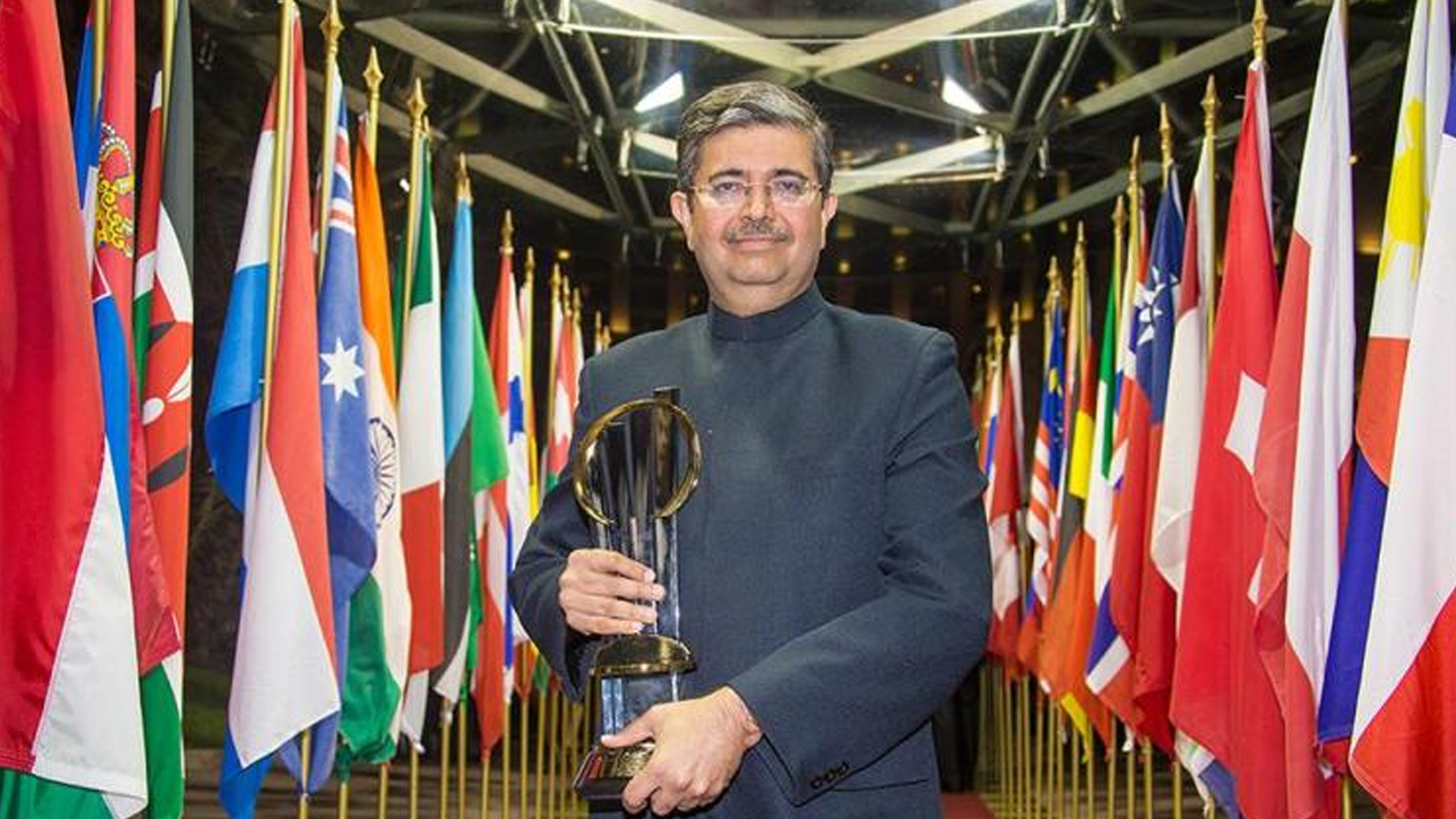
Uday Kotak Urges Modi Government to Bolster SMEs Amid Trump’s Tariff Shock

Uday Kotak Urges Modi Government to Bolster SMEs Amid Trump’s Tariff Shock

Earlier this month, Trump slapped an additional 25 per cent levy on Indian imports, on top of the 25 per cent reciprocal tariffs already in place, citing India’s imports of discounted Russian oil.

Amit Kumar

Indian banking tycoon Uday Kotak has urged Prime Minister Narendra Modi’s government to provide direct fiscal support to small and medium-sized enterprises (SMEs) as India braces for the economic fallout of US President Donald Trump’s sweeping tariff regime.

In an interview with the Financial Times, Kotak — founder of Kotak Mahindra Bank, India’s third-largest private lender — described Trump’s tariffs as a “major shock” to India’s economy. He warned that the country could not afford to remain in a “comfort mindset” and must instead treat the current crisis as a wake-up call to accelerate reforms.

Earlier this month, Trump slapped an additional 25 per cent levy on Indian imports, on top of the 25 per cent reciprocal tariffs already in place, citing India’s imports of discounted Russian oil. The White House argues that India’s purchases indirectly finance Moscow’s war in Ukraine. The move has escalated trade tensions between Washington and New Delhi, India’s largest trading partner.

Calls for Urgent Government Action

Kotak said the tariffs underscored the vulnerability of India’s economy and highlighted the need for a structural response. He called for “direct fiscal support” to SMEs in manufacturing, research, and technology, sectors he described as crucial to India’s resilience.

“Once you give that capital support, private equity, entrepreneurs’ equity [and] risk capital will come additionally,” Kotak told the Financial Times. Without such backing, he warned, Indian businesses risk losing competitiveness on the global stage.

Kotak’s remarks follow similar appeals from other leading industrialists. Anand Mahindra, chair of Mahindra Group, has urged the government to boost liquidity for SMEs and accelerate infrastructure investment. Harsh Goenka, chair of RPG Enterprises, has called for a dedicated fund to help exporters access new markets and attract supply chains relocating from China.

Modi’s Reform Push

Prime Minister Modi has attempted to reassure investors and industry leaders by pledging sweeping reforms, including reducing goods and services taxes and cutting regulatory red tape. He has doubled down on his Atmanirbhar Bharat(“self-reliant India”) vision, arguing that tariffs present an opportunity to strengthen domestic manufacturing.

Yet, the challenges are formidable. Manufacturing currently accounts for about 14 per cent of India’s GDP — far below Modi’s stated target of 25 per cent. Economists estimate that India’s GDP must grow at an average of 8 per cent annually to achieve developed economy status by 2047, the centenary of independence. Tariffs on Indian exports to the US could shave off nearly half a percentage point from annual growth, according to analysts.

Trade War as a Pivot Point

Kotak, one of the most influential voices in Indian finance, emphasized that while the macroeconomic fundamentals remain stable — with fiscal and current account deficits under control — India cannot afford complacency.

“The uncertainty of Trump’s tariff regime has created a sense of urgency for transforming India,” he said. “It offers a great opportunity to pivot.”

He argued that policymakers and businesses must prioritize productivity, efficiency, and building globally competitive brands, while encouraging manufacturers to aim beyond India’s large domestic market. Without such efforts, Kotak warned, India risks slipping into the “middle-income trap.”

India’s per capita GDP currently stands at about $2,700, compared to China’s $13,300 and nearly $89,000 in the United States. Kotak cautioned that India’s “cruise-level” growth trajectory would not be sufficient to bridge this gap quickly enough.

Growing Pressure on New Delhi

The chorus of concern from top Indian business leaders highlights the growing pressure on New Delhi to mitigate the fallout of Trump’s tariffs while sustaining high growth rates. With the 2025–26 budget season approaching, industry groups are likely to intensify calls for targeted support for SMEs, tax relief, and measures to strengthen India’s export competitiveness.

Whether the Modi government can translate this moment of crisis into a catalyst for long-promised structural reforms may determine if India can meet its ambition of becoming a developed economy by 2047.

Categories
Beyond

Rupee Hits August Peak on GST Optimism, Tariff Fears Ease

Rupee Hits August Peak on GST Optimism, Tariff Fears Ease

Sensex, Nifty gain as FPIs pump money back into Indian equities

Sreelatha M

The Indian rupee strengthened to its highest level in August, buoyed by optimism around government-led tax reforms and easing concerns due to US tariff escalation. The currency gained 19 paise in early trade on Tuesday, opening at 87.24 and touching a high of 87.20 against the US dollar at the interbank foreign exchange market, compared with its previous close of 87.39.

Analysts said sentiment turned positive as Prime Minister Narendra Modi’s planned GST rationalisation is expected to boost consumption and economic growth. The prospect of tax cuts on essential goods, particularly in areas like mobile phones—seen as the “primary tool of digital access” for over 90 crore Indians—has lifted both investor and consumer confidence.

Global Winds and Domestic Resilience

The rupee’s rise came despite weakness in most Asian peers, pressured by climbing US bond yields. The 10-year US Treasury yield touched a two-week high on Monday, typically a dampener for emerging market currencies. Yet, the Indian unit bucked the trend, helped by foreign portfolio investors (FPIs) resuming equity purchases. FPIs bought equities worth ₹550.85 crore on Monday, propelling the Sensex up 203.44 points to 81,477.19 and the Nifty higher by 53.4 points to 24,930.35 in early trade.

Geopolitical developments also played a role. Recent talks between US President Donald Trump, Russian President Vladimir Putin, and Ukraine’s leadership have raised hopes of a peace breakthrough. “This appears to reduce the likelihood of additional tariffs or sanctions on India related to Russian oil imports,” Nomura noted in a market commentary.

Tariff Risks Still Loom

While the rupee’s performance was encouraging, economists cautioned that risks remain. A proposed 25% tariff on Indian goods by the US, set to take effect on August 27, could weigh on the outlook. Any shift in American trade policy or US Federal Reserve signals, particularly from Chairman Jerome Powell’s upcoming speech, may also sway the currency’s trajectory. The dollar index, which measures the greenback’s strength against a basket of six currencies, was trading higher, reflecting global demand for safe assets.

Market participants said the Reserve Bank of India may have subtly intervened to stabilise the rupee at key levels. Overall, the combination of domestic tax reforms, foreign investor inflows, and easing geopolitical anxieties has given the Indian currency fresh momentum. The real test for the rupee lies ahead—its strength will be tested by shifting trade winds and the Fed’s next move.

Categories
Corporate

Will Mahindra’s NU_IQ Platform Shape the Future of Global SUVs?

Will Mahindra’s NU_IQ Platform Shape the Future of Global SUVs?

The versatility of the NU_IQ was showcased through four bold concept vehicles: the Vision.S, Vision.T, Vision.SXT, and Vision.X.

Staff Writer

Mahindra & Mahindra, one of India’s leading SUV manufacturers, has laid out its ambitious "Global Vision 2027" strategy with the introduction of the NU_IQ platform — a modular, multi-energy architecture designed to redefine its future SUV portfolio. Set to underpin both internal combustion engine (ICE) and electric vehicle (EV) models, the platform will form the foundation for new-generation SUVs tailored for India as well as global markets from 2027 onwards.

The versatility of the NU_IQ was showcased through four bold concept vehicles: the Vision.S, Vision.T, Vision.SXT, and Vision.X. Together, these prototypes provide a glimpse of Mahindra’s future design direction and the adaptability of the new platform.

Concepts That Chart a New Path

Each Vision concept reflects Mahindra’s intent to expand its SUV portfolio across diverse segments. The Vision.S hints at a compact SUV that could join the Scorpio family, marrying rugged DNA with modern design and robust off-road ability. The Vision.T, evolving from the 2023 Thar.e concept, emphasizes the “Born Iconic” character of the Thar, with a muscular stance, vertical grille, and dedicated off-road hardware.

Building on this, the Vision.SXT reimagines the Thar’s spirit in a pickup avatar, adding utility through a loading bay and catering to adventure enthusiasts. Meanwhile, the Vision.X points toward a sporty crossover designed to sit below the XUV700, potentially anchoring the XEV lineup. Collectively, the concepts underline how the NU_IQ platform can accommodate different body styles, market needs, and consumer lifestyles.

A Platform Engineered for Tomorrow

The NU_IQ represents a significant departure from Mahindra’s reliance on ladder-frame construction, embracing a more versatile monocoque design. This architecture supports multiple powertrains — petrol, diesel, hybrid, and electric — alongside front-wheel and all-wheel-drive configurations. Its flat-floor layout, applied across both ICE and EV versions, is a first in its class, enabling maximized cabin space and improved passenger comfort.

Safety and performance remain central to the design. Mahindra is targeting 5-star ratings in both Global NCAP and Euro NCAP, while offering ground clearance of up to 227 mm for confident all-terrain capability. The integration of Mahindra’s NU_UX digital interface will further enhance the driving experience, providing advanced connectivity and intuitive controls.

Scaling Up for Global Reach

The NU_IQ strategy is matched by aggressive production expansion. At its Chakan plant, Mahindra will add 240,000 units of annual capacity, taking the total output to around 7.5–7.6 lakh vehicles. To make room, certain commercial vehicle operations will be shifted to other plants. Beyond Chakan, the company is evaluating new greenfield sites for post-2027 production, reflecting a long-term commitment to scaling both domestic and international operations.

The platform’s flexibility is also key to Mahindra’s global aspirations. By developing vehicles that meet stringent international safety and emission standards, the company is positioning itself for new markets, including an EV-first push in the UK.

The Road Ahead

With NU_IQ, Mahindra is not just introducing a new platform but signalling a future-ready strategy. The Vision concepts reflect a broad spectrum of possibilities — from rugged off-roaders to lifestyle crossovers — while the underlying architecture ensures adaptability to evolving technologies and market demands. Together, they underscore Mahindra’s goal of balancing its strong brand identity with innovation and global competitiveness.

Categories
Corporate

BlueStone Makes Market Debut: Shares List Soft, Recovers to Trade Above ₹517 Issue Price

BlueStone Makes Market Debut: Shares List Soft, Recovers to Trade Above ₹517 Issue Price

Promoter holding dips from 18.28% to 16.36% post-IPO; expansion plan includes 290 new stores by 2027

Staff Writer

BlueStone Jewellery and Lifestyle Ltd made a lukewarm debut on the stock exchanges on Tuesday, with shares listing at a discount to the issue price before staging a recovery during the early trading session.

On the BSE, the stock opened at ₹508, a 1.74% discount to its IPO price of ₹517. On the NSE, it listed at ₹510, down 1.35%. However, sentiment improved quickly—at 10:25 IST, the scrip was trading at ₹528.05, up 2.14% from the issue price. It touched an intraday high of ₹533.40 and a low of ₹508.60. Over 3.18 lakh shares changed hands on the BSE within the first hour of trade, giving the company a market capitalisation of ₹7,699.18 crore.

IPO Details

The ₹1,541 crore IPO of BlueStone Jewellery and Lifestyle was subscribed 2.7 times when it opened between 11–13 August at a price band of ₹492–517 per share. The offer comprised a fresh issue of equity shares worth ₹820 crore and an offer for sale (OFS) of over 1.39 crore shares, aggregating to ₹720.65 crore by investors including Accel India III (Mauritius), Saama Capital II, and Kalaari Capital Partners Opportunity Fund. Ahead of the IPO, the company raised ₹693.29 crore from anchor investors on 8 August.

Proceeds from the fresh issue will primarily be used to meet working capital requirements (₹750 crore), with the balance allocated for general corporate purposes. Post-IPO, promoter shareholding is expected to reduce from 18.28% to 16.36%.

“BlueStone Jewellery IPO listing arrives at the intersection of scale and scrutiny. The brand has established a formidable omnichannel presence, with over 275 stores complementing its digital-first identity. Yet, the market response leading into the IPO underscores a clear divergence between revenue visibility and profitability conviction,” said Bhavik Joshi, Business Head, INVasset PMS.

Brand & Expansion Plans

Founded in 2011, the Bengaluru-based company has positioned itself as a leading digital-first, omni-channel jewellery retailer. It offers over 7,400 designs across gold, diamond, platinum, and studded jewellery, catering primarily to customers in the 25–45 age group. As of March 2025, it operates 275 stores across 117 cities and 26 states and UTs, supported by three manufacturing facilities in Mumbai, Jaipur, and Surat. BlueStone has outlined aggressive expansion plans to add over 290 new stores by 2027.

Despite its scale, the company remains loss-making, reporting a consolidated net loss of ₹221.84 crore on revenues of ₹1,770 crore for FY25. Market watchers believe profitability will be key to sustaining investor confidence.


Categories
Corporate

India Removes 11 % Cotton Import Duty, Easing Domestic Strain and Signaling Trade Gesture to the US

India Removes 11 % Cotton Import Duty, Easing Domestic Strain and Signaling Trade Gesture to the US

Vardhman, Ambika, and Welspun are among the top gainers

Staff Writer

New Delhi: Shares of leading textile companies surged on Monday after the government scrapped customs duty and agriculture cess on raw cotton imports until September 30. This decision is being interpreted both as a relief measure for India’s stressed textile industry and as a calibrated signal to the United States amid tense trade talks.

The Finance Ministry, through a notification by the Central Board of Indirect Taxes and Customs (CBIC), announced that all imports under heading 5201, covering raw cotton, will be duty-free for the next six weeks. Until now, cotton imports have attracted about 11 percent in combined duties.

The announcement immediately buoyed stocks such as Vardhman Textiles, Ambika Cotton Mills, Gokaldas Exports, and Welspun Living, which rallied between 1 and 8 percent. Industry bodies said the move would help stabilise raw material costs and prevent a spike in yarn and garment prices ahead of the festive season.

“CITI has long been requesting that the import duty on cotton be removed to help domestic prices align with international benchmarks. We therefore greatly welcome this measure, even though the relief is temporary,” said Chandrima Chatterjee, secretary general of the Confederation of Indian Textile Industry.

The decision also comes against a backdrop of heightened trade friction. Washington imposed 25 percent retaliatory tariffs on Indian exports earlier this month, with the rate set to double to 50 percent on August 27. A planned US delegation visit for the sixth round of trade talks on August 25 has already been cancelled.

Experts see the cotton exemption as an attempt to defuse tensions without compromising on India’s red lines in sensitive areas such as agriculture and dairy. “It is a calibrated gesture that addresses US concerns while safeguarding domestic sensitivities,” noted Ajay Srivastava, founder of the Global Trade Research Initiative.

At home, falling output has squeezed supply. India’s cotton production has dropped from 33.7 million bales in FY23 to an estimated 30.7 million bales in FY25, according to the agriculture ministry data. Imports, meanwhile, surged to 2.71 million bales this year, with the US emerging as the largest supplier, alongside Brazil, Egypt, and African nations like Benin and Mali.

For American exporters, India’s duty waiver is significant, particularly after China imposed additional tariffs on US cotton. For India’s $150-billion textile sector, it offers immediate respite, keeping mills running and consumer prices steadier during the crucial festive season.

Categories
Corporate

RIL Shares Climb as Jio Tariff Hike Spurs Bullish Brokerage Calls

RIL Shares Climb as Jio Tariff Hike Spurs Bullish Brokerage Calls

RIL Shares Climb as Jio Tariff Hike Spurs Bullish Brokerage Calls

Staff Writer

Reliance Industries (RIL) shares gained over 2 percent in Tuesday’s trade after its telecom arm, Reliance Jio, announced revisions to its prepaid tariff structure. Positive commentary from brokerages further fueled the rally.

On the NSE, RIL climbed as much as 2.2 percent to ₹1,412.40 around 11:52 am, marking its second consecutive session of gains.

Jio has discontinued its low-cost prepaid packs of ₹209 (1GB per day for 22 days) and ₹249 (1GB per day for 28 days). With this change, the new entry-level daily data plan begins at ₹299 for 1.5GB per day over 28 days — a 20 percent jump from earlier, bringing Jio’s tariffs in line with Bharti Airtel and Vodafone Idea.

Brokerage IIFL noted that the ₹249 plan contributed less than 10 percent to Jio’s mobile revenues, suggesting the price hike may lift overall revenue by under 2 percent. However, Axis Capital estimated that the revisions could raise Jio’s FY26E revenue and ARPU by 4–5 percent.

Morgan Stanley highlighted the scrapping of Jio’s popular ₹249 (1GB/day, 28 days) and ₹199 (1.5GB/day, 18 days) plans, pointing out that the lowest daily data plan for 28 days now starts at ₹299.

Domestic brokerages reiterated bullish calls on Reliance. Citi maintained a “Buy” rating with a target price of ₹1,690, adding that SEBI’s new IPO proposal could be favorable for a potential Jio listing. Jefferies also retained its “Buy” recommendation with a target price of ₹1,670, citing stronger Jio cash flows, steady momentum in retail, and sustained investments in renewables within the oil-to-chemicals segment.

As of 10:30 am, trading data showed 2.21 lakh RIL shares worth ₹31.06 crore changing hands on the BSE, while more than 45 lakh shares were exchanged on the NSE. The company’s market capitalization stood at over ₹19.1 lakh crore.

Categories
Beyond

From Lifeline to Liability? India’s Russian Oil Bet Under Pressure

From Lifeline to Liability? India’s Russian Oil Bet Under Pressure

Discounted crude kept prices low in New Delhi—but Trump’s tariff threat raises new risks

Sreelatha M

As the Ukraine war reshaped global energy flows, India found itself at the centre of a geopolitical storm. Russian oil, once a fringe source, has become India’s lifeline—cheaper barrels that helped tame inflation, power refineries, and even boost exports. But what started as economic pragmatism has now drawn sharp fire from Washington.

Earlier this month, US President Donald Trump slapped an additional 25 per cent tariff on Indian goods, accusing New Delhi of “fuelling the war machine” by continuing to buy Russian crude. He warned of further penalties. India, however, has dismissed the charges as “unjustified and unreasonable,” stressing that Russian oil purchases are driven by necessity, not politics.

Officials at India’s public sector refiners echo that stance. For New Delhi, the bottom line is clear: energy security trumps geopolitics. Arvinder Singh Sahney, chairman of Indian Oil Corporation (IOC), emphasized this fact, “We are continuing with our crude procurement strategy based on economics. It was and continues to be a commercial exercise. Even today, there is no sanction on Russian crude…there is only a price cap, and till we honour the price cap, there is no violation by Indian refiners. We have been honouring the price cap, and there is no change in our strategy.” Hindustan Petroleum and Bharat Petroleum executives also reinforced the same point: Russian oil remains in the mix as long as it is economical.

Indeed, the recent slowdown in imports from Moscow has less to do with politics and more to do with shrinking discounts. In 2022–23, Russian barrels were available at $25–30 below Brent crude, allowing India to save an estimated $13 billion over two years. By mid-2024, however, discounts had narrowed to just $1.5 per barrel, reducing Russia’s price advantage. As a result, refiners tapped supplies from West Africa, Latin America, and even the US.

Still, Russia remains India’s top supplier. From less than 2 per cent before the war, its share surged to nearly 40 per cent by 2023. In June 2024 alone, Russia accounted for 43 per cent of India’s imports—more than Saudi Arabia, Iraq, and the UAE combined.

Payments, too, required innovation. With dollar transactions risky under Western sanctions, Indian refiners shifted to UAE-dirham settlements routed through Emirati traders. Attempts to set up a rupee-rouble mechanism failed, but the workaround has kept flows steady.

But as Russian discounts shrink and US pressure intensifies, India’s oil diplomacy faces fresh stress. The balancing act that once saved billions may soon test how far pragmatism can go in the face of power politics.

Categories
Corporate

JSW Steel, Posco Ink Pact to Explore 6 MTPA Integrated Steel Plant in India

JSW Steel, Posco Ink Pact to Explore 6 MTPA Integrated Steel Plant in India

JSW Steel, Posco Ink Pact to Explore 6 MTPA Integrated Steel Plant in India

Staff Writer

JSW Steel and South Korea’s Posco have signed a non-binding Heads of Agreement (HoA) to explore setting up a 6 million tonnes per annum (MTPA) integrated steel plant in India. The pact, signed in Mumbai, marks another step in the two companies’ efforts to deepen collaboration in one of the fastest-growing steel markets globally. Odisha has emerged as one of the top locations being evaluated for the project.

The signing ceremony was attended by Lee Ju-tae, representative director and president of Posco Holdings, and Jayant Acharya, joint managing director and CEO of JSW Steel. The HoA lays down the framework for a proposed 50:50 joint venture first announced in October 2024. A detailed feasibility study will follow to determine location, investment size, raw material sources, and logistics.

Strategic Significance for Odisha and India

Odisha is a frontrunner for the site, thanks to its abundant iron ore reserves, coal availability, and access to ports. “JSW and Posco are looking at various sites which will make sense in terms of proximity to mines, logistics, and ports. Odisha remains one of our potential sites,” Acharya said. The state already hosts several large-scale steel plants and is positioning itself as a global hub for mineral-based industries.

The venture is expected to support India’s Atmanirbhar Bharat initiative by reducing reliance on imports and creating a globally competitive steel manufacturing ecosystem that caters to both domestic and export markets. For JSW Steel, India’s largest steel producer with 34.2 MTPA of domestic capacity, the deal adds momentum to its capacity expansion drive. The company is targeting 41.9 MTPA capacity by September 2027, and 50 MTPA in India by FY31. Including its US operations, JSW aims for 51.5 MTPA capacity by that period.

Posco’s India Journey

For Posco, one of the world’s leading steelmakers, the partnership represents another attempt at upstream investment in India after several aborted projects. Its most ambitious plan — a $12 billion, 12 MTPA greenfield project in Odisha — fell through after a decade of delays and protests. Later tie-ups with Shree Uttam Steel and Power, Steel Authority of India (SAIL), and Rashtriya Ispat Nigam also did not materialize. A proposed collaboration with the Adani Group in 2022 similarly did not advance.

Currently, Posco operates a downstream facility in Maharashtra producing galvanized steel for automotive and appliance industries. The joint venture with JSW could finally give the South Korean firm a foothold in India’s upstream steel sector.

Investment and Outlook

Industry estimates suggest that building greenfield steel capacity costs around $1 billion per million tonnes. At 6 MTPA, the proposed facility could therefore require investments upwards of $6 billion (nearly ₹50,000 crore). Acharya noted that the final cost would be determined once technology, plant design, and other contours of the project are finalized.

India’s steel demand is projected to grow sharply, backed by rising investments in infrastructure, housing, and manufacturing. According to the National Steel Policy 2017, India targets 300 MTPA of steel-making capacity and 255 MTPA of consumption by 2030–31, supported by urbanisation, smart cities, and transport corridors. The Ministry of Steel estimates annual demand growth of 7–7.5 percent over the next decade, making India the fastest-growing large steel market. This backdrop makes the JSW-Posco venture timely, positioning both companies to capitalise on long-term demand.

Posco’s Lee Ju-tae said India is central to the future of global steel demand. “Our collaboration with JSW is based on mutual trust and a shared long-term vision. This initiative represents our commitment to supporting India’s industrial growth while creating long-term value for both organisations,” he said.

China dominates the global steel industry with a production capacity of over 1,000 MTPA, accounting for more than half of the world’s total output. In contrast, India, the world’s second-largest steel producer, has a current capacity of about 160 MTPA and aims to expand this to 300 MTPA by 2030–31 under the National Steel Policy. While China’s growth is plateauing due to slowing domestic demand and stricter environmental regulations, India is emerging as the next major growth engine for steel, driven by infrastructure, housing, and manufacturing.

Categories
Corporate

Escorts Kubota to Establish ₹4,500 Crore Tractor Manufacturing Hub in UP

Escorts Kubota to Establish ₹4,500 Crore Tractor Manufacturing Hub in UP

The facility is not only intended as a manufacturing hub but also as a base for shared services that will support Kubota’s global research and development activities.

Staff Writer

Escorts Kubota Limited is set to make a landmark investment of ₹4,500 crore to develop a state-of-the-art tractor manufacturing facility in Uttar Pradesh. The Yamuna Expressway Industrial Development Authority (YEIDA) has allotted approximately 190–200 acres in Sector 10, Greater Noida, following a Memorandum of Understanding (MoU) signed with the UP government in August 2024.

The project will be executed in at least two phases. In the first phase, Escorts Kubota will invest ₹2,000 crore to construct a tractor plant, a commercial equipment unit, and related infrastructure. The second phase will be rolled out depending on market demand and capacity utilization from the initial operations. When fully operational, the new hub is expected to generate around 4,000 jobs through phased hiring, providing a major boost to the state’s employment landscape.

YEIDA officials have described the project as a key endorsement of Uttar Pradesh’s industrial policies and infrastructure initiatives. The facility is not only intended as a manufacturing hub but also as a base for shared services that will support Kubota’s global research and development activities. This reflects India’s growing importance as a center for both production and innovation in the global agricultural machinery sector.

Escorts Kubota, created in 2019 through the partnership of India’s Escorts Limited and Japan’s Kubota Corporation, has been steadily expanding its footprint. With tractors, construction equipment, and engines as part of its portfolio, the company aims to strengthen its position in both the domestic and global markets. The planned greenfield project is aligned with this ambition, designed to meet rising demand while reinforcing India as a major manufacturing base.

Beyond the greenfield plant, Escorts Kubota is targeting an increase in tractor production capacity by 100,000 units over the next three to four years. This expansion is crucial given the surge in demand for agricultural machinery, as well as India’s growing role as an export hub for farm equipment.

The choice of location highlights strategic foresight. The Yamuna Expressway corridor offers strong logistical advantages, including seamless connectivity to Delhi NCR and access to upcoming logistics clusters. Such positioning ensures efficient distribution within India while enhancing export potential. For the UP government, the project signals progress toward its goal of transforming the state into a preferred destination for large-scale manufacturing investments.

With this initiative, Escorts Kubota joins a growing list of companies capitalizing on India’s favorable industrial climate, state-level incentives, and the government’s broader push to encourage domestic manufacturing under the “Make in India” banner. As the project takes shape, it is expected not only to transform Greater Noida’s industrial landscape but also to reinforce India’s role in the global tractor market.