
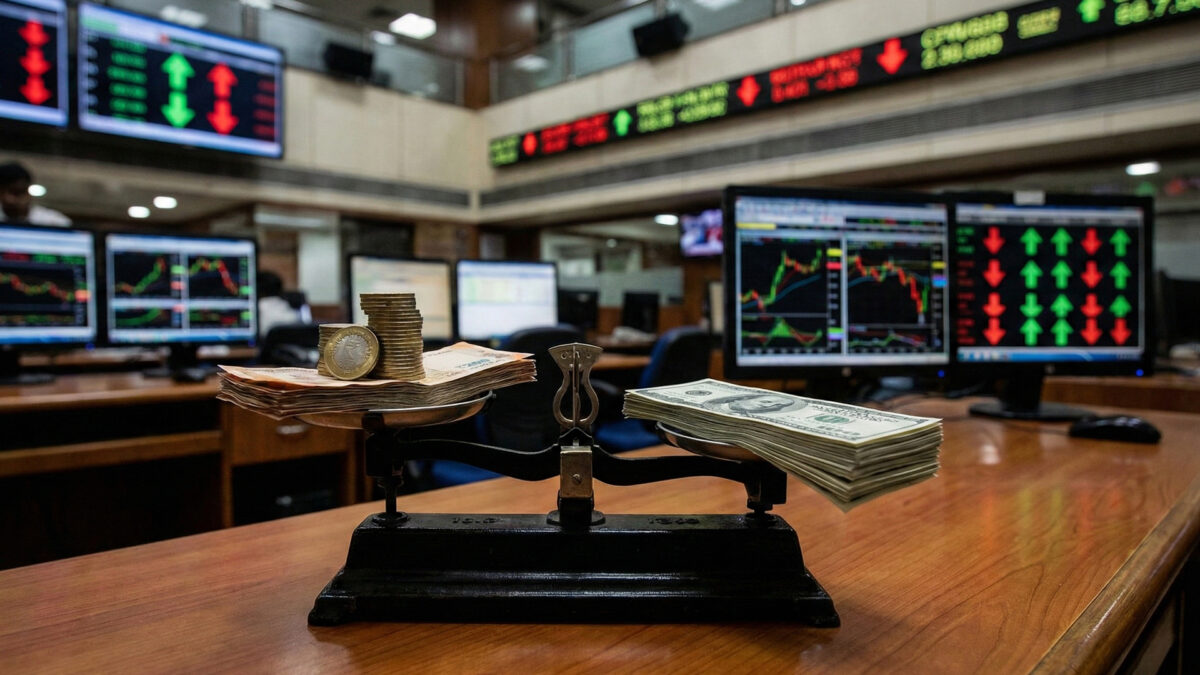
The Indian rupee recovered slightly on Friday after falling to its weakest level in history against the US dollar. It gained 9 paise to trade around ₹91.90 per dollar, supported by a decline in global crude oil prices, which eased some pressure on India’s import bill.
Earlier in the session, the rupee touched an all-time low of ₹92.02 per dollar. Traders said the intraday rebound was due to lower crude and commodity prices, which reduced immediate demand for dollars from importers. By the close of the day, the rupee settled near ₹91.97–₹91.93, showing a modest recovery.
Despite the short-term gains, the currency remains under pressure. The US dollar remains strong, and foreign portfolio investors (FPIs) continue to withdraw money from Indian equities, keeping overall market sentiment cautious. Analysts said sustained capital outflows and corporate demand for dollars are key reasons behind the rupee’s weakness.
January has been particularly challenging for the currency, with the rupee falling more than 2%, marking its worst monthly performance in over three years. The Reserve Bank of India (RBI) has intervened at times to prevent further sharp declines and curb volatility.
Market watchers are now looking ahead to the upcoming Union Budget, which could influence investor sentiment and currency trends. While falling oil prices provide some relief, experts say the rupee’s trajectory will largely depend on foreign investment flows and the global dollar trend in the coming weeks.
Also Read: Dixon Technologies rallies 5% after Q3 profit jump