
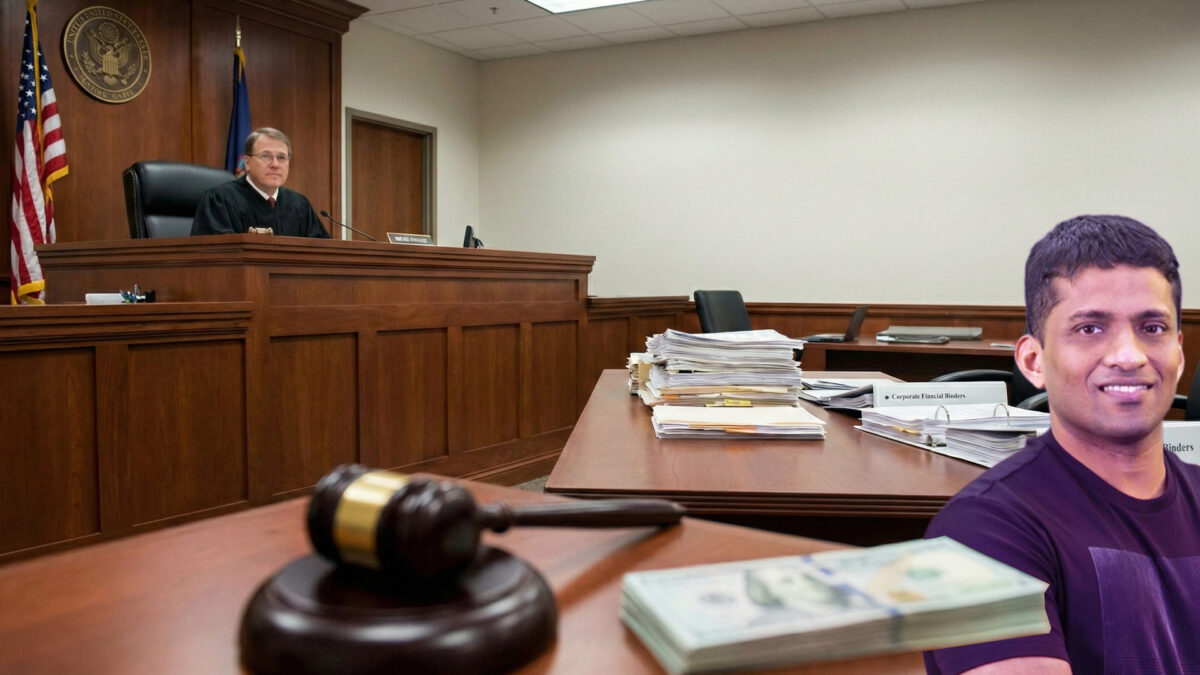
A US bankruptcy court in Delaware has ordered Byju’s founder, Byju Raveendran, to pay over $1 billion after ruling that he failed to comply with repeated court orders in a case involving alleged diversion of funds from the company’s US unit, Byju’s Alpha.
The court passed a default judgment, a strict legal action taken when a party does not cooperate with the judicial process, saying Raveendran repeatedly ignored instructions to submit financial documents, bank statements and details of large money transfers.
The dispute centres on two major fund movements: about $533 million transferred out of Byju’s Alpha in 2022 and another $540.6 million linked to a hedge fund investment in 2023. Lenders and the US entity alleged these transfers were made without proper explanation and may have been routed to other companies or accounts abroad. The judge criticised what he described as Raveendran’s “extensive and repeated pattern of delay and obstruction,” noting that the unusually large financial penalty was justified given the lack of cooperation.
As part of the order, Raveendran must also provide a full and accurate accounting of where the funds were sent, including tracing money that may have been moved to Singapore or to firms linked to Byju’s parent company, Think & Learn Pvt Ltd. Earlier, the court had also fined him $10,000 per day for civil contempt after he failed to comply with discovery requirements.
Raveendran has denied all allegations of personal misuse of funds. His legal team said the money was used by the parent company for business activities and not for his personal benefit. They claim they were not given adequate opportunity to present evidence and have announced plans to file counter-claims in the US accusing certain lenders of “racketeering and obstruction of justice,” while seeking at least $2.5 billion in damages.
The ruling comes at a time when Byju’s is already dealing with multiple challenges, including a funding crunch, layoffs, mounting debt, and governance concerns raised by investors. Once valued as India’s most successful ed-tech startup, the company now faces one of its most serious legal and financial crises, with the court order likely to have far-reaching implications for its future operations and credibility.
Also Read: Kotak Bank approves 5‑for‑1 stock split, first since 2010