
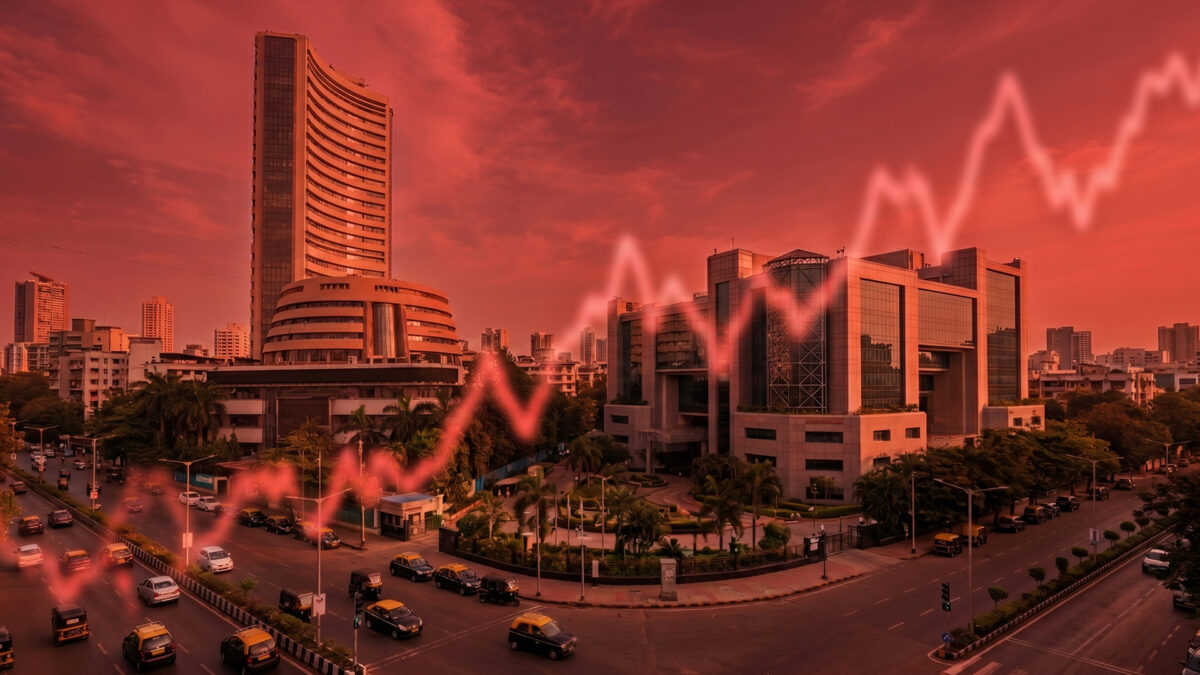
Indian stock markets ended lower on Tuesday, extending their losing run as high crude oil prices, foreign fund outflows and continuing geopolitical uncertainty kept investors cautious. The benchmark indices recovered from much sharper intraday losses but still closed in the red.
The BSE Sensex ended at 72,529.07, down 242.65 points or 0.33%, while the Nifty 50 settled at 22,716.20, lower by 64.05 points or 0.28%. Both indices had fallen much more sharply during the session, with the Sensex briefly dropping close to 1% before recovering some ground.
The market opened under pressure after global cues remained weak. Rising crude oil prices were a major concern for investors, particularly because India depends heavily on imports to meet its energy requirements. Brent crude was trading around $105-$106 a barrel, keeping worries about inflation, corporate margins and interest rates alive.
The uncertainty around the US-Iran conflict and negotiations also weighed on sentiment. Investors remain concerned that prolonged tensions in West Asia could disrupt energy supplies and keep oil prices elevated. The possibility of higher-for-longer interest rates added another layer of caution.
The selling was not limited to large-cap stocks. The Nifty Midcap 100 fell about 0.99%, while the Nifty Smallcap 100 declined around 0.81%, showing that pressure was visible across the broader market as well.
Among the Sensex stocks, Adani Ports emerged as the biggest gainer, rising about 4.39%. Sun Pharma gained 1.09%, while Tata Steel climbed 1.05%. Kotak Mahindra Bank also finished higher by around 1%.
Pharma and metal stocks provided some support to the market. The Nifty Pharma index gained 0.64%, while the Nifty Metal index rose about 0.78%. Pharma stocks received some attention after reports that Indian drug exports could benefit from exemptions related to US tariffs.
On the other side, Trent was among the biggest Sensex losers, falling around 2.72%. HCL Technologies declined 2.29%, while Tata Consultancy Services (TCS) slipped 1.72%. UltraTech Cement fell around 1.57%, and Hindustan Unilever declined about 1.53%, touching a fresh 52-week low during the session.
The technology sector remained under pressure as investors continued to watch global bond yields and concerns around the US economy. Higher US Treasury yields can make emerging-market assets relatively less attractive and encourage foreign investors to move money towards dollar-denominated assets.
Foreign institutional investors remained net sellers in Indian equities. According to market data, FIIs sold shares worth around ₹5,353 crore, while domestic institutional investors provided some support by buying equities worth about ₹5,189 crore.
The rupee also remained weak against the US dollar. It opened at around ₹96.05 per dollar, compared with the previous close of ₹95.98. A weaker rupee can increase the cost of imported crude oil and add to pressure on companies that depend heavily on imported inputs.
Tuesday’s session was also important because it coincided with the monthly derivatives expiry, which contributed to sharp swings during the day. The Nifty briefly slipped well below the 22,700 mark before recovering towards the close.
The broader market has now faced several sessions of weakness. The Nifty has fallen around 6% over the past seven weeks, while the latest decline adds to the pressure seen since the beginning of the week.
Investors are now watching global oil prices, developments in the Middle East, foreign fund flows and US bond yields closely. Domestic factors, including upcoming economic data and corporate developments, will also influence market direction.
Tuesday’s recovery from the day’s lows offered some relief, but the overall mood remained cautious. With crude oil still elevated and global uncertainty continuing, investors are likely to remain focused on defensive sectors such as pharmaceuticals while keeping a close watch on banking, IT and other rate-sensitive stocks.
The immediate market focus will remain on whether global tensions ease and whether crude prices cool from current elevated levels. Until then, volatility is likely to remain a key feature of Indian equity markets.