
Global oil markets are once again under pressure as crude prices move closer to the $100-a-barrel mark, with the ongoing Iran war disrupting shipments through the strategically important Strait of Hormuz.
Against this backdrop, OPEC+ has decided to keep its oil production targets unchanged for October, choosing caution as it assesses the impact of the conflict on global supply and demand.
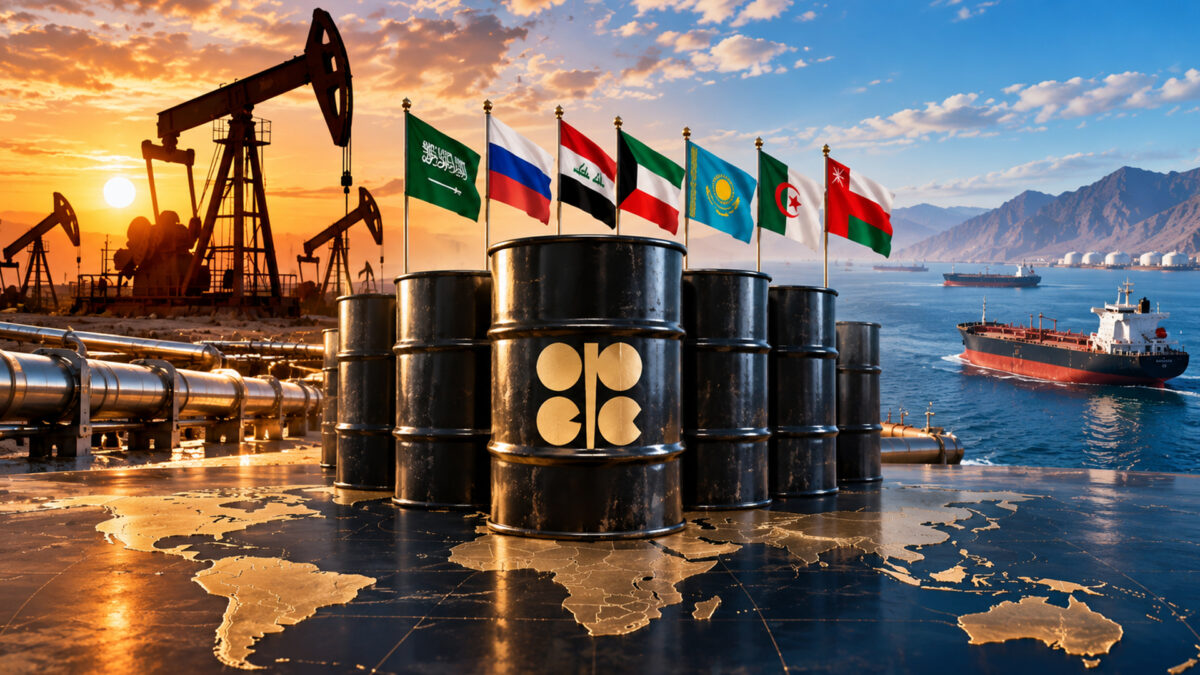
The decision was taken at a meeting of seven key OPEC+ producers on Sunday. Saudi Arabia, Russia, Iraq, Kuwait, Algeria, Kazakhstan and Oman agreed to maintain September’s production levels for October. The group is also reviewing the production capacity of its members before deciding on new quotas for 2027.
The move comes after six consecutive months in which the group had increased output targets. OPEC+ had been gradually reversing earlier production cuts, but the escalation of the Iran conflict has changed the market backdrop significantly.
The immediate concern for markets is the sharp rise in crude prices.
Brent crude was trading around $96 a barrel on Monday, after touching nearly $98 earlier, while US West Texas Intermediate was around $91 a barrel. Brent has gained sharply in recent sessions as tensions between the US and Iran have intensified.
The latest rally has brought back concerns that oil could cross the psychologically important $100-a-barrel threshold if the disruption continues.
For consumers and businesses, the issue goes well beyond petrol and diesel prices. A sustained rise in crude can push up transportation, manufacturing and logistics costs, feeding into broader inflation.
Higher oil prices could also complicate the decisions facing major central banks, particularly if energy costs begin to keep inflation elevated.
Much of the market anxiety is linked to the Strait of Hormuz, a narrow but critical shipping route connecting the Persian Gulf with global markets.
The waterway handles a significant share of international oil shipments. The ongoing conflict has sharply reduced tanker traffic, raising fears that a prolonged disruption could remove a substantial amount of crude from the global market.
The situation has become more complicated after fresh attacks involving US and Iranian forces. The US has reported strikes on Iranian tankers, while Iran has retaliated against vessels and threatened tighter controls around the waterway.
With commercial shipping already operating at reduced levels, traders are closely watching every development in the region.
The concern is not simply whether oil production falls. Even if crude is available at producing facilities, restrictions on shipping can prevent that oil from reaching international buyers.
OPEC+ has traditionally played a major role in balancing the global oil market by adjusting production.
But the current crisis is making that task harder.
The group can announce higher production targets, but actual supplies may not rise if producers cannot safely move crude through the region. The Iran conflict has therefore reduced the immediate impact that OPEC+ decisions can have on physical oil availability.
The group has also been gradually unwinding previous production restrictions.
In September, seven OPEC+ members increased their combined output target by 188,000 barrels per day, completing the rollback of voluntary cuts announced earlier. However, broader production restrictions introduced in previous years remain in place.
As of now, OPEC+ has chosen not to add another increase for October.
The October decision is also linked to a broader review of the group’s future production framework.
OPEC+ is assessing the actual production capacity of individual members before establishing new baseline quotas for 2027. That process could determine how much crude individual countries will be permitted to produce next year.
The group is expected to meet again on October 4 to discuss production levels for November.
Until then, the market is likely to remain highly sensitive to developments in the Middle East.
For the global economy, the latest oil surge comes at an uncomfortable time.
Crude prices had eased significantly earlier in the year as concerns over excess supply weighed on the market. The renewed Iran conflict has reversed some of that decline, bringing energy security back to the centre of economic discussions.
A prolonged period of expensive crude could raise costs for airlines, shipping companies, manufacturers and transport operators. Those higher costs can eventually reach consumers through more expensive goods and services.
Financial markets are already reacting to the inflation risk. Global stocks came under pressure on Monday as investors assessed the possibility of higher energy costs and tighter monetary policy.
India watches crude closely
In India, higher crude prices are particularly important because the country imports most of its oil requirements.
A sustained increase in global oil prices can put pressure on the country’s import bill and trade balance. It can also affect the rupee, government finances and domestic inflation.
Indian refiners and fuel consumers will therefore be watching the international crude market closely in the coming weeks.
The impact will depend largely on how long the disruption lasts and whether alternative supply routes can compensate for the reduced flows through Hormuz.