
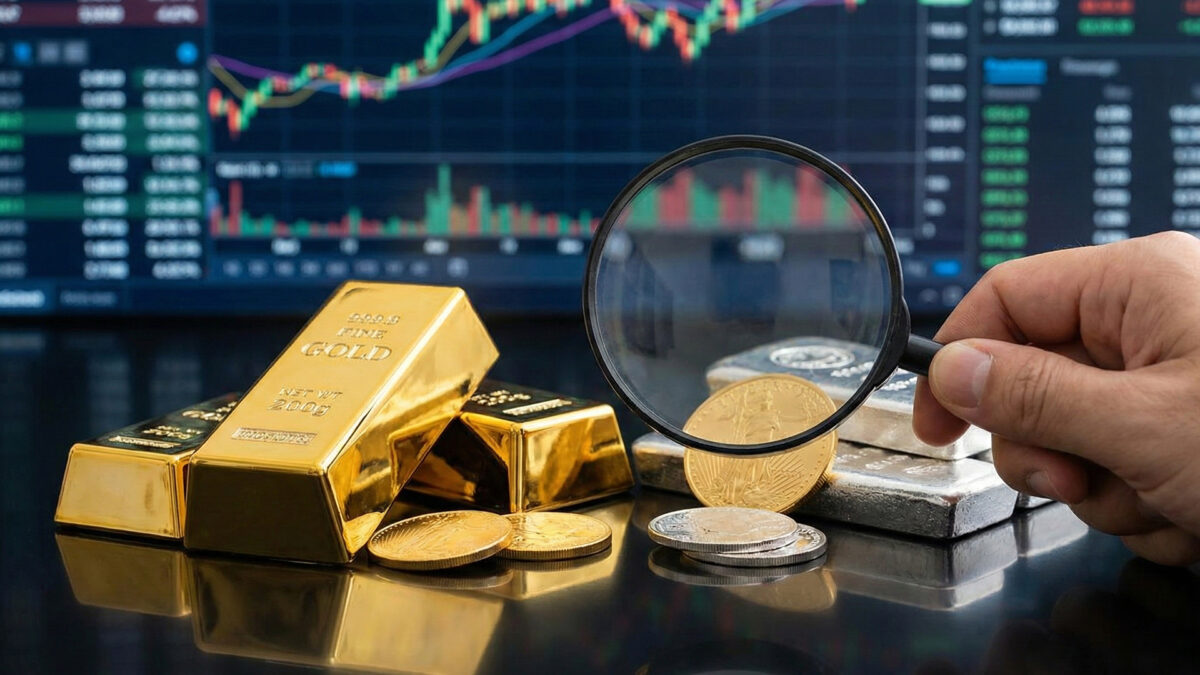
Gold and silver prices came under pressure on Wednesday, September 2, with both precious metals declining in the domestic futures market. Rising crude oil prices, a stronger US dollar and renewed concerns over inflation and interest rates weighed on bullion prices as investors assessed the impact of escalating US-Iran tensions.
On the Multi Commodity Exchange (MCX), gold futures were trading at ₹1,50,530 per 10 grams, down around 1.07%, while silver futures declined about 1.26% to ₹2,31,830 per kg around 9:13 am. The fall came as investors reassessed the outlook for interest rates amid growing concerns that higher oil prices could fuel inflation.
The decline in domestic bullion prices followed weakness in international markets. Spot gold fell to its lowest level in more than three weeks on Wednesday, extending its losing streak to a fourth session. The metal remained below its closely watched 200-day moving average, signalling continued pressure in the global gold market.
The latest weakness in gold comes against the backdrop of heightened tensions in the Middle East. The United States launched fresh airstrikes against Iran, prompting retaliation from Tehran. The escalation pushed crude oil prices higher for a third consecutive session and raised concerns about possible disruption to oil supplies from the region.
For gold investors, the rise in crude prices has created an unusual challenge. Gold is traditionally considered a safe-haven asset during periods of geopolitical uncertainty. However, if higher oil prices lead to stronger inflation, central banks may be forced to maintain or raise interest rates. Higher interest rates can reduce the appeal of gold because the metal does not generate interest income.
The US dollar has also remained firm, adding to the pressure on bullion. Gold is traded internationally in dollars, so a stronger US currency generally makes the metal more expensive for buyers using other currencies. This can reduce demand and contribute to a decline in international gold prices.
Retail gold rates across major Indian cities also moved lower. In New Delhi, 24-karat gold was priced at ₹1,50,000 per 10 grams, while 22-karat gold stood at ₹1,37,500. Mumbai recorded a 24K gold rate of ₹1,50,250 and a 22K rate of ₹1,37,729.
In Bengaluru, 24K gold was available at ₹1,50,160 per 10 grams, while 22K gold stood at ₹1,37,647. Hyderabad recorded 24K gold at ₹1,50,280 and 22K gold at ₹1,37,757. In Kolkata, 24K gold was priced at ₹1,49,840 and 22K gold at ₹1,37,353.
Chennai continued to quote one of the highest retail gold prices among the major cities, with 24K gold at ₹1,50,480 per 10 grams and 22K gold at ₹1,37,940 for 22K gold.
Silver prices also declined across the domestic market. Retail silver was quoted at around ₹2.31 lakh per kg in several major cities, with rates varying slightly depending on the location. The weakness in silver has come alongside the broader decline in precious metals, although its industrial applications make its price movement somewhat different from gold.
Silver is widely used in electronics, solar panels and other industrial applications. As a result, expectations about global economic growth and manufacturing activity can have a significant impact on silver demand. A weaker economic outlook can therefore weigh on the metal even when investment demand remains firm.
The MCX price and retail jewellery rate should not be confused. The final price paid for gold jewellery can be considerably higher because of making charges, wastage, GST and other applicable costs. The purity of gold also determines its value.
While 24-karat gold is the purest form commonly traded, 22-karat gold is widely used in jewellery because it is more durable. Buyers should therefore check both the purity and the per-gram rate before making a purchase.
The latest price movement also highlights the sensitivity of precious metals to global economic developments. Investors are now watching crude oil prices, US Treasury yields, the dollar and expectations for Federal Reserve policy.
The possibility of higher US interest rates has become a key factor for bullion markets. Recent market expectations indicate that persistent inflation could make policymakers more cautious about cutting rates. Upcoming US employment and economic data could therefore play an important role in determining the next direction for gold and silver.
The currency movements will also remain important. A weaker rupee can make imported gold more expensive domestically, even when international prices decline. On the other hand, a stronger rupee can provide some relief to local bullion prices.
The near-term outlook for gold and silver remains uncertain. Any further escalation in the Middle East could increase volatility, while signs of easing tensions may reduce safe-haven demand and bring additional pressure on precious metals.
The domestic bullion market remains under pressure, with MCX gold at ₹1,50,530 per 10 grams and silver at ₹2,31,830 per kg. Investors and buyers will be watching global oil prices, US interest-rate expectations and geopolitical developments closely for the next major price move.