
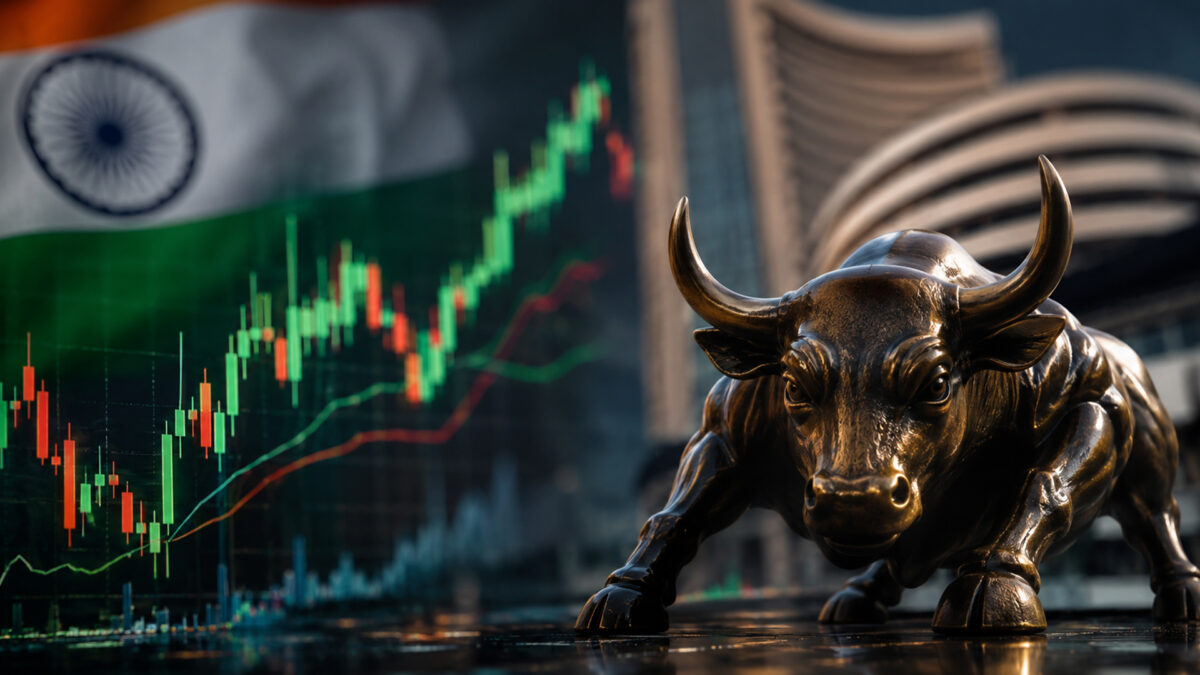
Indian benchmark equity indices extended their recovery for a second consecutive session on Tuesday, supported by easing crude oil prices, encouraging corporate earnings and positive global cues. The BSE Sensex gained over 100 points in early trade, while the NSE Nifty 50 held firmly above the crucial 24,000 mark, as buying in IT and banking stocks outweighed losses in select FMCG and defence counters.
The upbeat opening followed Monday’s sharp rally, when the benchmark indices snapped a five-day losing streak amid improving global sentiment and renewed buying by investors.
Technology stocks emerged as the biggest drivers of Tuesday’s rally. Tata Consultancy Services (TCS), Infosys, Tech Mahindra, HDFC Bank and Tata Power were among the top gainers on the Sensex, supported by positive earnings expectations and optimism over the sector’s medium-term growth prospects. Investors continued to favour large-cap stocks with strong fundamentals as the June-quarter earnings season gathered pace.
In contrast, Hindustan Unilever Ltd (HUL), Bharat Electronics Ltd (BEL), Coal India, Asian Paints and a few consumer-focused stocks traded in the red. HUL remained under pressure after reporting weaker-than-expected quarterly earnings, while BEL and Coal India witnessed profit booking following their recent gains and cautious investor sentiment around their earnings outlook.
Market participants said easing geopolitical tensions in the Middle East and the decline in global crude oil prices have significantly improved investor confidence. India, which imports nearly 85 per cent of its crude oil requirement, stands to benefit from lower oil prices as they help reduce inflation, ease pressure on the country’s import bill and improve corporate profitability.
The moderation in crude prices has also eased concerns over inflationary pressures, giving investors confidence that domestic economic growth and corporate earnings could remain resilient despite uncertainties in the global economy.
Monday’s rally had already signalled a shift in market sentiment. The Sensex surged nearly 776 points, while the Nifty gained more than 228 points, adding over ₹5 lakh crore to the market capitalisation of BSE-listed companies. Tuesday’s gains indicated that investors were willing to build on that momentum, although buying remained selective.
The ongoing corporate earnings season continued to dictate stock-specific movements. Companies delivering better-than-expected financial performance attracted strong investor interest, while those reporting weaker earnings or cautious future guidance faced selling pressure.
Information technology stocks remained in focus after analysts highlighted the sector’s relatively stable demand outlook. Expectations that Indian IT companies would continue benefiting from global digital transformation initiatives encouraged fresh buying despite uncertainty surrounding international economic growth.
Banking stocks also supported the benchmark indices, with investors expecting healthy credit growth, stable asset quality and improving profitability to continue driving the sector’s performance over the coming quarters.
Meanwhile, the broader market showed mixed trends. While several large-cap stocks traded higher, mid-cap and small-cap indices witnessed limited movement as investors preferred fundamentally strong companies over riskier bets. Analysts said elevated valuations in certain segments of the broader market have made investors increasingly selective.
Global cues also remained supportive. International markets found relief after crude oil prices softened amid signs of easing geopolitical tensions. However, investors continued to remain cautious ahead of key global events, particularly the US Federal Reserve’s monetary policy meeting scheduled later this week.
Although the US central bank is widely expected to keep interest rates unchanged, investors will closely monitor its policy commentary for clues on future rate cuts and the outlook for inflation. Any indication of a prolonged higher-interest-rate environment could influence foreign investment flows into emerging markets, including India.
Foreign Institutional Investors (FIIs) continue to play a significant role in determining short-term market direction. Their investment decisions remain closely linked to global interest rates, oil prices, geopolitical developments and currency movements. At the same time, consistent buying by Domestic Institutional Investors (DIIs) has helped cushion the market from sharp declines during recent bouts of foreign selling.
Analysts believe the Nifty’s ability to hold above the psychologically important 24,000 level is encouraging for market sentiment. Sustaining above this level could trigger further buying interest, although volatility is expected to remain high due to global macroeconomic uncertainties and the ongoing earnings season.
For retail investors, the market’s turnaround over the past two sessions highlights how quickly sentiment can change. Just days ago, concerns over rising crude oil prices and geopolitical tensions had triggered heavy selling across Dalal Street. The recent decline in oil prices, coupled with encouraging corporate earnings and improving global cues, has helped restore confidence among investors.
However, market experts continue to advise caution. They recommend focusing on quality businesses with strong earnings visibility rather than chasing short-term market rallies. With several major companies yet to announce their June-quarter results, stock-specific volatility is likely to remain elevated in the coming days.
Market participants will now closely track the US Federal Reserve’s policy decision, ongoing June-quarter corporate earnings, foreign institutional investor (FII) activity and movements in global crude oil prices for fresh direction. Analysts believe sustained lower oil prices, steady domestic institutional inflows and robust corporate earnings could help the Indian stock market extend its recovery. However, any adverse geopolitical developments or unexpected global policy announcements could keep the Sensex and Nifty volatile in the near term, making investors remain selective even as the broader outlook continues to improve.