
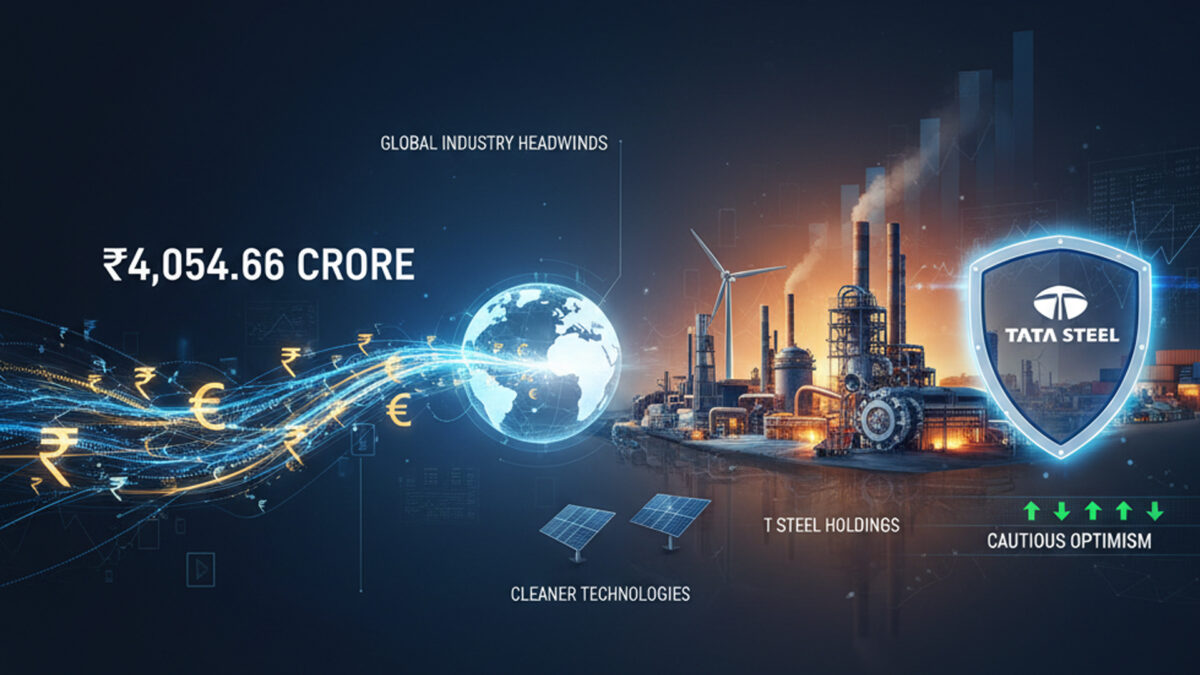
Tata Steel has injected ₹4,054.66 crore into its overseas subsidiary, T Steel Holdings, in a move that underlines the group’s strategic investment in its international operations. The capital infusion, approved by Tata Steel’s board, marks one of the latest steps in the company’s attempts to strengthen its global presence and address working capital or financial requirements of its foreign entity.
The funds are being routed into T Steel Holdings, which oversees Tata Steel’s overseas assets and operations. While Tata Steel has not provided detailed public disclosures about the precise use of these funds, sources familiar with the matter indicate that the infusion will support both operational needs and ongoing expansion or modernization programmes abroad. The move is expected to help offset currency risks, fund capital expenditure in line with market conditions, and shore up balance sheet health for overseas operations.
Tata Steel’s annual reports and filings periodically show performance pressures in foreign units, including those in Europe and Southeast Asia, where raw material costs, energy prices, import/export duties, and logistic expenses have had notable impacts. By transferring capital via the parent company, Tata Steel appears to be ensuring that its subsidiaries have sufficient liquidity to navigate volatile global steel market conditions.
Financial analysts suggest that the ₹4,054.66 crore infusion may also be aimed at facilitating compliance with regulatory norms in overseas jurisdictions, enabling investments in cleaner technologies or facility upgrades, and safeguarding against disruptions in supply chains. Tata Steel has in recent years made several commitments toward decarbonisation and environmental sustainability; overseas units often require upgraded infrastructure to meet increasingly stringent environmental standards.
The timing of the infusion is significant: it comes amid a global steel industry facing challenges such as overcapacity, fluctuating demand, freight rate volatility, and raw material price inflation. Such external pressures have compressed margins for many firms, especially for overseas units operating in Europe where energy and carbon costs can erode profitability rapidly. For Tata Steel, maintaining operational resilience abroad is critical not only for revenue diversification, but also for exposure to advanced steel-making markets and technology.
Investors have reacted to the news with cautious optimism. On one hand, the investment signals Tata Steel’s continued commitment to its overseas subsidiaries and suggests confidence in their long-term potential. On the other, some market watchers indicate that sustained capital infusions might raise concerns about returns if those overseas operations continue to underperform or if the parent company faces cash flow constraints domestically.
Regulatory filings pertaining to this transaction are expected to shed more light on the subsidiary’s business plans, including where precisely the capital will be deployed — whether in debt reduction, scaling production, or upgrading technology. Tata Steel’s management, while not yet disclosing granular details, has reaffirmed its focus on disciplined capital expenditure and cost management across its businesses.
The ₹4,054.66 crore investment in T Steel Holdings underscores Tata Steel’s strategy of buttressing its overseas operations amid global industry headwinds. It reflects a balance between ensuring short-term stability for those units and positioning them for longer-term competitiveness in a shifting international steel landscape.
Also Read: Infosys Expands Partnership with Sunrise to Accelerate AI-Driven IT