
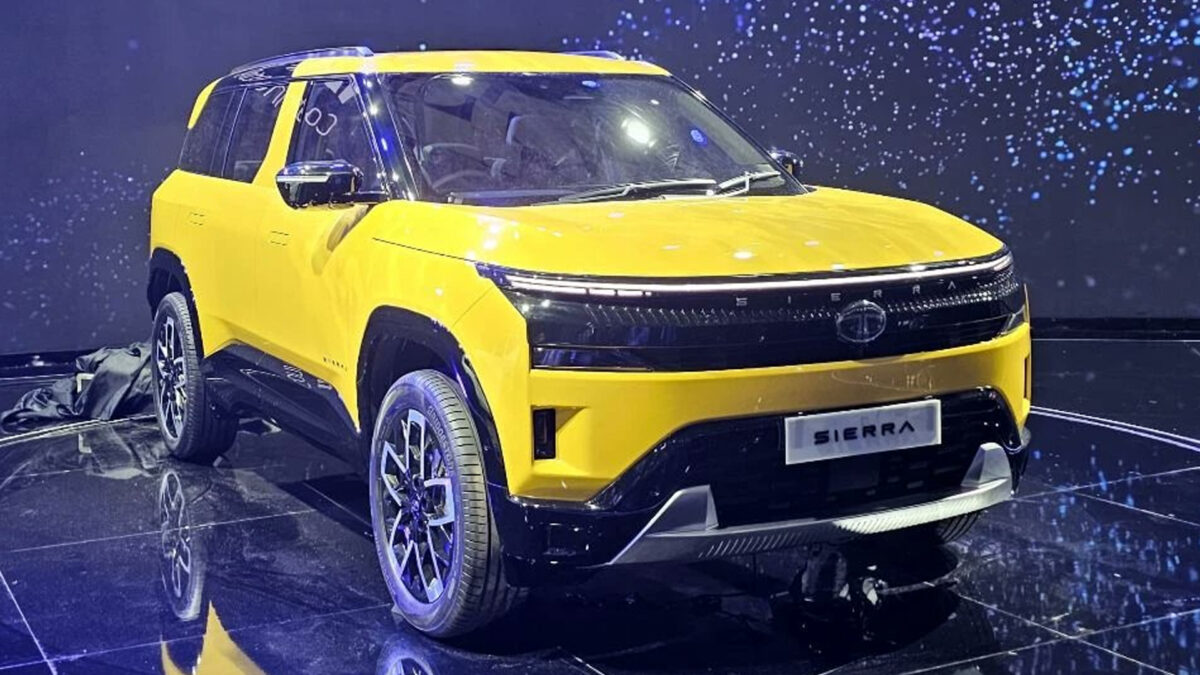
Tata Motors has confirmed the much-anticipated relaunch of its iconic SUV nameplate, Tata Sierra, set for November 25, 2025.
The revival aims to blend the nostalgic styling of the original Sierra, which debuted in India in the early 1990s, with contemporary design and technology that align with the automaker’s current ambitions.
The new Sierra will be introduced initially in internal-combustion engine (ICE) versions, while an electric vehicle (EV) variant is expected to follow shortly thereafter.
Tata Motors has positioned the model as a key addition to its SUV portfolio, slotting it above the current Curvv model and targeting a premium segment below the Harrier.
Design previews and spy photos suggest the 2025 Sierra retains hallmark cues of its predecessor — such as the upright bonnet, tall profile and expansive rear glass (often dubbed the “Alpine” window) — while integrating modern elements like flush door handles, full-width LED light bars, shark-fin antenna and a robust off-road stance.
Interior reports show a steep step-up for the cabin: Tata is expected to offer a triple-screen digital layout (driver display, center touchscreen and front-passenger screen), ambient lighting, ventilated seats, panoramic sunroof and a full Level 2 ADAS suite.
On the powertrain front, the new Sierra is tipped to carry petrol and diesel options in its ICE range, with a 1.5-liter turbo petrol and a 2.0-liter Kryotec diesel being likely candidates.
Later, the EV version is expected to ride on Tata’s Acti.EV architecture featuring dual-motor all-wheel-drive capability and a claimed range in excess of 500 km.
Pricing speculation places the starting ex-showroom price somewhere in the ₹13.5 lakh to ₹24 lakh range, though industry watchers expect the final numbers to be announced at the launch event.
Analysts note that the Sierra’s return aligns with a broader strategy by automakers to tap into nostalgia while offering modern relevance.
As one report observed, the 90s-era Sierra holds cult status, and Tata Motors is leveraging that emotional recall by blending its 1990s charm with modern design, advanced technology and both EV and ICE options.
For Tata Motors, the timing is critical: the SUV segment in India remains fiercely competitive, and the manufacturer’s ability to deliver both volume and margin from a legacy nameplate will be closely watched.
The company’s decision to launch ICE versions first, followed by an EV, reflects market realities: while EV adoption is rising, ICE models still dominate many buyer segments in India.
The ICE-first approach enables the Sierra to begin volumes earlier, with the EV variant likely helping future portfolio transition.
Market observers will be closely watching how the Sierra fares against established rivals such as the Hyundai Creta, Maruti Grand Vitara and Kia Seltos, especially given its legacy appeal and positioning.
As Tata Motors gears up for the November 25 unveiling, consumer interest appears high. The revival of the “Sierra” badge — once one of India’s earliest lifestyle SUVs — could mark one of the most talked-about launches in the Indian automotive calendar this year.
Whether the new model will live up to its heritage and deliver the promised blend of legacy, technology and performance remains to be seen.
Also Read: TVS Motor Posts 37% Jump in YoY Net Profit