
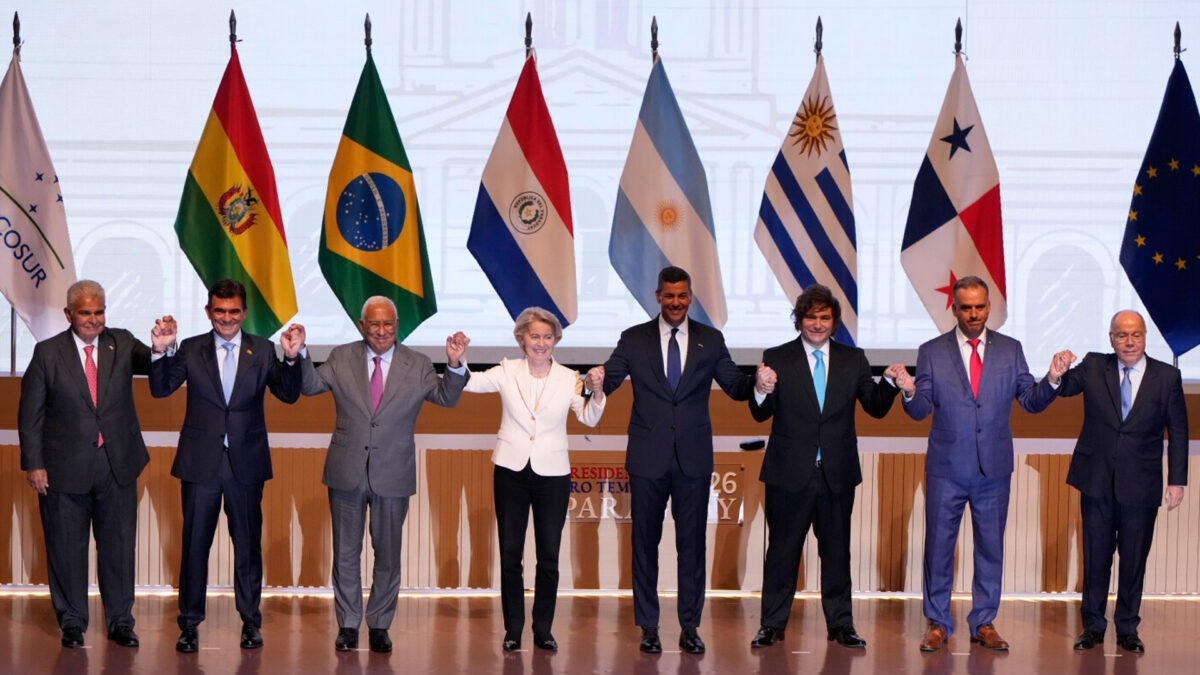
The European Union (EU) and the Mercosur bloc of South American countries have signed a historic free trade agreement, ending more than 25 years of negotiations. The deal, signed on January 17, 2026, in Paraguay, is expected to create one of the world’s largest trade zones, connecting over 700 million people and boosting economic ties between the two regions.
Mercosur includes Argentina, Brazil, Paraguay, and Uruguay. Bolivia is not part of the deal yet, and Venezuela remains suspended from the bloc. The agreement aims to gradually remove most tariffs on goods traded between the EU and Mercosur, including cars, machinery, and chemicals. This is expected to save businesses billions in customs fees and make products cheaper for consumers.
European Commission President Ursula von der Leyen called the deal a choice for “fair trade over tariffs,” highlighting its importance for Europe’s global trade strategy. Argentina’s President Javier Milei also welcomed the pact, viewing it as a boost for free trade and economic growth.
The agreement still needs approval from the European Parliament and the national parliaments of Mercosur countries before it comes into effect. Some European farmers and environmental groups have expressed concerns, fearing that cheaper imports could hurt local agriculture and worsen environmental issues, like deforestation. To address this, the deal includes quotas and safeguards, and the EU has promised support for its farming sector.
Supporters say the pact is not just about trade—it also strengthens political and economic ties between Europe and South America. Analysts note it could serve as a model for other large trade agreements in a time of rising global protectionism and supply chain challenges.
Once fully implemented, the EU-Mercosur deal is expected to increase exports, lower costs for consumers, and encourage investment in industries across both regions.
Also Read: Tata Motors pushes for budget relief for entry-level EVs