
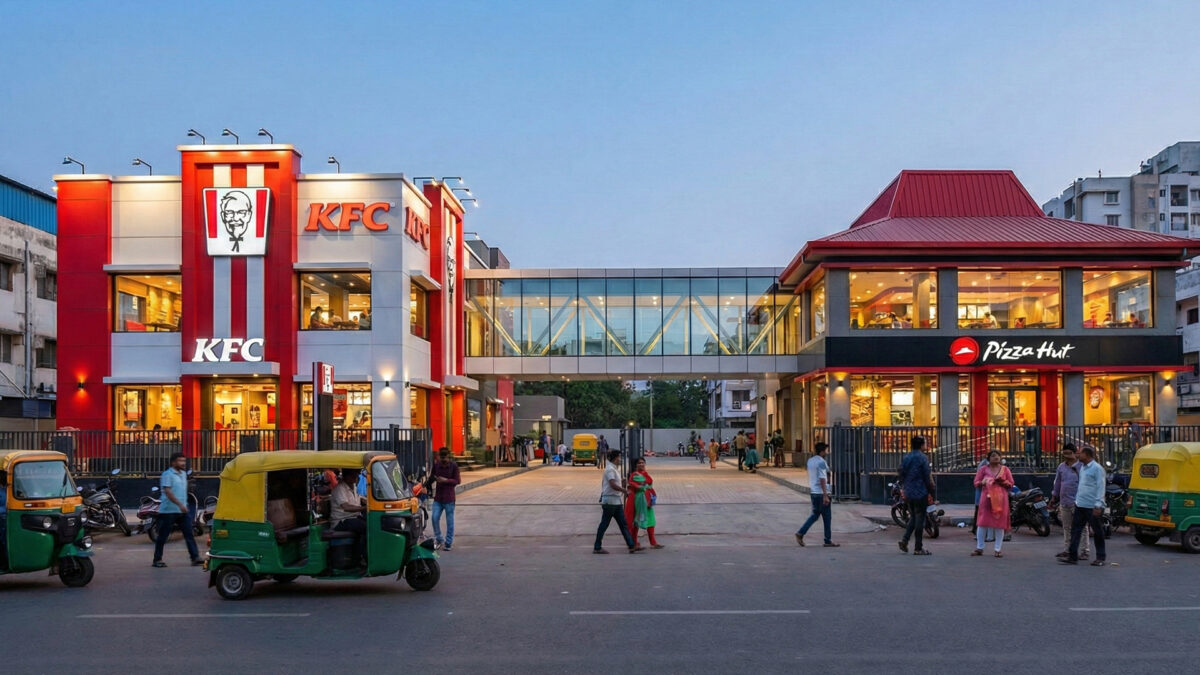
Sapphire Foods India Ltd and Devyani International Ltd, two of the largest franchise operators of KFC and Pizza Hut in the country, have announced a merger that will create India’s biggest quick-service restaurant (QSR) operator. The deal, approved by the boards of both companies, will be executed through a share-swap arrangement, with Devyani International becoming the surviving listed entity.
As per the merger terms, shareholders of Sapphire Foods will receive 177 shares of Devyani International for every 100 shares they hold. The combined entity will operate more than 3,000 restaurants across India and select international markets, making it a dominant player in the organised fast-food segment. The portfolio will include popular global brands such as KFC, Pizza Hut and Costa Coffee.
The merger is expected to take around 12 to 15 months to complete and will be subject to approvals from shareholders, regulators and other statutory authorities. The appointed date for the merger is April 1, 2026.
The move comes at a time when India’s QSR sector is facing pressure from slowing urban demand, rising input costs and intense competition. By combining operations, the two companies aim to achieve economies of scale, improve supply chain efficiencies, reduce overhead costs and strengthen their negotiating power with suppliers and landlords.
Sapphire Foods currently operates KFC and Pizza Hut outlets across India and Sri Lanka, while Devyani International runs a wide network of KFC, Pizza Hut and Costa Coffee stores in India and overseas markets. The merger will also simplify Yum! Brands’ franchise structure in India by bringing most of its key outlets under one large operator.
The stock market reacted swiftly to the announcement. Shares of Devyani International rose sharply, reflecting investor optimism about the benefits of scale and long-term growth prospects. In contrast, Sapphire Foods shares came under pressure, as investors assessed the share-swap valuation and near-term integration challenges.
Experts in the industry are of the opinion that this merger could strengthen profitability over the long term if synergies are executed well, though short-term challenges related to integration, demand recovery and cost control remain. Once completed, the combined company is expected to be better positioned to expand aggressively and compete with other major fast-food chains in India’s growing QSR market.