Categories
Corporate

Adani Power launches unit to enter nuclear energy

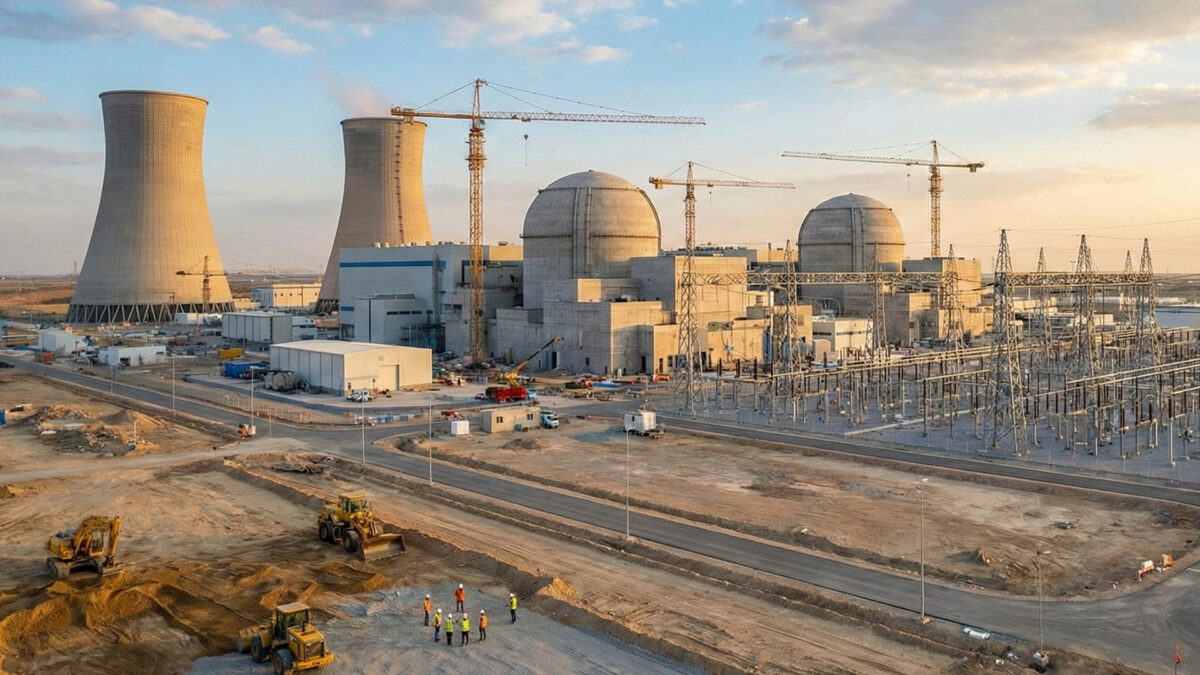
Adani Power has officially stepped into India’s nuclear energy sector with the creation of a wholly-owned subsidiary, Adani Atomic Energy Limited (AAEL). The Ahmedabad-based company announced the formation of AAEL on February 11, 2026, with an authorized capital of ₹5 lakh, divided into 50,000 equity shares, fully held by Adani Power. The new unit will focus on producing, transmitting, and distributing electricity from nuclear energy sources, marking the company’s first formal move into atomic power.

This strategic move follows the passage of the SHANTI Bill (Sustainable Harnessing and Advancement of Nuclear Energy for Transforming India), which allows private firms to participate in India’s previously state-controlled nuclear sector. Until now, the Nuclear Power Corporation of India Ltd (NPCIL) was the only operator of nuclear power plants in the country. The reforms aim to attract private investment, expand electricity generation, reduce carbon emissions, and diversify India’s energy mix.

While AAEL’s exact capacity plans, project timelines, and technology partners have not been disclosed, industry analysts say Adani Power is likely to explore partnerships with international firms to acquire nuclear technology and expertise. The company already has a strong presence in thermal and renewable energy, and this move signals a broader strategy to diversify into low-carbon, long-term energy solutions.

Financially, the market has responded positively to the news, reflecting investor confidence in the private sector’s entry into nuclear power. Government incentives, including customs duty exemptions on imported nuclear equipment and budget allocations for atomic energy, further support private participation.

Experts note that Adani Power is among the first private utilities to enter India’s nuclear sector, positioning it for potential long-term growth as the country scales up nuclear capacity.

Also Read: UBS opens Hyderabad hub, promising 3,000 jobs

Categories
Corporate

Adani Power’s Vidarbha takeover gets final nod

Adani Power has overcome a significant legal challenge in its bid to acquire Vidarbha Industries Power Ltd (VIPL) for ₹4,000 crore. The National Company Law Appellate Tribunal (NCLAT) has upheld the company’s resolution plan under the Insolvency and Bankruptcy Code (IBC), dismissing appeals from Western Coalfields Ltd., a key coal supplier and a group of employees. This decision affirms the earlier approval by the National Company Law Tribunal (NCLT), providing final clarity to the long-pending takeover of the 600 MW Vidarbha power project.

The disputes centered on creditor treatment and procedural compliance. Western Coalfields, an operational creditor claiming around ₹500 crore, argued that Adani Power’s plan violated IBC timelines for debt resolution. Meanwhile, employees raised concerns over inadequate payouts, receiving only ₹1 crore collectively against claims exceeding ₹550 crore. They contended that the plan unfairly prioritized secured creditors, leaving operational dues undervalued.

NCLAT rejected these claims, ruling that the Committee of Creditors (CoC) had approved the plan well within legal deadlines. The tribunal noted that Adani Power’s subsequent modifications to operational debt handling were permissible, as they neither reduced creditor recoveries nor prejudiced any party. On employee dues, NCLAT clarified that asset values could not fully cover all claims post-secured creditor payments, a common outcome in insolvency cases. Crucially, statutory obligations like provident fund and gratuity contributions remain fully protected and must be disbursed in full, safeguarding worker interests.

This ruling marks a pivotal moment for Adani Power’s expansion strategy in the power sector. The acquisition bolsters its capacity amid India’s growing energy demands, aligning with the group’s aggressive growth in renewables and thermal assets. Market analysts view the verdict as a strong endorsement of the IBC framework, which has resolved over stressed assets since 2016. By balancing swift corporate rescues with creditor rights and employee protections, it signals judicial confidence in India’s bankruptcy regime.

For the broader economy, the decision underscores the maturing insolvency ecosystem. It demonstrates how tribunals can navigate complex stakeholder conflicts, encouraging more strategic investments in turnaround opportunities. Adani Power shares rose marginally post-ruling, reflecting investor optimism. As the company integrates VIPL, focus shifts to operational synergies and long-term value creation in a competitive power landscape.

Also Read: S4Capital chief praises India at WEF 2026, Davos

Categories
Corporate

Adani Power shares rises 7% as investor optimism surge

Adani Power Ltd. shares jumped sharply on January 1, 2026, rising 7.1% to ₹153.20 on the BSE, marking their highest level in over a month. The stock witnessed heavy trading, with nearly 50 million shares exchanged, signaling strong investor interest.

Brokerages have highlighted that Adani Power is entering a multi-year earnings upcycle, driven by growing demand for power in India. Sectors such as manufacturing, data centers, and electric vehicles are expected to increase baseload electricity requirements, boosting revenue visibility for the company.

Research reports point to the company’s ongoing transformation from a stressed thermal power producer to one of India’s most efficient private power operators. Its current capacity of 18.15 GW is projected to expand to nearly 41.9 GW by FY33, largely through long-term power purchase agreements (PPAs) that provide steady revenue streams. Around 90% of existing and planned capacity is already under contracts or letters of intent, giving investors confidence in sustained earnings growth.

Global brokerage Morgan Stanley recently maintained an “Overweight” rating on Adani Power, projecting a 20% EBITDA compound annual growth rate through FY33. The firm also raised its price target to ₹185, citing new PPAs and reduced reliance on merchant power sales as key drivers.

Despite the rally and positive outlook, analysts caution that the stock remains exposed to broader market fluctuations and sector-specific risks. They advise investors to weigh these factors before making decisions, noting that while fundamentals are improving, short-term volatility cannot be ruled out.

With strong trading activity and optimism surrounding long-term earnings, Adani Power has become a focus for investors seeking exposure to India’s growing energy sector. The stock’s recent surge underscores the market’s positive sentiment and the company’s potential to benefit from rising power demand and operational efficiency.

Analysts say the surge reflects renewed confidence in the company’s long-term growth prospects and a technical recovery supported by robust volumes.

Also Read: Tarun Garg named Hyundai India MD & CEO

Categories
Corporate

Adani secures ₹63,000 cr worth power projects in Assam

Adani Power and its affiliate Adani Green Energy Ltd have won two major contracts from Assam Power Distribution Company Limited, aiming to strengthen the state’s power infrastructure with a combined investment of around ₹63,000 crore.

Under the first project, Adani Power will build a 3,200 MW ultra-supercritical thermal power plant. The plant will have four units of 800 MW each and is expected to start operations in phases from December 2030, with full commissioning by December 2032. The project will be developed under a design-build-finance-own-operate model, supplying electricity to Assam under a long-term agreement. Coal for the plant will be procured following government guidelines to ensure steady fuel availability. The estimated investment for this project is around ₹48,000 crore.

The second project involves a 500 MW pumped hydro energy storage facility to be developed by Adani Green’s subsidiary. This is part of a wider plan to set up two pumped storage plants in Assam with a combined capacity of 2,700 MW and an investment of roughly ₹15,000 crore. Pumped storage allows electricity to be stored and released when needed, improving grid stability and supporting reliable power supply. The project will operate under a fixed tariff for 40 years from the start of commercial operations.

These projects come as the Adani Group expands into both traditional thermal power and large-scale storage solutions, reflecting Assam’s push to increase electricity generation and strengthen the grid. The initiatives are expected to boost regional infrastructure, create local employment opportunities, and enhance supply chain engagement, though the projects have long-term timelines.

Overall, these twin contracts mark a major expansion for the Adani Group in northeast India and align with national priorities to enhance generation capacity, introduce storage solutions, and build a stronger, more resilient power grid for the future.

Also Read: Adani Cement’s big green leap with TNFD adoption, a first in India

Categories
Corporate

Adani Power Invokes Arbitration Clause in Bangladesh Dispute

Adani Power Ltd (APL) has opted for international arbitration to resolve a payment dispute with the Bangladesh Power Development Board (BPDB) concerning electricity supplied from its 1,600 MW Godda coal-based power plant in Jharkhand. The move comes after prolonged discussions over differences in cost calculations and billing under a 25-year Power Purchase Agreement (PPA) signed in 2017.

According to company officials, both parties have mutually agreed to invoke the dispute resolution clause to ensure transparency and protect long-term cooperation. An Adani Power spokesperson said that there are disagreements in how certain cost elements are computed and billed. Both partners have agreed to invoke the dispute-resolution process and are confident of a quick, smooth, and mutually beneficial outcome.

The BPDB, meanwhile, has stated that it remains engaged in negotiations and will consider arbitration after discussions conclude. Reports indicate that while earlier this year Bangladesh’s dues to Adani Power were nearly USD 2 billion, they have now been reduced to the equivalent of just 15 days of tariff payment, reflecting significant progress in clearing outstanding amounts.

Industry analysts view the arbitration step as a strategic move by Adani Power to formalize dispute resolution while maintaining supply stability. The company continues to export power to Bangladesh without disruption, reaffirming its commitment to support the neighbouring nation’s growing energy needs.

The Godda plant, operated through a cross-border transmission arrangement, meets a notable share of Bangladesh’s power demand. The dispute primarily relates to tax treatment, fuel costs, and related cost components that impact the final tariff structure under the PPA.

Adani Power emphasized that arbitration would not affect ongoing supply or the company’s regional growth plans. Both sides are expected to appoint arbitrators soon, aiming for an expeditious and amicable settlement.

Also Read: Starbucks Offloads China Stake to Boyu for $4 Billion

Categories
Corporate

Adani Solar Ships 15,000 MW Modules Globally

Adani Solar, the solar manufacturing arm of the Adani Group, has achieved a significant milestone by shipping over 15,000 megawatts (MW) of solar modules globally. This marks a strong push toward India’s renewable energy ambitions and its Atmanirbhar Bharat vision.

Of the total capacity shipped, 10,000 MW were delivered to domestic projects, while 5,000 MW were exported to international markets. This translates to nearly 28 million solar modules, enough to power about five million homes and prevent an estimated 60 million tonnes of carbon dioxide emissions annually. Around 70 percent of these modules were manufactured using India-made solar cells, reinforcing Adani’s commitment to local production and sustainability.

With this feat, Adani Solar has become the first Indian company to cross the 15 GW shipment milestone and stands among the world’s top ten solar module manufacturers, as recognized by research firm Wood Mackenzie. The company plans to expand its current 4 GW annual manufacturing capacity to 10 GW in the next fiscal year, with an ambition to ship an additional 15 GW thereafter.

The company’s expansion aligns with India’s larger goal of becoming a global hub for solar manufacturing. The country’s total solar module capacity is projected to exceed 125 GW by 2025, well above the estimated domestic demand of 40 GW, opening vast export potential.

Adani Solar’s achievement underscores India’s growing self-reliance in renewable energy technology, reducing dependence on imports and strengthening the country’s position in the global clean energy supply chain. It also contributes to the creation of over 2,500 green jobs and supports the government’s mission to achieve 500 GW of non-fossil fuel-based power capacity by 2030.

Also Read: India Plans ₹7,000 Cr Boost for Rare-Earth Magnets