
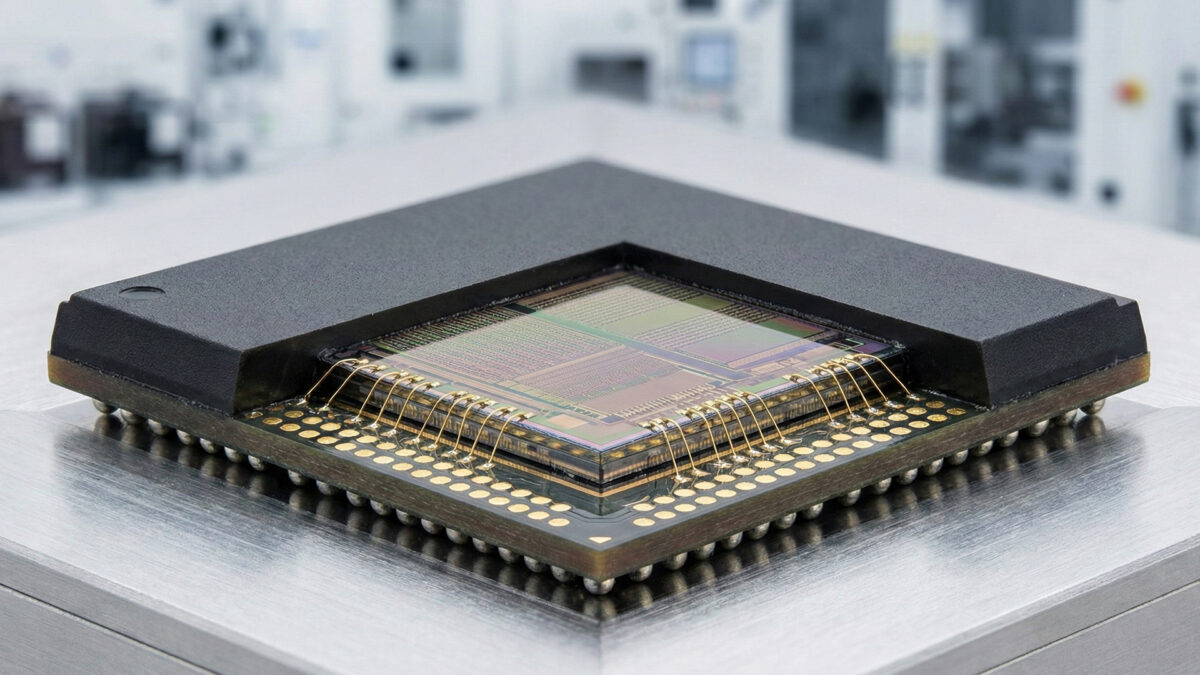
Micron Technology’s semiconductor assembly and testing plant in Sanand, Gujarat, is scheduled to begin commercial production next month, marking a key development in India’s semiconductor manufacturing programme. The facility is part of Micron’s $2.75 billion investment in India and is the first major project to come onstream under the government’s semiconductor incentive scheme.
Union Minister for Electronics and Information Technology Ashwini Vaishnaw said the plant has completed its pilot production phase and is ready to transition to full-scale commercial operations. The project focuses on assembly, testing, marking and packaging (ATMP) of memory chips, which are used in mobile phones, data centres, automobiles, consumer electronics and industrial equipment.
The Sanand facility is being developed with financial support from the Centre and the Gujarat government. Under the incentive framework, the central government is providing up to 50% of the project cost, while the state is offering additional subsidies, infrastructure support and policy incentives.
According to the government, the Micron plant will manufacture high-value memory products and handle complex chip packaging processes. While the facility does not involve wafer fabrication, it is seen as a critical first step in building a domestic semiconductor manufacturing ecosystem. Officials have stated that advanced packaging and testing capabilities are essential for India to integrate into global semiconductor supply chains.
The project is expected to generate several thousand direct and indirect jobs and support the development of a local supplier base for materials, equipment and logistics. It is also expected to encourage global and domestic firms to invest in related segments of the semiconductor value chain.
India currently has a strong presence in semiconductor design but relies heavily on imports for chip manufacturing. With Micron’s plant coming online, the government expects a gradual shift towards local production, reducing import dependence and improving supply chain resilience.
The government is also working with international partners, including the US, Japan, South Korea and the European Union, to secure access to critical materials and technologies required for semiconductor manufacturing.
Also Read: US natural gas trading hits all-time high