Categories
Corporate

Tech Trouble Halts Alaska Airlines Operations Across US

Alaska Airlines, one of the largest US carriers based in Seattle, grounded all its flights nationwide on Thursday due to a major IT outage.

The disruption also affected its regional subsidiary, Horizon Air. Together with Hawaiian Airlines, the group serves 140 destinations worldwide, spanning 37 US states and 12 countries.

The Federal Aviation Administration (FAA) issued a temporary ground stop, leaving thousands of passengers stranded.

The outage, traced to a failure at Alaska Airlines’ main data center, affected booking systems, mobile apps, and other essential operational services. Over 140 departures were delayed at major hubs, including Seattle-Tacoma International Airport.

“This was an unexpected disruption, and we sincerely apologize to our passengers,” Alaska Airlines said on social media, urging travelers to check flight status before heading to airports. Hawaiian Airlines reported no impact and continued normal operations.

This is the second IT-related outage for Alaska Airlines this year because a similar incident in July grounded all flights for three hours. Flexible travel policies are now in effect as the airline works to restore full service.

Also Read: Starlink Begins Security Trials in India Ahead of Commercial Launch

Categories
Technology

OpenAI Introduces ChatGPT Atlas for Intelligent Browsing

OpenAI has entered the web browsing arena with ChatGPT Atlas, an AI-powered browser designed to make online navigation smarter, faster, and more intuitive.

Initially available for macOS, the browser will soon reach Windows, iOS, and Android, bringing ChatGPT’s intelligence directly into your everyday internet experience.

Unlike conventional browsers, Atlas integrates ChatGPT at every step. Users can summarize articles, draft emails, compare products, or extract key insights without toggling between tabs or apps.

Its standout Agent Mode takes things further, letting the AI handle tasks on your behalf, starting from research and form-filling to online purchases, thus saving time and effort.

Atlas also remembers your preferences through a memory feature, offering personalized suggestions while letting you control what it stores, archives, or deletes.

Privacy remains a priority, with browsing data not used for AI training by default and options like incognito mode for secure sessions.

Onboarding is smooth, allowing users to import bookmarks, passwords, and browsing history for a seamless transition. The interface is designed to feel natural, making AI interactions feel like a helpful companion rather than just a tool.

With ChatGPT Atlas, OpenAI is redefining the web browser, not just a gateway to websites, but a smart, personalized assistant that could reshape how we explore the internet and even rival tech giants like Google.

Also Read: Apple Nears $4 Trillion Valuation Upon iPhone 17 Success

Categories
Corporate

Apple Nears $4 Trillion Valuation Upon iPhone 17 Success

Apple Inc. (AAPL) hit an all-time high on Tuesday, bringing its market capitalization close to $3.9 trillion. The rally follows strong early sales of the iPhone 17 series, which have significantly outpaced expectations in major markets, including the U.S. and China.

Data from Counterpoint Research shows the iPhone 17 outsold its predecessor by 14% during the first ten days of launch. In China, sales of the base model nearly doubled compared with the iPhone 16’s launch period, highlighting robust consumer demand for the new lineup. Analysts attribute the surge to innovative features, strategic marketing, and growth in the global smartphone market.

The stock rally has also propelled Apple past Microsoft, reclaiming its position as the world’s second-most-valuable company, behind only Nvidia. Investors have reacted positively, viewing the iPhone 17’s success as a sign of Apple’s enduring brand strength and market leadership.

Evercore ISI recently added Apple to its Tactical Outperform List, citing continued strong demand and optimistic earnings forecasts. Apple is scheduled to announce its quarterly results on October 30, a report expected to further influence the stock’s trajectory.

The iPhone 17 series, featuring upgraded camera systems, longer battery life, and advanced software tools, has resonated with consumers seeking premium smartphones. Analysts predict that continued demand for the iPhone 17, coupled with Apple’s broader product ecosystem, could sustain the company’s upward momentum in the coming quarters.

On Wednesday, Apple shares traded at $262.77, hitting intraday highs of $265.16 and lows of $260.77. The company’s price-to-earnings ratio stands at 30.28, with earnings per share (EPS) of 6.59, reflecting sustained investor confidence.

With strong sales and resilient stock performance, Apple reinforces its position as a global technology leader, demonstrating its ability to innovate, capture market share, and maintain investor trust in a competitive market.

Also Read: WeWork India Issues Detailed Response to InGovern Critique

Categories
Beyond

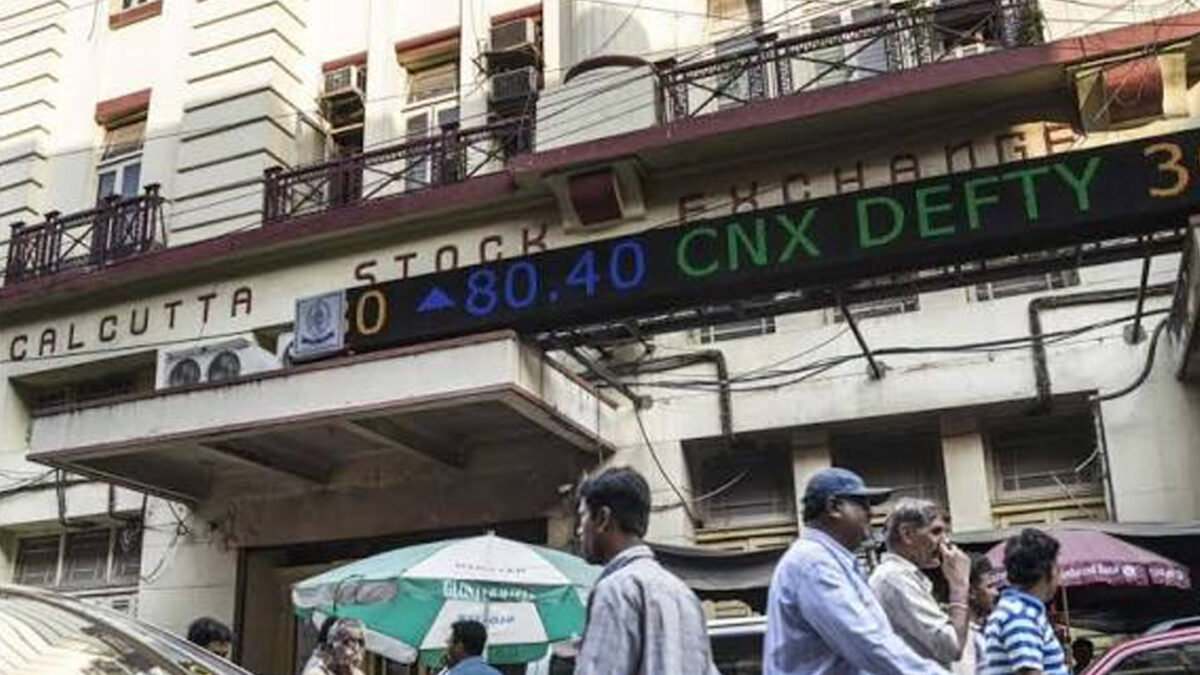
Calcutta Stock Exchange Bids Farewell After 117 Years

For generations of traders, investors, and the city of Kolkata itself, the Calcutta Stock Exchange (CSE) has been more than just a marketplace—it has been a symbol of ambition, innovation, and the city’s financial heartbeat. This year, however, that chapter comes to a close. The CSE is celebrating its final Diwali and Kali Puja, marking the end of 117 years of trading.

Established in 1908, the CSE once rivaled the Bombay Stock Exchange, bustling with the energy of brokers shouting bids, deals being made over wooden desks, and Kolkata at the center of India’s financial narrative. Over time, however, the exchange faced challenges. Regulatory changes, modern trading platforms, and the rise of larger exchanges gradually slowed its activity.

Trading at the CSE was suspended in April 2013 by SEBI, and despite attempts to revive it, operations never fully resumed. In 2024, the board decided to voluntarily exit the stock exchange business, a decision approved by shareholders in April 2025. Today, while the CSE itself will close, its subsidiary, CSE Capital Markets Pvt Ltd (CCMPL), will continue broking activities on the NSE and BSE, ensuring that the legacy lives on in a different form.

The historic three-acre property of the exchange on EM Bypass is set to be sold to the Srijan Group for ₹253 crore, adding a tangible end to this long chapter of Kolkata’s financial history.

For those who walked its floors, the CSE was more than numbers as it was a community, a place of dreams, deals, and relationships that spanned generations. Its last Diwali is not just a financial milestone but a moment of nostalgia for a city that once watched fortunes rise and fall in its halls.

As Kolkata celebrated the festival of lights, the quieting of the CSE serves as a reminder that even institutions that shape history are not immune to the passage of time. Yet, in every trader’s memory and every story from its past, the Calcutta Stock Exchange will continue to shine.

Also Read: BSNL Offers Data And Calls for Re 1 This Diwali

Categories
Technology

BSNL Offers Data And Calls for Re 1 This Diwali

BSNL wishes a special Diwali 2025 with a festive bonanza for new users. From October 15 to November 15, 2025, customers can activate a BSNL 4G connection for just Re 1 and enjoy unlimited voice calls along with 2GB of high-speed daily data for a month. The offer also includes a free SIM card upon completing KYC formalities.

The one-month validity plan gives users a chance to explore BSNL’s upgraded 4G network without committing to long-term prepaid or postpaid plans. Post the initial month, subscribers can switch to regular BSNL plans as per their needs.

To activate the offer, users can visit any BSNL Customer Service Centre or authorized retailer, complete the KYC process, and request the Diwali Bonanza SIM. Services are activated immediately upon completion. The offer is strictly valid during the festive period and must be activated before November 15. Customers can also seek assistance through BSNL’s helpline at 1800-180-1503 or its official website, bsnl.co.in.

This festive push comes as BSNL reports strong growth, adding 1.3 million new subscribers in August 2025. The operator posted consecutive quarterly net profits of ₹262 crore in Q2 FY25 and ₹280 crore in Q3 FY25. Communications Minister Jyotiraditya Scindia noted improvements in the state-run provider’s performance while emphasizing the ongoing need for enhanced customer satisfaction and eventual 5G rollout.

The Diwali Bonanza reflects BSNL’s effort to expand its 4G user base and attract new customers while showcasing its strengthened network during the festive season.

Also Read: Markets Shine Bright as Samvat 2082 Begins

Categories
Corporate

South Indian Bank Gains 19% on Q2 Profit

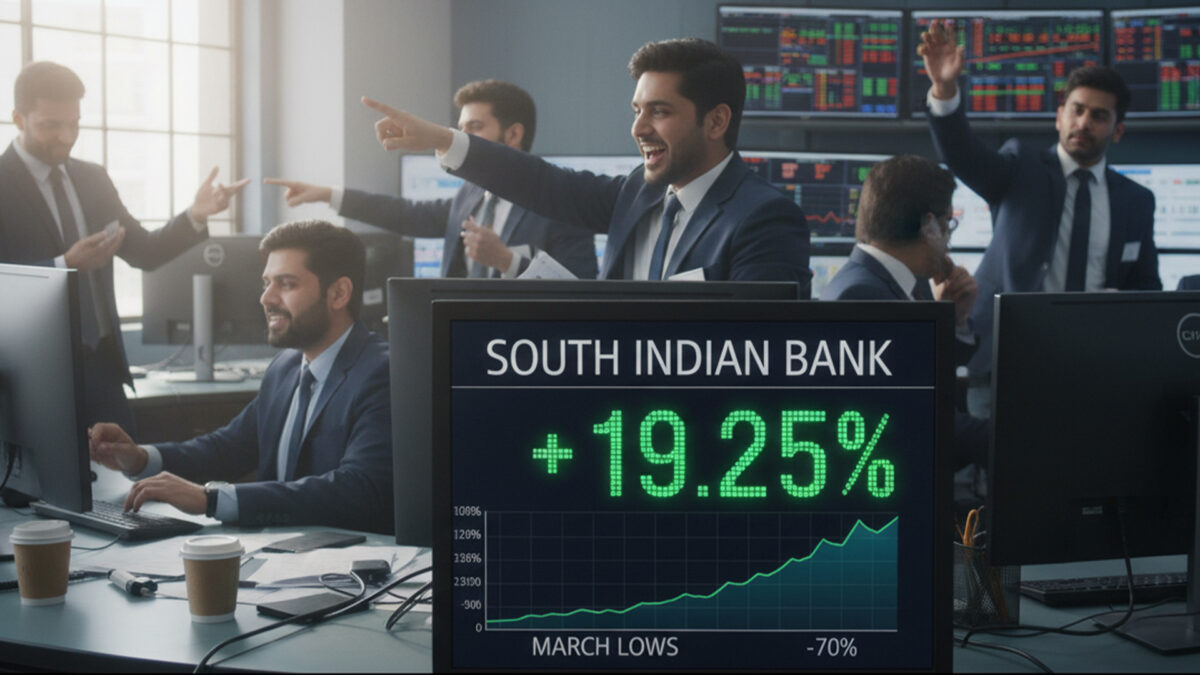
Shares of South Indian Bank (SIB) jumped nearly 19% on Monday to hit a 52-week high, driven by strong investor sentiment following the bank’s second-quarter results. The stock has now recovered about 70% from its March lows, supported by robust trading volumes and improved fundamentals.

The Kerala-based private lender reported an 8% rise in net profit to ₹351 crore for the quarter ended September 2025, compared with ₹325 crore a year earlier. While net interest income remained steady, the bank’s non-interest income and lower provisioning helped boost profitability.

Notably, the bank’s asset quality strengthened, with gross non-performing assets (GNPA) improving to 2.93%, down from 4.40% a year ago. However, net interest margins (NIM) slipped to 2.8%, reflecting some pressure on spreads.

Analysts said expectations of sustained profit growth, prudent lending, and renewed traction in retail and MSME segments underpinned the rally. Despite margin compression, the bank’s improving balance sheet and consistent earnings have bolstered investor confidence.

Also Read: Midwest IPO Fully Subscribed, Listing Set for October 24

Categories
Corporate

Reliance Jumps 4% on Strong Q2 Results

Shares of Reliance Industries Ltd (RIL) climbed nearly 4% on Monday following the release of its Q2 FY26 results, which exceeded street expectations and triggered a wave of bullish calls from brokerages. The stock touched an intraday high of ₹1,473.80 before closing around ₹1,467.90 on the NSE, buoyed by gains across all major business verticals.

The conglomerate reported a 10% year-on-year increase in consolidated net profit to ₹18,165 crore. Revenue from operations grew 10% to ₹2.59 lakh crore, while gross revenue stood at ₹2.83 lakh crore. EBITDA rose 15% to ₹50,367 crore, and operating margins improved to 17.8% from 17% in the same quarter last year.

Segment-wise, the oil-to-chemicals (O2C) division posted a recovery, driven by improved refining margins and stronger petrochemical spreads. The retail segment saw continued growth in footfall and sales, while digital services, led by Jio, benefited from an expanding subscriber base and stable ARPU.

Capital expenditure during the quarter reached ₹40,010 crore, with ongoing investments across new energy, telecom infrastructure, and retail expansion. Despite high capex, net debt levels remained largely unchanged, maintaining the company’s balance sheet strength.

Chairman Mukesh Ambani stated that the quarterly performance reflects the resilience of India’s consumer demand and Reliance’s ability to drive structural growth across its diversified businesses.

Brokerages were quick to respond. Nomura reaffirmed its ‘Buy’ rating and raised FY26–27 EBITDA estimates by 4% and 12%, respectively, setting a target price of ₹1,700. Morgan Stanley echoed the positive outlook with a target of ₹1,701, citing strong positioning going into the festive quarter. HDFC Securities, JPMorgan, and Macquarie also maintained bullish views, highlighting key growth triggers including retail outperformance, telecom tariff potential, and the emerging new energy segment.

While analysts see Reliance as a long-term growth story, they advise a staggered investment approach given recent price gains. With festive demand and operational strength aligning, Reliance remains a strong contender in Diwali and year-end portfolios.

Also Read: Avaada Electro Seeks ₹10,000 Crore in Confidential IPO Filing

Categories
Corporate

Hindustan Zinc Q2 Profit Climbs 14% to ₹2,649 Crore

Hindustan Zinc showed a rise in the second quarter of FY26 with a solid financial showing, reporting a 14% jump in net profit to ₹2,649 crore compared to ₹2,327 crore a year earlier. While revenue growth was more modest, ticking up by 3.5-4% to between ₹8,282 crore and ₹8,549 crore, it signals steady business momentum amid ongoing market challenges.

The company’s focus on controlling costs paid off, keeping expenses around ₹5,245 crore and lifting profit margins to a healthy 31%, up from 29% last year. Operational efficiency clearly took centre stage, supporting sustained earnings growth.

Production hit a record 258,000 tonnes of mined metal in the quarter, a slight 1% rise year-on-year. Earnings before interest, tax, depreciation, and amortisation (EBITDA) grew 7% to ₹4,467 crore, with the EBITDA margin steady at an impressive 52%, underlining strong operational discipline.

Silver was a shining star this quarter, contributing nearly 40% of total profits and reinforcing its role as a key earnings pillar. Meanwhile, zinc production costs fell to a five-year low of USD 994 per tonne, down 7%, further cushioning margins and creating a competitive edge.

Management credits this success to ongoing investments in technology, operational upgrades, and a growing emphasis on sustainability practices. Looking forward, the company is exploring exciting new avenues such as waste-to-value projects, enhanced circular resource use, and the emerging sector of energy-transition metals.

Despite the upbeat earnings, the stock experienced a mild dip post-results, a light pause amid its generally strong trend, buoyed in part by rising silver prices lately.

Also Read: Jio, Retail Drive 14% Profit Growth for Reliance in Q2

Categories
Corporate

Jio, Retail Drive 14% Profit Growth for Reliance in Q2

Reliance Industries Ltd (RIL) delivered a strong performance in the second quarter of FY26, with consolidated net profit rising about 14% year-on-year to ₹22,140 crore. Growth was powered by continued strength across its oil-to-chemicals (O2C), telecom, and retail divisions.

Gross revenue rose 10% to ₹2.83 lakh crore, while operating profit (EBITDA) climbed nearly 15% to ₹50,367 crore, supported by improved margins from operational efficiencies and a favourable business mix.

Jio Platforms Ltd maintained its growth momentum, posting a 12.8% jump in net profit to ₹7,379 crore. Average revenue per user (ARPU) increased to ₹211.4, reflecting rising 5G adoption and new subscriber additions. More than 234 million users are now on its 5G network, accounting for half of all wireless data traffic.

Reliance Retail continued to expand aggressively, with revenue up nearly 19% and profit rising 21.9% year-on-year. The division added 412 new stores during the quarter, taking its footprint to 77.8 million sq ft across 19,821 outlets, boosted by demand in grocery, fashion, and electronics.

Chairman Mukesh Ambani said Reliance’s “resilient and broad-based performance” underscores its readiness for the next phase of growth across new energy, AI, media, and consumer technology. “Our businesses have delivered sustained momentum with strong domestic orientation,” he said.

The O2C segment posted modest revenue growth of 3.2% but saw a sharp 20.9% rise in EBITDA, thanks to firmer fuel margins and higher retail volumes. Downstream chemicals, however, remained under pressure from global oversupply.

Reliance’s oil and gas exploration business underperformed, with revenue slipping 2.6% due to lower production and softer condensate prices, though realized gas prices from the KG-D6 basin improved slightly.

Meanwhile, its digital and media arm JioStar saw profits more than double to ₹1,322 crore, reaching over 830 million users across platforms, a reflection of the group’s expanding digital ecosystem.

Capital expenditure rose to ₹40,010 crore, focused on telecom infrastructure, retail expansion, and renewable energy projects. Net debt stood at ₹1.18 lakh crore, while cash reserves increased to ₹2.3 lakh crore.

Also Read: Embraer Opens India Office, Partners with Mahindra on C-390 Aircraft

Categories
Corporate

Adani’s Godda Plant Gets Grid Nod; Shares Surge 7%

The Union government has approved a key regulatory change that will allow Adani Power’s 1,600 MW Godda thermal plant in Jharkhand,  originally set up solely to supply electricity to Bangladesh, to now connect to India’s national power grid.

This marks a significant shift in the project’s mandate and unlocks the potential for Adani Power to supply electricity to Indian distribution companies (discoms), opening up a new domestic revenue stream.

The Ministry of Power issued the approval via a notification dated September 29, allowing the plant to link up with the 400 kV Kahalgaon–Maithon transmission line through a “line-in-line-out” (LILO) arrangement. The route will pass through 56 villages in the Godda and Poreyahat tehsils of Jharkhand.

Until now, the Godda plant operated under a Special Economic Zone (SEZ) structure with a binding power purchase agreement to export electricity exclusively to Bangladesh. The new move involved regulatory adjustments to accommodate cross-border electricity export rules, SEZ guidelines, and domestic transmission access.

To facilitate the grid connection, Adani Power has also been granted rights under the Indian Telegraph Act, enabling the company to lay transmission infrastructure across land parcels along the approved route.

The development was met with a positive response from investors, with Adani Power shares rising around 7% to hit a day’s high of ₹168 on the NSE on Friday, following the announcement.

Analysts see the approval as a long-term boost to the company’s operational flexibility and earnings potential. However, the project still faces ground-level challenges, including securing local clearances and managing the concerns of affected villages along the transmission line route.

The regulatory green light marks a new chapter for Adani Power and a notable shift in India’s energy policy landscape, although questions remain about when domestic supply will begin and whether it will take precedence over existing power exports to Bangladesh.

Also Read: Natco Pharma Triumphs Over Roche: SC Allows Generic SMA Drug Sale