
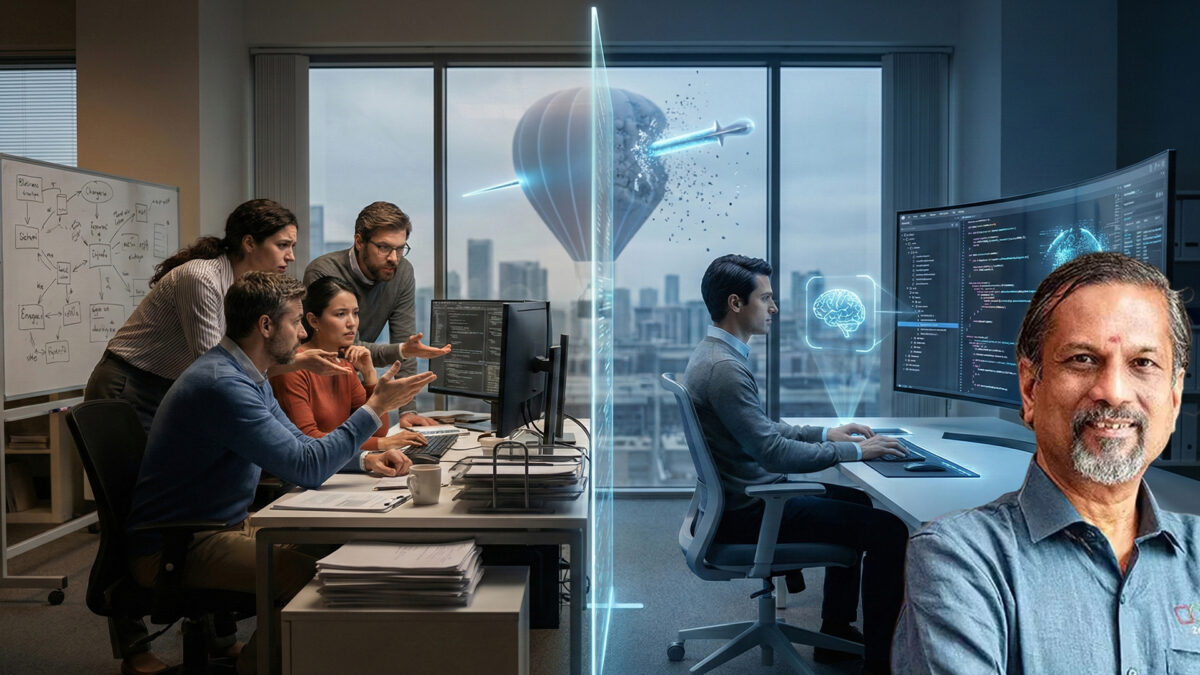
The rapid evolution of AI-driven development tools is poised to transform the software industry, changing how applications are created and challenging traditional coding roles. Generative AI models, such as Anthropic’s Claude, are now capable of handling tasks that once required experienced programmers, from writing code to building entire software systems.
A striking example comes from a recent app development scenario: a non-technical investor, using AI tools, built a fully functional iOS app on the Bhagavad Gita without writing a single line of code. The app, 10 Minute Gita, includes daily readings, translations, searchable content, and customization — all generated through AI prompts. This highlights the growing ability of AI to automate complex software engineering tasks.
Advanced models like Claude have even achieved technical milestones such as creating a complete C compiler, demonstrating that AI can now handle core programming functions traditionally reserved for trained engineers. These capabilities signal a shift in the software landscape, where productivity and application development are increasingly augmented or even replaced by AI.
Industry experts warn that this could have profound implications for IT professionals. Developers who have relied on coding as a primary career skill may find traditional roles shrinking as AI takes over routine and even advanced tasks. While this shift poses challenges, it also opens avenues for human creativity, innovation, and oversight in AI-driven workflows.
The broader tech community is observing these trends closely, as generative AI continues to influence IT strategies, investment decisions, and employment patterns globally. Companies are exploring ways to integrate AI tools into their development pipelines, emphasizing efficiency and faster product delivery, which could redefine career expectations for software engineers.
In this changing environment, the message is clear: IT professionals must adapt and diversify their skill sets to remain relevant. Embracing AI as a collaborator rather than a competitor, learning AI integration, and focusing on creative or managerial roles could help coders navigate the future of work.
Also Read: Tim Cook talks succession, denies retirement plans