
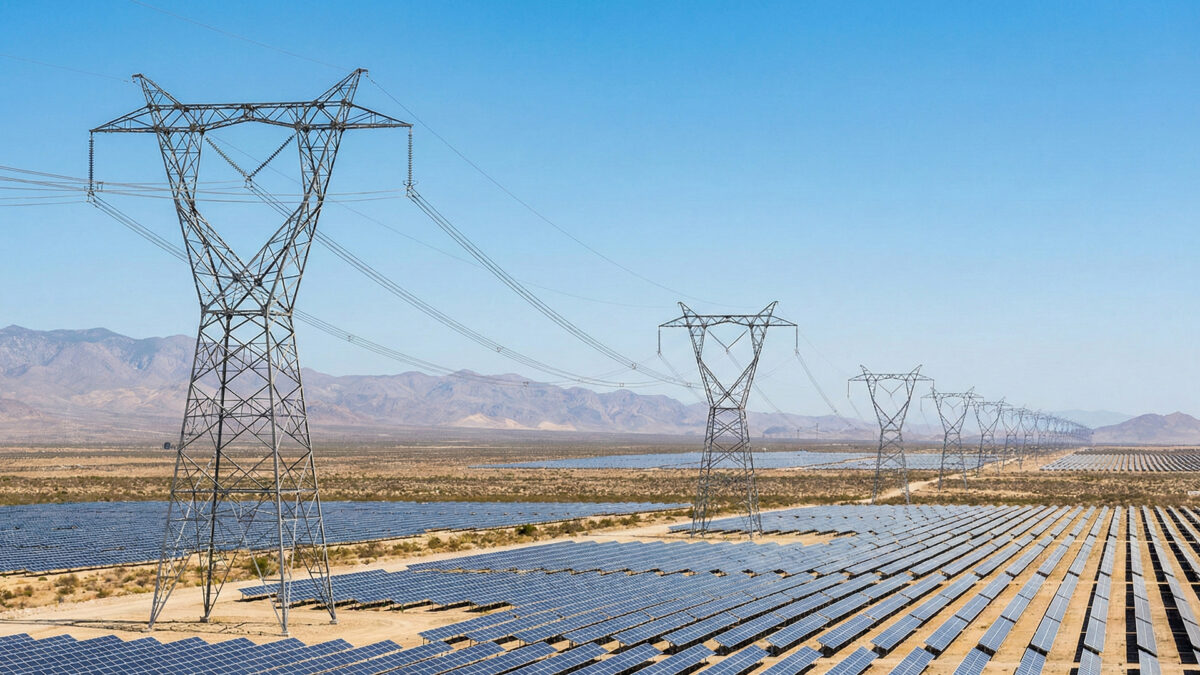
Adani Energy Solutions Ltd has taken a major step in strengthening India’s clean energy backbone by securing long-term funding from Japanese banks for a 6,000 megawatt green energy transmission corridor. The project will help move renewable electricity from areas where it is generated in large quantities to regions where demand is high, making clean power more accessible and reliable for millions of people.
The corridor will run for nearly 950 kilometres, connecting Bhadla in Rajasthan, one of the country’s biggest solar power hubs, to Fatehpur in Uttar Pradesh. Once completed, it will carry electricity generated from solar and other renewable sources across northern India. The project is expected to be operational by 2029.
The financing has come from a group of well-known Japanese financial institutions, led by MUFG Bank and Sumitomo Mitsui Banking Corporation. Their participation reflects growing global confidence in India’s renewable energy plans and in Adani Energy Solutions’ ability to deliver large infrastructure projects. The funding has been structured as a green loan, meaning it meets international environmental and sustainability standards.
What makes this corridor special is the technology being used. The project will use advanced high-voltage direct current (HVDC) systems, which allow electricity to travel long distances with minimal loss. The equipment will be supplied by Hitachi Energy, while Bharat Heavy Electricals Limited (BHEL) will handle key execution work, supporting India’s push for local manufacturing under the “Make in India” programme.
For Adani Energy Solutions, the project is more than just a transmission line. It is part of a larger effort to build a strong, future-ready power network that can support India’s rapid shift to renewable energy. As more solar and wind power is added to the grid, efficient transmission systems like this corridor become critical.
Experts are of the opinion that the project will help stabilise the power grid, reduce dependence on fossil fuels, and ensure that clean energy generated in remote regions reaches homes, factories, and cities without interruption. It also strengthens economic and strategic ties between India and Japan in the clean energy space.