
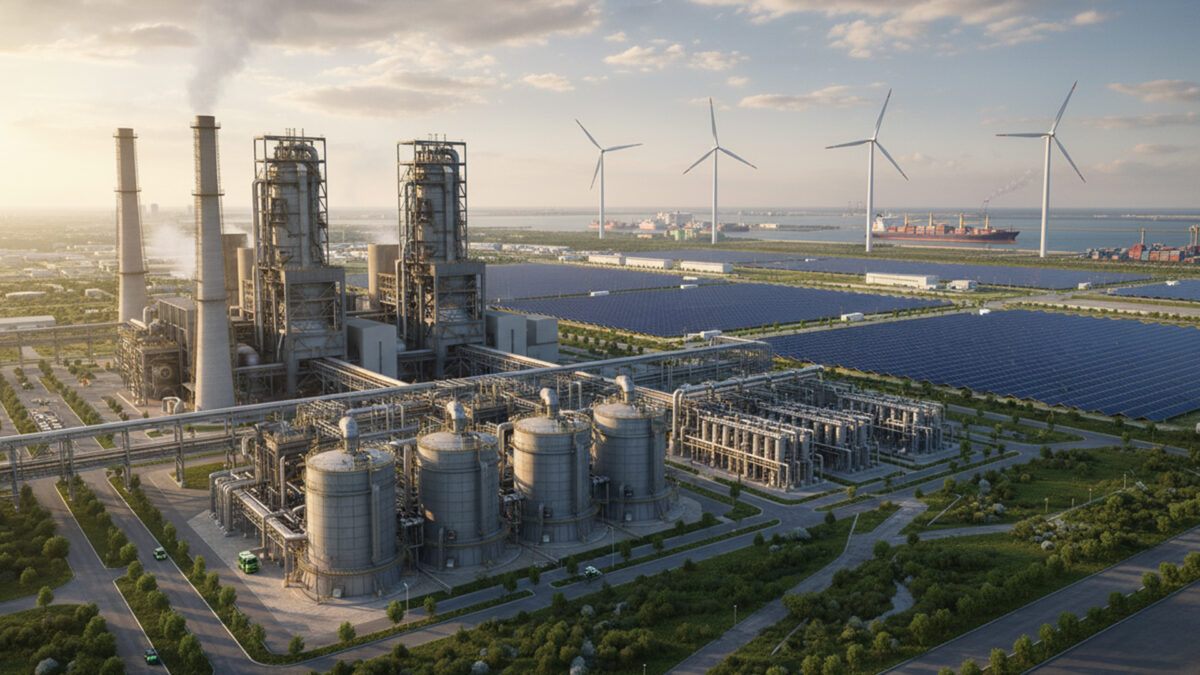
ACME Group is set to invest approximately ₹5,000 crore to build a 1.2 million tonnes per annum (MTPA) green iron facility (phase 1), focused on producing Green Hot Briquetted Iron (HBI) and Green Direct Reduced Iron (GRI), according to industry sources.
In a statement, ACME’s chairman Manoj Kumar Upadhyay said the planned greenfield facility will target “some of the lowest-emission green HBI and DRI products,” reflecting the group’s ambition to lead in clean-technology solutions.
The company is currently evaluating prospective locations in India and Oman, preferring sites close to its existing operations for logistical synergies.
ACME already has clean-energy undertakings underway, including a green hydrogen facility under development in Odisha and another project in advanced stages in Oman.
Its renewable portfolio also spans solar, wind, hybrid, and dispatchable energy projects, with an existing installed solar capacity of around 2,700 MW.
On the commercial front, ACME has signed a long-term supply deal with Vietnam’s Stavian Industrial Metal.
Under the agreement, ACME will supply green HBI/DRI output from the forthcoming 1.2 MTPA facility over a 10-year take-or-pay and supply-or-pay structure.
The supply arrangement reflects growing confidence in the global demand for low-carbon iron feedstock, particularly as steelmakers accelerate their transition toward hydrogen-based and electrified production processes.
The partnership also secures offtake certainty for ACME ahead of commissioning, giving the project a strong commercial foundation.
The investment comes amid intensifying global efforts toward decarbonising the steel industry, one of the largest contributors to industrial greenhouse gas emissions.
With the sector accounting for roughly 7–8% of global CO₂ emissions, several companies are racing to retrofit or build new zero-carbon infrastructure.
ACME’s move positions it among a growing group of industrial players betting on hydrogen and green iron technologies as the backbone of future steelmaking.
The upcoming facility is expected to strengthen India’s role in producing low-carbon steel inputs and could help reduce the carbon intensity of domestic steel value chains.
By integrating renewable energy with hydrogen-based iron reduction, ACME aims to demonstrate that large-scale industrial decarbonisation is both feasible and commercially viable.
With phase 1 anchored at 1.2 MTPA, the company is expected to explore further expansion in subsequent phases, though no official timeline has yet been announced.
The project is likely to leverage ACME’s hydrogen and renewable energy infrastructure to meet emissions targets and maintain cost competitiveness.
As the group finalises site selection and regulatory clearances, the ₹5,000 crore commitment signals ACME’s growing ambition to become a major player in India’s emerging green-steel ecosystem.
The initiative not only aligns with India’s broader decarbonisation goals but also underscores the increasing convergence of clean energy and heavy industry — a necessary step toward a sustainable industrial future.
Also Read: Tata Trusts Faces Internal Strife as Shapoorji Pallonji Group Pushes for IPO