
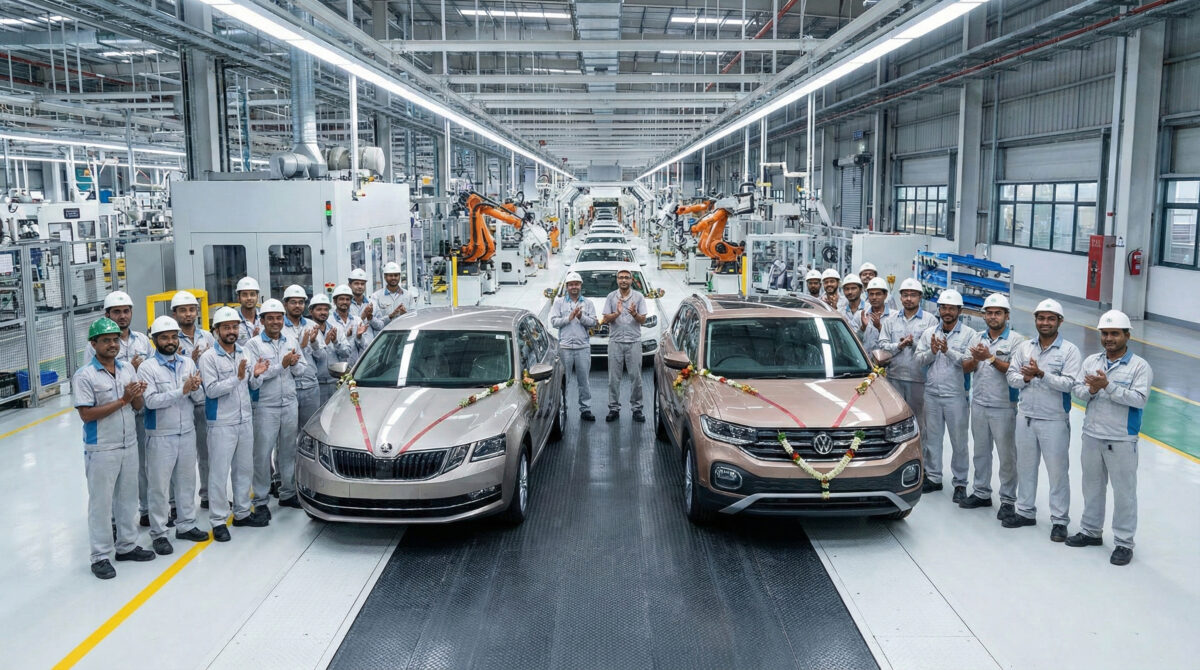
Škoda Auto Volkswagen India (SAVWIPL) has reached a remarkable milestone with two million vehicles produced in India since it began operations. This achievement marks over 25 years of manufacturing, innovation, and growth in the country.
A big part of this success comes from the MQB‑A0‑IN platform, designed and developed locally. It underpins popular models like the Škoda Kushaq, Slavia, and Kodiaq, as well as the Volkswagen Taigun and Virtus. Impressively, the last half a million cars on this platform rolled out in just 3.5 years, showing how quickly demand for these cars has grown.
The past few months have been particularly strong for the company. October 2025 was its best-ever sales month, while Škoda India reported 61,607 units sold in the first 10 months of 2025, more than double the same period last year. Volkswagen’s Virtus has also made its mark, now holding over 40% market share in the premium sedan segment.
Luxury brands under the group have added to the momentum. Bentley now has its own division in India with showrooms in Mumbai and Bengaluru. Porsche has expanded to 13 outlets and served more than 4,400 customers in six years. Lamborghini had a record year in 2024, delivering 113 cars, supported by its new hybrid models.
Exports have played a significant role as well. SAVWIPL has shipped over 700,000 India-made vehicles to markets including Latin America, Southeast Asia, Africa, and the Middle East.
To support this growth, the company has invested heavily in local manufacturing, with plants in Pune and Chhatrapati Sambhaji Nagar and strong localisation efforts in Bangalore.
Commenting on the milestone, Piyush Arora, CEO & MD of Škoda Auto Volkswagen India, said: “This achievement reflects our long-term commitment to India, not just as a market, but as a hub for innovation, manufacturing, and global mobility.”
With this milestone, Škoda-Volkswagen India not only celebrates its past but also sets the stage for an ambitious future in local and global markets.
Also Read: Adani Group backs indology with ₹100 crore funding