
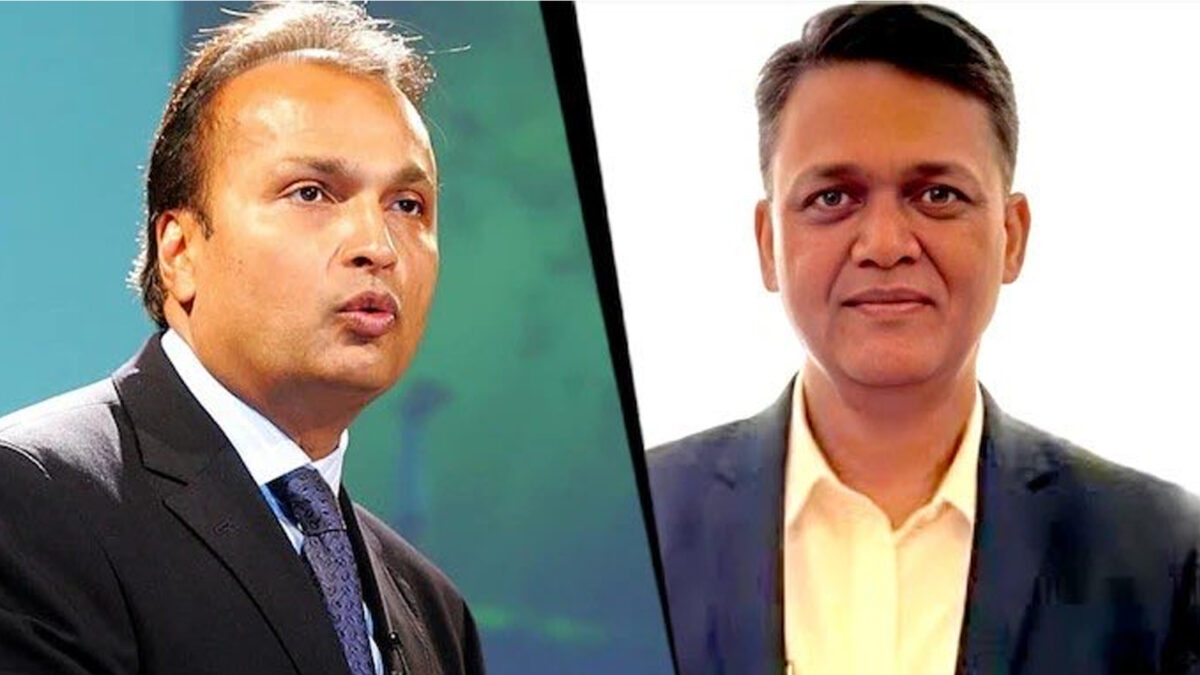
Ashok Kumar Pal resigned from his positions as Executive Director and Chief Financial Officer (CFO) of Reliance Power Ltd following his arrest by the Enforcement Directorate (ED) in a money-laundering probe.
The company said the resignation is effective immediately, stating that it has acted “bona fide” and now views itself as a victim of fraud and forgery.
The ED’s case centres on allegations that Pal played a key role in a scheme involving fake bank guarantees submitted to the Solar Energy Corporation of India (SECI) by a Reliance Power subsidiary, Reliance NU BESS (formerly Maharashtra Energy Generation Ltd).
Investigators allege that a bank guarantee of ₹68.2 crore was purportedly issued by FirstRand Bank, Manila, even though the bank has no branch in the Philippines.
The agency alleges that he was involved in designing and executing sham transactions, using forged documents, and concealing financial trails through shell companies.
The ED’s remand application claims that Pal directed the use of falsified endorsements, managed encrypted communication channels to avoid detection, and manipulated accounting workflows to process fraudulent guarantees.
One of the intermediary firms under investigation is Biswal Tradelink Pvt Ltd, based in Odisha, which allegedly arranged fake bank guarantees bearing forged State Bank of India (SBI) endorsements and fabricated confirmations.
The probe has revealed that communications in the case involved spoofed email domains that closely resembled official bank emails, such as altering “sbi.co.in” to “s-bi.co.in.”
Investigators also claim that Pal approved payments to Biswal Tradelink against bogus invoices for services that were never rendered, bypassing the company’s standard vendor verification systems.
He is also said to have used WhatsApp and Telegram to communicate instructions related to these transactions, leaving minimal formal records.
Reliance Power has distanced itself from Pal’s alleged actions, asserting that the company and its subsidiaries were victims of deception. In a regulatory filing, the firm stated that Pal resigned “pending the ongoing matter and in order to assist the investigation.”
It also clarified that Anil D. Ambani, who has often been linked to Reliance Power in media reports, has not served on the company’s board for over three years and “is not concerned with this matter in any manner.”
Following his arrest, Pal was produced before a special court, which granted the ED two days’ custody for interrogation. His legal counsel has challenged the arrest, arguing that procedural lapses could undermine the case.
This development is part of a broader probe into financial irregularities linked to the Anil Dhirubhai Ambani (ADA) group, particularly concerning loans disbursed by Yes Bank between 2017 and 2019 that were allegedly diverted to shell companies.
In July 2025, the ED conducted raids at more than 35 locations across Mumbai and Delhi as part of this ongoing investigation into suspected money laundering and forged financial instruments.
The arrest and subsequent resignation of Pal mark a significant escalation in regulatory scrutiny of Reliance Power and its group entities.
The company, which has over 75 percent public shareholding, is now facing heightened questions about its corporate governance framework and internal control systems. The case also highlights broader concerns about the vulnerability of major infrastructure and power sector tenders to fraud involving forged financial guarantees and complex money-laundering channels.
As the ED continues its investigation, more details are expected to emerge through custodial interrogation and forensic analysis of seized communications and financial records.
The outcome of the case could have wider implications for regulatory oversight in the energy and financial sectors, particularly in relation to due diligence requirements and accountability standards within large corporate groups.
Also Read: ACME to invest ₹5,000 crore in 1.2 Mt green iron plant