
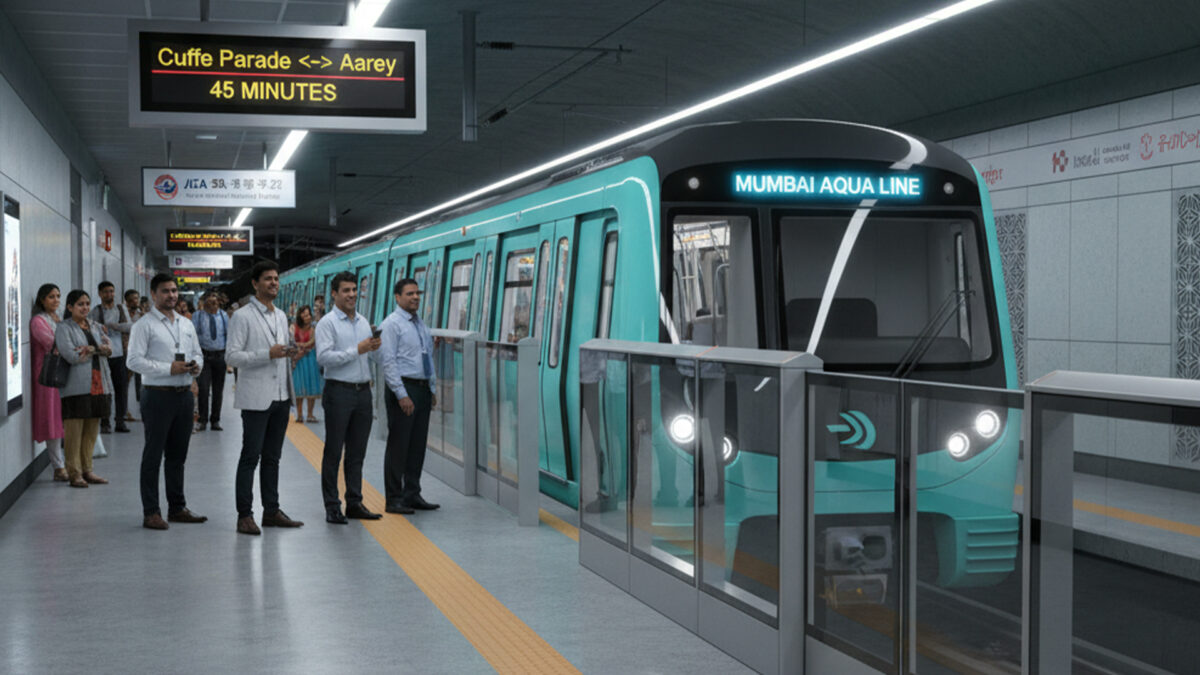
Mumbai has stepped into a new age of commuting this week as its first fully underground metro line, the Colaba–Bandra–SEEPZ corridor or Aqua Line, began full operations. Stretching 33.5 kilometres with 27 stations, the high-capacity line now carries passengers from Cuffe Parade in South Mumbai to Aarey in the North in just 45 minutes, transforming the way the city moves.
The final link, from Acharya Atre Chowk to Cuffe Parade, was flagged off on October 8 by Prime Minister Narendra Modi in the presence of Japan’s Ambassador to India, Maharashtra’s Governor and Chief Minister, and senior union ministers. The metro’s construction, years in the making, tested engineering limits by tunnelling through Mumbai’s dense, heritage-rich core without disturbing life above ground.
Funded in partnership with the Japan International Cooperation Agency (JICA), which covered over half of the JPY 680,692 million project cost through concessional loans, the line reflects decades of Indo-Japan infrastructure collaboration. PM Modi saluted the engineers and workers for taking on one of India’s toughest projects, calling the metro “a living symbol of a developing Bharat.”
Connecting commercial powerhouses like Bandra-Kurla Complex, Dharavi, Mumbai International Airport, and SEEPZ, the Aqua Line is designed for inclusivity with women-only coaches, disabled-friendly access, and advanced safety systems. Maharashtra Chief Minister Devendra Fadnavis called the metro a pride of the state and a testament to Mumbai’s resilience.
Fast, safe, and deeply rooted beneath the city it serves, the Aqua Line stands as a reminder that Mumbai’s spirit knows no limits, even when the path forward lies deep below the surface.
Also Read: Indian Households’ Gold Holdings Surge to $3.8 Trillion Amid Record Prices