
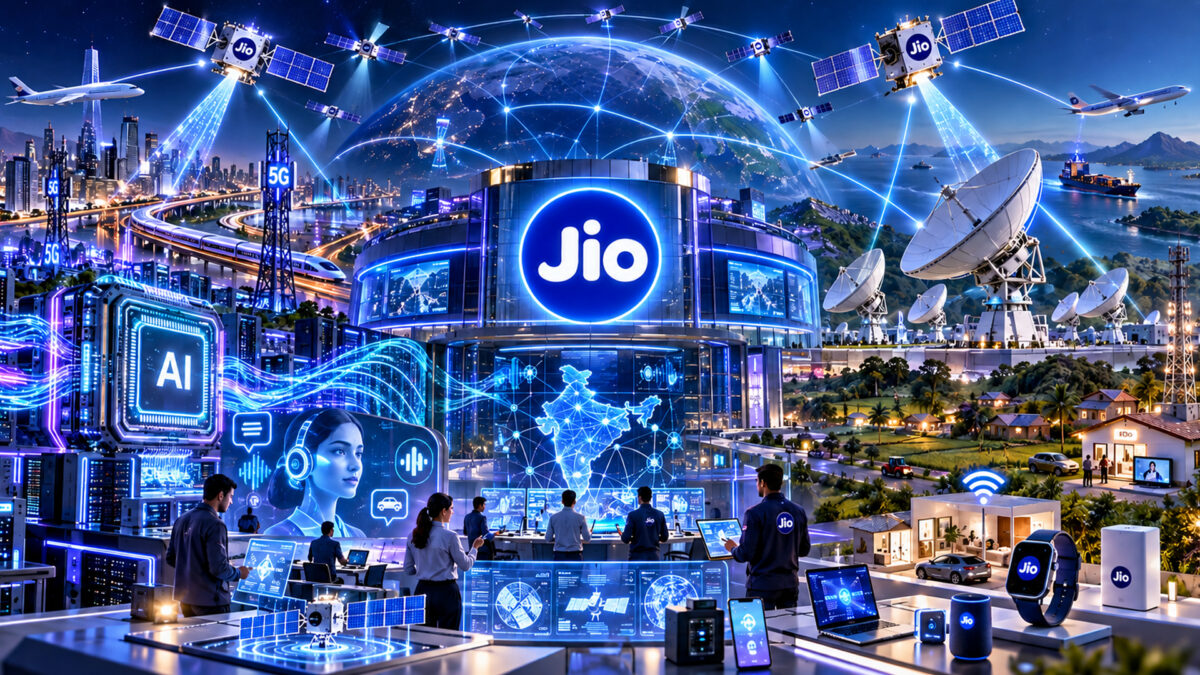
India’s technology sector is looking towards its next phase of growth, with artificial intelligence (AI), 6G connectivity and digital security taking centre stage at the 10th India Mobile Congress (IMC) 2026. The event brought together telecom operators, technology companies and policymakers to discuss how India can move beyond expanding connectivity to developing homegrown technologies for global markets.
Prime Minister Narendra Modi called for a global framework to tackle cyber fraud and deepfakes, while Reliance Jio Chairman Akash Ambani emphasised the need for an indigenous technology ecosystem that keeps digital services affordable for India’s billion-plus population.
The discussions reflect the industry’s evolving priorities. As millions more people use mobile internet and digital payments, the focus is shifting towards faster networks, intelligent infrastructure, stronger cybersecurity and technology designed and developed in India.
At IMC 2026, telecom operators and equipment makers showcased emerging technologies that could shape the next generation of mobile connectivity. These included 6G, AI-native networks, intelligent radio access networks (RAN) and autonomous network management.
Unlike conventional networks, AI-native systems are designed to integrate artificial intelligence into network operations. This could allow telecom infrastructure to identify problems, allocate resources and respond to changing demand with less human intervention. The aim is to improve network performance, reduce operating costs and deliver more reliable services.
The technology could become increasingly important as mobile networks carry growing volumes of data generated by cloud computing, connected devices, industrial automation and AI applications. Managing this traffic efficiently will require networks that can adapt in real time rather than rely entirely on manual monitoring.
The event also featured the International 6G Symposium, which examined research, standards and the development of next-generation communications. Although commercial 6G services remain a future prospect, work on standards and network architecture is already under way globally.
India’s opportunity lies in participating in that development early, rather than simply adopting technologies created elsewhere. Greater involvement in research, intellectual property and international standards could help Indian companies build products for domestic and overseas markets.
Alongside the technology showcase, cybersecurity emerged as a central concern. PM Modi urged governments, technology companies, telecom operators and financial institutions to work together to stop cyber fraud before it reaches users.
He called on the Global System for Mobile Communications Association (GSMA) and international telecom operators to help develop a coordinated mechanism to tackle cross-border digital crime. Criminals can operate from one country, use networks in another and target victims elsewhere, making isolated national responses less effective.
The Prime Minister also warned about deepfakes and AI-generated content, which can imitate real people and make fraudulent calls, videos or messages appear genuine. Such tools can be used to spread misinformation, impersonate individuals and deceive people into transferring money or sharing sensitive information.
Modi stressed that digital growth depends on trust. Users should be able to identify callers, distinguish authentic messages from fake ones and feel confident when making online payments or sharing personal data.
A stronger global framework could encourage better cooperation between governments and private companies, helping them identify threats and respond more quickly. As AI tools become more accessible, the challenge will be to support innovation while limiting their misuse.
Akash Ambani said India needs to develop its own indigenous technology stack, a direction Reliance Jio is pursuing as it builds solutions for the country’s large user base. He reiterated that affordability would remain central to Jio’s approach, with the aim of making digital services accessible to a billion users.
An indigenous technology stack can include the software, hardware, network systems and platforms needed to deliver digital services. Developing more of these capabilities locally could reduce dependence on foreign suppliers and give Indian companies greater control over product development and innovation.
Ambani also discussed Jio’s planned initial public offering (IPO), describing it as a significant responsibility towards shareholders. The proposed listing would mark the first public issue from the Reliance group in three decades, according to his remarks at the event.
The company’s emphasis on affordability reflects a wider challenge for India’s telecom industry. Advanced networks and digital services must be commercially sustainable while remaining accessible to consumers across income groups and regions.
IMC 2026, held in New Delhi from October 7 to 10 under the theme Scale Without Boundaries, covered 5G and 6G, AI networks, semiconductors, cybersecurity, quantum communication and electronics manufacturing. The programme also explored applications in smart mobility, industrial robotics and transport technology.
India has already built a large mobile connectivity base, but the next stage will require more than adding users and expanding network coverage. AI-ready infrastructure, skilled talent, domestic research and trusted digital services will be essential to turning scale into economic value.
For consumers, these developments could eventually mean more responsive networks and better digital services. For businesses, AI-driven infrastructure could improve productivity and create new opportunities in manufacturing, healthcare, transport and other sectors.