
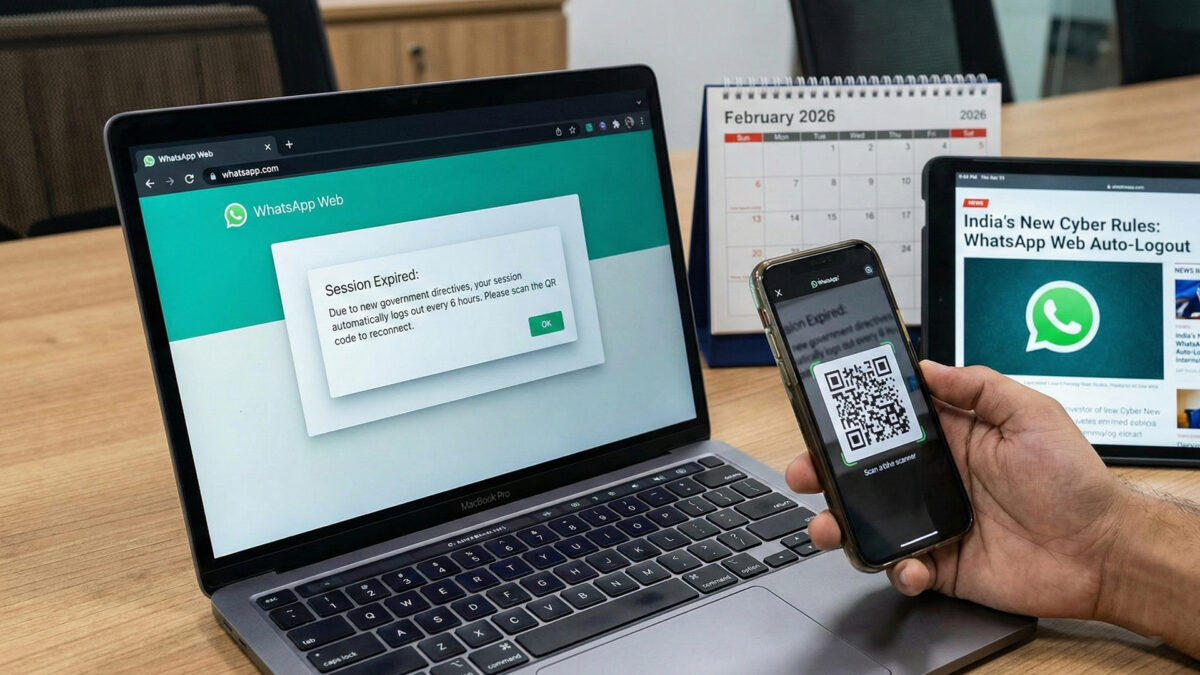
WhatsApp Web users in India will soon face automatic logouts every six hours, following new regulations from the Department of Telecommunications (DoT). The rule, part of the Telecommunication Cybersecurity Amendment Rules, 2025, requires all messaging accounts to be tied to the SIM card used during registration. This means web and desktop sessions can no longer remain active all day, and users will need to log in again, typically by scanning the QR code.
Other popular messaging apps, including Telegram and Signal, are also expected to comply. Platforms have been given 90 days to implement the changes, after which the six-hour logout policy will be enforced.
The step is aimed at improving cybersecurity and reducing digital fraud. Regulators have highlighted that some scammers exploit messaging apps without active SIM links, sometimes operating from outside India. By enforcing SIM binding, authorities hope to make it easier to trace accounts back to the actual subscriber and prevent misuse.
For users, this change will have practical implications. People who rely on WhatsApp Web for work or personal use will face frequent session interruptions. Those using secondary devices, tablets, or phones without the registered SIM may lose access altogether. Travelers or users who frequently switch SIMs could also experience login difficulties, making continuous access more challenging.
Tech experts say the rule is a step toward safer digital communication, but it may require adaptation from millions of users accustomed to persistent web sessions. Messaging platforms are expected to update their systems soon to meet the government’s security requirements, ensuring compliance within the mandated 90-day period.
As the six-hour auto-logout becomes standard, users will need to remain aware of session limits and plan accordingly to avoid interruptions in both personal and professional communications.
Also Read: Ahmedabad’s GIFT City expands as $100 billion financial hub