
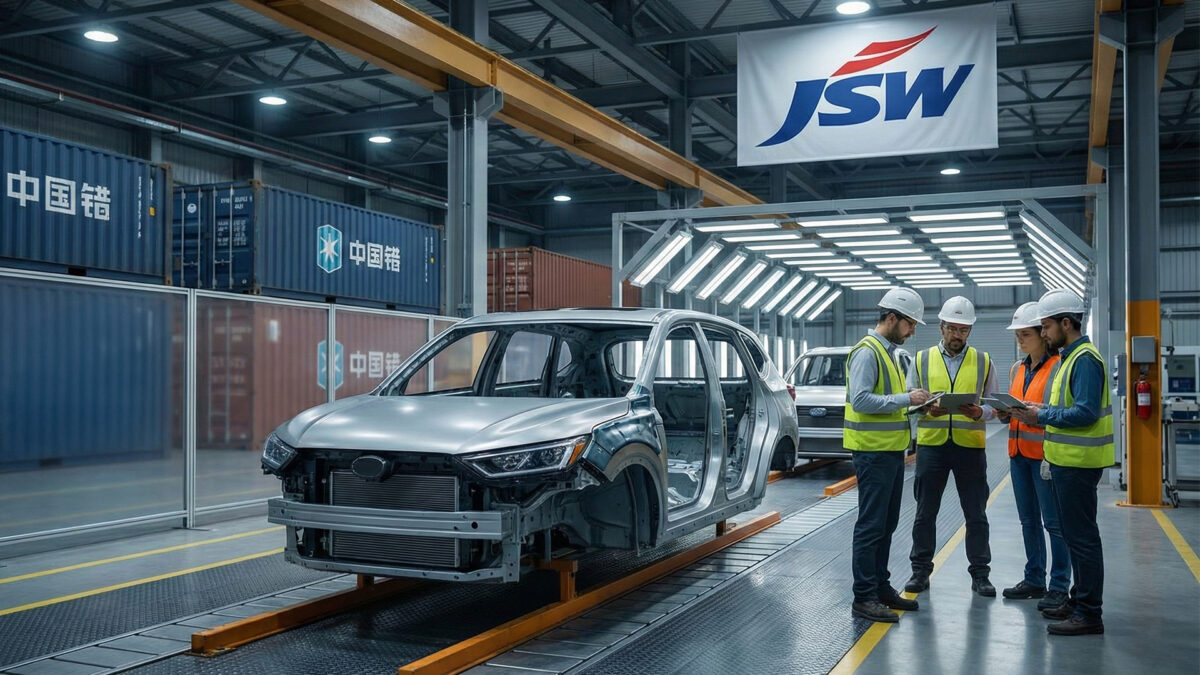
JSW Motors has indicated that the launch of its first passenger vehicle in India could be delayed due to regulatory hurdles related to importing key components from China. The company is preparing to enter the Indian automobile market with hybrid and electric vehicles, with its first model expected in the second half of 2026. However, approvals required for certain imported parts are still pending.
The issue relates to India’s quality control regulations, introduced in recent years to ensure that imported products meet prescribed standards. Under these rules, foreign suppliers must obtain certification before their components can be shipped to India for manufacturing use. Some of JSW Motors’ selected Chinese vendors are still awaiting these clearances, creating uncertainty around supply timelines.
According to reports, the company has written to the government seeking faster processing of licences for critical components, including specialised automotive glass used in windshields and sunroofs. JSW has said that it explored domestic sourcing options but could not find suitable alternatives for certain high-specification parts. The firm is also assessing suppliers from other countries, but shifting sourcing may increase production costs.
JSW Group, led by Sajjan Jindal, has committed significant investment to build its automotive business, including setting up manufacturing operations in Maharashtra. The company aims to compete in India’s fast-growing electric and hybrid vehicle segment, where global and domestic players are expanding aggressively.
Industry observers say the delay highlights broader challenges faced by companies dependent on imported components, particularly from China. While India is encouraging local manufacturing, the supplier ecosystem for some advanced automotive parts is still developing.
If approvals are not granted in time, JSW Motors’ planned launch schedule may need to be revised. The company, however, remains committed to its long-term strategy of establishing a strong presence in India’s new-energy vehicle market.
Also Read: Sattva Group enters Mumbai with ₹11,000 cr projects