
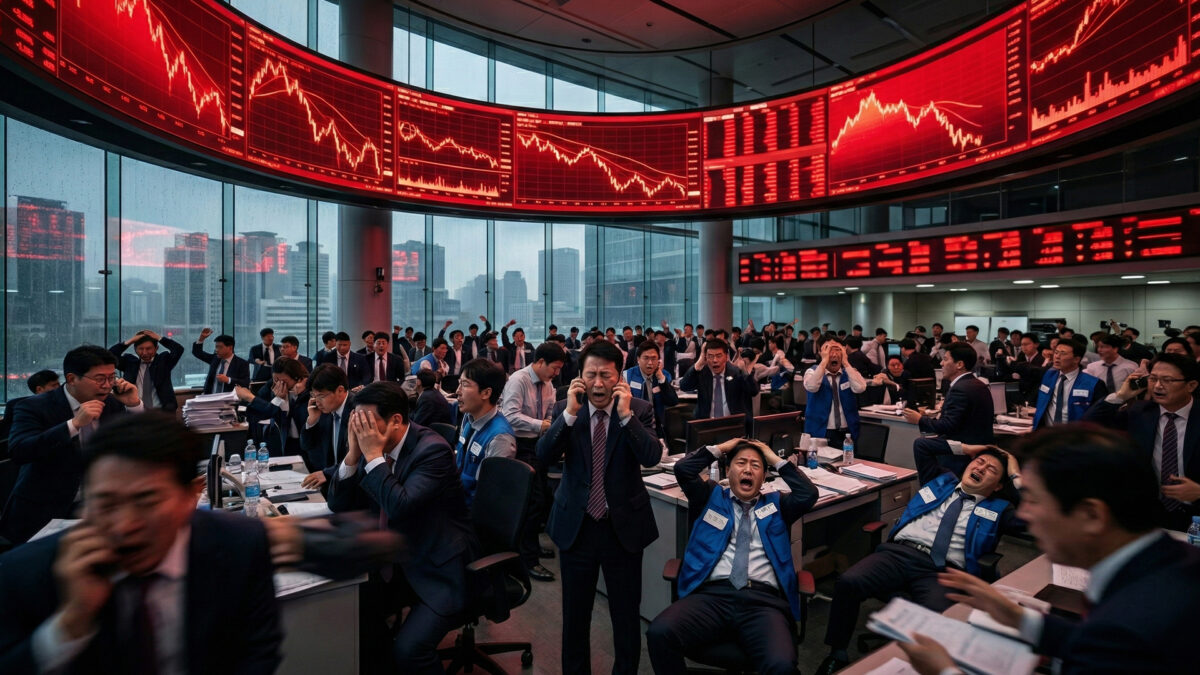
South Korea’s stock market suffered a historic sell-off on 4 March 2026, with the Kospi index plunging over 12 %, marking its largest single-day drop ever. The slide came as investors reacted to escalating tensions between Iran, the US, and Israel, which have raised concerns about global energy supply and economic stability.
The Kosdaq index, representing smaller tech and growth companies, fell about 14 %, indicating a broad-based market decline. Major firms such as Samsung Electronics, SK Hynix, and Hyundai Motor recorded significant losses, driving overall market sentiment downward. Rising oil prices amid the conflict added to investor anxiety, prompting both foreign and domestic investors to sell equities rapidly.
Trading was highly volatile, with the Korea Exchange temporarily halting operations after circuit breakers were triggered due to the sharp losses. The Korean won weakened, reflecting increased risk aversion and broader financial stress. Analysts noted that the sudden drop underscores the vulnerability of markets to geopolitical tensions, particularly for countries like South Korea, which depend heavily on imported energy.
Authorities, including the Bank of Korea and the Financial Services Commission, are monitoring the situation closely and have indicated readiness to intervene if volatility continues. Experts warn that further corrections are likely until tensions in the Middle East ease and global oil prices stabilize.
Investors worldwide are watching developments closely, as South Korea plays a critical role in global technology supply chains. The crash demonstrates how international conflicts can have far-reaching impacts on stock markets, currencies, and investor confidence.
As the market attempts to stabilize, traders and policymakers remain cautious. The sell-off serves as a reminder of the interconnected nature of global geopolitics and financial markets, showing how regional conflicts can quickly affect economic stability across continents.