
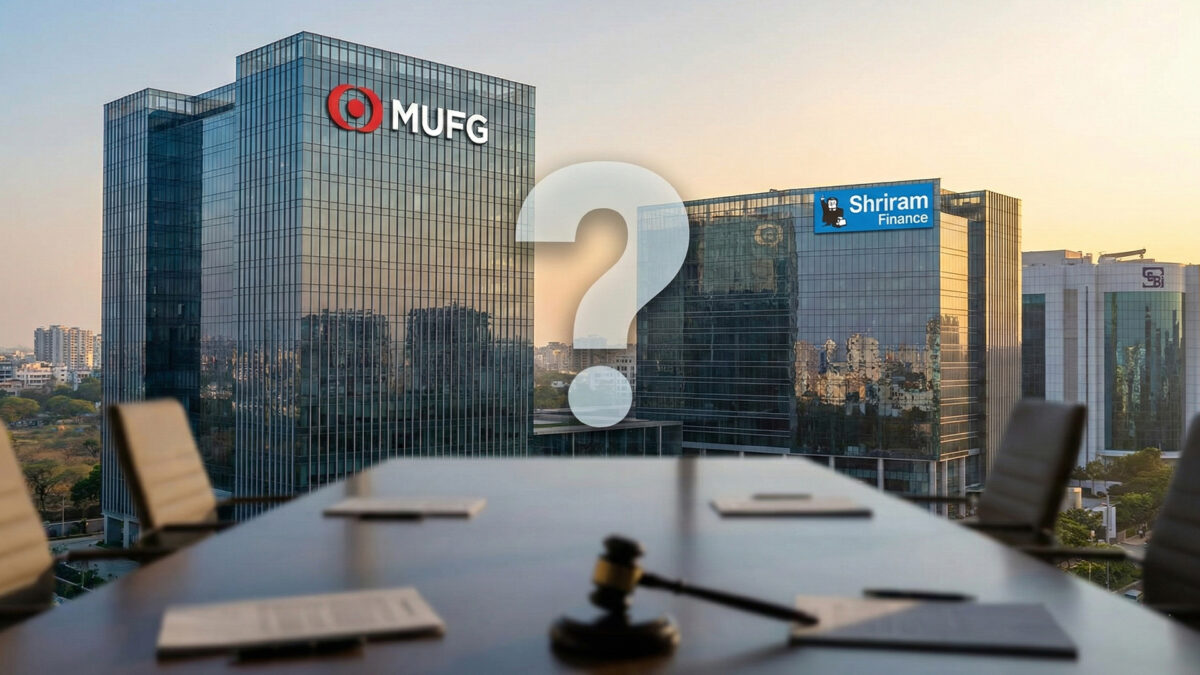
Japan’s Mitsubishi UFJ Financial Group (MUFG) Bank is set to invest $4.4 billion in Chennai‑based non‑bank lender Shriram Finance Ltd (SFL), acquiring a 20 per cent stake. While the deal is one of the largest inbound investments in India’s financial sector, a separate $200 million non‑compete fee for the Shriram promoter trust has sparked debate among regulators, shareholders, and advisory firms.
The non‑compete fee is intended to prevent the Shriram Ownership Trust (SOT), the promoter entity, from starting a competing business under the Shriram brand or any other name. Typically, non‑compete fees are paid when promoters exit a company, but in this case, SOT will remain a major shareholder and retain management control even after receiving the payment.
India’s market regulator, the Securities and Exchange Board of India (Sebi), requires fair treatment for all shareholders. Sebi rules say promoters cannot get extra compensation in securities transactions without board and shareholder approval. If such a fee is paid, it usually needs to be included in the open offer price for public shareholders. Here, however, MUFG is acquiring its stake through new share issuance, not a direct share purchase, making the rules less clear.
Investor advisory firms are split on the deal. Some, like IiAS and SES, have advised shareholders to reject the non‑compete payment, citing fairness concerns. Others, including InGovern and ISS, have supported it, highlighting different interpretations of the arrangement’s purpose.
The non‑compete period is also unusually long, lasting until MUFG’s stake drops below 10 per cent, which could effectively be permanent since MUFG is a long-term strategic investor. Experts say this raises questions about whether the fee is meant to secure promoter agreement rather than a genuine business need.
The Shriram‑MUFG case could set a precedent for how promoter non‑compete fees are treated under Indian law, influencing future large investments and corporate governance practices.